
The Dassler family, two brothers from the small town of Herzogenaurach, revolutionised the sports industry, which is where the German brand Puma originated. The Gebrüder Dassler Schuhfabrik served as the foundation for Puma and Adidas. Their story is about a battle to become number one.
Gebrüder Dassler Schuhfabrik, the origin of Puma
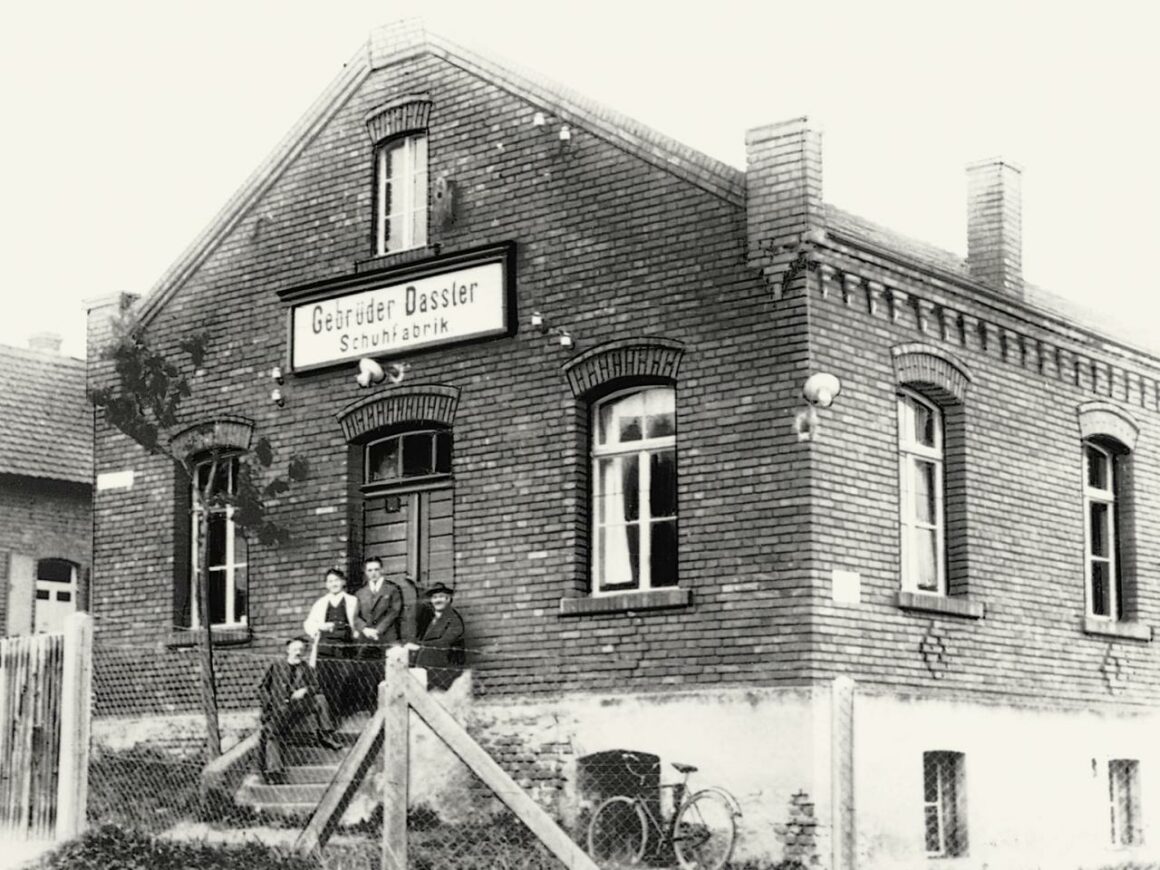
Gebrüder Dassler Schuhfabrik was founded in 1924 by brothers Adolf (“Adi”) and Rudolf Dassler in Herzogenaurach, Germany, as a small shoe workshop in the laundry room of their family home. With a focus on quality and functionality and thanks to the Dassler brothers’ passion for sports, they quickly earned a reputation in German sports.
At the 1928 Amsterdam Olympic Games, athletes wearing Gebrüder Dassler Schuhfabrik shoes began to win medals, marking the company’s first major international success. However, it was not until the 1936 Berlin Olympic Games that the brand gained international recognition. Jesse Owens, an American sprinter, won four gold medals in Dassler shoes. Other top athletes quickly won seven gold and five bronze medals. Dassler shoes have broken two world and five Olympic records, indicating the Dassler brothers’ international breakthrough in the sports footwear industry.
Despite their joint success, Adi and Rudolf Dassler’s personal and political differences grew during WWII, resulting in a bitter separation in 1948. This family feud resulted in the division of the original company and the formation of two of the most iconic sports brands: adidas, founded by Adi Dassler, and Puma, founded by Rudolf Dassler.
The separation sparked a fierce rivalry that pushed both companies to innovate and expand globally.
Puma, the choice of name
Rudolf Dassler moves into another family-owned building in Herzogenaurach. Together with 14 employees, he transforms it into a factory and founds his own company: “Schuhfabrik Rudolf Dassler (RUDA)“.

The company was registered as a business in January 1948 and a few months later, on June 1, 1948, it began operations. The name chosen, Ruda, was a variation of the founder’s name, Rudolf. But they soon decided to turn it into Puma, an animal that represented the character of the brand. On October 1, 1948, the Puma trademark was born and registered with the German Patent and Trademark Office. In December 1948, Rudolf Dassler announces his decision to name the company “PUMA Schuhfabrik Rudolf Dassler”.
Designs that leave their mark
From the very moment of its creation, Puma developed footwear for the best athletes in the world. Models that triumphed in the stadiums then created an influence on the design and style of different generations.
1952: Puma Atom, the first success
Rudolf Dassler had a personal relationship with Sepp Herberger, the long-time German football coach. Together with him, he created Puma’s first major football boot, the Atom, as well as the first prototypes of a boot with interchangeable studs, the Puma Super Atom, which surprised everyone and was quickly copied by other brands. The collaboration of Rudolf Dassler and Sepp Herberger was critical to the creation of this innovative design. The bolt-on studs provided players with increased traction and adaptability in a variety of playing conditions, revolutionising the way football was played.

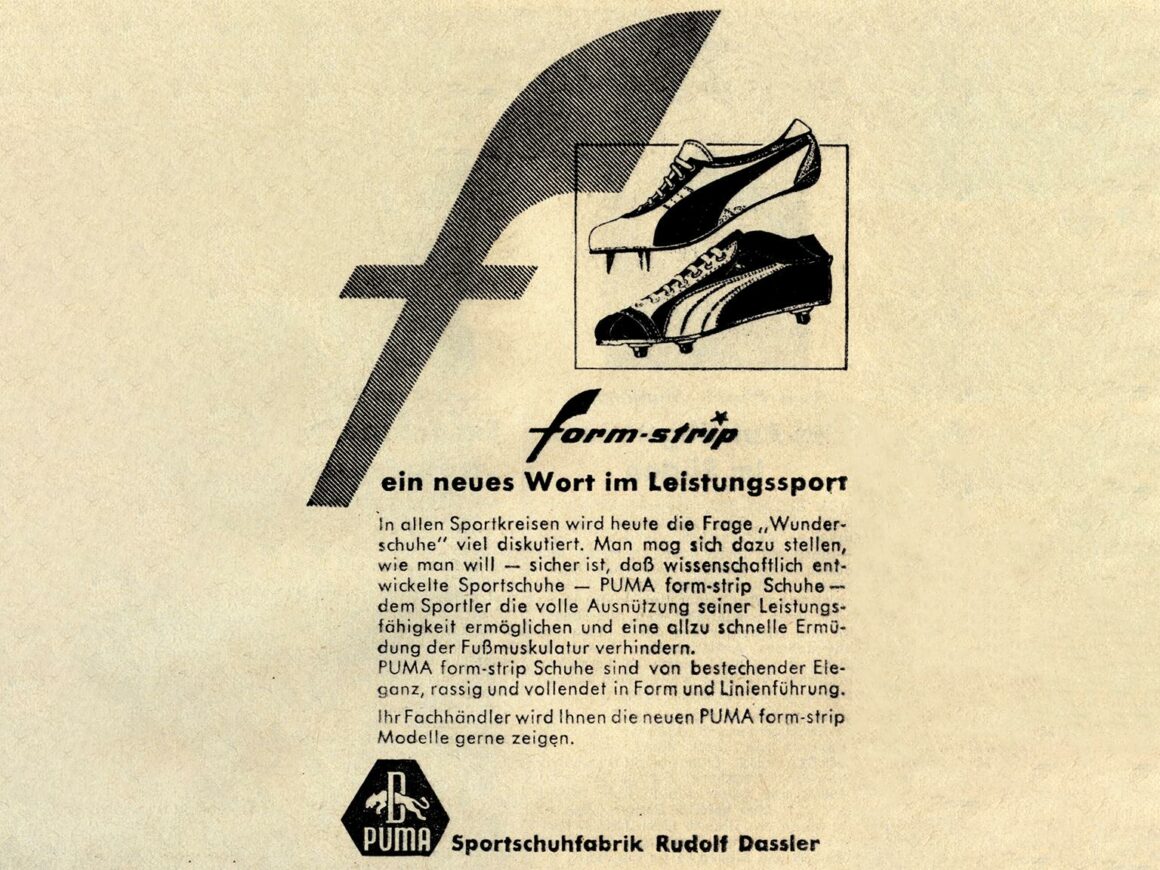
1958: the Formstrip is born
Formstrip is the name of the logo developed by Puma for its sports footwear. It initially had a stabilising function but soon also served to easily identify Puma footwear in action.
Puma King in soccer
Eusebio had won the Golden Ball in 1965, but he surprised the world a year later with his performance during the World Cup, a tournament in which he was the top scorer. Until then, Eusebio played with the Puma Wembley with very firm studs and for the World Cup, he asked the designers for a softer model which would adapt to his game. The result was the Puma King Eusebio, a model with non-slip nylon studs and a new, more flexible construction, which hit the market in 1968. It was the origin of a saga, Puma King, which was also used by other of the best players in history.
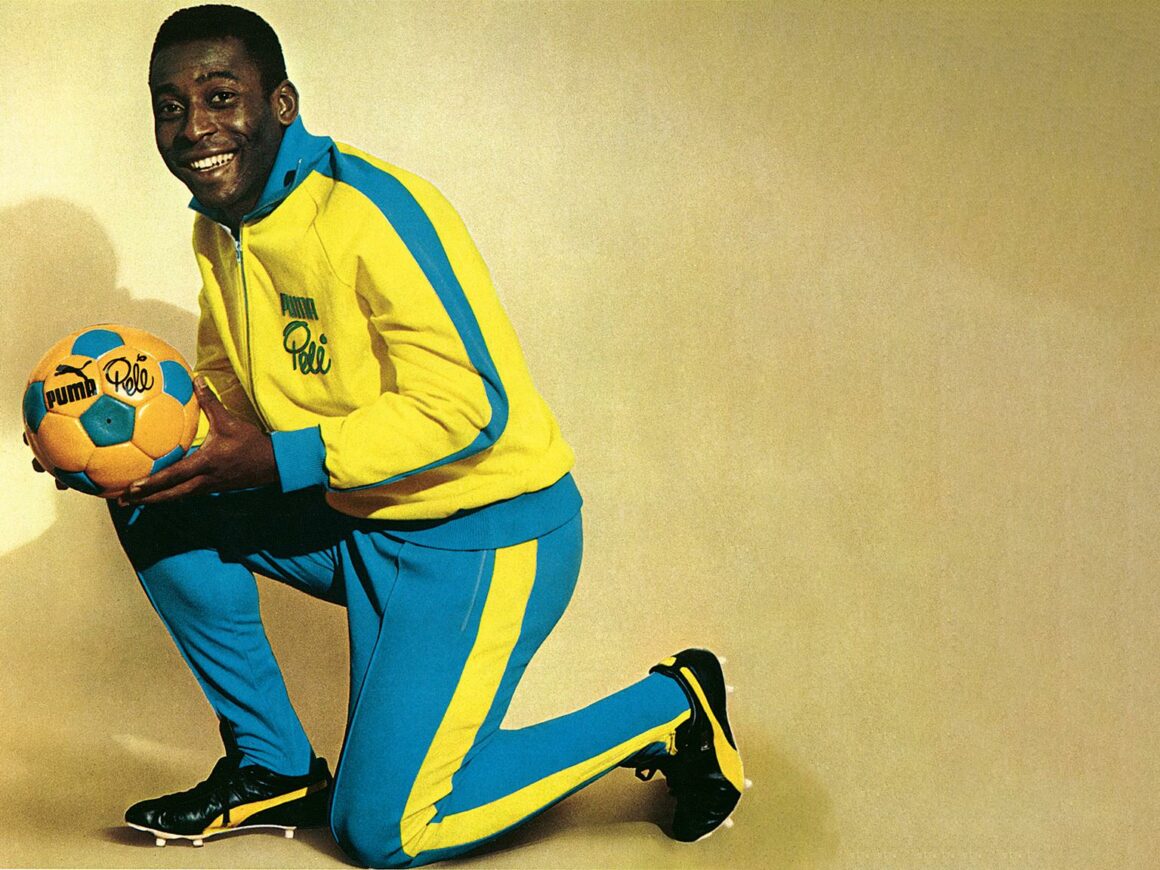
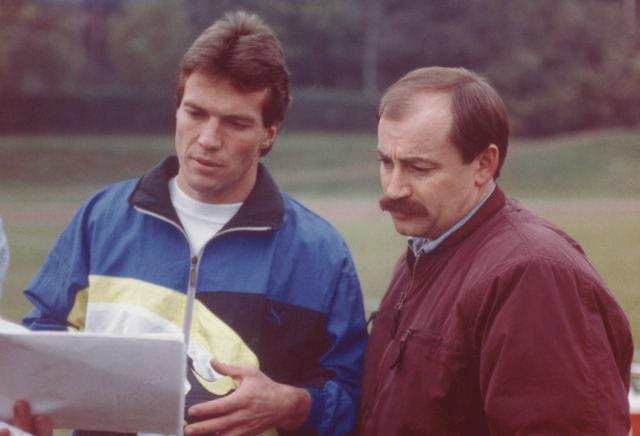
In 1970, the new star of world soccer, Pelé, debuted the new version of the Puma King, lighter and with a new structure. Four years later it was Johan Cruyff who signed with Puma to wear his King. His alliance with the brand is remembered for his refusal to wear jerseys with three stripes; in the 1974 World Cup he played with a version created expressly for him, with two stripes. In 1986, the best was Diego Armando Maradona, and the so-called Goal of the Century against England also bore the signature of the Puma King. In 1990, the top star of the champion, Germany, was Lothar Matthaus, who had a more intense relationship with Puma. His first team had been FC Herzogenaurach, which wore Puma clothing and shoes, and he had grown up on the doorstep of the brand’s offices. His father was one of the facility managers.
In 1998 the Puma King took an unexpected step. Designer Jil Sander used the Puma King as a base to create a hybrid alongside another legend, the Puma Easy Rider. That collaboration between Puma and Jil Sander is considered the creator of a trend that today is commonplace, the alliances between sport and fashion.
Puma Clyde, Puma Suede
The Puma Crack of 1968 was a training model that Puma handed out to its athletes during the 1968 Mexico Olympics. It was the shoe worn by John Carlos and Tommie Smith as they were about to collect their medals in one of the most memorable ceremonies in history. Carlos and Smith protested, fist raised, against discrimination in the United States and were automatically disqualified. Unwittingly, the Puma Crack went down in history. And it continued to do so when Puma changed the midsole for one more suitable for playing basketball.

Thus was born the Puma Suede, a reference to the new material of the Puma Crack. The use of nubuk allowed the use of new colors.
When basketball star Walt “Clyde” Frazier came to Puma, he also put his name on the new model. The Puma Clyde was, during the 1970s, synonymous with New York. From basketball, it caught on in hip hop, breakdancing and graffiti.
Puma Palermo Super Team Terrace
On the other side of the Atlantic, in the United Kingdom, soccer attracted a type of spectator loyal to their team that followed them in European competitions. Thus they were getting to know new models and brands not so popular in the local market. The Aesthetic Terrace of football fans made some of the silhouettes of Puma’s unexpected sports, badminton, tennis, handball… their own. Among them, some models that have returned on specific occasions to recover the legacy of an aesthetic, such as Puma Palermo, Puma Super Team or Puma Indoor.
Puma California, Puma Guillermo Vilas Special
The peculiar silhouette of the Puma California is a direct consequence of its manufacturing process, a system called “California” that was developed in the United States during the Civil War due to the impossibility of using other methods. Puma recovered the California system in the Puma California. A play on words that would still have one more step.

During the second part of the seventies, tennis player Guillermo Vilas stood out for his game and his style. Puma renamed the California as the GV Special and turned it into a myth of the Terrace culture, soccer fans in love with the tennis style.
Puma Slipstream
Puma attempted to recreate the success of the Puma Clyde in the 1980s with a collection featuring Ralph Sampson, but injuries cut short the center’s career, and Puma responded with the Slipstream. Originally released in 1987, it arrived just as basketball shoes were starting to get a new life on the streets. The profusion of colorways and editions made it an essential model of the late eighties.
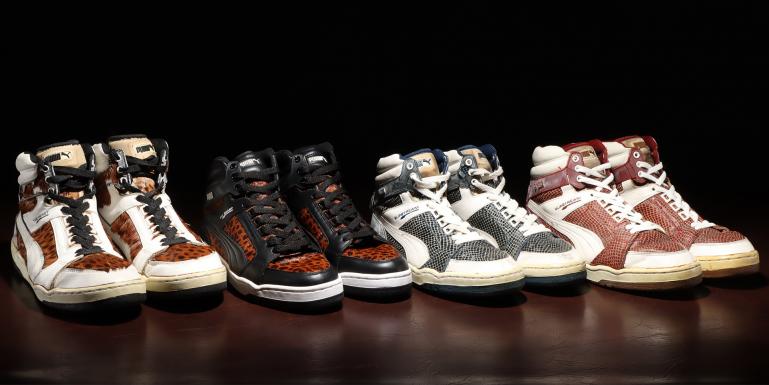
In the 2000s, the Puma Slipstream entered the reissue wheel and became a hit in Japan thanks to its special editions and The Beast, a version with animal prints.
Puma TRINOMIC
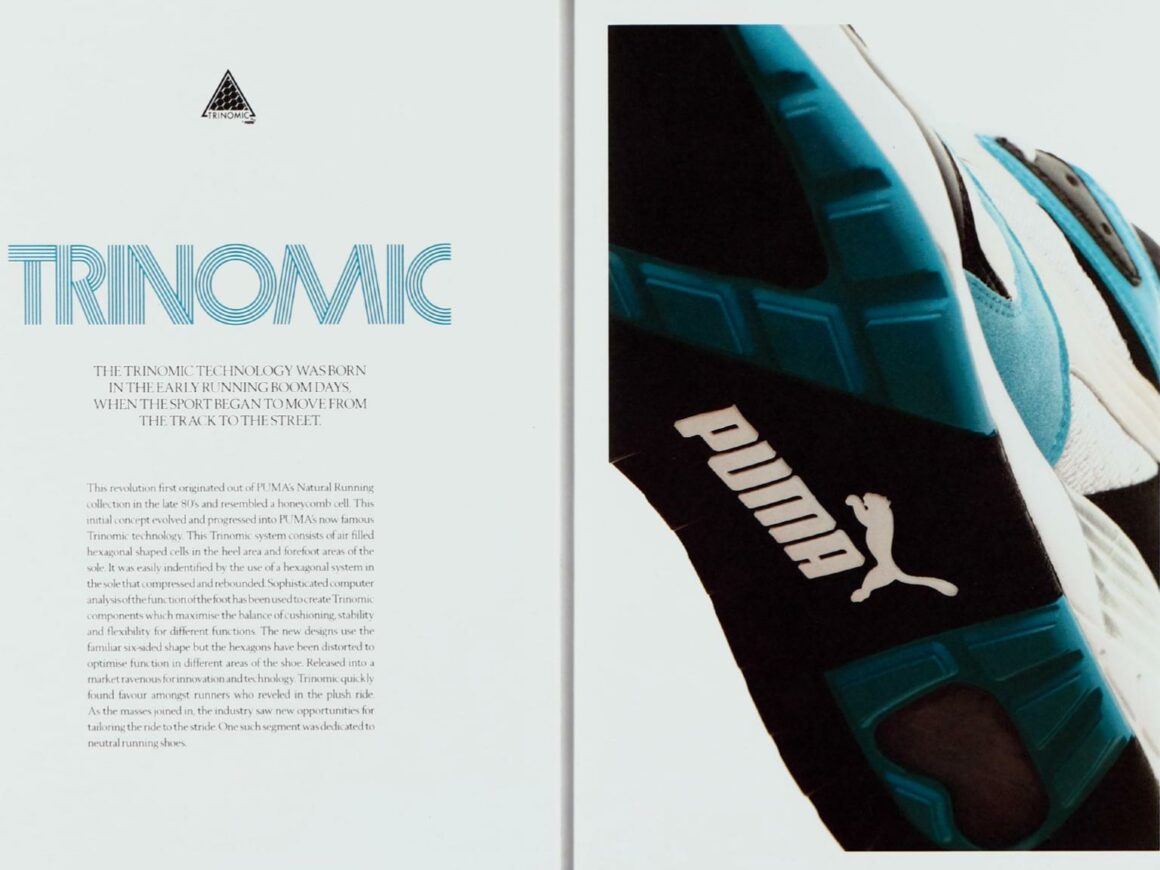
In 1990, Puma introduced a new cushion system, TRINOMIC, consisting of hexagonal panels that used energy from each step. The TRINOMIC system was inspired by the panel structure that bees use in their hives, and it provided the ideal balance of cushioning, stability, and flexibility. It appeared in running, basketball, training, tennis and soccer models, and its triangular logo became a guarantee of innovation.
Puma DISC
The TRINOMIC cushioning system received a curious traveling companion in 1991, Puma DISC, a system that allowed a perfect fit without laces. Puma DISC consisted of a disc located in the instep connected to stabilizing elements and a compression unit. By rotating the disc you could get a perfect fit (as well as giving it a striking image).

Initially created for running shoes, it gradually appeared in tennis, basketball (Puma DISC Weapon) and track and field models.
Puma Easy Rider
Originally, the Puma Rider was created as a model for trail running, for which Armin Dassler, son of founder Rudolf, developed the so-called Federbein sole, a series of lugs that facilitated cushioning on any terrain. The Rider saga consisted of three models: Puma Fast Rider, Puma Lite Rider, and Puma Track Ride. During the 1990s, it resurfaced as a model admired by the fashion industry.
Puma Speedcat
Puma’s relationship with motorsports dates back to the 80s, when it developed footwear for driver Stefan Bellof. However, it was in 1999 when some of the ideas created for the F1 teams reached the streets. The Puma Speedcat was inspired by the models created for the drivers: a silhouette very close to the foot, a very low profile and close to the ground and of course, a multitude of colors.
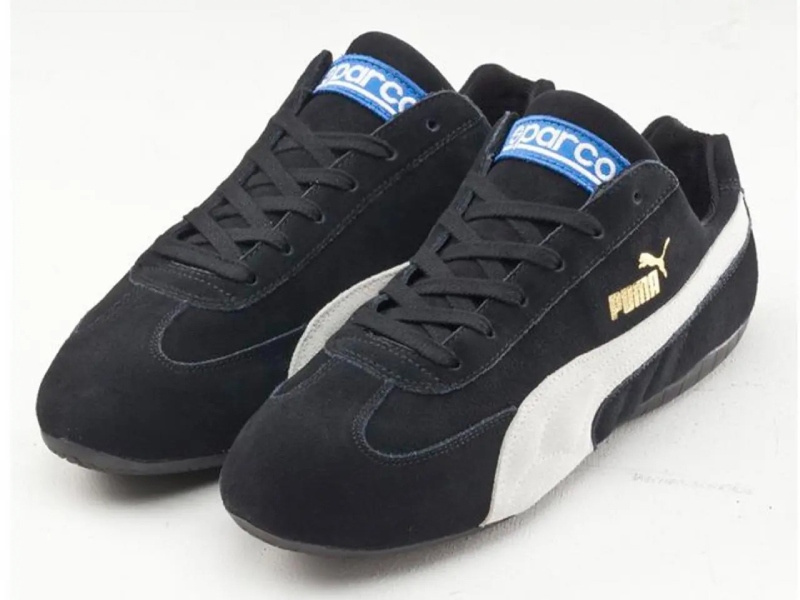
The Puma Speedcat was born on the racetracks, but created a culture and an aesthetic of its own in the cities to become a style reference during the 00s.
Puma Mostro
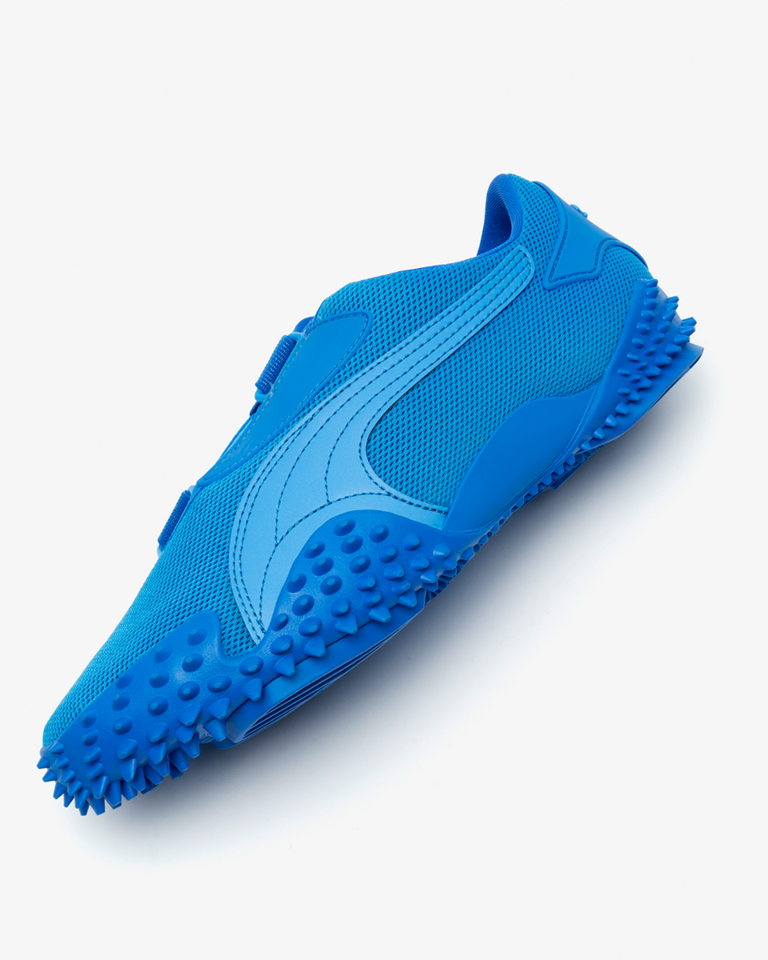
Speed has always been one of the essential characteristics of Puma. Armin Hary, Tommie Smith, Linford Christie or Usain Bolt have tested the brand’s fastest shoes. From spike shoes and with ideas related to surfing, Puma developed in 1999 a shoe unlike anything else; the Puma Mostro. Its style was perfect for a turn of the millennium that advanced new ideas. Its strange forms were first adopted by musicians like Madonna or Björk, but its leap to the masses was immediate.
Puma Blaze of Glory
Created in 2008 from the great creation of the 90s, the TRINOMIC system and with design ideas from the DISC system, the Puma Blaze of Glory marked Puma’s entry into a new era, that of collaborations and limited editions, where the Puma Blaze of Glory reigned thanks to partnerships with Sneaker Freaker, Alife, Jeff Staple or Ronnie Fieg.
Puma Fenty and other collaborations
In the history of Puma there are numerous partnerships with musicians and artists, although none with the success of the Puma Fenty collaboration with Rihanna. A curious mix of models taken from the archive of the Puma brand and new ideas coming from the aesthetic universe of Riri. An explosion that had in the Puma x Fenty Creeper its greatest reference.
La historia de las colaboraciones de Puma, que comenzó con Jil Sander en los noventa, ha evolucionado con trabajos junto a Ottolinger, Coperni, Skepta, Palomo Spain, Pleasures, Balmain, A$AP Rocky, Ronnie Fieg, Noah o Ferrari.
FOOTDISTRICT selects the best Puma references to incorporate it into a neat catalog featuring some of the brand’s historical silhouettes and new ideas.