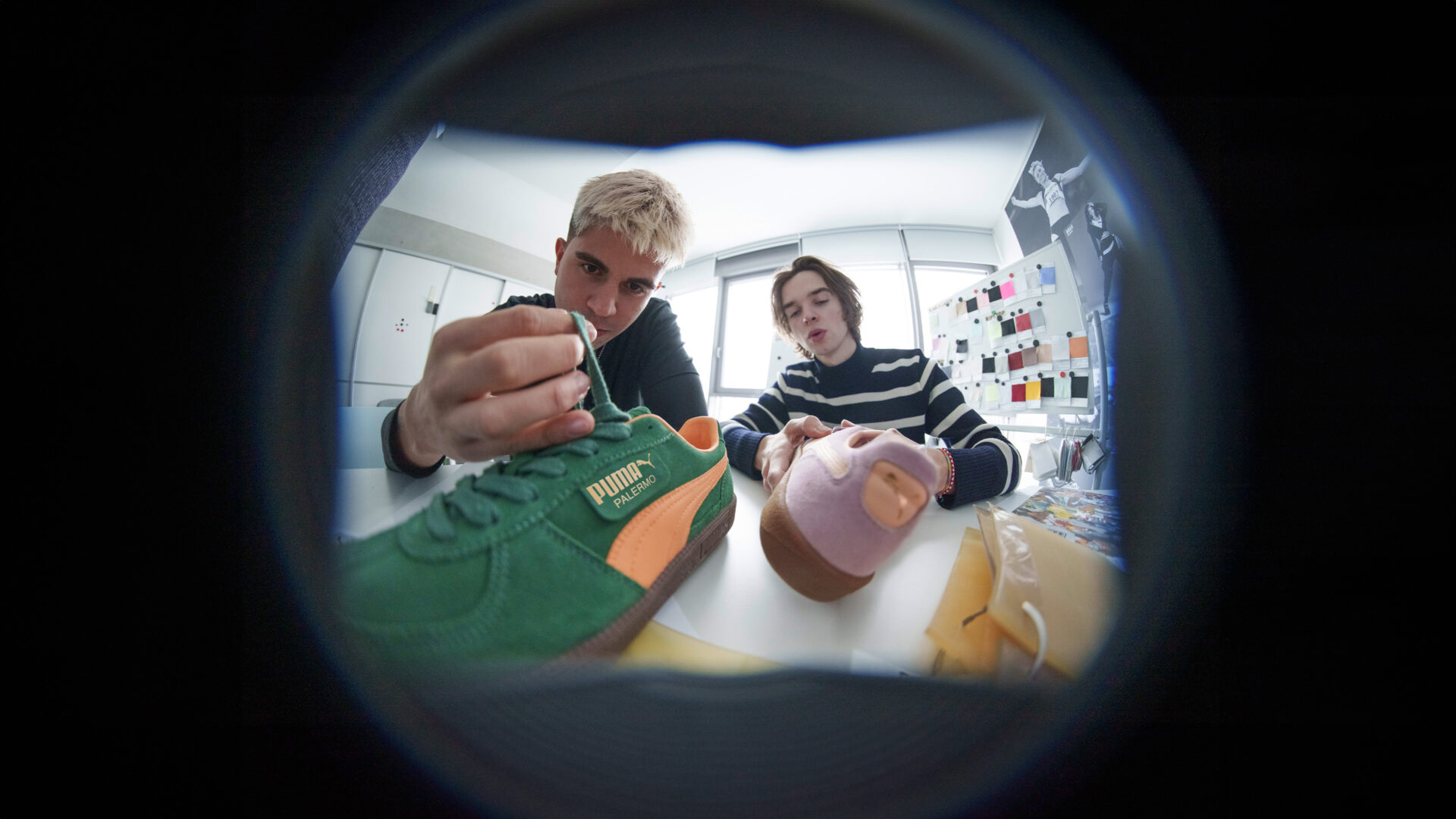
Thanks to its updated twists, minimalist lines, and relatable stories, the Puma Palermo has resurfaced as a popular trend, owing to its association with the Terrrace aesthetic.
Finding their beginnings and development leads us to the work of two designers, Pablo Garza and Milo Fitzsimons, who transformed the Puma Palermo into a contemporary model by experimenting with different materials, colors, and styles. Join us for a talk on the origins, trends and future of design.
Would you please introduce yourselves? What motivates you to pursue a career in shoe design? What is your role at Puma?
MF: Hi, my name is Milo Fitzsimons, Colour & Materials Designer for PUMA Sportstyle Footwear. I studied as an Industrial Designer at university and managed to join PUMA as an intern as part of my placement year abroad. From there, I fell in love with the process of storytelling through materials in footwear. The fast-paced nature of the industry is challenging but extremely rewarding.
The biggest part of my role is refreshing the Unisex range every season, coming up with stories and executions to bring new life to existing PUMA models.
PG: My name is Pablo Garza, I am a junior colors and materials designer. I am originally from Mexico but have grown up in the US. I have recently graduated from University where I studied industrial design. I have always been surrounded by streetwear and have been fascinated by footwear culture and different brand’s archives. I joined puma as an intern and have been lucky enough to be surrounded by such inspiring people.
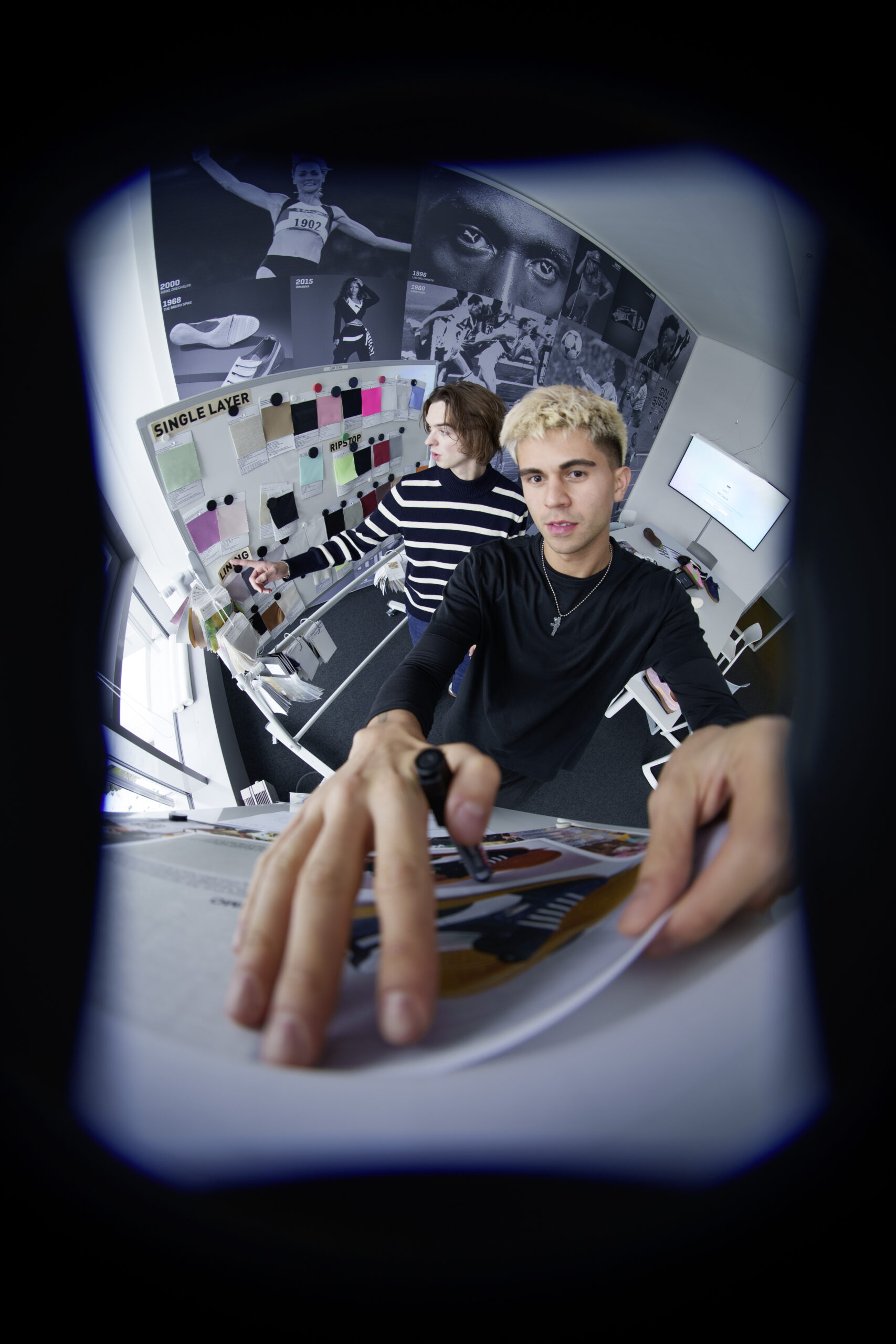
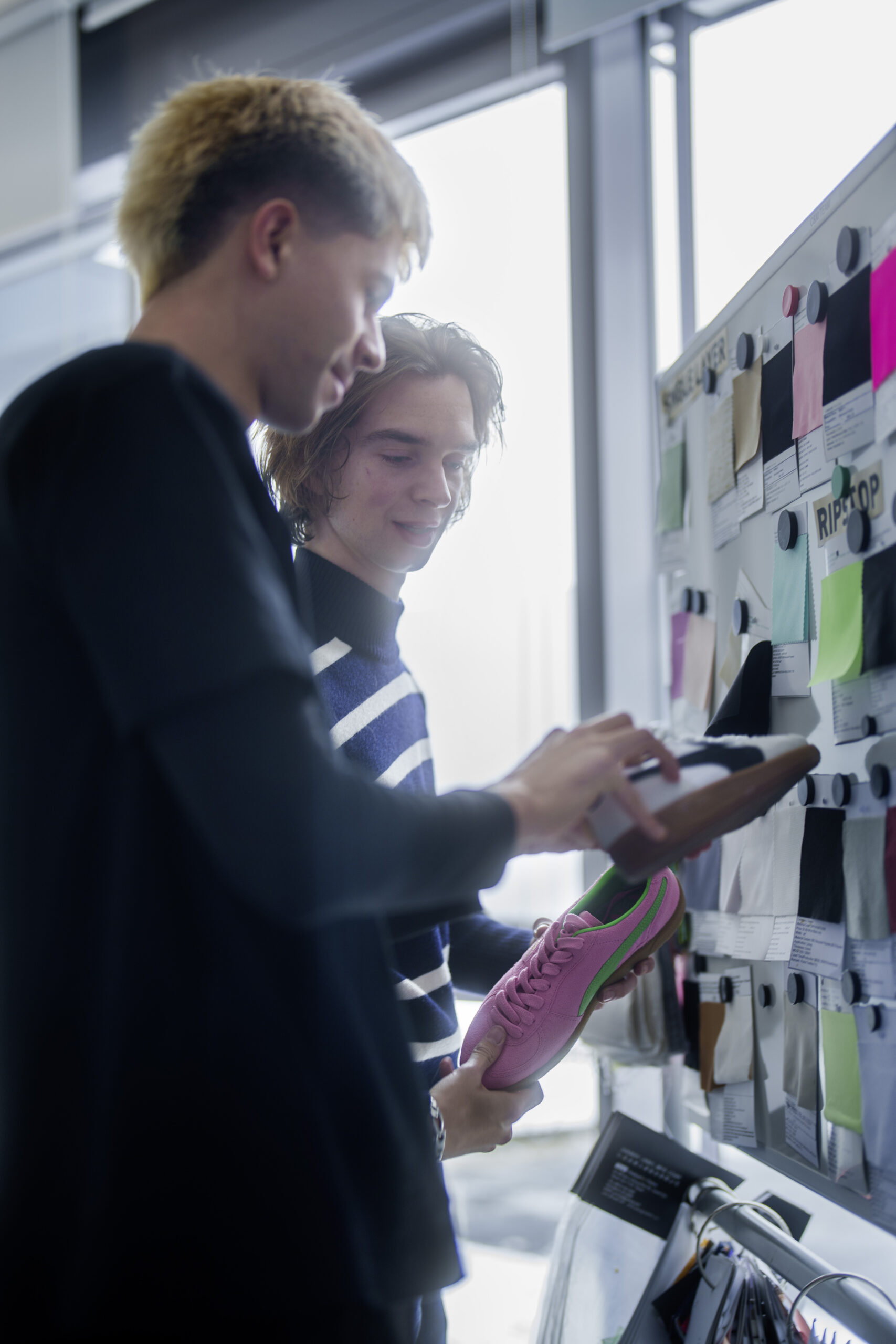
Puma’s archive has a wealth of historical stuff. Why did Puma choose the Palermo?
MF: After it was successfully launched a couple of years ago through a limited activation, it made sense to bring it back on a wider scale as it is such great canvas to explore bold colour executions through an archive, terrace lens.
PG: We wanted to explore the future of terrace. The Palermo has a rich history and interesting details that advance the “german army trainer” silhouette.
How does the process of reissuing a shoe begin? Where does your work begin in this process?
MF: The usual process involves studying the archive reference shoe- either through old catalogue pictures, second-hand listings or finding the physical shoe itself in the PUMA Archive. We try to stay as faithful as we can to the original, preserving the unique qualities of each archive shoe. However, we try to modernise our reissues in some ways, improving comfort and fit where it’s needed. Reissuing requires a lot of back-and-forth sampling, making sure our ‘new’ version is as close to the original as possible.
If I ask you what your favourite sneaker is right now, I am sure it is the Puma Palermo, so I will skip the question. I would like to know if you have a favourite detail on the Puma Palermo.
MF: I would have to say the over-sized logo flap on the quarter of the shoe. The placement and size are kind of unique to the model and give it character.
PG: I think the full suede on this one makes the design cohesive and give it that timeless effect. Light but excessive.

What was the main challenge you faced in reissuing the Puma Palermo?
PG: The biggest challenge was making tweaks to make the vision more appealing to the younger consumer. Truly looking at what the shoe could look like in terms of creative direction and consumer appeal.
You both come from very different contexts (geographically or chronologically) than the one that popularised the Puma Palermo in the 1980s. How do you believe your vision will help to further the story of the Puma Palermo?
MF: Good question! I feel like the PUMA Palermo has two sides, and one of them is its origin as a terrace classic. So I feel like coming from the UK, we have that understanding of terrace culture and the footwear that comes along with that.
PB: I believe bringing a younger aspect to the model and truly looking at the gen-z consumer allowed for a new appeal to the silhouette.
The design of the Puma Palermo is linked not only to the Terrace movement, but also to historical training models and even the German Army Trainer. In this sense, it is a model that perfectly explains Puma’s design language. How would you define this design language?
PG: I believe the design language speaks to the true archive minimalist consumer. That is why reimagining in a new light has allowed for something that is progressive yet timeless, truly bringing everything into harmony.
How important is the cultural story associated with the shoe, and how do you incorporate it into the design?
MF: It’s very important. Storytelling is a massive part of the design process, as it helps to make the shoe feel authentic. If the story, colours and materials don’t match the vibe and history of the shoe, sometimes it can feel disjointed and ‘fake’. It’s especially important when the model is brought back from the archive.
PG: I believe cultural association to la dolce vita and Italy has allowed Palermo to take a lane of its own in comparison to other competitors. Collaborations with Palermo Football Club allow for the model to really tap into italian culture and give the shoe true nostalgia.

What goes into the selection of materials and colors for a model such as the Puma Palermo?
MF: Defining a persona or ‘character’ for each model helps to inform the aesthetic of the franchise. For the Palermo, it’s about tapping into ‘La Dolce Vita’, the good life. We wanted the colours on the model to feel vibrant and expressive, and I think it’s translated well in conjunction with the promotional campaign for the Palermo.
Imagine: no budgets, would not be for sale, a single pair of Puma Palermo. What material would you choose to make that Puma Palermo that would be unique?
MF: I’m quite classic so something simple with a twist would suit me! Maybe a clean patent black pair with an all-over croc-embossed leather… maybe hand-stitched to make it extra special.
When designing a model from scratch, you can look for inspiration in elements far away from the footwear. Is the process the same for a reissue?
MF: For sure. When it comes to reissues, you can still be inspired by outside influences. There is so much to draw from, and a lot of my inspiration comes from old movie posters, vintage clothing and accessories. There are always tiny details that you can reference and incorporate to make sense in the footwear world.
PG: Yes, I believe looking into vintage advertisements and old terrace styling allows for different executions of the shoe. Looking directly at football jerseys and team colors allow for a deeper understanding of executions that would fit this vibe.
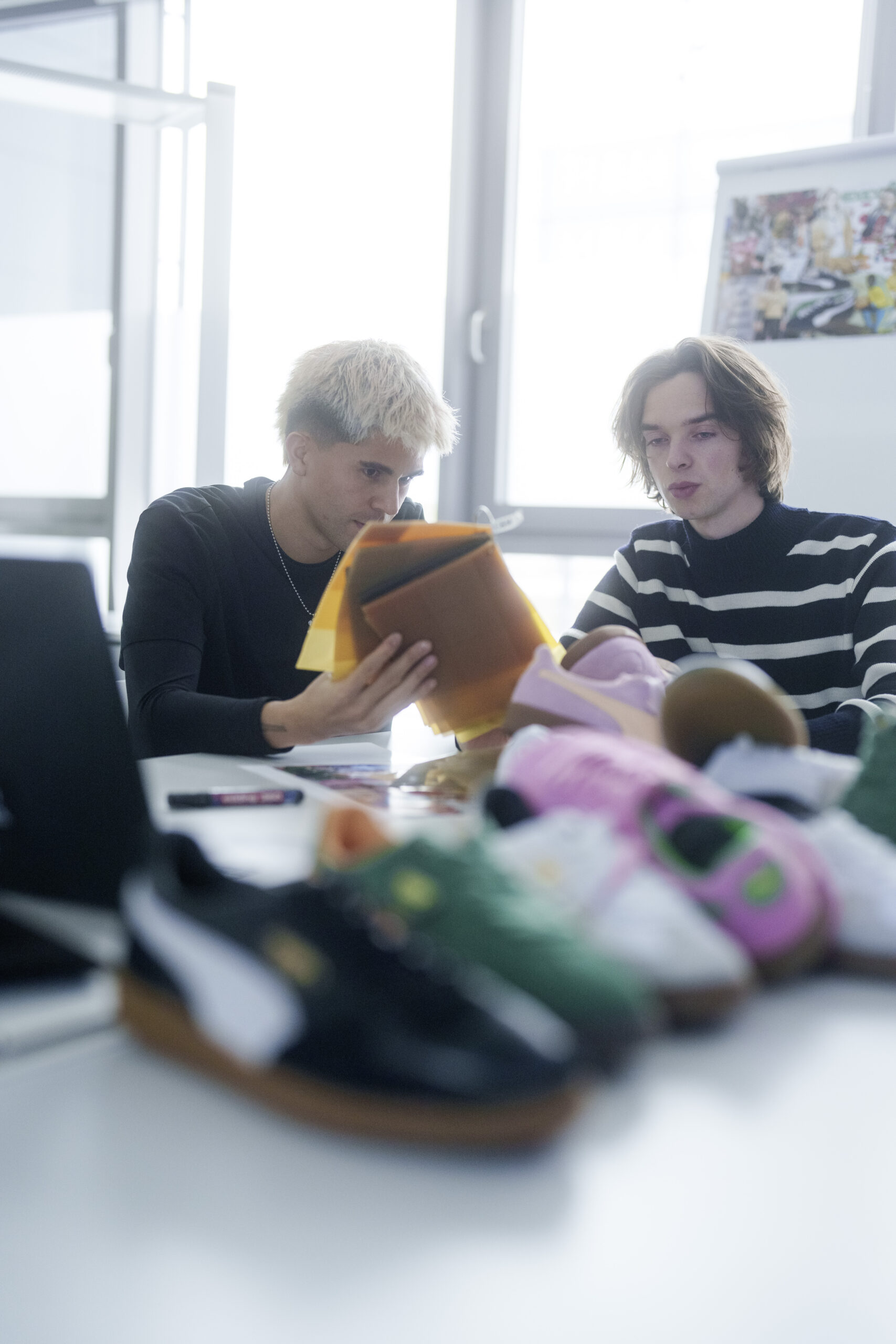
A design process can last months, whereas a trend can last weeks. How is it that the Puma Palermo has arrived at the right time?
MF: I think it’s a combination of research, experience and confidence. You could feel that the terrace trend was building slowly the past couple of years. Credit goes to our Product Line Managers for being decisive in deciding to bring back the shoe at the right time. Having said that, at PUMA we are always looking to bring back archive models, and I think that the PUMA Palermo is a classic that could stand on its own, whether ‘terrace’ was trending or not.
PG: Tamping into the archive while looking into the future allows for this to be a quality shoe that can stand the test of time. Although the bright terrace trend is reaching an all time high, the silhouette is truly timeless.
What do you think the future of footwear design will be?
MF: I feel like consumers are becoming more and more selective in their purchases. In response I feel like new sneaker releases need to feel more and more authentic and considered. Attention to detail is integral and I believe that consumers increasingly recognise these small details and references in the shoes they are buying.
PG: I believe the future of footwear will be using new technologies to further the design process. 3d printing and Ai will allow for progressive silhouettes that are more sustainable pushing technology and allowing for circular design.
The Puma Palermo in a variety of colours and limited editions are available at FOOTDISTRICT.