Warning: Trying to access array offset on false in /var/www/blog.footdistrict.com/wp-content/plugins/fusion-builder/inc/lib/inc/class-fusion-images.php on line 219
Warning: Trying to access array offset on false in /var/www/blog.footdistrict.com/wp-content/plugins/fusion-builder/inc/lib/inc/class-fusion-images.php on line 219
We talk with the ASICS design team to uncover the story behind the new edition of the GT-2160.
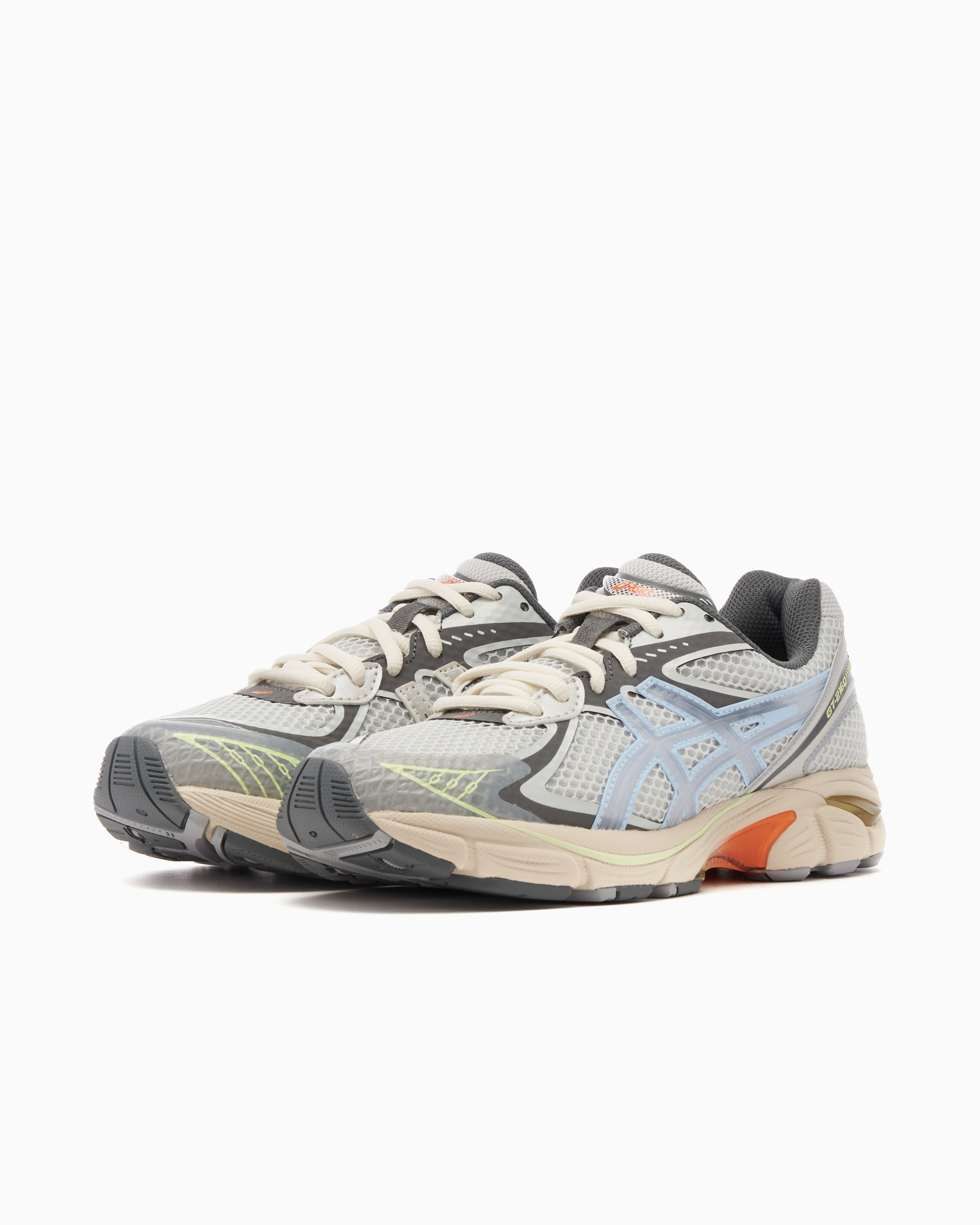
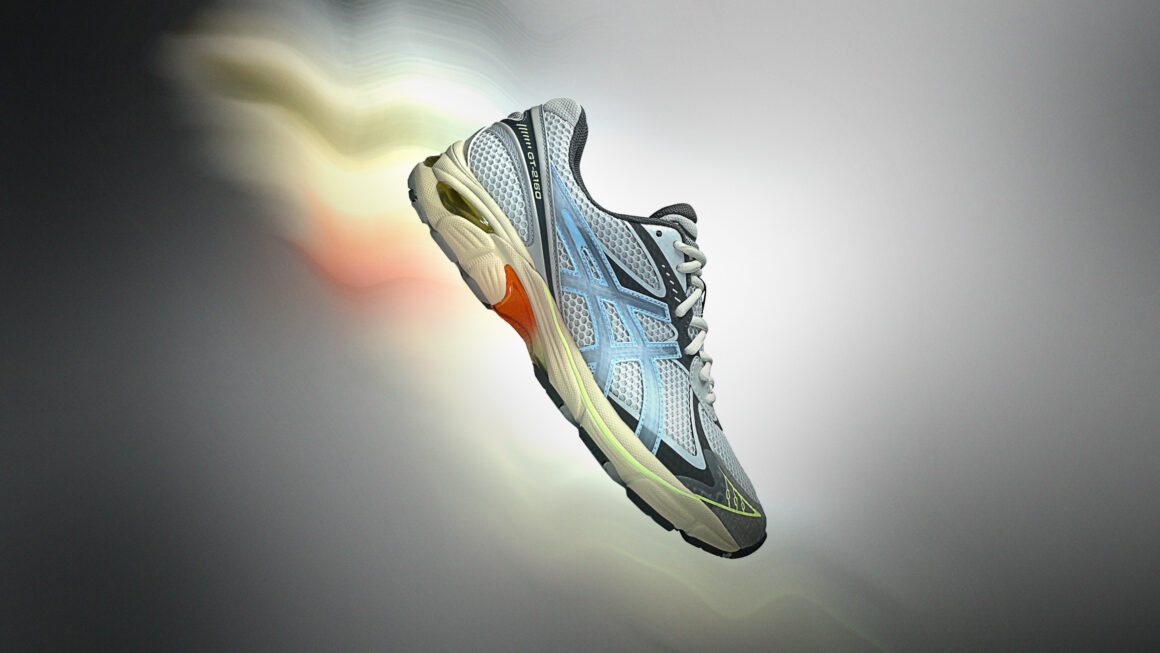
ASICS has surprised us with a new concept behind the GT-2160. Inspired by “Kogarashi”, a Japanese term that literally translates as “death of the trees”, it refers to the exact moment when you feel that the good weather is ending. A series of events that begin with the changing colors of the trees, the falling leaves, and a burst of cold air.
Although the GT-2160 TOMO SMU inspired by “Kogarashi” reveals a Japanese concept, beneath the layers of the shoe’s stories, there is one more idea related to its creation: the concept of participation. To achieve this, ASICS brought together nine of the top European stores that belong to its most innovative category, and invited them to work together in a workshop where they were asked to combine their ideas, resources, and their own cultures to create something new.
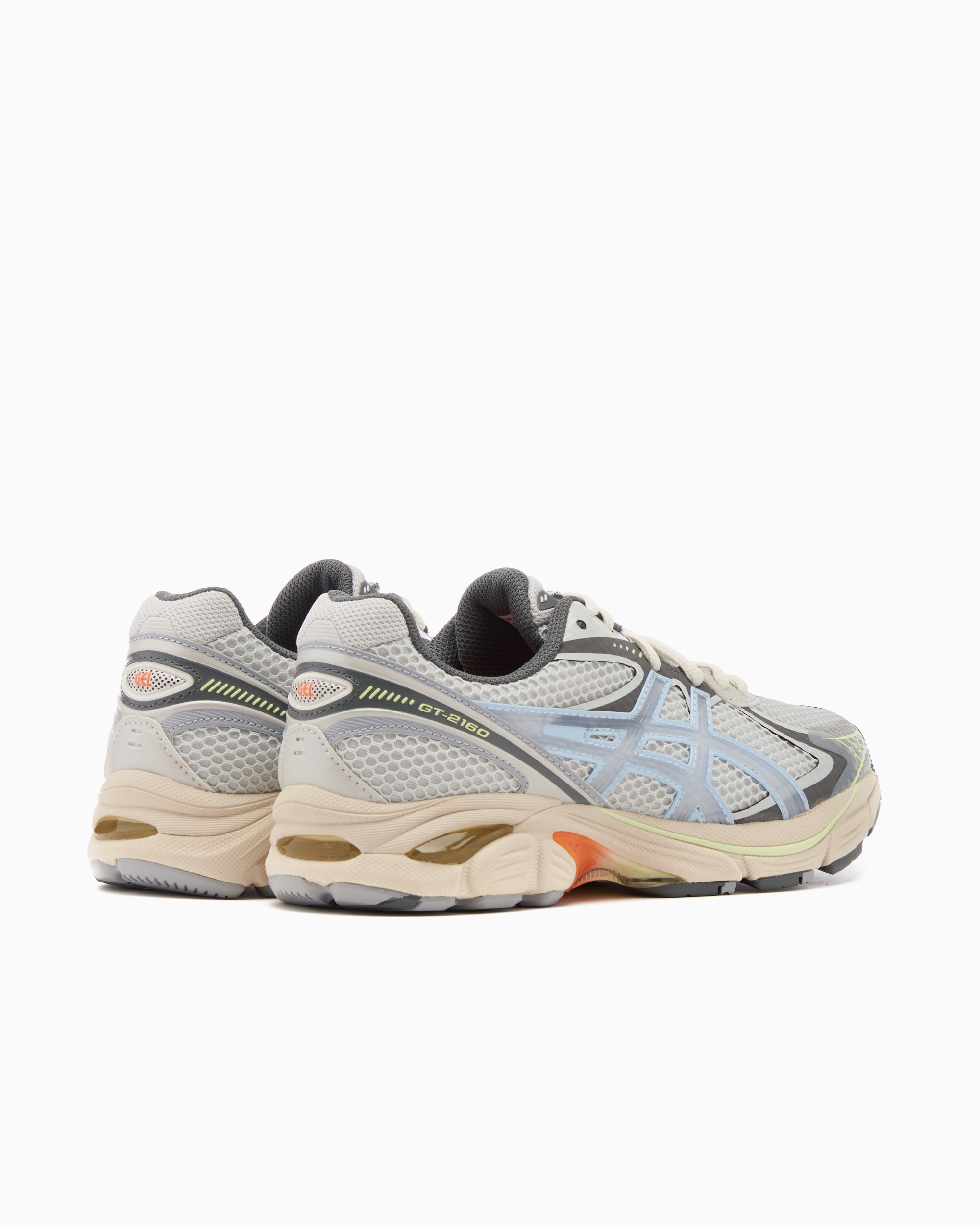
The process of creation, debate, and voting resulted in “Kogarashi”, a concept that united the European stores. ASICS then developed the GT-2160, a shoe that uses the language of the GT-2000 series.
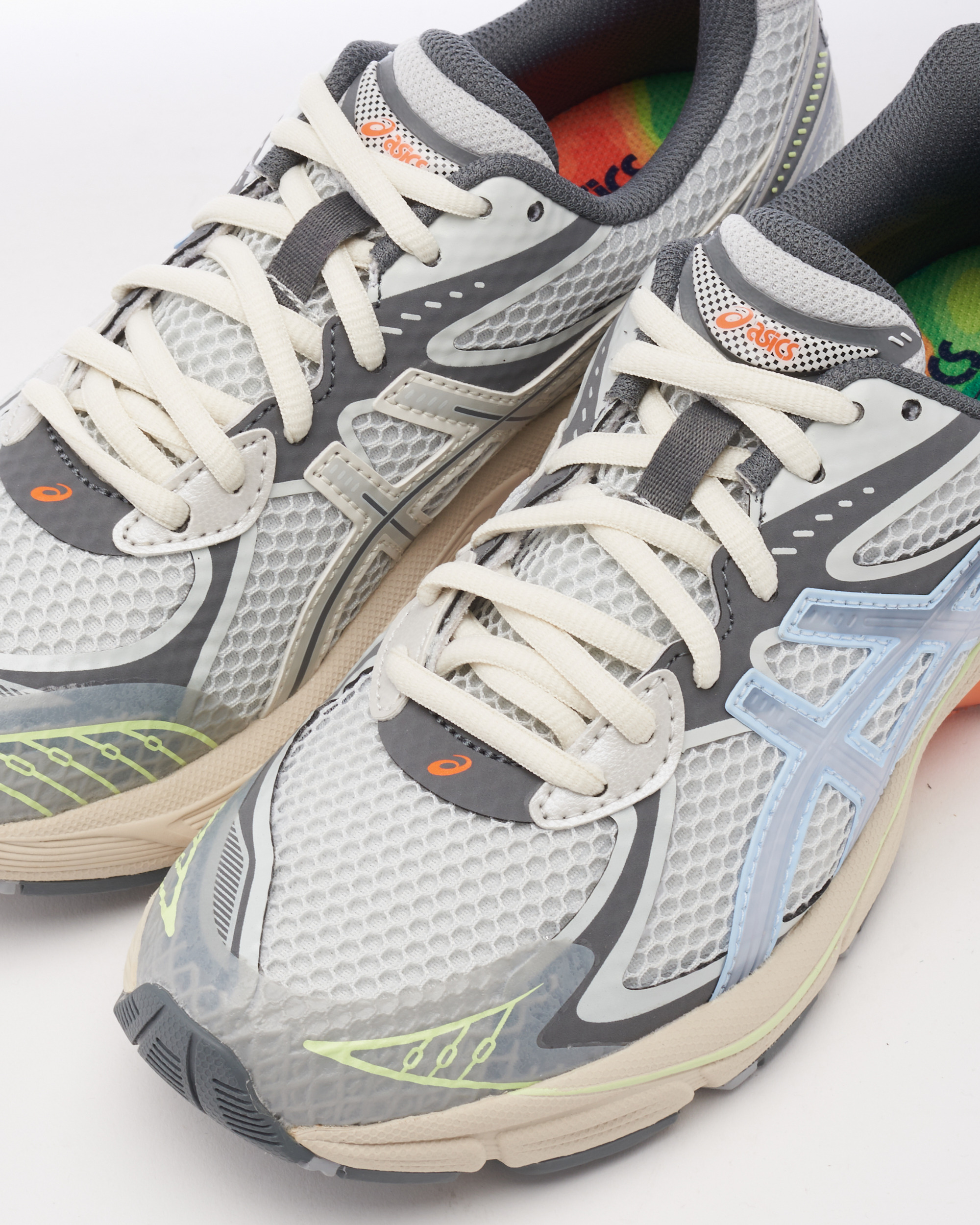
This idea is reflected in the choice of the color palette, with icy tones overlaid with warm hues, a concept that is amplified by the heat map on the insole.
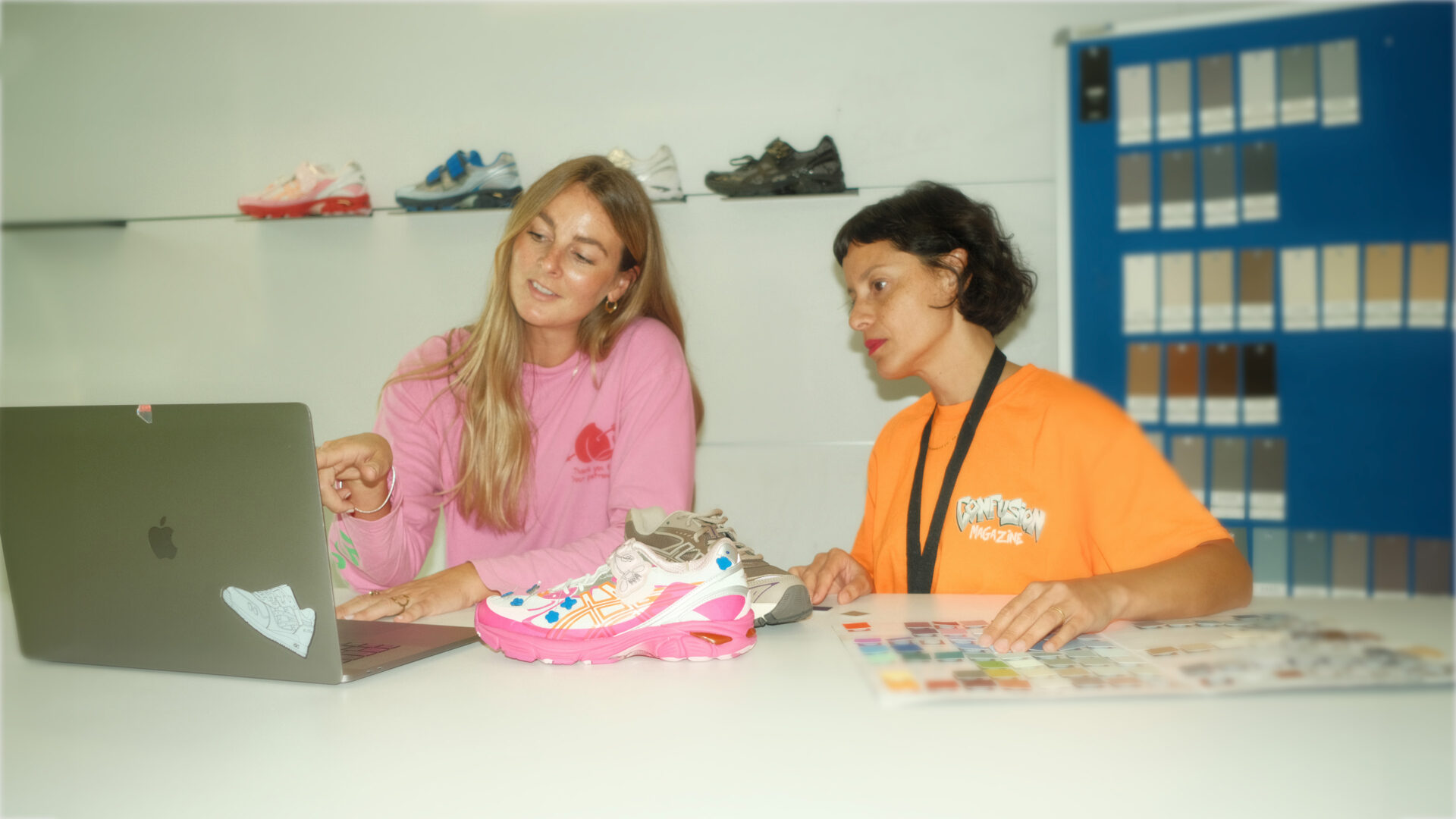
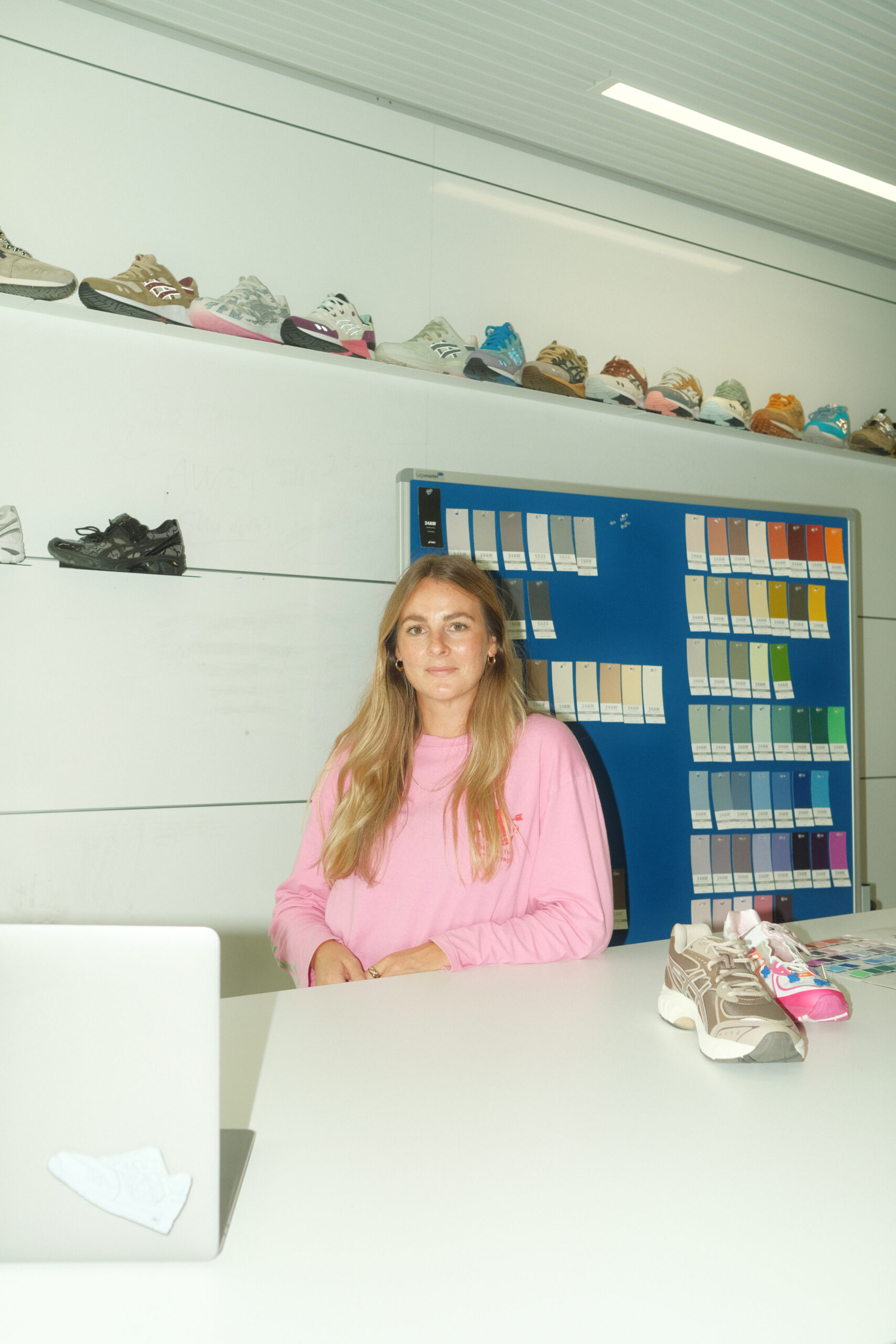
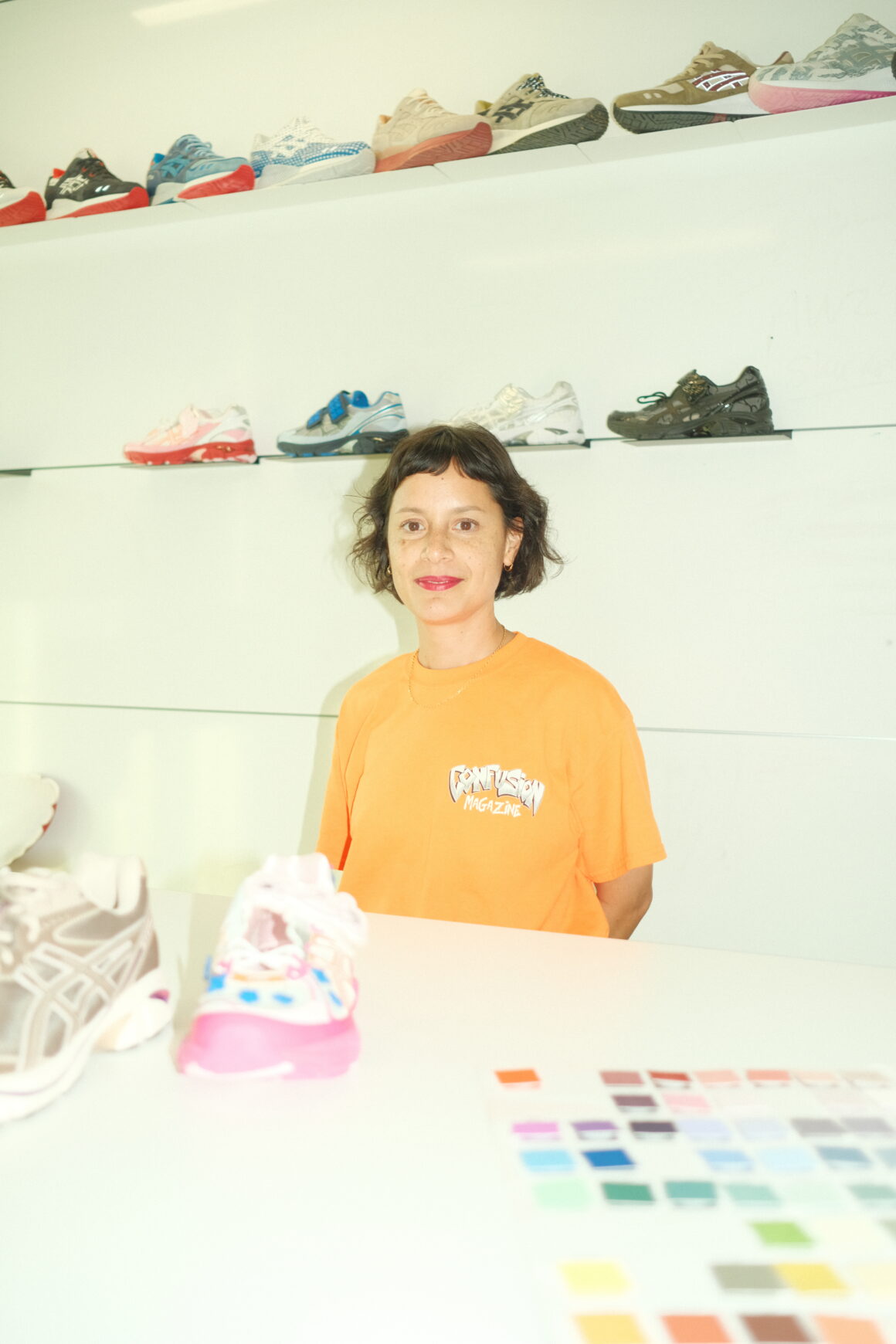
To learn more about the creation process of the ASICS GT-2160, we visited ASICS’ headquarters in Amsterdam, where we had an appointment with Arlette Schreurs -Senior Footwear Specialist at ASICS Sportstyle- and Masie Reid -Product Marketing Specialist at ASICS Sportstyle. We discussed ASICS, its history, its archives, collaborations… and, of course, “Kogarashi”.
We are more familiar with your work than we are with you, could you introduce yourself?
MR: Hi! I’m Maisie, I have been working on the ASICS Sportstyle product team in Europe for just over 4 years now. I live in Amsterdam, where we have the European headquarters, and we build the assortment for our region. I also work closely with Arlette our design & developer on the European collaboration and SMU projects.
AS: I’m Arlette, Senior Footwear Specialist at ASICS EMEA, responsible for design and development of Collaborations and SMU’s. This year marked my 16th year at ASICS, a company that has kept me fascinated in its brands, people, and culture. But first and foremost, I’m a proud mother of two incredible kids. Perfect collaboration with my husband Mick, if you’d ask me.
We often say that great designs “come to us as a surprise,” an insight that appears anywhere and solves a problem. Should we still believe these stories, or are they more the result of research and lab work?
AS: A great design might be different for everyone. For some it might be something conceptual and not so much functional. Pieces of art to look at. For others a great design depends on whether it will, as you say, solve a problem. At ASICS, we look at functionality and comfort with the objective to facilitate you in your sports or day-to-day activities. Our brand is founded with the philosophy of a Sound Mind in a Sound Body; therefore, our products should function as such. So yes, in our case we do our research and lab work, we evolve our technologies, discover newness and incorporate that into design.
How do we know when we are seeing a good design?
AS: How design is perceived depends on who’s looking and what they’re looking for. Sometimes a design is good when it sells, sometimes it’s good when it functions without distractions. For me, it’s when I feel an emotion and when I’m intrigued.
How important is storytelling for a shoe?
MR: Story-telling is really important for us as it helps us to stay authentic and credible in the industry. We really value meaningful products and activations which allow us to connect with our consumers, rather than chasing trends.
AS: Our shoes come with a legacy, so our storytelling is authentic and not fabricated. This is why I love working for ASICS.
The time it takes from the initial concept to the time the shoe actually gets into shelves can vary from weeks to months. How does one go about creating a product for a future consumer?
MR: It takes a long time! We typically work 1-2 years in advance and are juggling several seasons at once.
When it comes to creating product, at ASICS we have a rich archive of product which has function and technology at the core. This is something we always utilize for new bring-backs and creations. We want to ensure we offer our consumer the highest level of comfort through a style relevant lense.
AS: With collaborations, we use our existing designs as the base for new product. Together with our collaboration partner, we brainstorm to find shared values on which we build a concept. We work closely and dedicated together to create a unique product which will resonate with our future consumer.
ASICS is known for its easy to recognise designs; how would you define ASICS’ design language?
AS: In a way it’s somewhat tech-nerdy because functionality and comfort are the key ingredients. These key features, innovation and high quality standards are part of our design DNA.
ASICS was founded in Japan at a time when the country itself was not playing a key role in the fashion world, as it does today. How far has Japan’s influence in ASICS gotten?
AS: We weren’t founded to hit a fashion trend. ASICS was founded out of the ideology to motivate the minds of Japanese people after the WWII through sports and movement. Sound Mind in a Sound Body has been the core of our company ever since. There are no Japanese influences. ASICS was founded in Kobe, west side of Japan. Characteristics such as attention to detail and the “Kaizen” mentality are at the heart of what we do.
MR: There are many Japanese philosophies that we apply to our ways of working. For example Kaizen – a Japanese philosophy which means ‘’continuous improvement’’. We refer to this in terms of developing new products which use the latest and greatest technology; continually improving the quality.
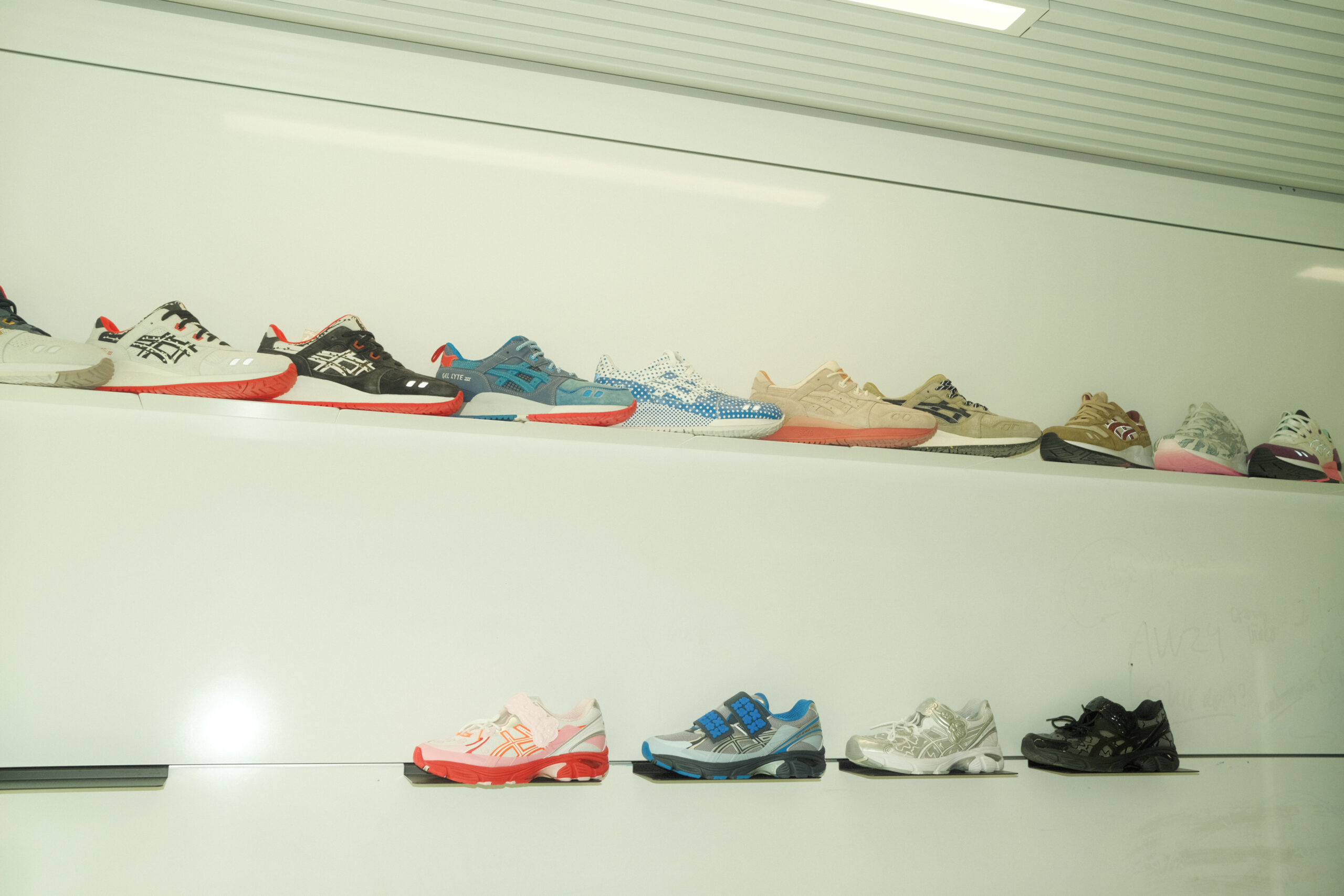
ASICS has created products for a wide range of activities, including tug of war, space walks, and sports that we would not usually associate with the ASICS name. Are archives a source of inspiration?
AS: Definitely. There are so many amazing details to look at within every year since we were founded. What I think is most interesting is that all of those details were functional. Take our “Tiger Stripes” (our logos on the sides). Those were there to offer extra stability to the midfoot.
What do collaborations offer today?
MR: I think collaborations allow us to have a unique point of view in the industry. Sneakers and collaborations are a saturated industry, so we are selective about our partners and ensure they have a meaningful impact and result.
How does a collaboration develop?
AS: It starts with conversations with a partner we feel matches with what ASICS stands for. If they feel the same, and once our product team decides which item we will work on, we plan a meeting at our office to work out concept ideas.
How do you select a partner / how does a collaboration develop?
MR: As a team we come up with ideas about what outside collaborators would make sense for our brand and our market. We also determine what kind of partner makes sense for a specific new product launch.
For example with Cecilie Bahnsen; we really wanted someone who could connect with our female consumer through a completely unique and special proposition that we haven’t done before. The GT-2160 was the perfect model as our 2000’s runner aesthetic has been trending really well for Her. Cecilie and her team created the most beautiful, feminine design which was extremely successful!
One particularly interesting case is that of the GT-2160 inspired by the term “Kogarashi”, which pushes the collaborative process to its limit. Could you tell us how the idea of collaborating with nine retailers in a single shoe came about?
AS: Alvaro and Krzys from our Marketing department came up with the idea of doing a workshop with multiple accounts. The first face-to-face meeting since covid. We brainstormed and landed on a collaboration of like-minded people in our field. Not competitors, because on this day, they were teammates striving to make the best concept and product possible. And they did just that.
MR: This was a really exciting opportunity to give even more love to our new AW23 product, the GT-2160. The 9 retailers involved came up with different design concepts to tell a unique story and take the original design to a new space through colour and materials. We love the idea of many different markets in Europe collaborating and bringing their own cultures and backgrounds together to create something unique.
Typically, collaborations produce editions that go far beyond the norm. Does this have any implications for design?
AS: Collaborations inspire me, because this forces me to look at designs through the eyes of “outsiders” and not through my ASICS lens. It stirs thing up, which is great for creativity.
Where will the future of design be headed?
AS: I don’t know. What I do know is that innovation never stops, people will always walk and design is a never ending story.
The GT-2160, the result of a collaboration between nine European shops, inspired by the term ‘Kogarashi’ and developed by our guests Arlette Schreurs and Masie Reid, are now available at FOOTDISTRICT.