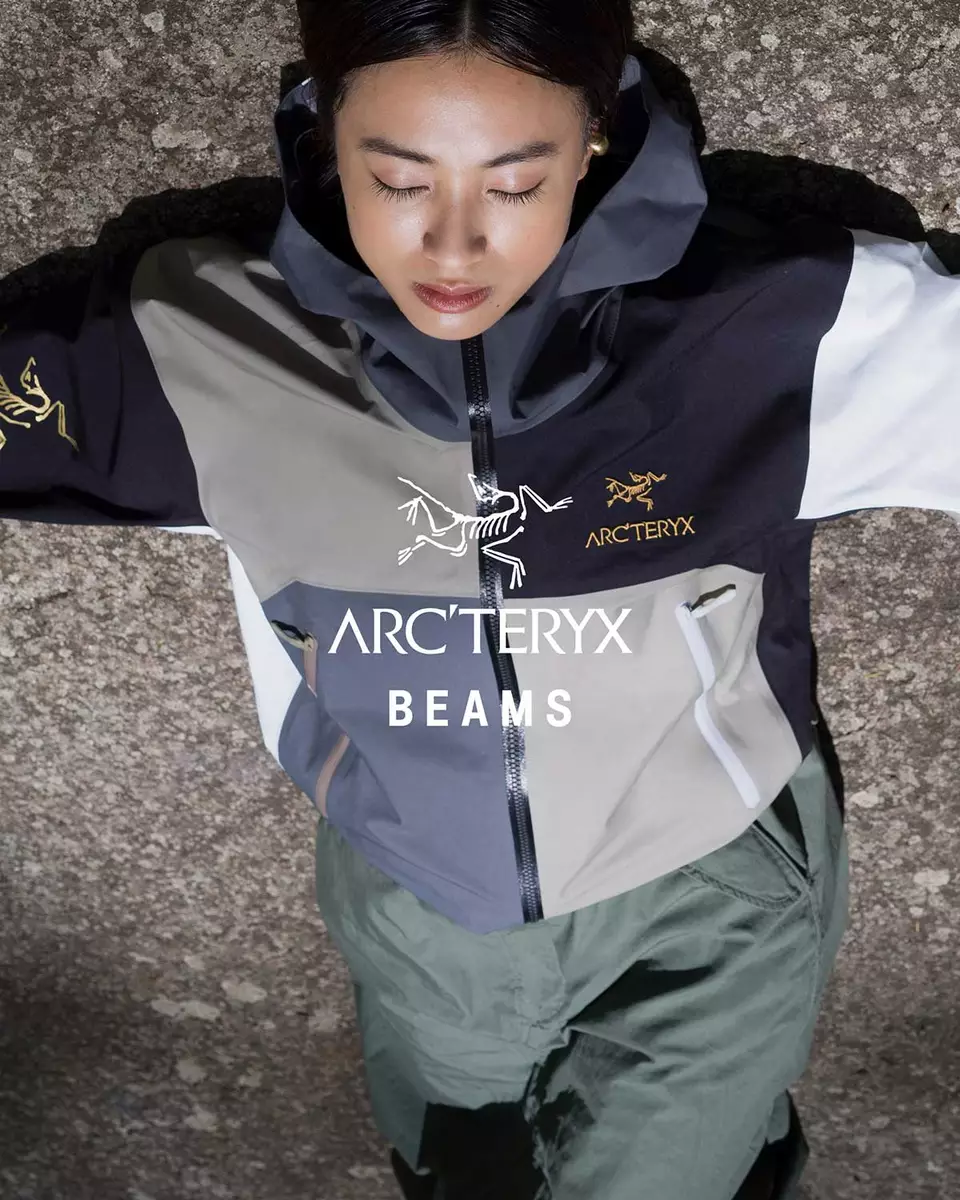
What connects a private equity worker, A$AP Rocky, young Japanese fans of strolling and shopping in Harajuku, and the new generation of fashion kids on Instagram? The answer is technical clothing. Let’s call it outdoorism, or under the term “recent” wedge-gorpcore. The reality is that the phenomenon of dressing with outdoor activity garments irrevocably leads us to a country: Japan. Let’s analyze the line that connects all these points.
From WWII to the Olympics
First, to understand the background of why technical clothing in Japan is quintessential and, at the same time, the spearhead influencing this trend worldwide, it is also necessary to understand the historical and socio-economic development of the nihon country in the 20th century. After World War II, Japan was immersed in a process of economic recovery and a certain openness to the world, also marked by the presence of American troops within its borders. As with the toy and electronics industries, Japanese fashion absorbed elements of Yankee culture, such as denim and traditional American style. These are swallowed with relish and assimilated into Japanese style to be regurgitated in a totally new way and sweep the rest of the world in the form of currents such as Japanese Americana (where names like Kensuke Ishizu, founder of VAN Clothing, would be capital).
Take Ivy meets Whole Earth Catalogue
The 1960s are years of change, transformation, and cultural exchange. In two directions. In the same way as the 1964 Tokyo Olympics or the international tour that brought The Beatles to Japan in 1966, Japan also began to go abroad. Thus, during a trip to the United States in 1969 to document young cultural currents, Yasuhiko Kobayashi and editor Jirō Ishikawa found a copy of the ‘Whole Earth Catalogue’ in New York. Halfway between a fanzine and a philosophical manifesto, this publication was a kind of countercultural memoir. Created by Stewart Brand and published for four years (between 1968 and 1972), this catalog included book reviews, information on currents of thought, details of products… All of it aimed at giving the keys and blueprints, sometimes literally, to live an alternative lifestyle. Its impact would be significant, influencing both design and product development trends. And also stylistically, since this meeting would inspire Kobayashi and Ishikawa to make a Japanese adaptation, called ‘Made in USA’ and launched in 1975, much more mundane and focused on the product, especially textile, made in the United States. The team in charge of this initiative would also be the one that would found the men’s fashion magazine Popeye, and that would lead to the catalog-bazaar style becoming predominant in Japanese fashion publications.

All these elements made fashion trends in Japan evolve from a position close to that marked by the Ivy League aesthetic (in which the preppy was almost omnipresent) to Heavy Duty (where technical and work clothes enjoyed greater weight). This is also logical, given that the social development after the war led to an expansion of the middle classes, which began to have more resources and free time available to devote to leisure and outdoor activities, such as mountaineering or camping. In addition, the climate of the country (very cold in the winter, very hot and humid in the summer) would condition the design of clothing.
The Birth of an industry
Cause or consequence, it is impossible to understand the unstoppable growth of the outdoor industry in Japan without mentioning the different brands that emerged at the dawn of the technical needs and that were and have been shaping Japanese fashion. Today, they are also references: Snow Peak, founded in 1958 by Yukio Yamai as a response to the impossibility of finding climbing clothing suitable for their needs; Nanga, founded in 1941 and specialized in items with padding, such as sleeping bags or climbing jackets; Montbell, which was started in 1975 by Isamu Tatsuno and also became iconic for these elements; or Goldwin, which emerged in the 50s from a knitting factory and started as its own brand in 58 offering products closely linked to the world of skiing. Examples that serve to understand how Japan is a country that has taken care of design and functionality in the same way.
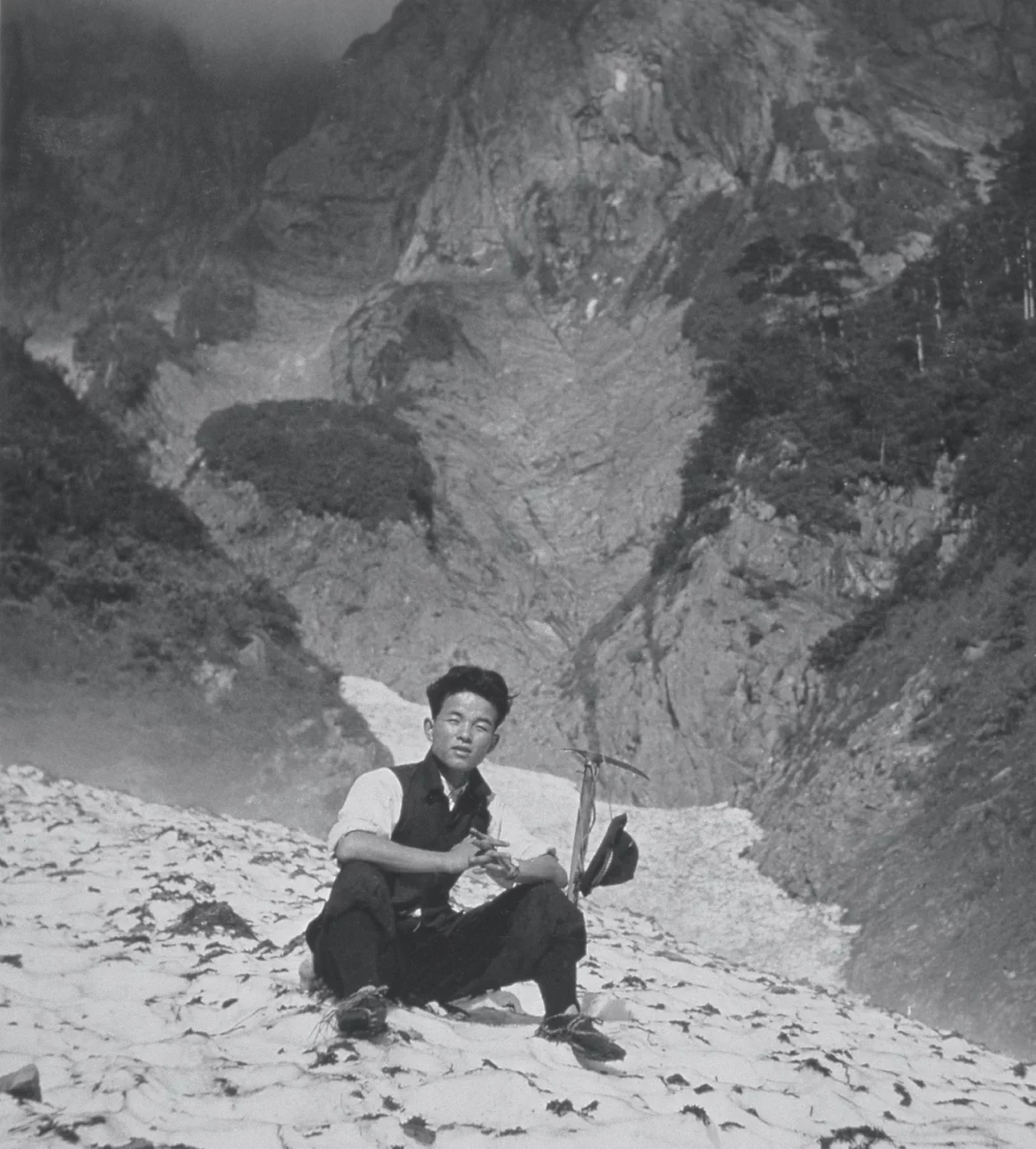
A sort of virtuous circle leads us to the mid 70’s, and especially the 80’s and 90’s, when a generation of Japanese designers began to appear and explode in two directions. Firstly, marking the state of the art of fashion on a global level (here we could cite names like Issey Miyake, Rei Kawakubo, Yohji Yamamoto or Junya Watanabe). Secondly, the vibrant scene created around Ura-Harajuku is closely linked to hip-hop (to which we can attribute names such as Hiroshi Fujiwara, Jun Takahashi or Nigo). A symbolic and symbiotic melting pot in which the streets of New York are correlated with technical clothing, with brands such as The North Face, Helly Hansen or Patagonia, with rap musicians -as we already reviewed in our article dedicated to Gore-Tex-, with catwalks and the Shibuya crossing in Tokyo. A phenomenon that drinks from all the previous Tokyo subcultures (born in the heat of rock, punk or jazz) or the Japanese idiosyncrasy itself, very given to embrace any current on which it casts its eye, as well as the culture of collecting.
In the 2010s the explosion during the previous years of normcore led us irremediably to what in 2017 was baptized by Jason Chen as gorpcore, which possibly has been and is the most influential fashion trend for its impact at all levels and its survival over time for more than five years, so far. A milestone that can be explained from multiple points of view: the role played by names like A$AP Rocky and Virgil Abloh; the continued inspiration of hip-hop or other territories such as soccer and terrace wear; the work of brands like Supreme and its collaboration strategy; the work of outwear brands like those already mentioned or others -both Japanese and from other countries- like Battenwear, White Mountaineering, nanamica, The North Face Purple Label, Salomon, Gramicci, ROA… Whatever the reasons, we find it hard to imagine a scenario in which this fashion loses the massive influence it has today. So strap on your Arc’teryx.