
Except for the very passionate or those who make a living from it, the bulk of ordinary mortals are oblivious to the raw materials and manufacturing methods of their favorite garments. No one cares much if those jeans are ‘selvedge’ or that shirt is made of Egyptian cotton. With perhaps one caveat: Gore-Tex.
This technology, discovered by pure chance and which has made its mark in the Arctic or in space, has gone from being a mere membrane that guarantees waterproofing and offers breathability to being a brand in its own right. But what is it about Gore-Tex that makes it the object of desire of graffiti writers and designers for their catwalks? Let’s take a look.
From basement to space: the birth of Gore-Tex
The history of Gore-Tex is well known. Bob Gore spread the good things about polytetrafluoroethylene (PTFE) from the basement of his house. He found out that this material grew very quickly when it was heated, up to ten times its original size. This led to the discovery of expanded polytetrafluoroethylene (ePTFE), which would eventually become what we know today as Gore-Tex. The key to this innovation was based on the breathability it provided. The pore size of ePTFE was smaller than that of a water molecule, so water vapor could pass through it without getting stuck in the material.

Gore-Tex as we know it today went through several iterations and development processes over the decades. For example, in successive versions, a solution was found to one of the main initial problems: when dirt or soapy products became embedded in the pores of the polytetrafluoroethylene. Throughout the 1970s and 1980s, the use of Gore-Tex would move into the Textile industry (initially in jackets and, then, footwear), also developing its range of technical solutions and giving rise to the appearance of new technological iterations. Similarly, its use would be extended to industries such as aerospace and medical.

Japan and New York: outdoors, graffiti and rap
There are certainly two geographical points that are essential to understand the development of Gore-Tex. The first is Japan and the influence that the nihon country has had both in terms of fashion and in terms of the outdoors and the importance of the technical. We have to go back to the 1960s and 1970s, when illustrator Yasuhiko Kobayashi and editor Jirō Ishikawa travelled to the United States and discovered the Whole Earth Catalog, a countercultural fanzine that (in addition to serving as a precursor of certain trends such as the new age) served to make the catalog style the predominant one in Japanese magazines and to imbue these authors with new trends linked to outdoor life, technical sports and workwear fashion. Today, the technical component is quintessential to understanding Japanese fashion, with publications such as Go Out magazine making the point.

The other geographical enclave takes us to New York. The birthplace of rap, hip-hop and the birthplace of graffiti. With Gore-Tex (actually, with outdoor brands in general) something similar happened with the development of the Lo-life trend. New York is an inhospitable city: because of its size, because of its extreme climate even for a big city (especially cold in winter and with a tendency to snow or rain) and because of the predominant lifestyle in the city. Graffiti writers (and the same could be said of other role models in rap, such as drug dealers) have always had a preference for expensive, technical brands such as The North Face and Arc’teryx, because of the nature of their activity and the component of their day-to-day lives. Functionally, to beat the elements on their missions (where Gore-Tex is helpful) and for the construction of such garments (for example, The North Face Nuptse would be ideal for hiding stolen paint cans inside). But also spiritually. Because wearing a technical garment from brands like these was a sign of status. If you wore Arc’teryx, it was because you had stolen it. Within the halo associated with rocking certain brands, if the garment contained Gore-Tex it meant that it was more expensive and, therefore, more coveted.
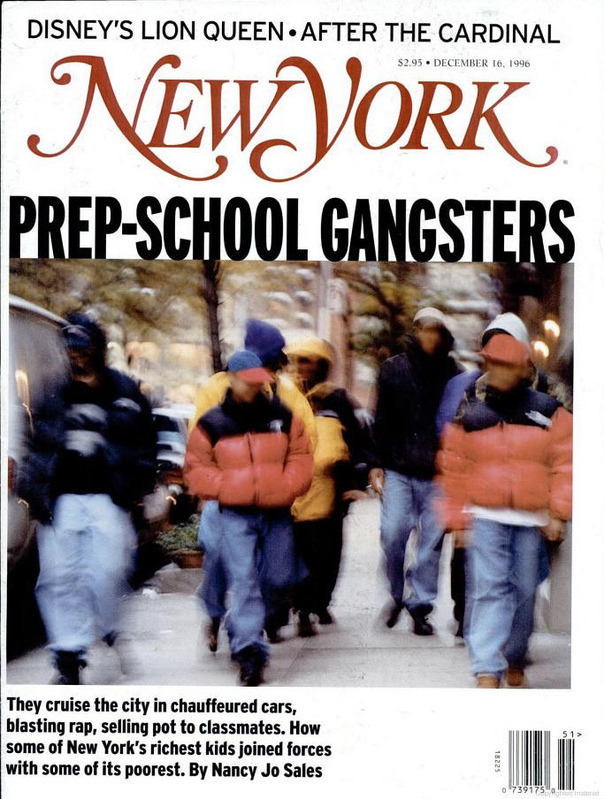
Hip-hop and rap, intrinsically linked to graffiti, have not been alien to this process. MCs, always wanting to take on trends and show street feeling in their lyrics, have helped Gore-Tex become more popular by introducing the term in their lyrics and rhymes. There are numerous cases we could cite: Big L (“Me and O.C. be in the Lex’, Cartier specs, Nautica sweats, Gore-Tex, with Presidentials on, full of baguettes”), Nas (“Spinach and steak, GORE-Tex boot print still on his face. It’s still on his face when we visit his wake”), Action Bronson (“Just for that sizzle, Gore-Tex in case of drizzle”)… Outdoor and hip-hop have not stopped their love affair, be it Mobb Deep starring in a campaign for Helly Hansen, or simply through the boom in the 90s and beyond of garments such as the Steep Tech jackets or the aforementioned Nuptse by The North Face. Today, prominent names in the New York rap underground such as the RRR crew are avid collectors of technical clothing and Gore-Tex and loyal ambassadors for the material.
Gorpcore and high fashion
Of course, this is not the only cause and effect process, but an intrinsic interweaving of aesthetic and conceptual relationships. The work of brands such as Supreme in carrying out collaborations with all kinds of brands over the last two decades (we could almost draw a straight line here to the recent collaboration between TNF and Gucci); the existence of figures such as Kanye West or Pharrell have allowed, over the years, the barrier between high fashion, brands of a certain status and the street, as well as the aforementioned relationship with Japan, to become diluted, in a sort of mutual influence.
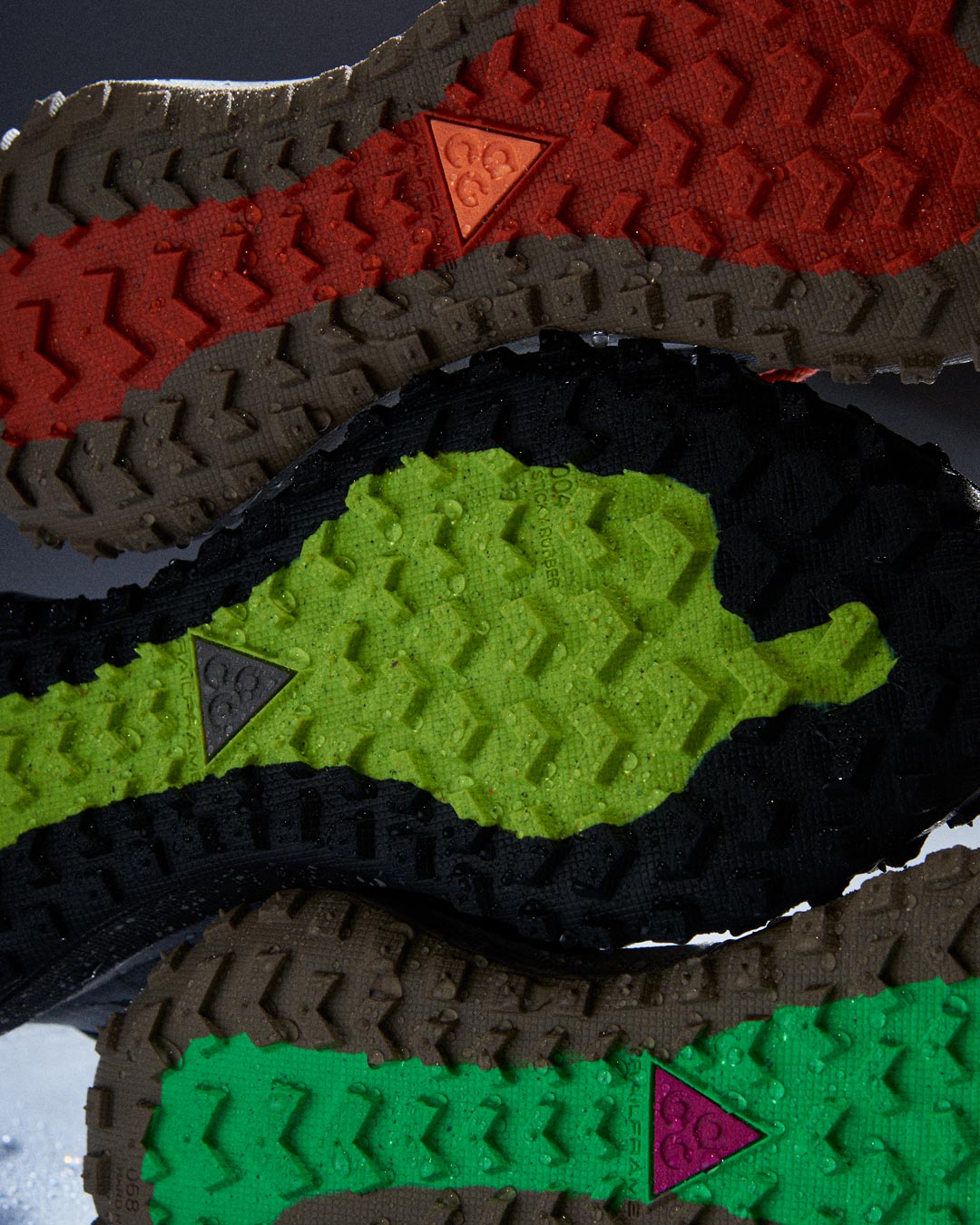
The presence of brands such as Marmot or the everlasting Patagonia, linked to other aesthetic currents such as the imaginary Silicon Valley, has been reinforcing this process in which Nordic fashion (where the presence of materials such as Gore-Tex is almost obligatory) has also had an impact. Of course, it is also obligatory to mention here the work of Nike and its AGC line, whose influence on a technical and aesthetic level has not ceased over the years, with some notable recent launches such as the Nike ACG Mountain Fly Low Gore-Tex SE (also in its black colorway), or the Nike ACG Mountain Fly Gore-Tex, which are in line with current design codes (and which also feature this two-tone color combination).



Names like Virgil Abloh are also essential to understand the aesthetic paradigm of recent years. Through his work at PYREX and Off-White, his creative work at Louis Vuitton, and his collaborations with Nike, the Chicago native has shown the benefits of outdoor clothing and the power of Gore-Tex. The end result of all this cocktail of names is the boom of the trend known as Gorpcore: a revival of technical, highly functional outdoor clothing that floods Instagram and almost all the headlines of the genre.

A development that has allowed Gore-Tex to become much more than a technology: it is an essential element to understand the union between functionality, aesthetics, desire and fashion.
At FOOTDISTRICT we have an extensive Gore-Tex collection, from clothing to footwear. Here is a selection.


