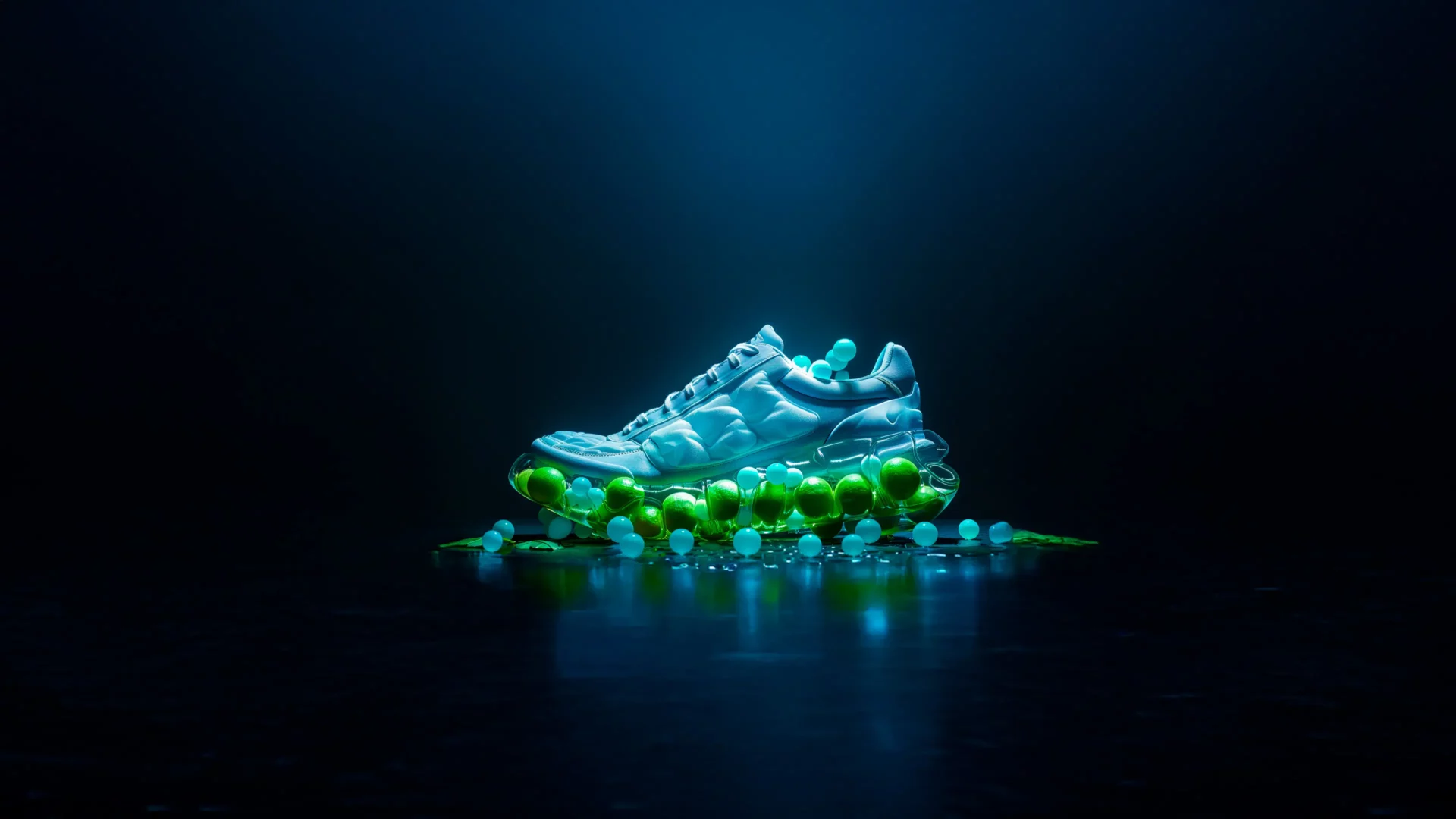
Cushioning has been one of the most sought-after features in today’s sneakers, but it wasn’t always that way. It all started in the 1970s, when the popularization of jogging in the United States led thousands of people to the streets and to confront the hard asphalt. It was a moment of real change for sneaker design, a true revolution that expanded into other sports and of course, into fashion.
Since then, the major brands have developed systems to cushion the impact.
adidas
Until well into the seventies, Europe was adidas’ most important market, and the needs of European runners were very different from those of American runners. adidas used various foams and EVA until the 1980s when it developed several concepts centered on personalizing cushioning.
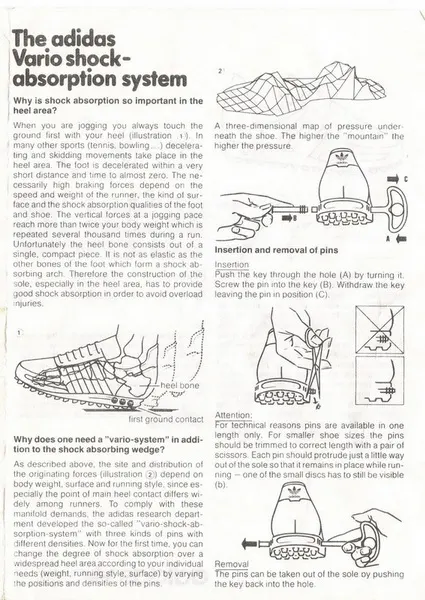
adidas Vario Shock – Absorption System (1984)
First seen in the adidas L.A Trainer, launched for the Los Angeles Games in 1984. Pins of varying hardness were mechanically inserted into the midsole to adapt to the needs of each runner, depending on their weight and the surface they were running on.
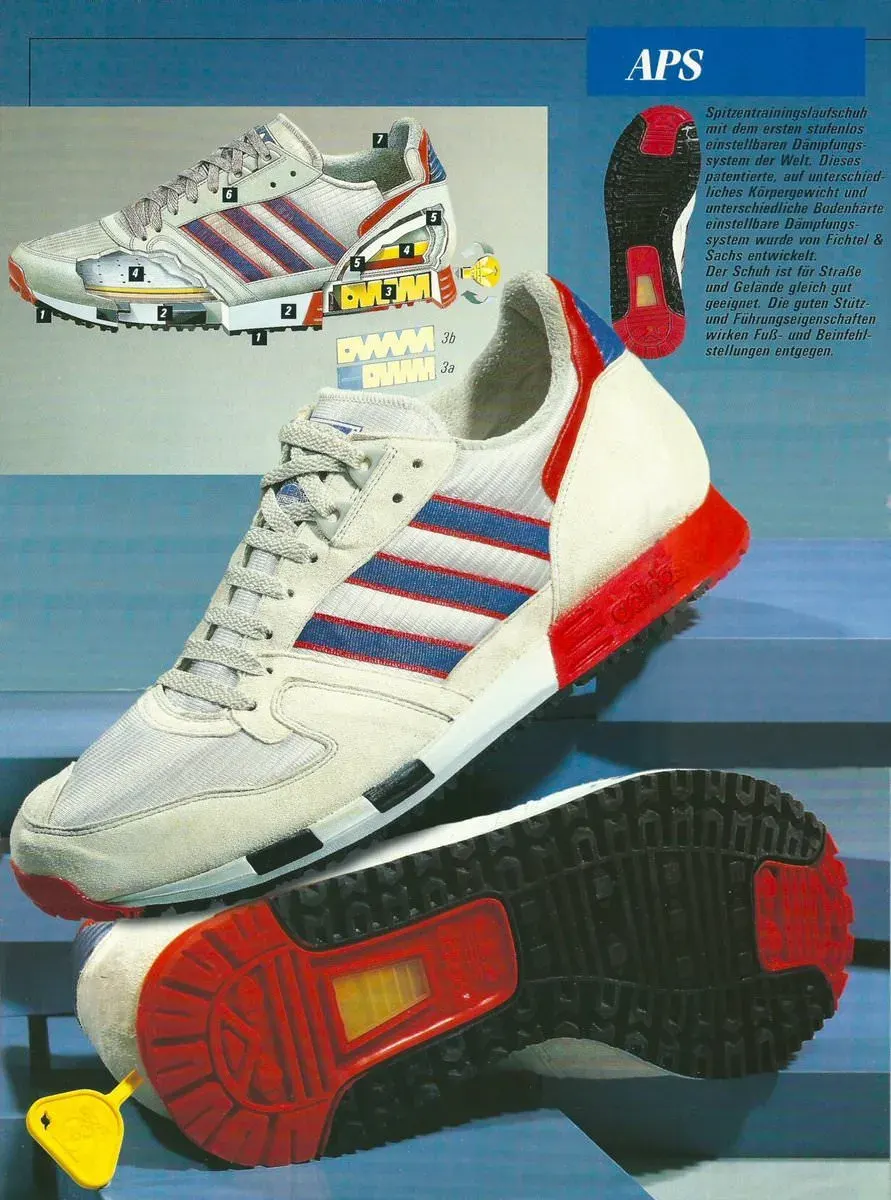
adidas A.P.S. Anti-Pronation & Shock (1986)
A structure located inside the midsole that could be customized using a removable key placed in the heel.
In the nineties, elements like Torsion and Feet You Wear incorporated cushioning as part of a broader system where stability, control, and freedom were the main focus.
adiprene & adiprene+ (1996)
In the nineties, adidas launched adiprene and adiprene+, two different compounds with distinct characteristics that served as opposing elements: adiprene absorbed the impact, while adiprene+ returned the energy for the next stride.
Bounce (2005)
A new foam with a higher energy return, forming a spectacular three-dimensional structure in its original versions.
BOOST (2013)
In 2013, adidas revolutionized the cushioning concept with BOOST, a paradigm shift resulting from the fusion of small TPU capsules. It first appeared in the adidas Energy BOOST, but it was with the UltraBOOST that adidas truly revolutionized cushioning.

ASICS
The main cushioning system in ASICS is GEL, created four decades ago and still extremely functional.
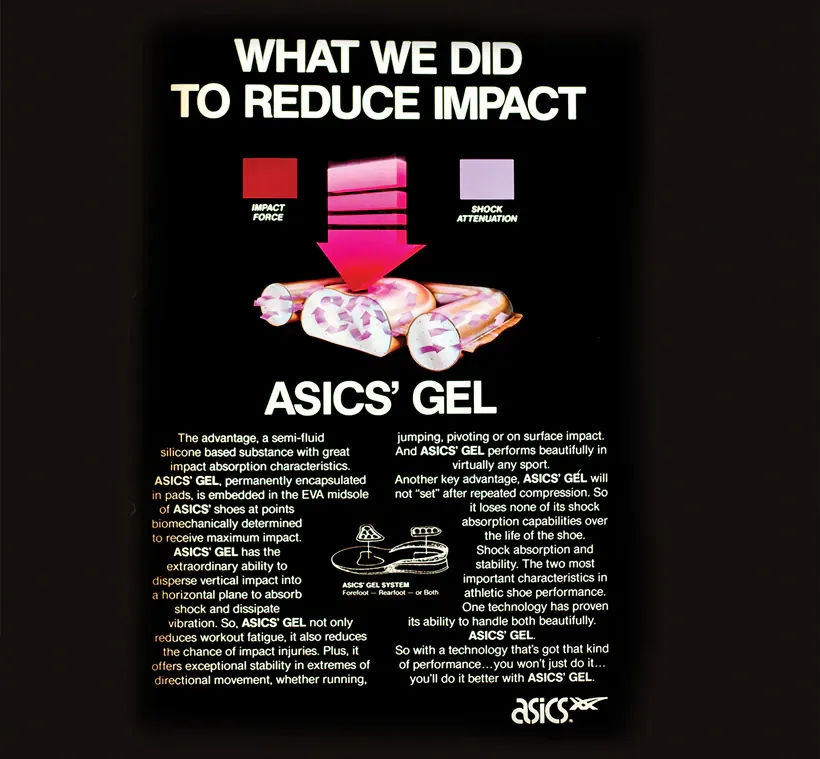
GEL (1986)
ASICS partnered with TAICA, an innovation company in materials, to develop Alpha Gel, a revolutionary technology for cushioning systems. This semi-fluid silicone gel was incorporated into the EVA midsole, optimizing impact absorption at key points. Its ability to disperse impact forces and reduce vibration not only alleviated fatigue but also helped prevent injuries, transforming the athletic footwear industry. It was first used in the ASICS Freaks Alpha, available only in Japan, and later in the GT-II.
FlyteFoam (2016)
An ultralight foam with reinforced fibers designed to improve cushioning and durability without adding weight, used in high-end models. It has evolved into various compounds such as FlyteFoam Propel (2018) and FlyteFoam Blast (2020).
Dr Martens
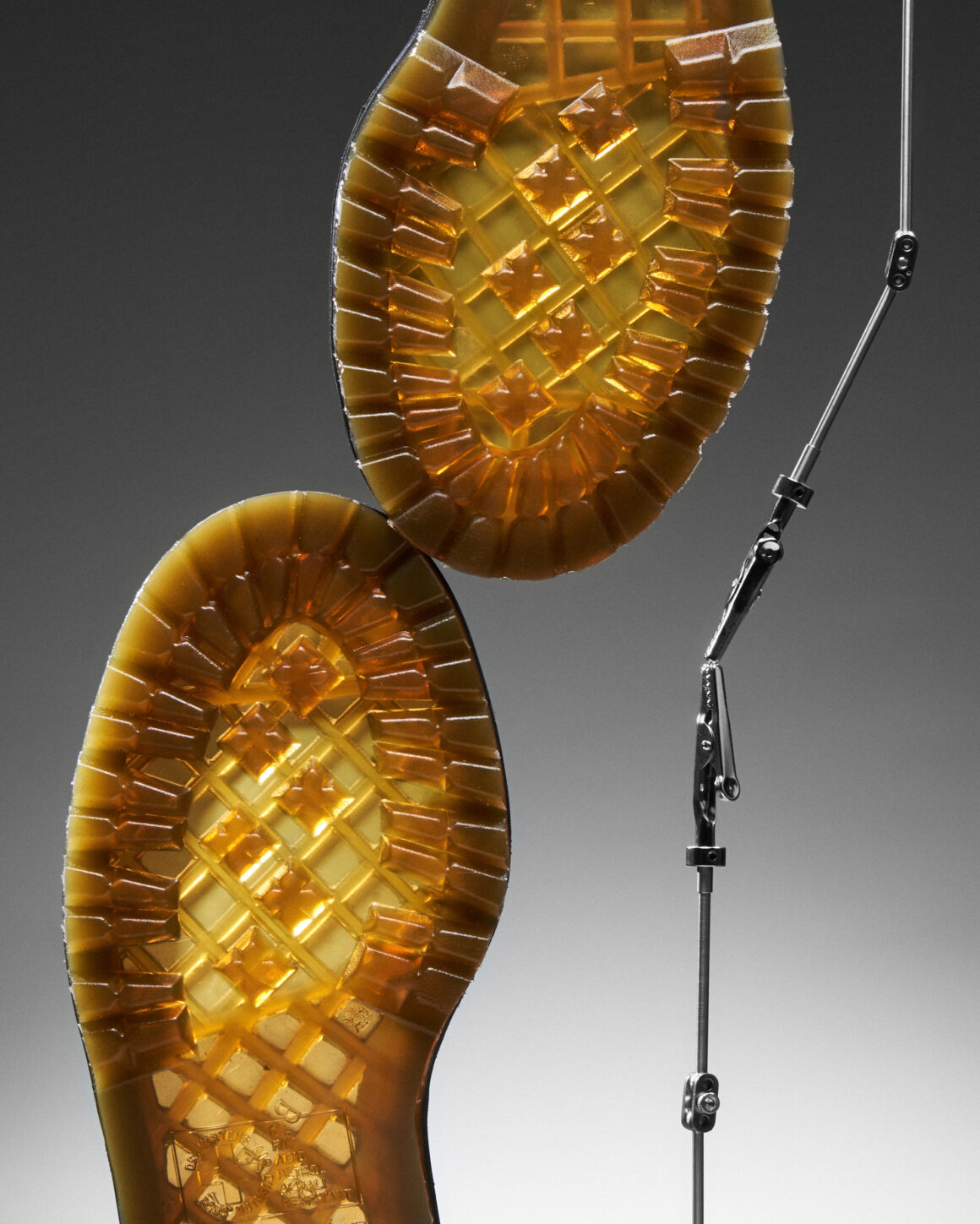
Although the brand Dr Martens doesn’t focus on sports cushioning, it has innovated in comfort and impact absorption with different types of soles.
AirWair (1960)
Introduced in the first Dr. Martens 1460, this sole with air encapsulated in the midsole provided greater impact absorption and comfort compared to other work footwear. It remains the base technology for all of the brand’s classic boots.
Hoka
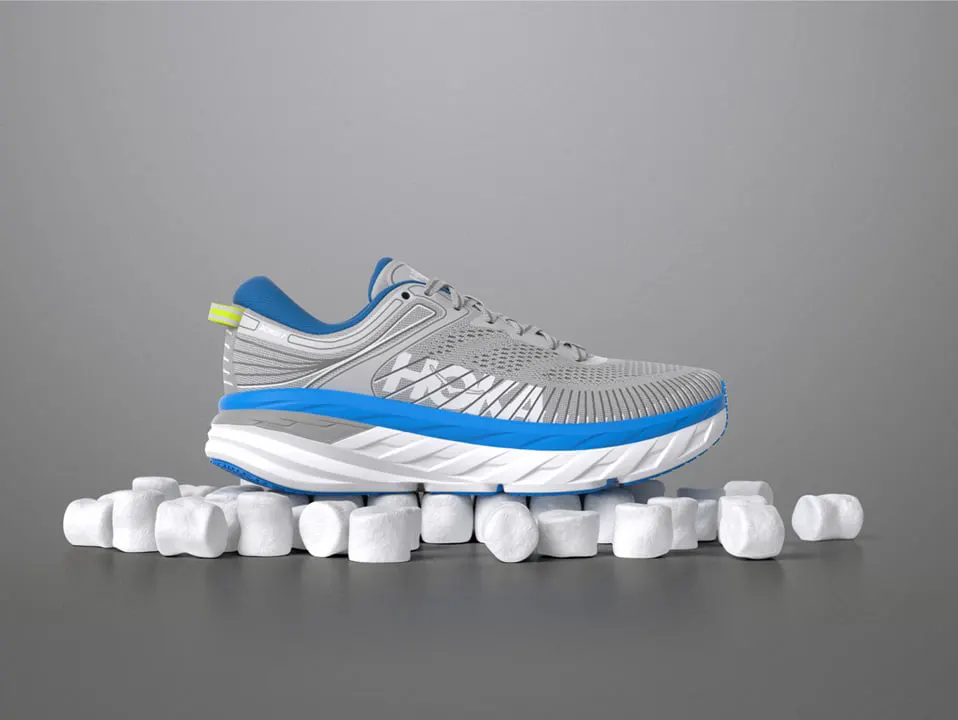
Oversized foams are one of Hoka’s essential features, playing with materials, structures, and shapes to enhance performance, such as their recognized rocker frame.
ProFly (2017)
ProFly™ is a dual-layer midsole designed to offer a more dynamic stride. It combines a soft upper layer for added comfort with a more responsive lower layer that enhances propulsion and response with every step.
ProFlyX™ (2020)
Plates added to the ProFly foam, offering aggressive propulsion by combining durability and lightness for a more dynamic and efficient energy return with every stride.
New Balance
ENCAP (1985)
A combination of a soft EVA wedge and a firmer polyurethane edge in the midsole for greater stability and durability. It mixes soft cushioning on the inside with firm support on the outside of the midsole.
ABZORB (1993)
An elastomer-based material that absorbs impact and redistributes energy to reduce fatigue with each step. ABZORB was developed in the mid-’90s as an innovative running technology and became a key part of the NB Suspension System. With the rise of technology in the new millennium, ABZORB evolved with different versions, such as ABZORB Full Length, ABZORB DTS, and its most well-known form today, ABZORB SBS.
N-ERGY (2006)
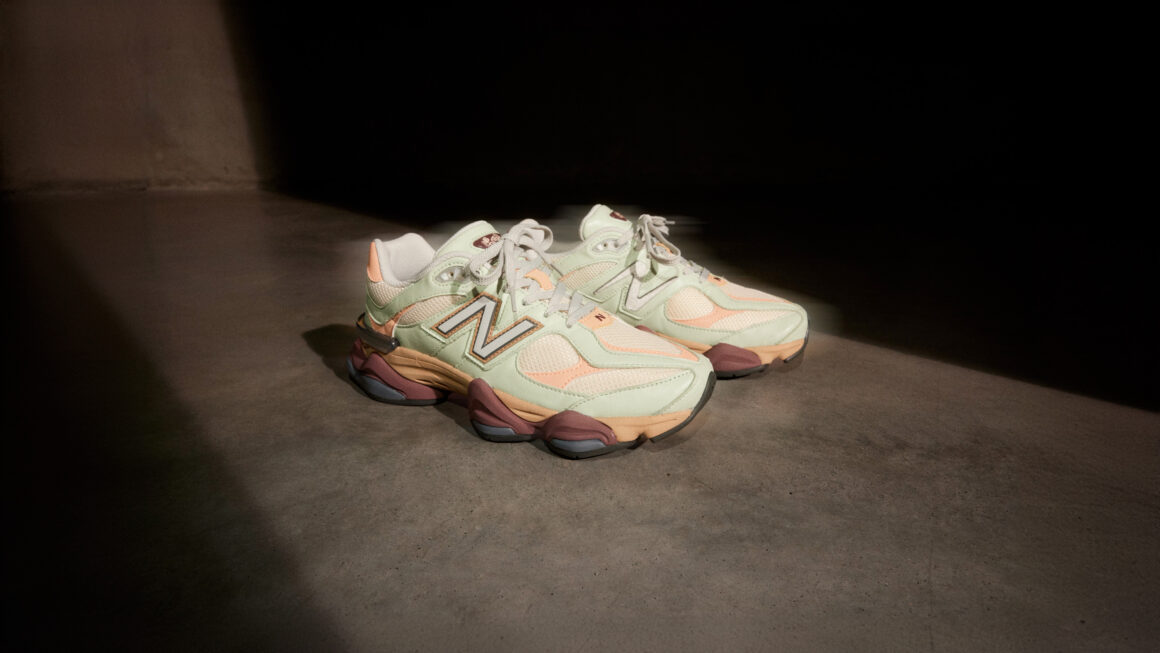
New Balance’s technology based on gel capsules in the midsole to improve impact absorption and energy return.
REVlite (2009)
A foam that is 30% lighter than other performance midsoles without compromising response or durability.
Fresh Foam (2014)
A foam designed with data collected from runners to provide a smoother, more natural ride. Its hexagonal structure allows for softer or firmer zones based on need. It’s developed using 3D data gathered from real athletes to analyze pressure maps and force application.
FuelCell (2019)
A compound with high responsiveness and energy return, designed to maximize propulsion with each stride. It’s the most responsive foam New Balance has created to date. Its exclusive design provides exceptional, more dynamic, and reactive sensations, offering maximum propulsion with every stride.
Nike
Sponge Rubber (1972)
Bill Bowerman, one of Nike’s founders, first aimed to popularize running in the United States by creating training groups unrelated to the elite. He discovered that the running stride was very different from his athletes’ and they needed more cushioning in the heel. Thus, the idea emerged to combine the comfort of a flip-flop with a running shoe.
The result was the Nike Cortez, which featured a foam wedge in the heel. Today, these Cortez shoes may seem incredible, but they were a marvel of technology based on cushioning.
Air (1979)
The Nike Tailwind was the first shoe with an integrated Air unit. The idea is simple: air is lighter and cushions better than foam, so adding air to the midsole would be a technological breakthrough. Thanks to Frank Rudy, Nike developed a capsule that could be integrated into midsoles, instantly becoming the standard for cushioning.

Air Max (1986)
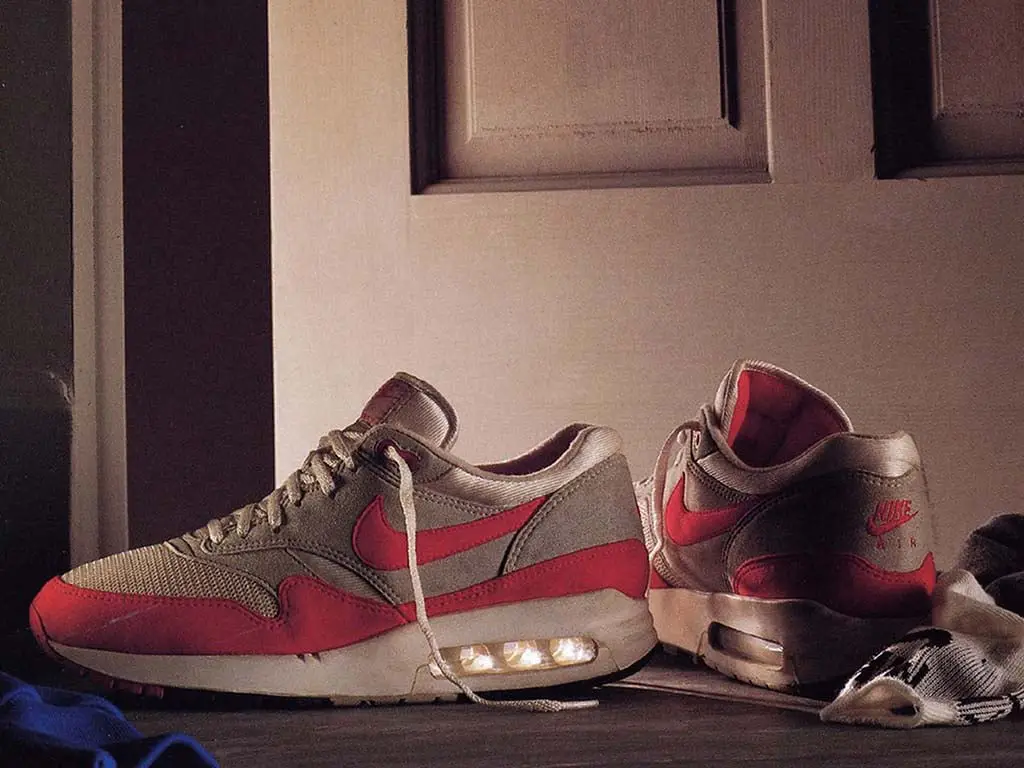
From the first walk with the Tailwind prototype, the goal remained the same: to put more Air in the midsole. By 1986, the Air units were so large that they were visible from the outside, adding functional advantages while forever changing the aesthetic of sneakers. The constant evolution of the Air Max series allowed different pressures to be used to adapt to the stride, eventually eliminating foam altogether to achieve the original goal.
Air Zoom (1995)
An evolution of Air using fibers to cushion and propel. It allowed for greater responsiveness in a smaller unit, which made it perfect for sports requiring quick reactions. Initially called Tensile Air, it appeared first in the Nike LWP and later in the Zoom Spiridon, as well as basketball and soccer models.
Tuned Air (1998)
A cushioning system that combined various patents to place semi-spherical TPU units inside the Air units to maintain stability. Used mainly in the Air Max Plus series (often known as TN), it also appeared in more technical shoes like the Air Tuned Max and Air Tuned Force (basketball).
Shox (2000)
The first Shox models consisted of four columns that absorbed impact and returned energy. The original names of these models were related to the activity they were designed for + the number of columns (Shox R4 for running + 4 columns, BB4 for Basketball + 4 columns).

Its first major impact was during the Olympics, with Vince Carter as the main endorser and his iconic dunk over a French player, marking a dramatic appearance of a new cushioning system.
React (2017)
Foam developed for running and basketball with high durability, lightness, and energy return. Unlike other technologies, React foam improved performance in energy return, impact reduction, lightness, and durability. Its evolution, ReactX, increases its performance and reduces environmental impact.
ZoomX (2017)
Nike ZoomX is the brand’s lightest, softest, and most responsive foam, developed to optimize speed through high energy return. Its composition comes from a material originally used in the aerospace industry, adapted to high-performance footwear for the first time in the Nike Zoom Vaporfly Elite and 4%.

On
CloudTec® (2010)
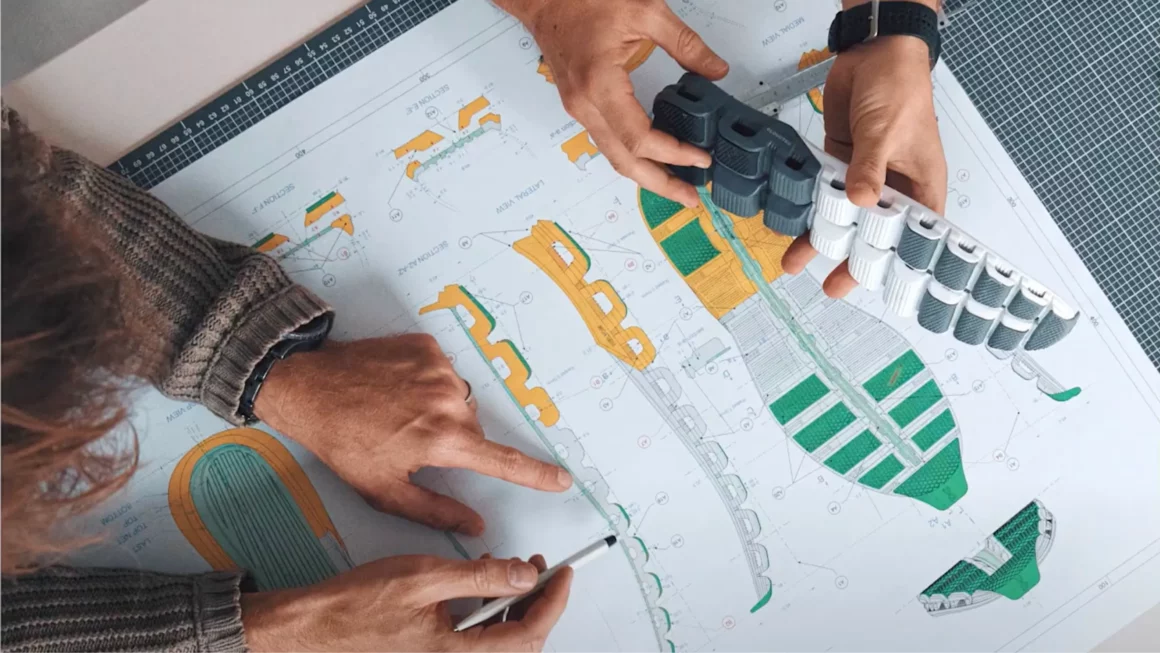
An On’s cushioning system based on independent “pods” or clouds in the sole, designed to compress upon impact and expand during takeoff, providing a soft landing and explosive push-off.
CleanCloud™ (2024)
Cushioning foam made from recycled carbon emissions, part of the brand’s sustainable commitment.
Puma
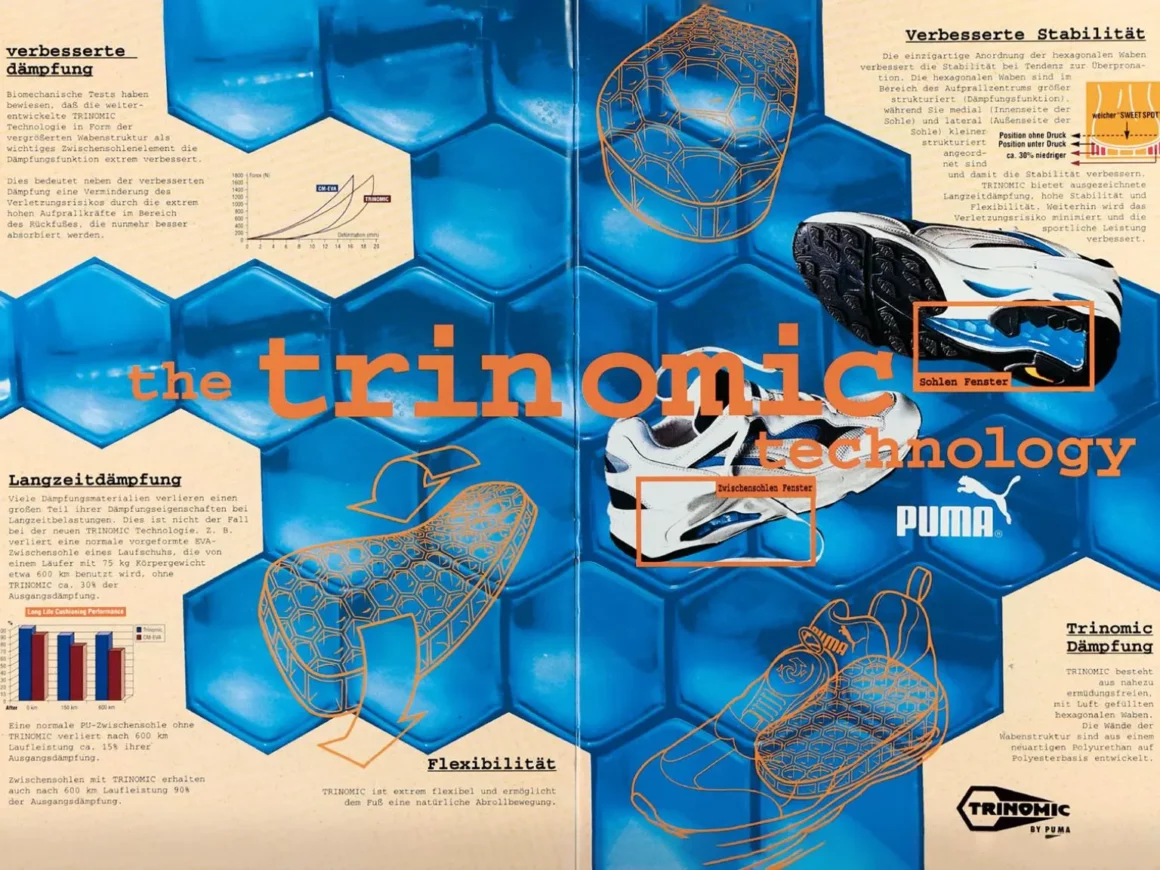
Trinomic (1990)
PUMA launched TRINOMIC cushioning in 1990, a visible technology with a hexagonal system in the sole that compressed and regained its original shape to offer cushioning, stability, and flexibility. Inspired by natural structures like honeycombs, it combined lightness and durability in air-filled cells located in the heel and forefoot. Its iconic triangular logo symbolized its three key benefits, consolidating its use in running, basketball, tennis, and football shoes throughout the ’90s.
CELL (1998)
PUMA introduced CELL technology in the 1990s, during the peak of visible cushioning in running shoes. This system used blow-molded TPU in an intertwined hexagonal cell structure to improve stability and impact absorption.
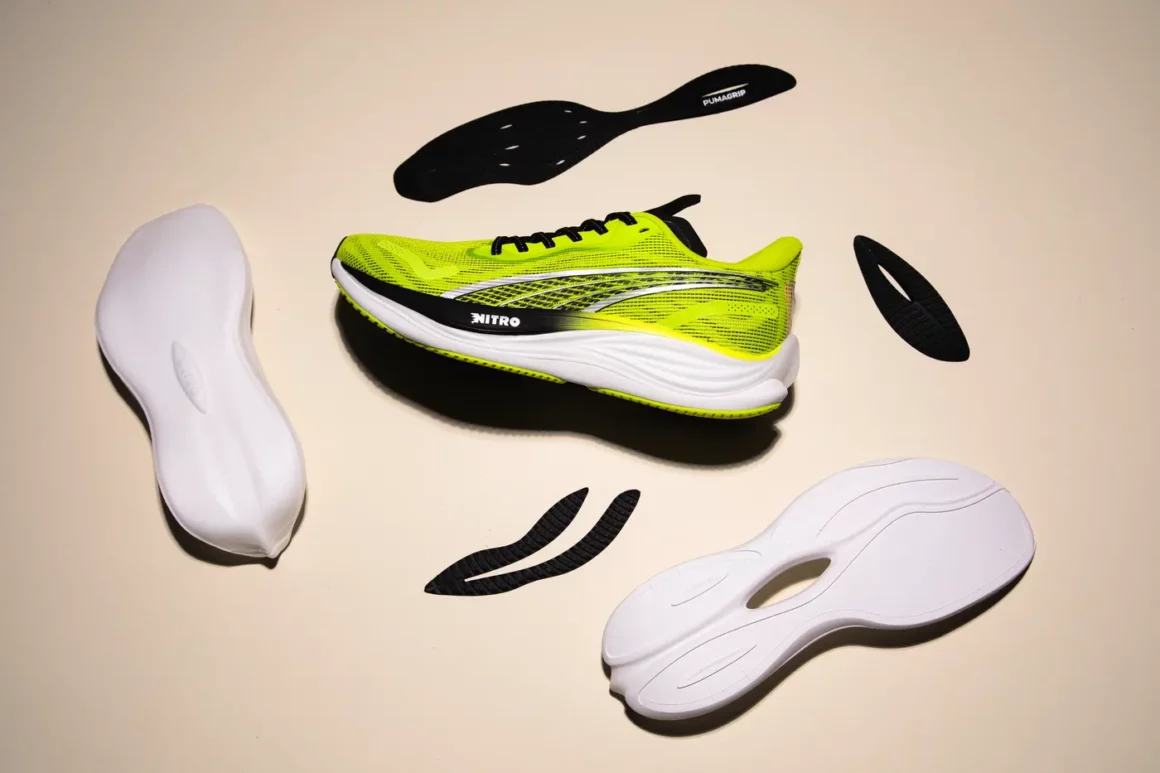
NITRO (2021)
PUMA’s NITRO foam is a cushioning material infused with nitrogen that enhances midsole responsiveness and propulsion. Released in 2021, it combines lightness and comfort, optimizing running performance. It has become a key element in PUMA’s high-performance footwear, providing a more efficient and comfortable stride for athletes.
Reebok
The main cushioning systems of Reebok emerged in the ’80s and ’90s when the brand competed with Nike and adidas.
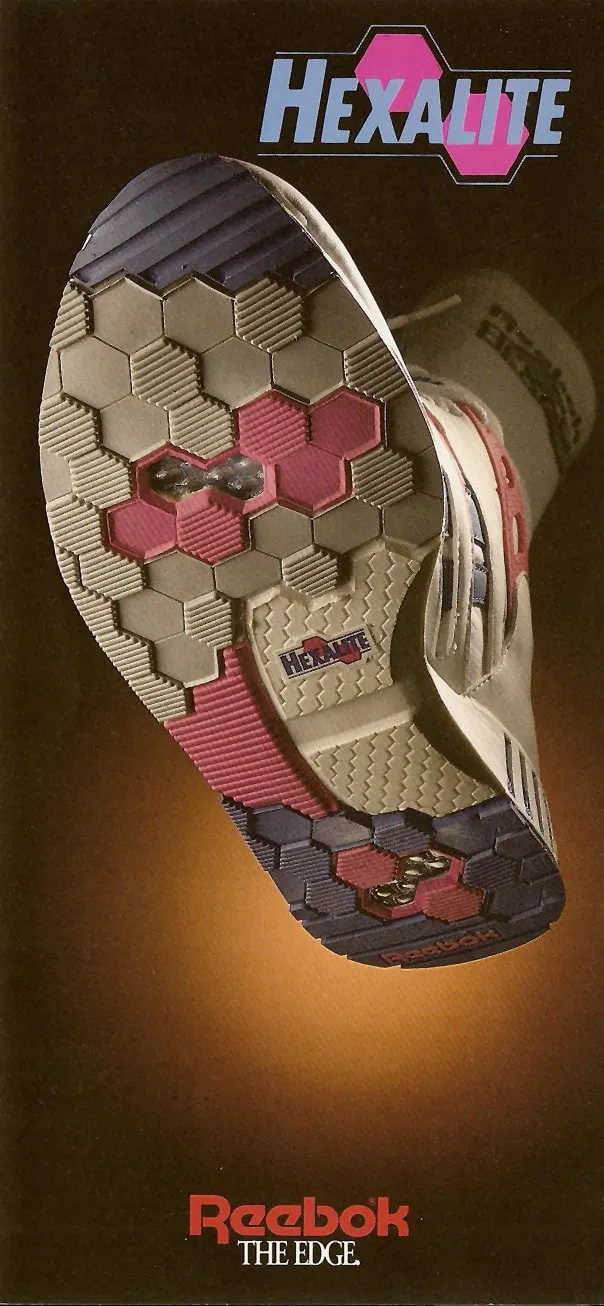
Hexalite (1990)
Reebok’s answer to visible Air, Hexalite is a honeycomb-shaped structure that uses air in the midsole for lightweight, durable cushioning. It initially appeared in Reebok’s runners and became an essential element in their products.
Pump (1989)
The Pump is a dynamic cushioning system that uses air pockets to adjust the fit, particularly in the ankle and midsole regions. It was innovative for its time, allowing athletes to personalize the fit and feel of the shoe during wear.
DMX (1997)
Reebok’s DMX technology was introduced in 1997. It was one of the first innovations in dynamic cushioning, in which air moved inside the air chambers located in the midsole, adapting to the foot and providing more personalized cushioning during movement. Since then, it has been a prominent feature in several of the brand’s models.
Saucony
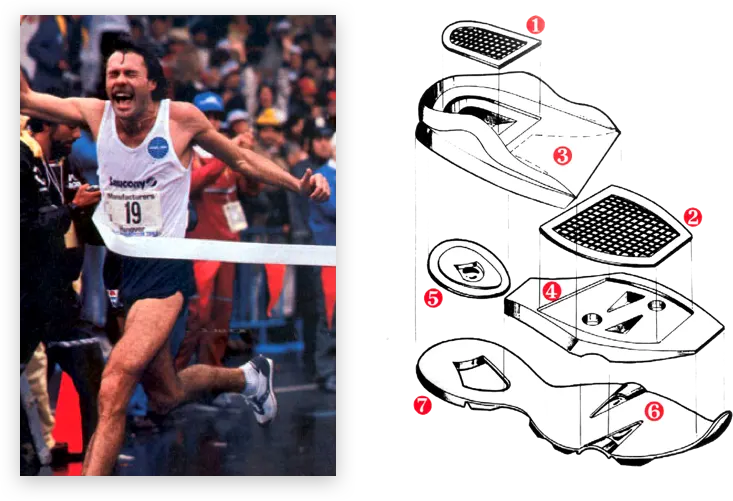
GRID (1991)
It was the first cushioning system based on a grid structure (GRID) integrated into the midsole, which offered shock absorption and improved stability, two closely related concepts.
ProGrid (2002)
Evolution of the GRID system, with a more refined structure and improved materials for greater smoothness and response.
PWRFOAM (2018)
New EVA foam optimized for softness and reactivity, used in combination with the brand’s other technologies.
PWRRUN (2020)
Saucony’s PWRRUN technology is formulated with a special type of PEBA foam, known for its exceptional energy return. This foam is engineered with beads that make it even more responsive and cushioned at high speeds. In addition to being incredibly lightweight, PWRRUN PB technology maintains consistent performance in all temperatures, making it a reliable choice for both training and racing.