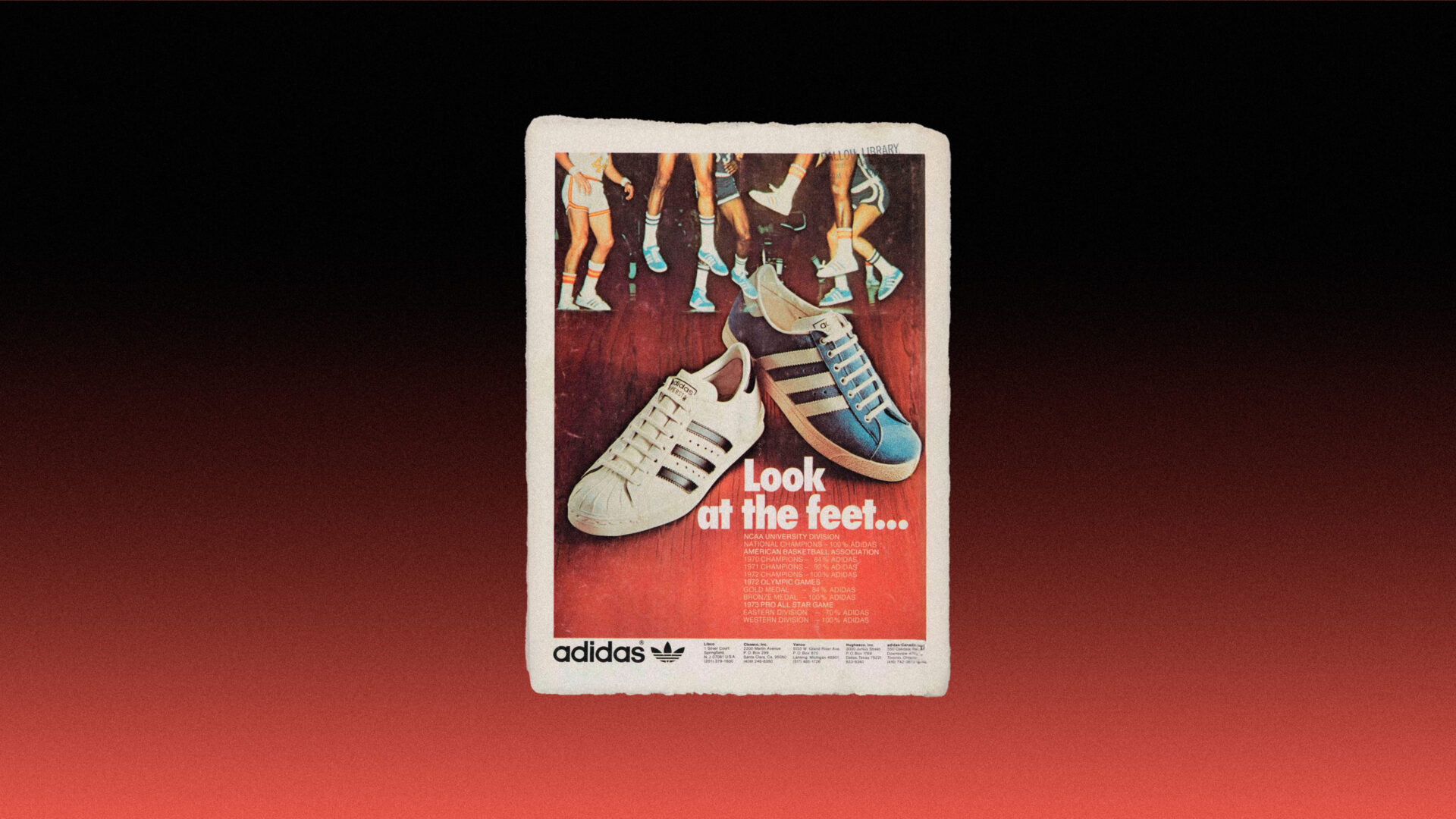
The history of the adidas Superstar is marked by key moments, but also by different silhouettes that adapt to each era.
Born in the late 60s as an evolution of the Supergrip, the adidas Superstar first conquered NBA courts before becoming a cultural icon. Its success in sports performance was immediate, but its influence extended beyond basketball, reaching new markets and audiences.

As a result, the sneaker itself evolved. This is why there isn’t just one adidas Superstar—each moment and culture has embraced a different silhouette, each with its own story.
adidas Superstar: The Original Silhouette
The original adidas Superstar gained popularity in the 70s with its iconic rubber shell toe, nylon heel for ankle support, and thin tongue. Although the Superstar II appeared in 1976 with slight modifications, the original version remained the benchmark. By the 80s, it had lost its dominance in basketball but gained influence in hip-hop culture and streetwear.

adidas Superstar 2: The Evolution of the 90s
By the late 80s and early 90s, the growing interest in vintage sneakers fueled the rise of the Superstar II. Featuring a wider shape, padded tongue, and updated materials, this version became a commercial success and found a new home in the skateboarding scene.

What’s the Difference Between the Superstar I and Superstar II?
Both share the same basic structure and rubber shell toe, but they have distinct features:
- Superstar: A more streamlined silhouette, thin tongue, and a rectangular logo patch with “The Brand with the Three Stripes.”

- Superstar 2: A wider fit, padded tongue, and the adidas Trefoil logo as the key branding element.

Each version represents a different era and style, yet all remain true to the classic adidas Superstar DNA.