Warning: Trying to access array offset on false in /var/www/blog.footdistrict.com/wp-content/plugins/fusion-builder/inc/lib/inc/class-fusion-images.php on line 219
Warning: Trying to access array offset on false in /var/www/blog.footdistrict.com/wp-content/plugins/fusion-builder/inc/lib/inc/class-fusion-images.php on line 219
Warning: Trying to access array offset on false in /var/www/blog.footdistrict.com/wp-content/plugins/fusion-builder/inc/lib/inc/class-fusion-images.php on line 219
Warning: Trying to access array offset on false in /var/www/blog.footdistrict.com/wp-content/plugins/fusion-builder/inc/lib/inc/class-fusion-images.php on line 219
Warning: Trying to access array offset on false in /var/www/blog.footdistrict.com/wp-content/plugins/fusion-builder/inc/lib/inc/class-fusion-images.php on line 219
Edith the iguana is the least known of an elite group that also includes Michael Jordan, LeBron James and Rafa Nadal. Although she lacks their athletic prowess, Edith the Iguana at Sedgwick County Zoo got a whole team of Nike designers to work on a specific item just for her. The story began as one of the most representative anecdotes of Nike ACG’s approach to the product. To be an anecdote, though, it has to be told.
The Jamaican Iguana (Cyclura Collei) had been considered an extinct species since 1948, but the appearance of some remains in the Hellshire Hills touched the hearts of the amphibian researchers -ironically, scholars studying cold-blooded animals are actually pretty warm-hearted.
For a long time the largest animal native to Jamaica, had gradually lost importance due to the introduction of invasive species such as the Javan mongoose, which was intended to control the number of rats. In a story that has been repeated in different territories and with different species, mongooses arrived in Jamaica without an exact definition of their roles on the island and found that they preferred the eggs of birds and iguanas, leading to their near extinction as the rats multiplied in a world without predators and with a free bar.
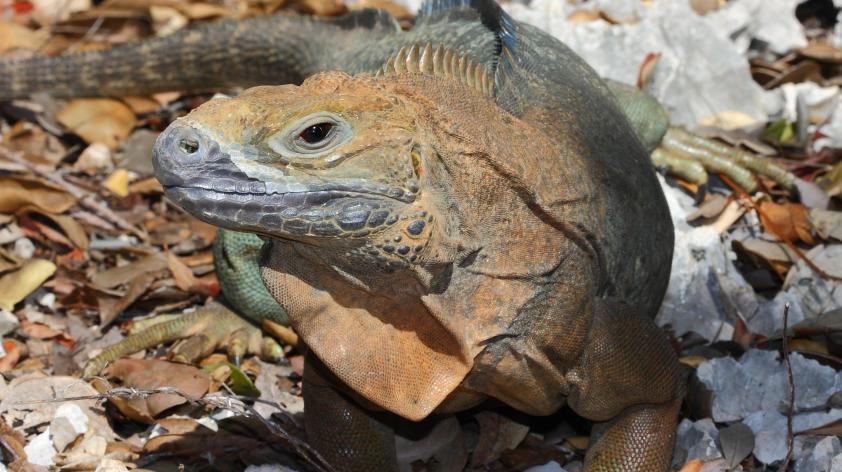
In 1970 the remains of a Jamaican Iguana were found, so despite being considered officially extinct, there was still hope of finding some specimens. And so it was in 1990. The surprise of the first moment soon turned into responsibility for keeping what could be the last individuals of a species. A project was created so that the young could evolve in captivity until they reached the right size to be returned to their place of origin.
Sedgwick County Zoo in Wichita, Kansas was responsible for creating an environment in which the Jamaican iguana hatchlings could thrive. During the 1990s, work was done on a monitoring service to control their movements in the wild. A radio transmitter placed on six iguanas was to be used to monitor their location and evolution, but while the market for transmitter vests is usually small, the market for iguana transmitter vests was non-existent.
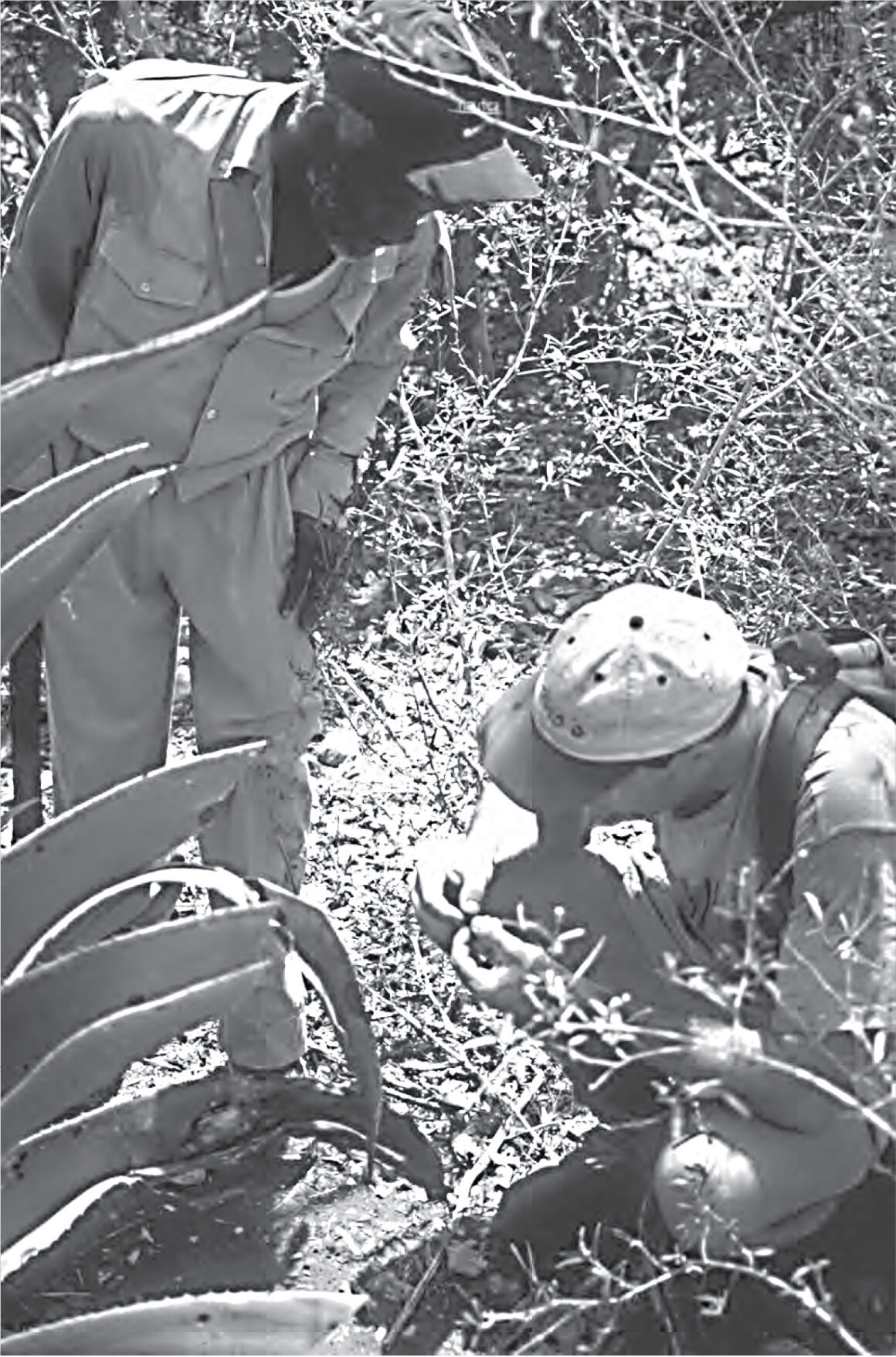
In 1999 Damon Clegg, who was the Creative Director of Footwear for ACG, received an odd assignment from the communication department of the brand, already used to strange assignments: he had to design and produce vests for Jamaican iguanas. Karen Graham, the herpetologist in charge of the mission, had discovered a Nike line that was guaranteed to work in all conditions and thought her iguanas would make excellent product testers. Nike could have analysed the possibility of adapting the product to other departments (null), its potential market (a handful of iguanas of a species about to disappear) and the impact on the consumer (complicated, given the poor communication skills of the iguanas). But he just said yes.
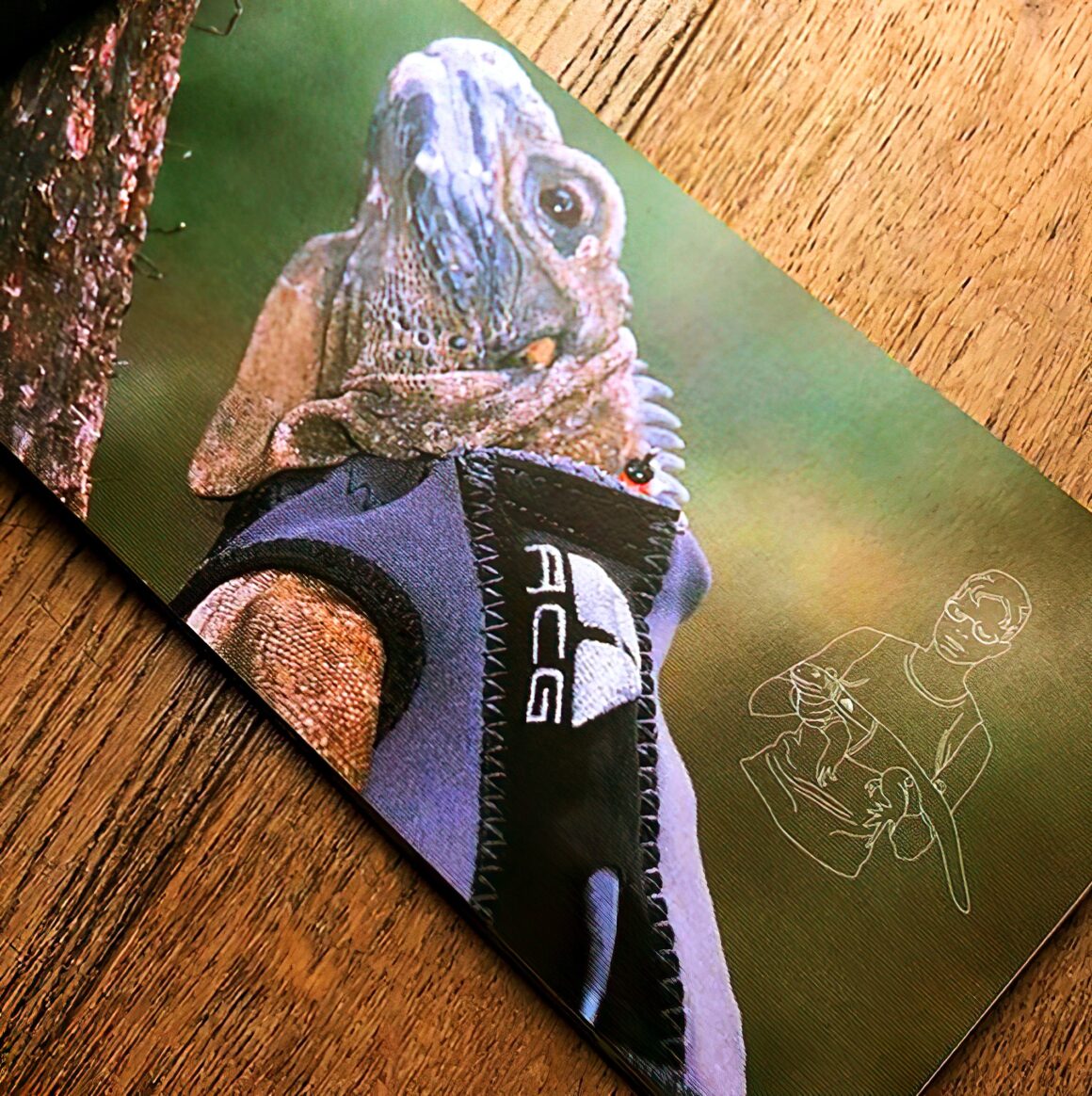
Clegg, accustomed to the demands of athletes, still remembers the process that led him to design transmitter vests for Jamaican iguanas. As can be expected, there were certain differences with the athletes he used to work with. The iguanas needed extra protection because they spent a lot of time in contact with rocks and the fabric had to work in both dry and wet conditions. Moreover, the iguanas could not be expected to wash their clothes after each use as most of their athletes did. They were to function as a second skin, with an abrasion-resistant zone on the belly and another expandable zone, in addition to a small pocket for the transmitter. The iguanas were so close to the ground that the final product must have looked more like a sneaker than a human garment.
A small group within ACG developed the project almost silently while only a few steps away, their colleagues designed shoes for great athletes. Among the six rounds of prototypes, the colour proved to be problematic, since the usual bright tones of Nike ACG caused unexpected effects on the iguanas.
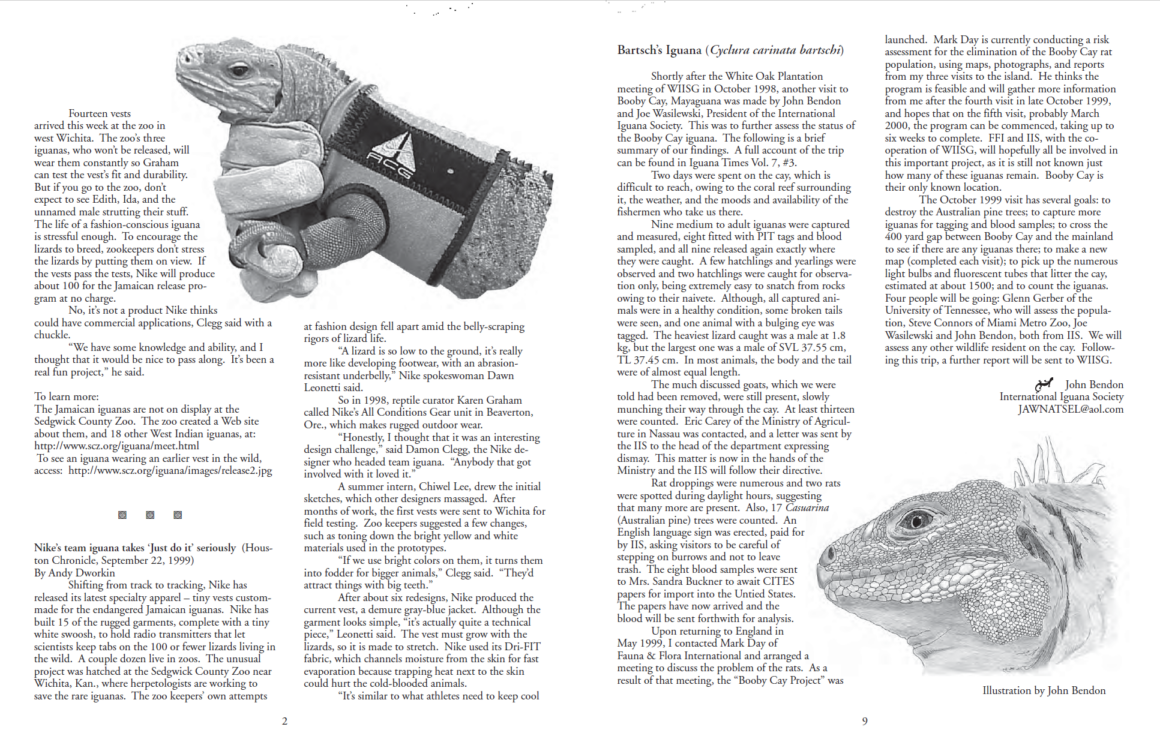
The project was kept secret until the iguanas began testing the vests in their natural habitat. Even afterwards, such a strange idea and such a precise execution hardly had any repercussions, beyond a few thank-you notes in the scientific publications for herpetologists, possibly the last place you expect Nike to be cited. Not even visitors to the Wichita Zoo could see the iguanas dressed in those vests. The tests on the iguanas, fearful hiders, had to be carried out of sight. Created in a pre-digital era, there are hardly any images left of one of the strangest experiments in Nike’s history.
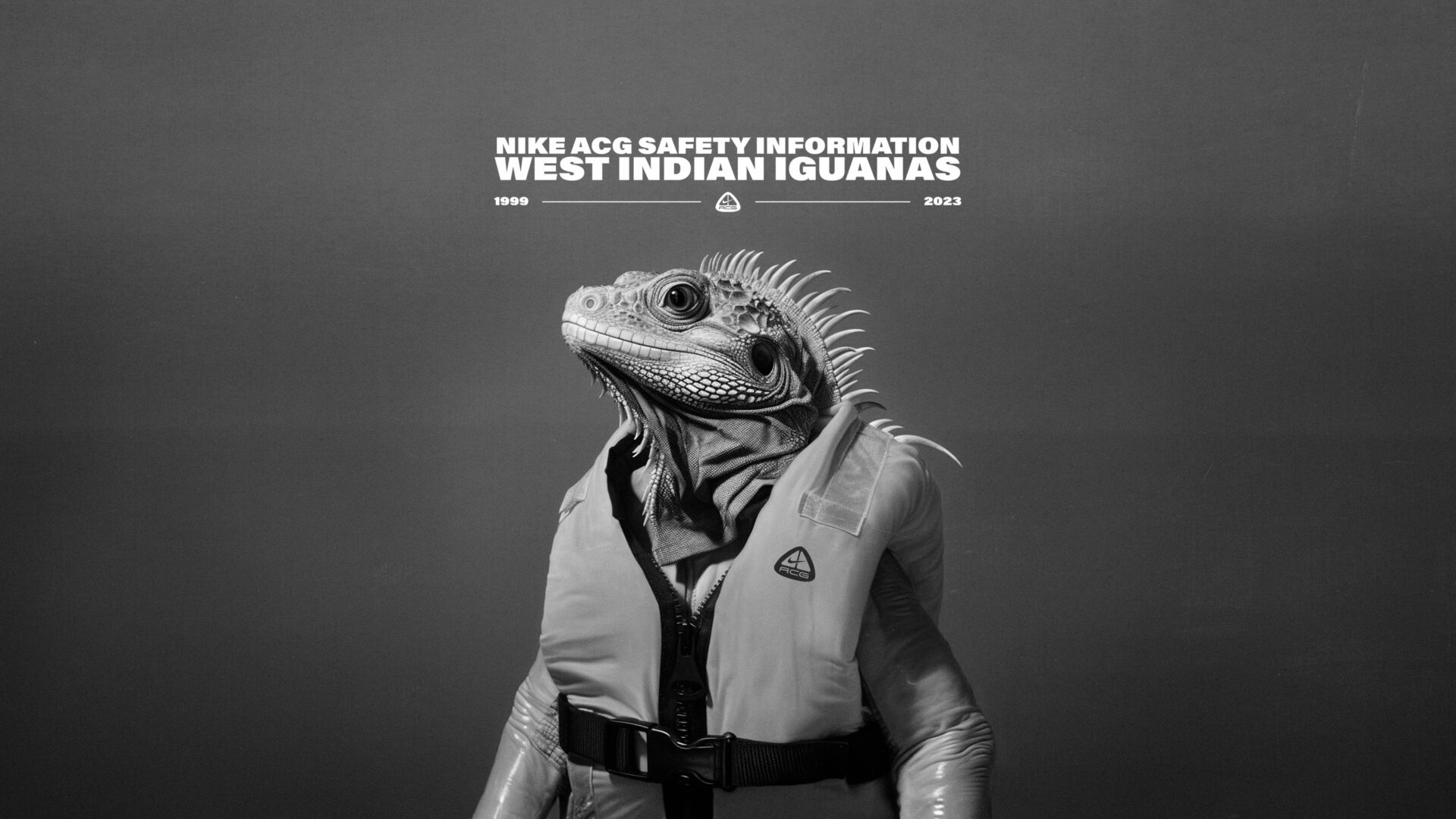
Today the Cyclura Collei Iguanas are still in critical danger of extinction but can be spotted in their natural habitat. In order to see them dressed in ACG we have to use artificial intelligence.
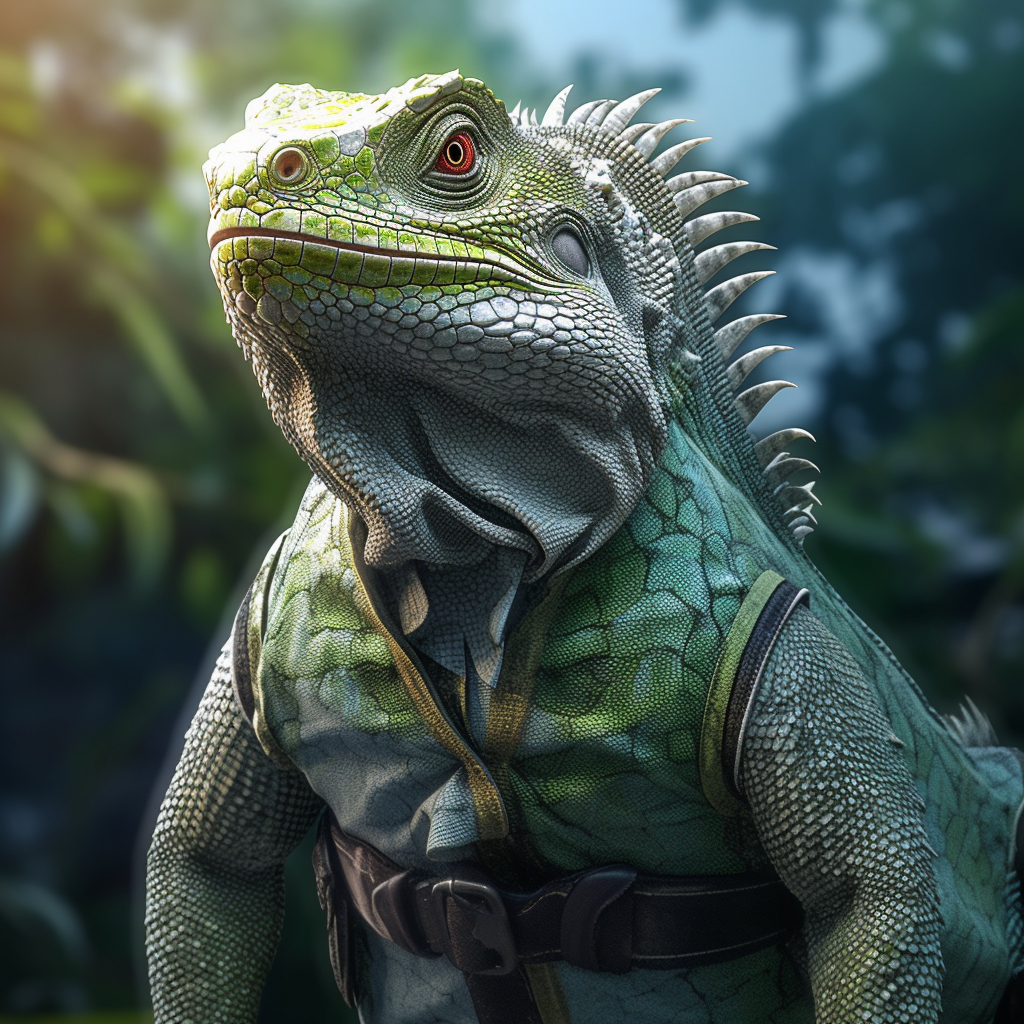
According to Damon Clegg, none of the innovations developed for iguanas could be incorporated into other Nike ACG projects. With no intention of creating new products from there, the story of the iguanas saved thanks to ACG was left as a real but hidden story in a world in which most stories play with falsehood and extreme visibility. Perhaps that is why the story of iguanas dressed in ACG continues to have its charm today.