When Michael Jordan found out he was going to work with Bugs Bunny
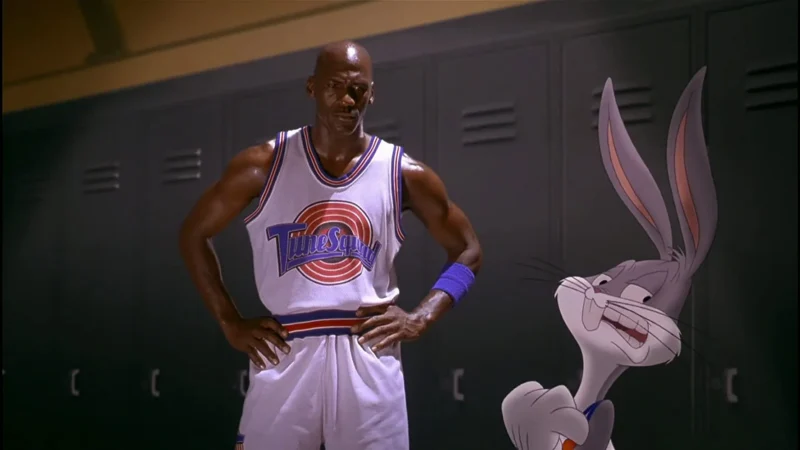
David Falk, Michael Jordan’s agent since the beginning of his career, usually avoided giving away too much information about his negotiations until they were well underway. But this was different, very different from most of the campaigns he worked on with Jordan. So he decided to tell Michael about the possibility of making a movie with Bugs Bunny.
For Jordan, working with Bugs Bunny sounded so strange that he chose not to believe his agent. “When we’re on set, I’ll believe it.”
It wasn’t the first time a movie had been discussed, but with Michael’s fiercely competitive mindset, it only made sense if it was something big enough. And the project with Warner Bros. ticked every box. It was designed to become one of the biggest films of its time, not only because of the innovations required to bring animated characters to the screen, but also because of the merchandising universe it could create.
By 1995, Michael had already appeared in so many advertising shoots that you could say he had spent more hours in front of cameras than some actors. However, he wasn’t particularly comfortable playing someone else. That’s why one of the conditions for making the leap to the big screen was simple: Michael Jordan had to play himself.
From Nike Commercials to the Big Screen
Appearances by major basketball stars in movies had previously been occasional and unexpected. Kareem Abdul-Jabbar had played a pilot in Airplane!; Patrick Ewing appeared as the Angel of Death in The Exorcist III; and Marques Johnson had a nearly anonymous, partially masked role in White Men Can’t Jump.
With Blue Chips, Shaquille O’Neal and Penny Hardaway seemed to be moving towards something different: leading roles, something that had previously only been seen in the cult classic The Fish That Saved Pittsburgh, starring Julius Erving and Meadowlark Lemon.
David Falk’s proposal went much further. It was based on something that already worked: Nike campaigns in which Michael Jordan and Bugs Bunny had shared the screen to promote the Air Jordan 7 and Air Jordan 8. The idea was to turn that formula into a full-length movie.
For the project, Falk brought in Joe Pytka, a director who had built his career during the 1980s working on Michael Jackson music videos and commercials featuring Madonna. He could also claim to have already directed Jordan and Bugs Bunny together in those commercials.
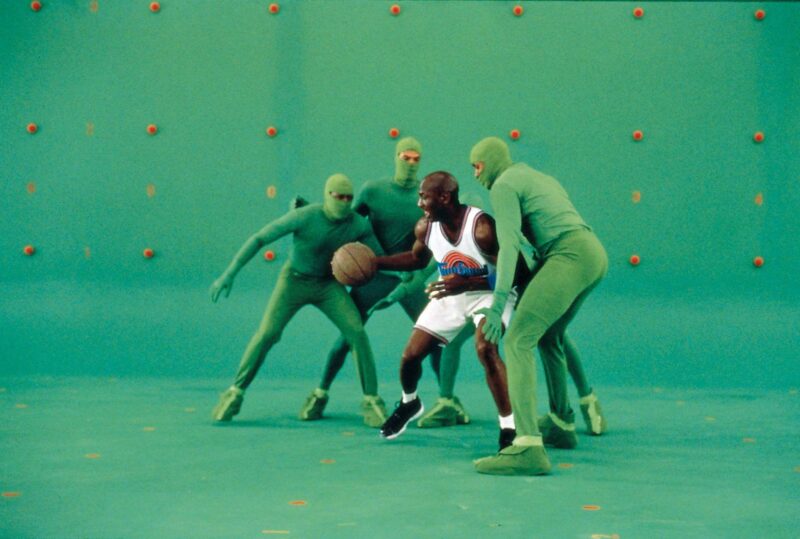
For someone without formal acting training, the shoot was a considerable challenge. Much of the film would be shot against a green screen, with Bugs and the other animated characters, including their enemies, added later.
A Shoot set against Jordan’s NBA comeback
The movie began at a particularly complicated moment. During pre-production, Michael announced his retirement from basketball and his intention to play professional baseball. Soon after, with part of the script already developed, he returned to the NBA.
The difficulties weren’t limited to the script. Jordan was back with the Bulls, but things didn’t go quite as planned.
One of the first problems was his number. The 23 had been retired in his honour, so he had to return wearing 45. What looked like it was destined to be a triumphant comeback became one of the few setbacks of his career.
Although his statistics remained at the level of his best seasons, the Bulls lost in the semifinals to the Orlando Magic after Michael lost a crucial possession. He had recovered his level, but two years away from the NBA had changed things.
To make matters worse, Nick Anderson, the player who stole that ball, delivered a line that would become part of the legend: Michael wearing 45 wasn’t the same Michael who wore 23.
Jordan promised himself he would return to the highest level. But there was one problem: that summer, he was committed to filming Space Jam, meaning his time to train would be limited.
The Jordan Dome: The Court built for a movie
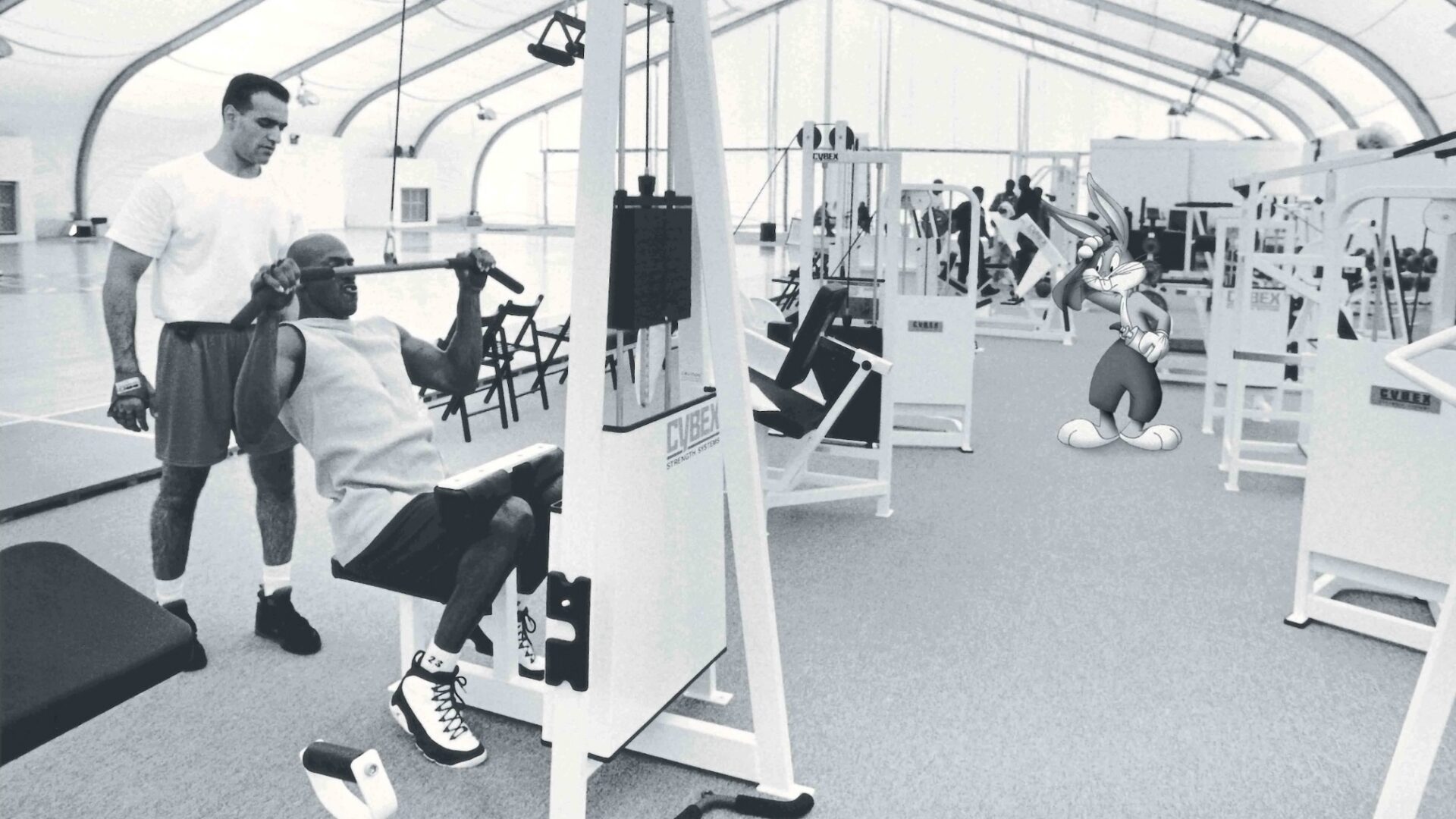
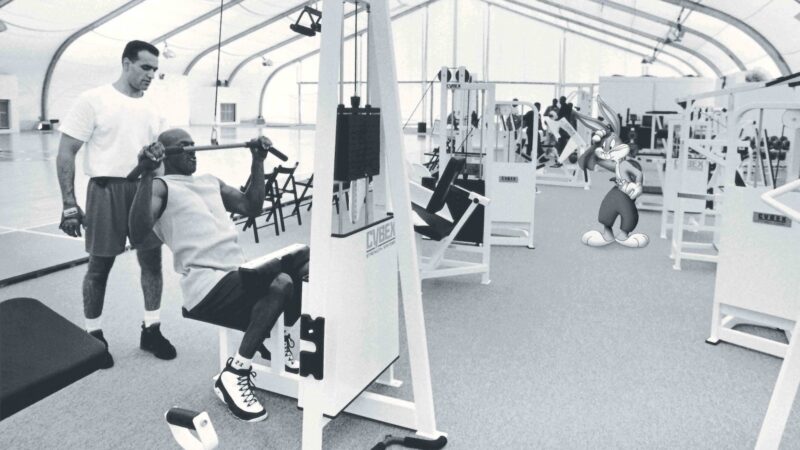
Jordan asked Warner Bros. to build a training court next to the set. What he probably didn’t expect was to find an almost complete training facility.
There was a basketball court, a gym equipped by Tim Grover, Michael’s personal trainer, who even created a training programme specifically for Bugs Bunny, although we have no idea whether Bugs actually followed it.
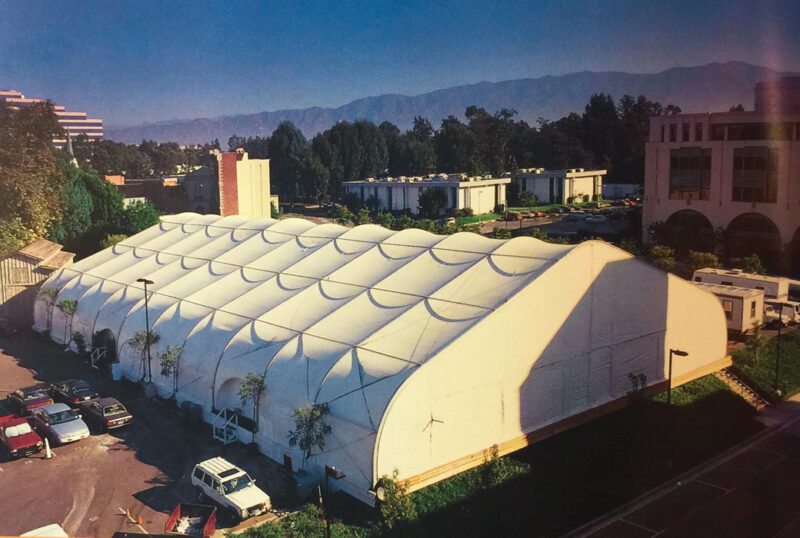
But it was much more than a gym. There was also a putting green, a locker room with showers, a lounge area with giant screens, and a table for card games. Everything was housed beneath a huge inflatable structure that quickly became known as the Jordan Dome.
Some of the biggest players of the era passed through. At first, several were players represented by Falk. Later came Magic Johnson, Reggie Miller, Scottie Pippen and Dennis Rodman, among many others.
The rules were simple: five-on-five games, first to seven points, no referees. Games started at seven in the evening, after Michael finished filming for the day, and could run until around ten.
The Space Jam shoot became a kind of parallel training camp for Jordan’s comeback.
And, of course, the sneakers
Michael Jordan’s retirement had left the Air Jordan 9 in an unusual position. While he was wearing them with a modified sole during his baseball career, the silhouette was beginning to find a second life in the NBA.
Some players who might not have dared to face Michael while wearing his sneakers now started wearing them as a kind of tribute. In their original form or in customised versions, the Air Jordan 9 appeared on the feet of Anfernee “Penny” Hardaway, Kendall Gill, Mitch Richmond, Latrell Sprewell, Harold Miner, B.J. Armstrong, Hubert Davis, Reggie Miller and Nick Anderson, the same player who would later say that 45 wasn’t the same as 23.
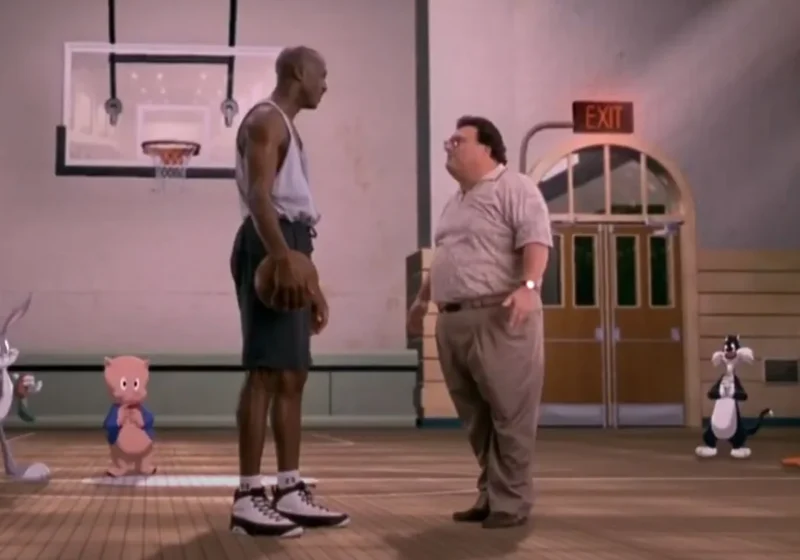
During the filming of Space Jam, Michael did not wear the Air Jordan 10, the model developed during his retirement and one that never seemed to fully convince him, even after Nike modified its design by removing the toe cap. In the film, the Jordan 10s appear far from Michael’s feet, as a kind of trophy among the cups.
Jordan wears some sneakers we might not expect to see in a production of this scale, including the Nike GTS Canvas and Nike Air Max Triax. And, of course, the Air Jordan 9 appears during the training games, while the Air Jordan 11 takes centre stage during the decisive moments.
The latter became forever associated with Space Jam, thanks to its special colourway created for the film. But if we go back to the training sessions that helped lay the foundations for Jordan’s comeback, the image is different: Michael in the Air Jordan 9.
30 Years Later
The 30th anniversary of Space Jam is a reason for Jordan to celebrate. The brand is bringing back sneakers associated with the film like the Air Jordan 9 “Space Jam”, as well as others that allow us to revisit the stories surrounding the shoot.
It is also a good excuse to watch the movie again. And perhaps to discover it from a different perspective: not just as a film starring Michael Jordan and Bugs Bunny, but as the product of a unique moment when basketball, cinema and advertising began to merge in a completely new way.