Can we think of new thoughts in a vacuum of the past? At first glance, a look at the surface of fashion does not necessarily indicate so. Most of the ideas conceived today revolve heavily around aesthetic movements of a long-lost past, but, needless to say, there is much more to it. Referencing the past can only be based on what we know now, and on a good day in the world of fashion, this means rethinking what we already know and injecting it with a new purpose.
The Roots of Ivy
Many of the industry’s most celebrated aesthetic movements adhere to this, and the pre-preppy, proto-modernist Ivy League movement testaments to it. Originating in the Northeastern states of the US by students enrolled in wealthy and privileged Ivy League universities, the movement took off in the 1950s as the young and wealthy started looking to 1920s sports- and leisurewear for a more casual aesthetic input. Dressed in houndstooth jackets, button-downs, and penny loafers, the aesthetic was for the selected few who could afford to play along. Despite its class-fixated nature, Ivy League attire spread rigorously in the following decade. Particularly in England and Japan, local re-interpretations of the movement became visual signifiers of the massive social revolutions happening concurrently in the early 60s. From the culture-countering Swinging 60s of London to the Heibon Punch-reading youth of Tokyo that would eventually clash with police ahead of the Tokyo Olympics in 1964.
In both cases, the youth had revolted against the conformity of the previous decades, and in the process of doing so, a new social awareness emerged, stressing the need for liberation, expression, and equality. Attire became a visual manifestation of that.
A Culture Around A Drugstore
By the time the ‘Anglomania’ Ivy League fever hit Paris, the generational changes were already happening, partially facilitated by the radical leftist ideas of the French New Wave. As a political shift was happening across France, French Ivy started emerging somewhere similar to where it originated. Specifically, at the gender-separated catholic schools for the upper middle class.
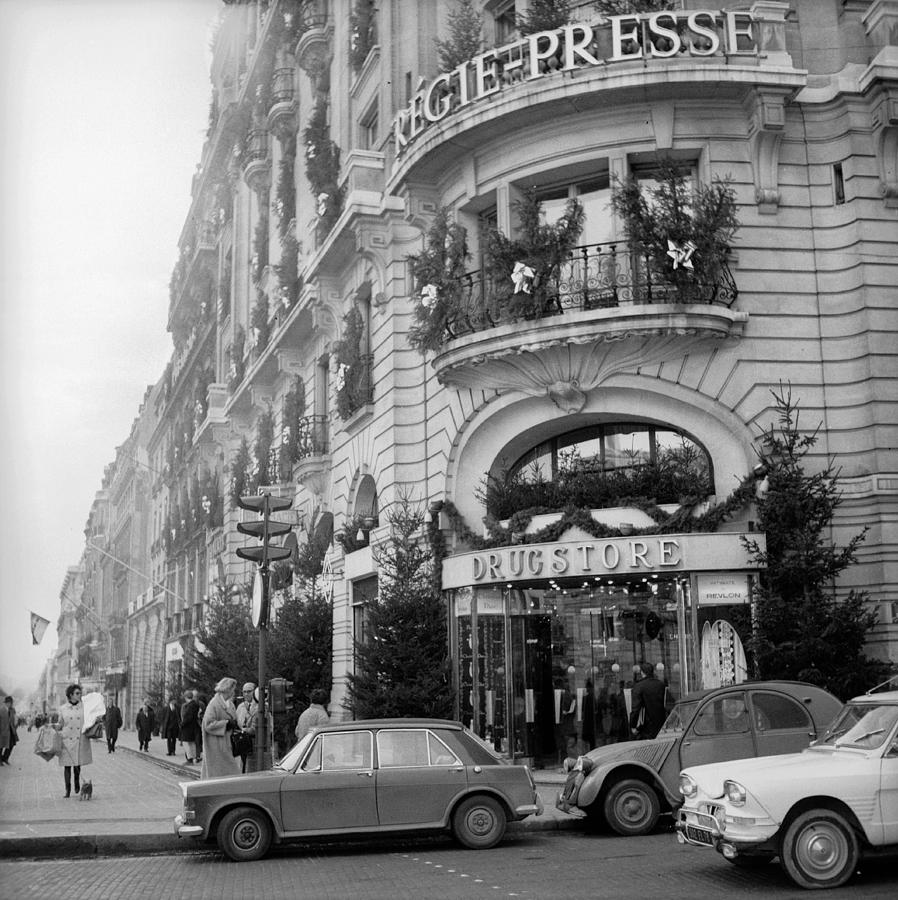
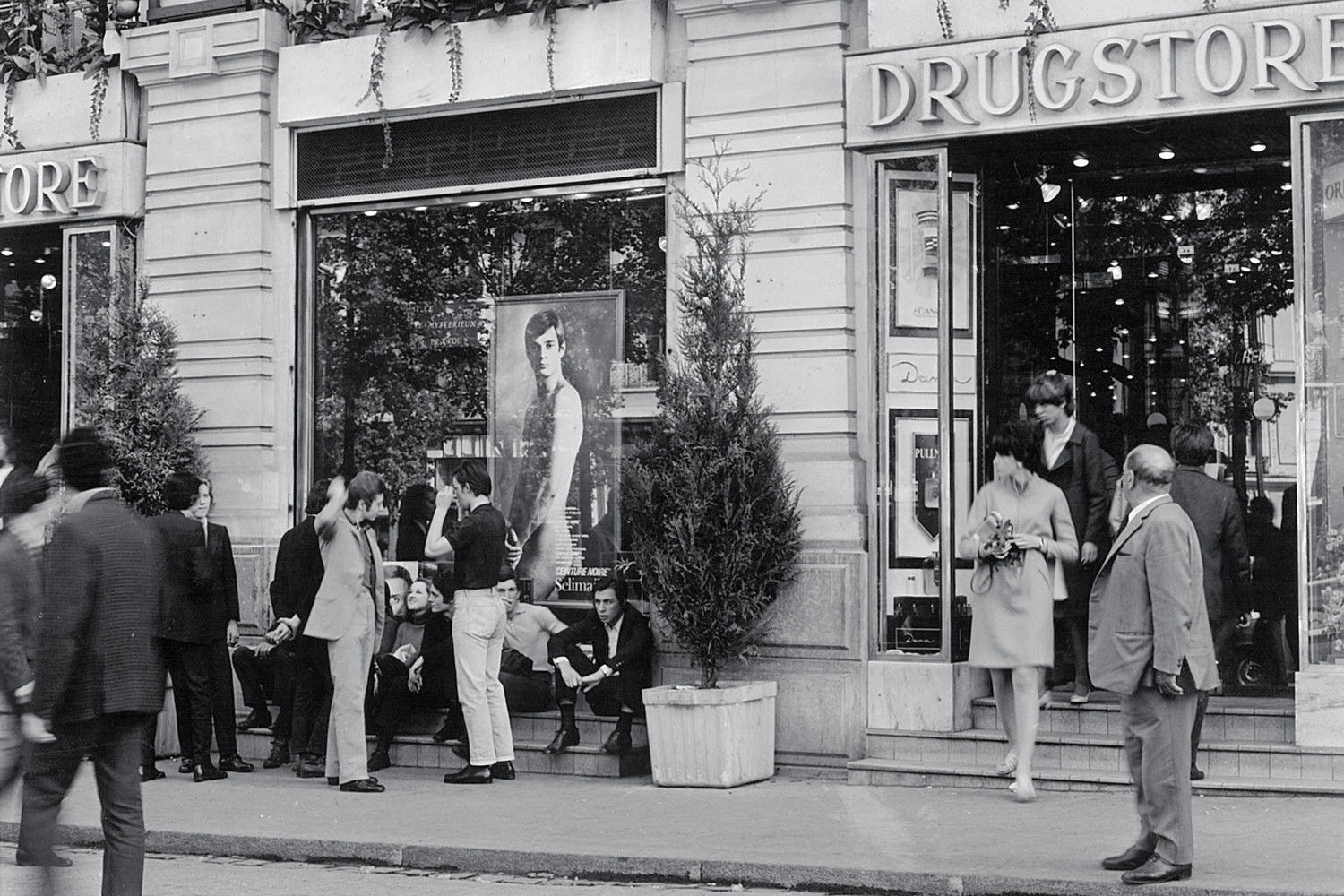
Tired of the conformity of school uniforms and the rigidness of a gender-separated educational system, a group of male students welcomed the idea of a more socially casual alternative. They started hanging around Marcel Bleustein Blanchet’s multi-conceptual space known as Drugstore. Housing a press agency, a record shop, a perfume store, and an actual pharmacy, Drugstore’s opening in 1958s was considered ground-breaking in its contemporary, and it quickly became a hub for the French Ivy. Posting up at the site on Thursday afternoons became routine, and the group quickly gained the name ‘Bande Du Drugstore’, also known as les minets. Soon, an identity formed around the group, as it gradually built up a notorious reputation for vandalism, starting fights, and tirelessly attempting to pick up girls.
The French Aesthetic Jargon
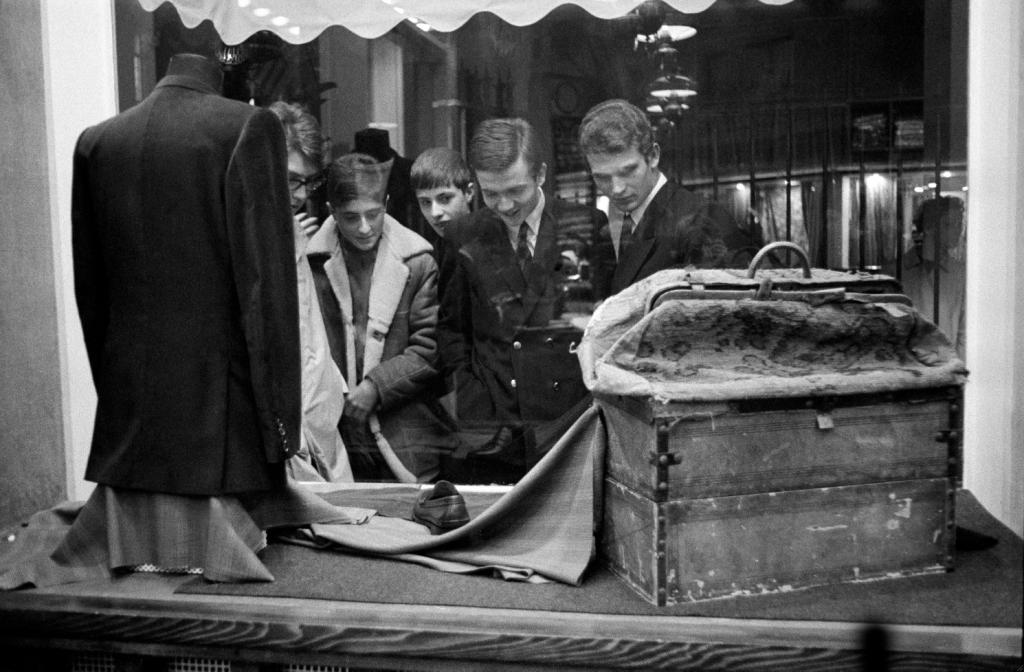
Whereas the Americans had J.Press and the Londoners’ John Simons, the French minets had Renoma, opened by tailor Maurice Renoma in 1963. Offering tailor-made suits and access to international brands associated with the aesthetic, Renoma became an instant go-to for the bande and beyond. The youth looked to the international concurrent movements for aesthetic reference, but it was the distinct integration of French heritage brands that would shape the singularity of French Ivy. Bande du Drugstore turned to Paris-based shoe manufacturer JM Weston’s Moccasin 180 as the footwear of choice, over time cementing it as a visual embodiment of the movement. Other brands like Church’s, Clarks, and Paraboot would also appear sporadically within the scene. The casually wealthy, sometimes androgynous style, initially stood in stark contrast to the renown of the gang. However, as the reputation of les minets began to transcend Drugstore into numerous similar groupings across Paris, the French Ivy became a symbol of the young revolt in return.
Ivy Becomes Political
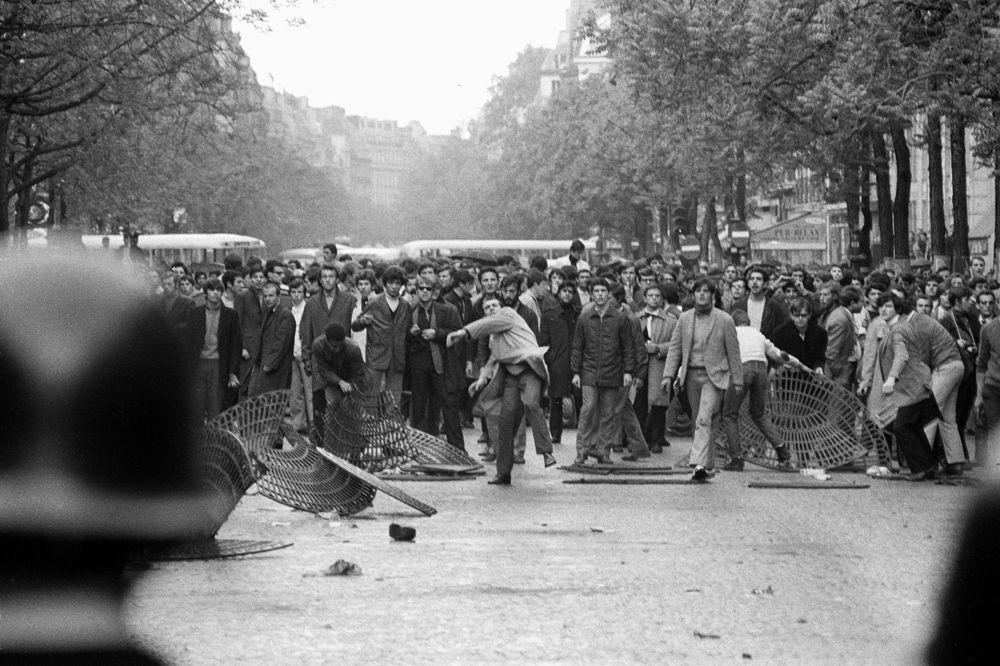
Despite the obvious privilege that was, and still is, attributed to both the movement and its associated brands, the early culture around French Ivy could not exist without the privilege it derived from. It was the rigidness of the upper middle class – its bureaucratic obedience and imposed limitation of self-expression and equality – Bande du Drugstore initially reacted to, and it remains from this notion that a discontent with the social structure arose. A discontent similar to that of the students and the working class, whose indefatigable effort eventually led to the May 68 uprising.
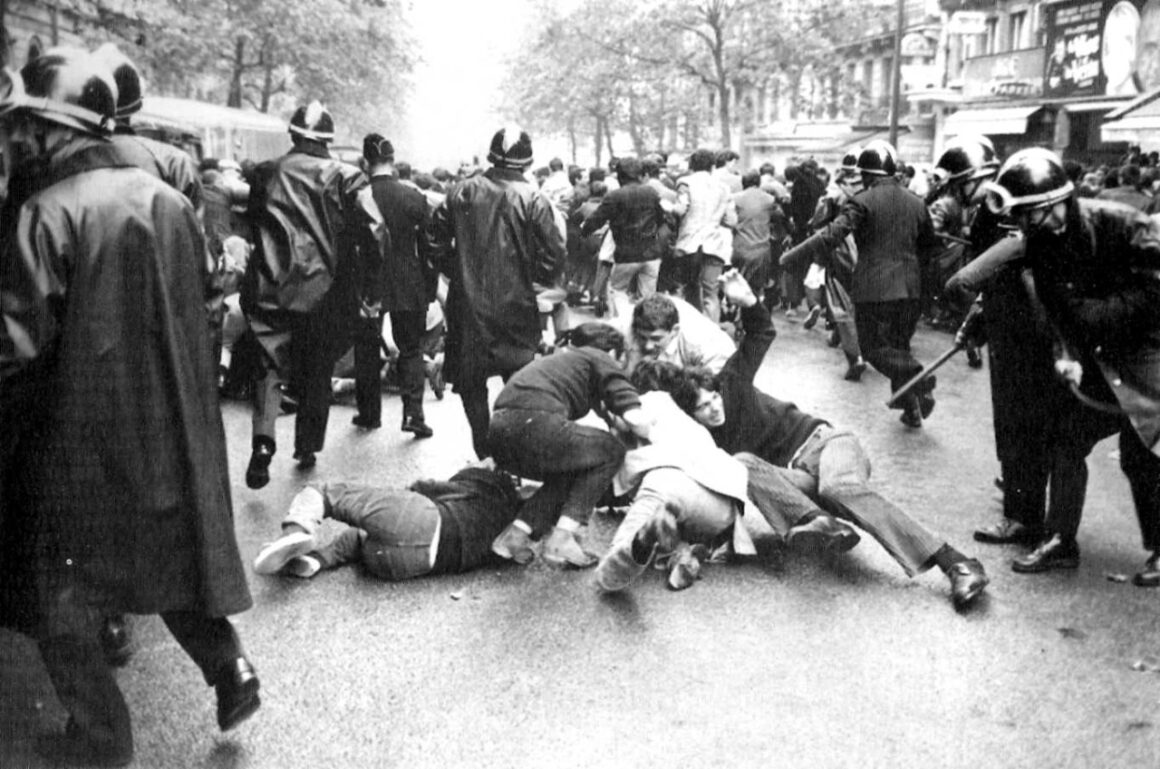
The revolt of Bande du Drugstore did not necessarily correspond with the political agenda of the former, and to a wide extent the refusal happened through embracing English and American aesthetic and culture, rather than ideology. In the years predating the uprising, numerous members of the movement returned to bourgeois life distanced from the inequality of society, while others were catapulted into the leftist youth movement via their defiance. When the May-preceding demonstrations erupted at the University of Nanterre on March 22, several former Bande du Drugstore members were among the enrolled students that protested.
So were these kids blinded by privilege, or was it solidarity after all? The short answer is a little bit of both. For some, privilege became a leeway of acting without accountability. For others, the resentment of overimposed control was the preliminary encounter with the oppressing side of society that an array of social groups were subject to, which facilitated the establishment of solidarity.
Bande du Drugstore is long dissolved, and the French Ivy hay days seem more like an echo of an earlier generation’s youth. Albeit, the aesthetic movement of Ivy has re-emerged on numerous occasions since, every time with a slightly new definition of what Ivy can and should look like. In Paris, the mindset of resisting remains in place as new generations continue to find ways of reinterpreting the past to challenge the present.