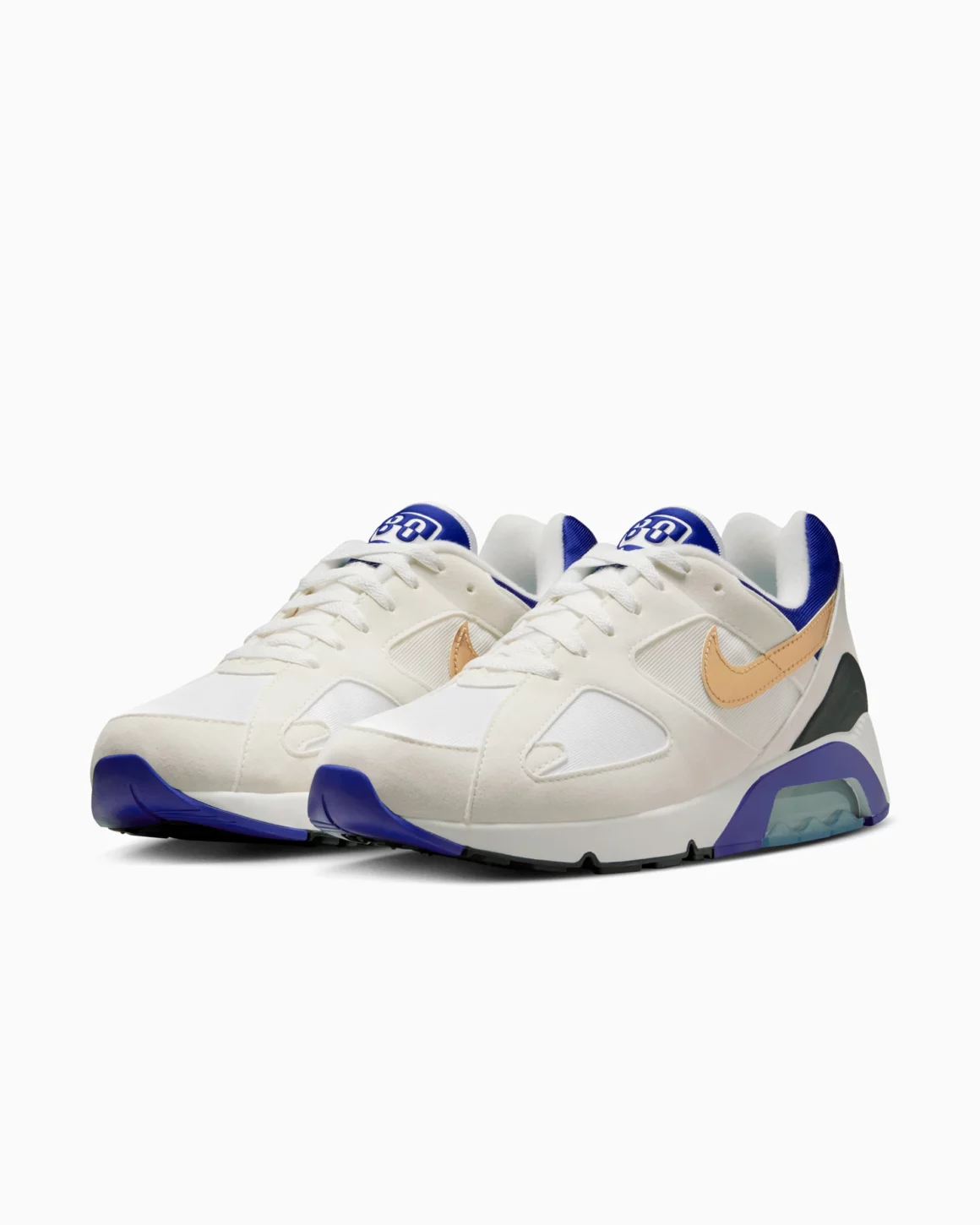
Created in 1991, the Air 180 emerged at the intersection of technological innovation and art. Since then, its history has been maintained through its reissues as a legend.
Nike Air 180, 180 degrees
Since the inception of Air technology in 1977, when Frank Rudy presented his project to Nike, the goal has been consistent: to make shoes more airy. That was the Air Max’s goal, and it has remained so through each season. So the first Air Max in 1986 was not enough, and the Air units became increasingly large….

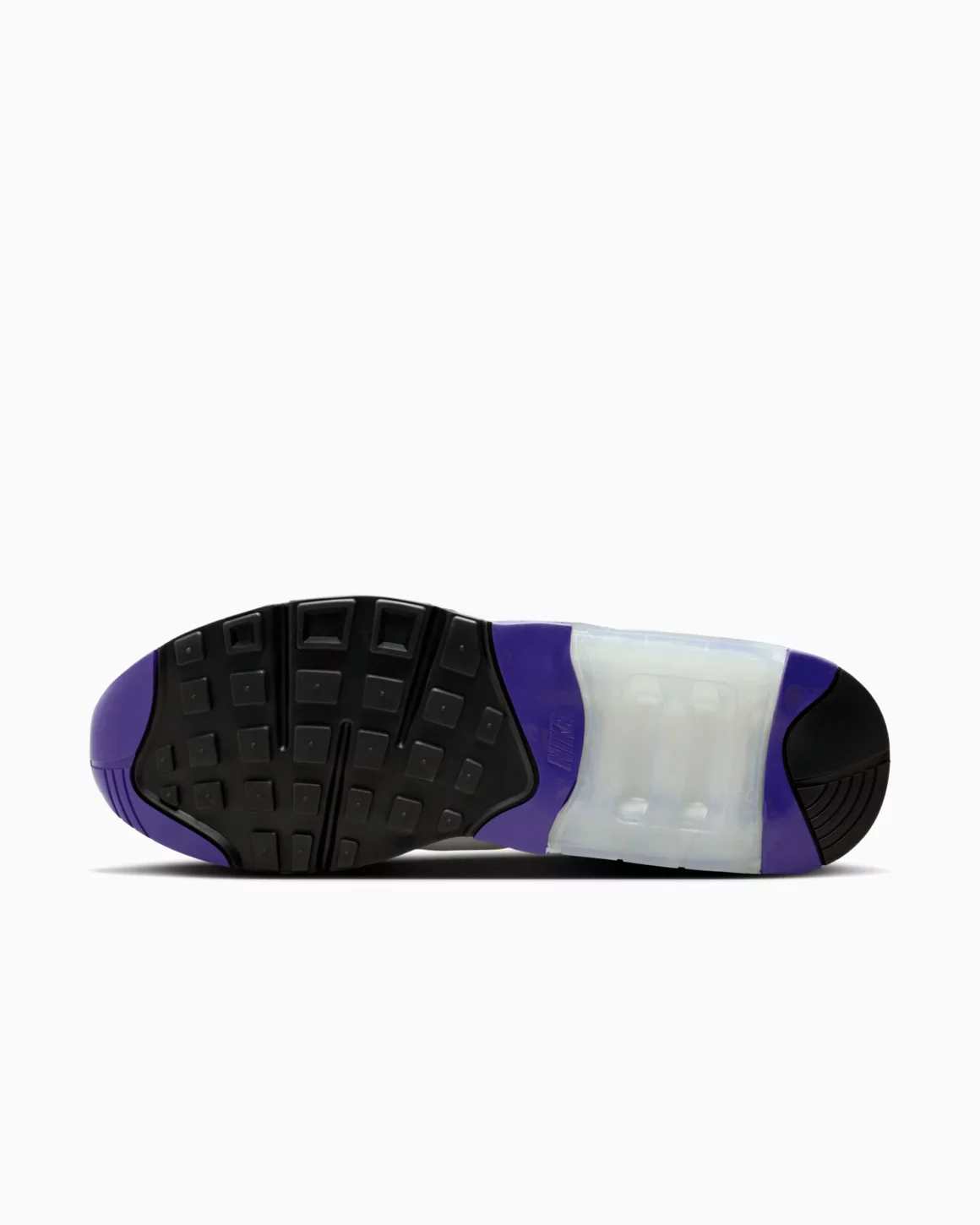
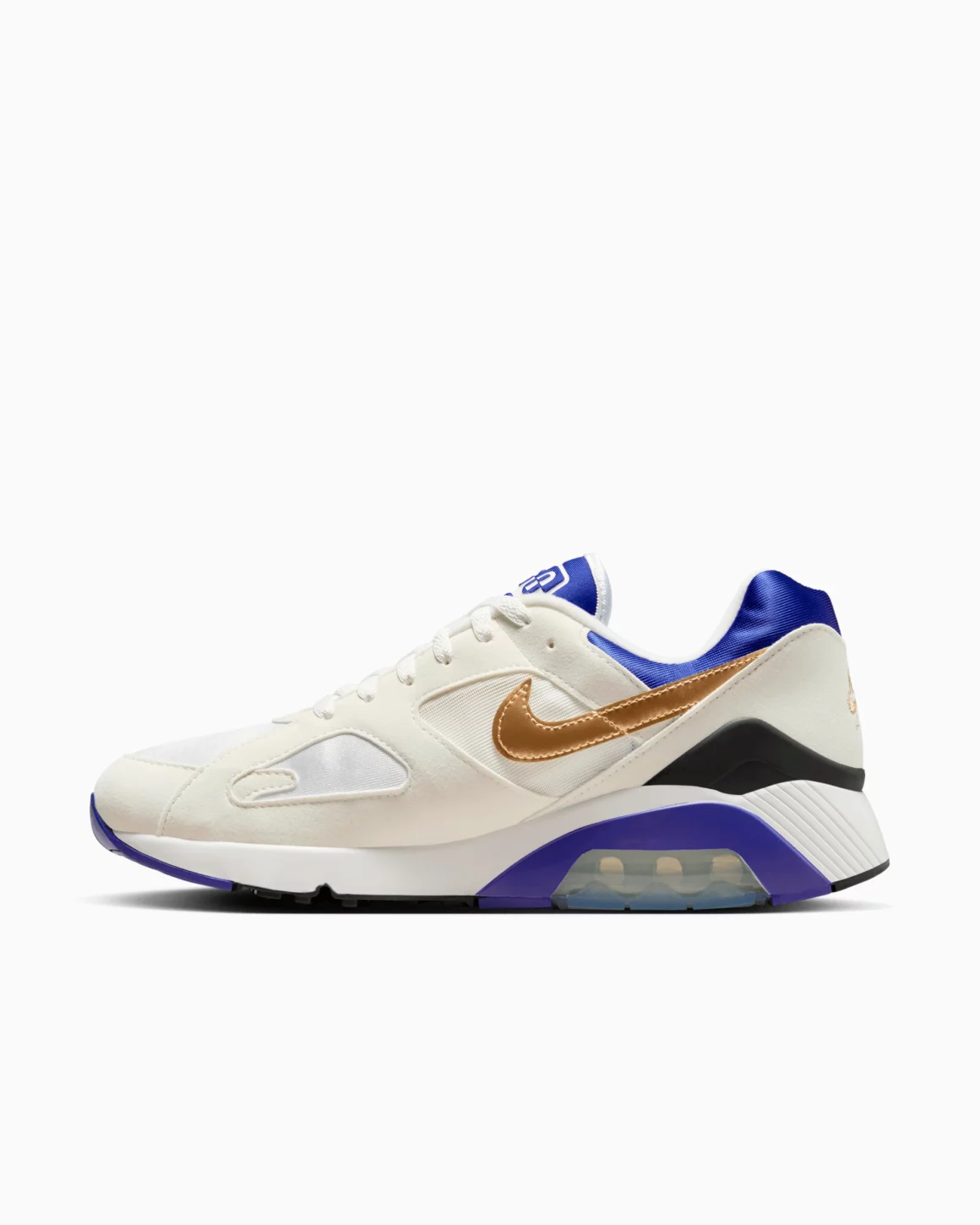
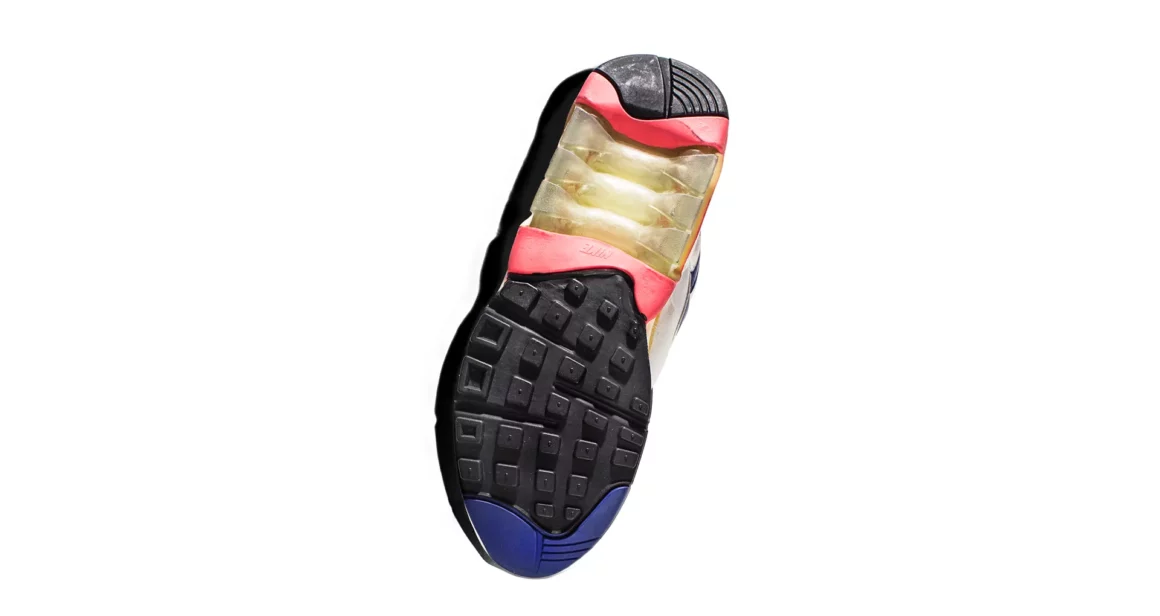
In 1991, it appeared to have reached its peak, with Bruce Kilgore, also the designer of the Air Force 1, developing an air unit that was visible at 180 degrees, even from underneath, and contained 50% more air than previous models. Nike hoped that the Air 180 would pave the way for basketball models promoted by Charles Barkley and David Robinson.
Nike Air 180 and Tinker Hatfield
Tinker Hatfield designed the Air 180 to make the big innovation the centre of attention, drawing inspiration from the Air Max 90 (then known as the Air Max III), which was surrounded by color (which we now call Infrared, though it was Hyvent Orange back then).
Unlike the previous Air Max, Air Max 86, Air Max Light, and Air Max III, the Air 180 had a clean color scheme, with a predominantly white upper and Ultramarine and Solar Red accents on the midsole.
Nike 180: innovation
But the innovation did not stop with the midsole; he was inspired by another Hatfield design, the Nike Huarache, for the construction of the tongue to create the Dynamic-Fit Sleeve, which surrounded the foot and allowed for anatomical differences, as well as the upper, which was made of an exoskeleton design made of synthetic suede and covered in mesh.
Nike Air 180 and art
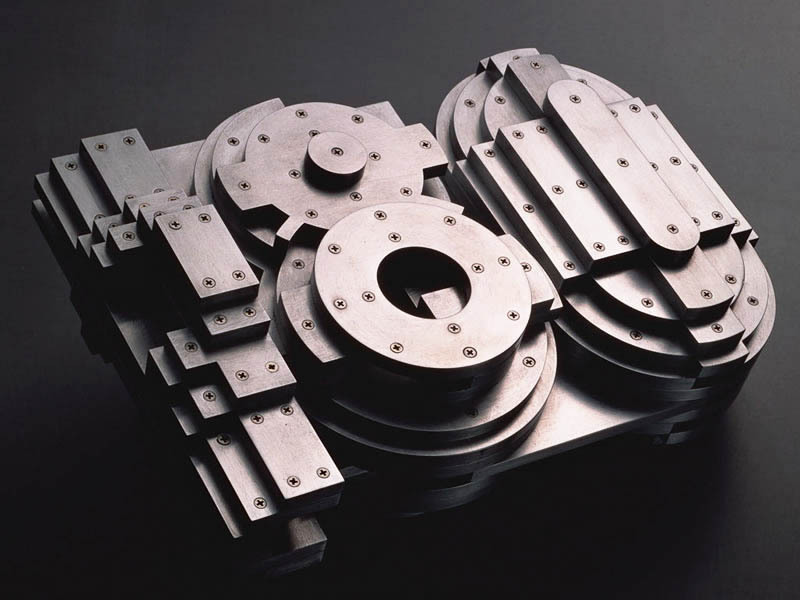
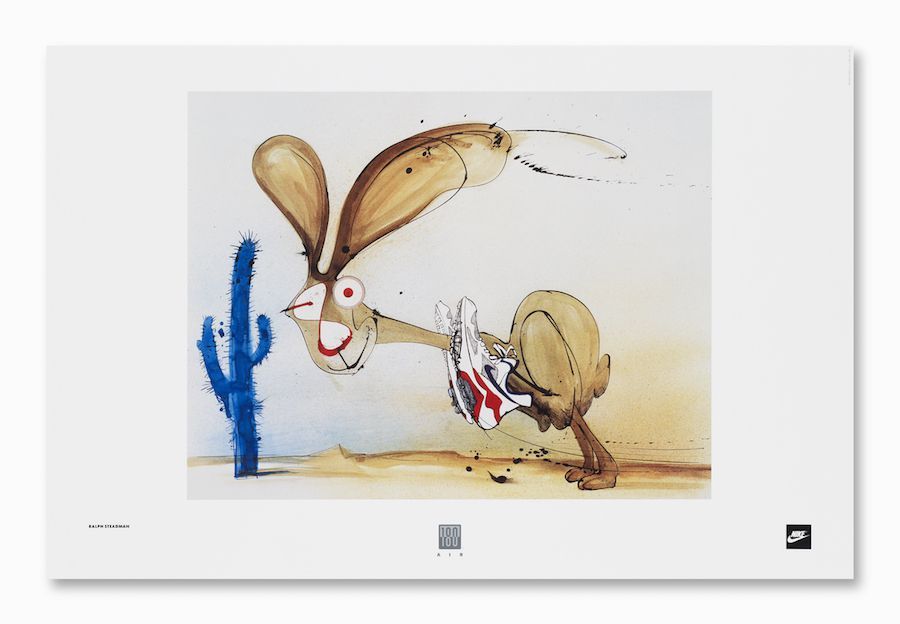
It was Nike‘s first global launch, featuring works by Ralph Steadman, Marcello Morandini, Alfons Holtgreve, Charles S. Anderson, and Takenobu Igarashi, as well as video pieces by directors David Cronenberg, Jen Luc Godard, and Industrial Light & Magic (George Lucas’ special effects company). Cinematographer (and Zooey Deschanel’s father) Caleb Deschanel and costume designer Eiko Ishioka (Bram Stoker’s Dracula) also had their own Air 180 videos.
It was not the first time art crossed paths with sneakers; Ralph Steadman had been working with Hunter S. Thompson and Nike since the early 1980s (he designed some of the London Marathon posters). But it was the first time that art occupied a predominant space in a Nike campaign.
Nike Air 180: samples
Perhaps due to the extensive nature of these campaigns, which were carried out in Germany, Japan, and the United States, there were many changes to the final design of the 180, both aesthetic and structural; in catalogue photos, the 180 appeared with traditional or Dynamic-Fit tongue, different versions of the 180 logo, and shapes of the Air unit. Many of the samples sparked rumours about the final design that would be available in stores.
The double life of the Air 180
The 180 technology had a brief run, appearing in models seen at the 1992 Barcelona Olympics, including a rare appearance by Michael Jordan. And it disappeared.

Unlike other contemporary models, its reissues have remained in the background, reserved for connoisseurs. Very limited editions commemorating the release of Kanye West’s “The College Dropout”, special versions for Eminem’s charity programmes, and collaborations with Dizzee Rascal. COMME des GARÇONS released three colorways based on pink, AMBUSH, and Fear Of God, completely reinterpreting the silhouette. Ralph Steadman and some 1991 artists had special editions.
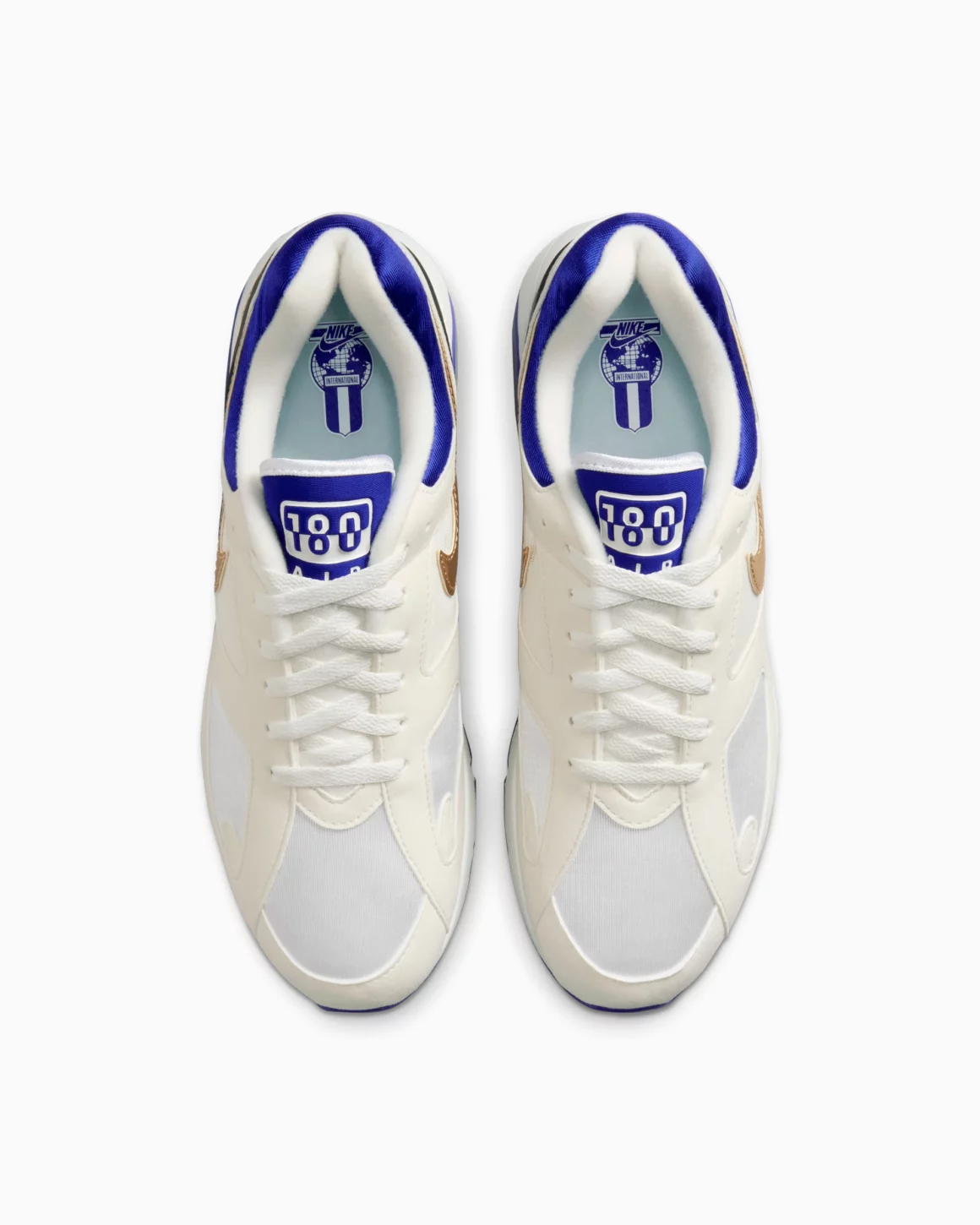
The new edition of the Nike Air 180, (Summit White/Metallic Gold-Concord-Black), presented by Michael Jordan as a prequel to Barcelona 92, is available only for FOOTDISTRICT VERIFIED.