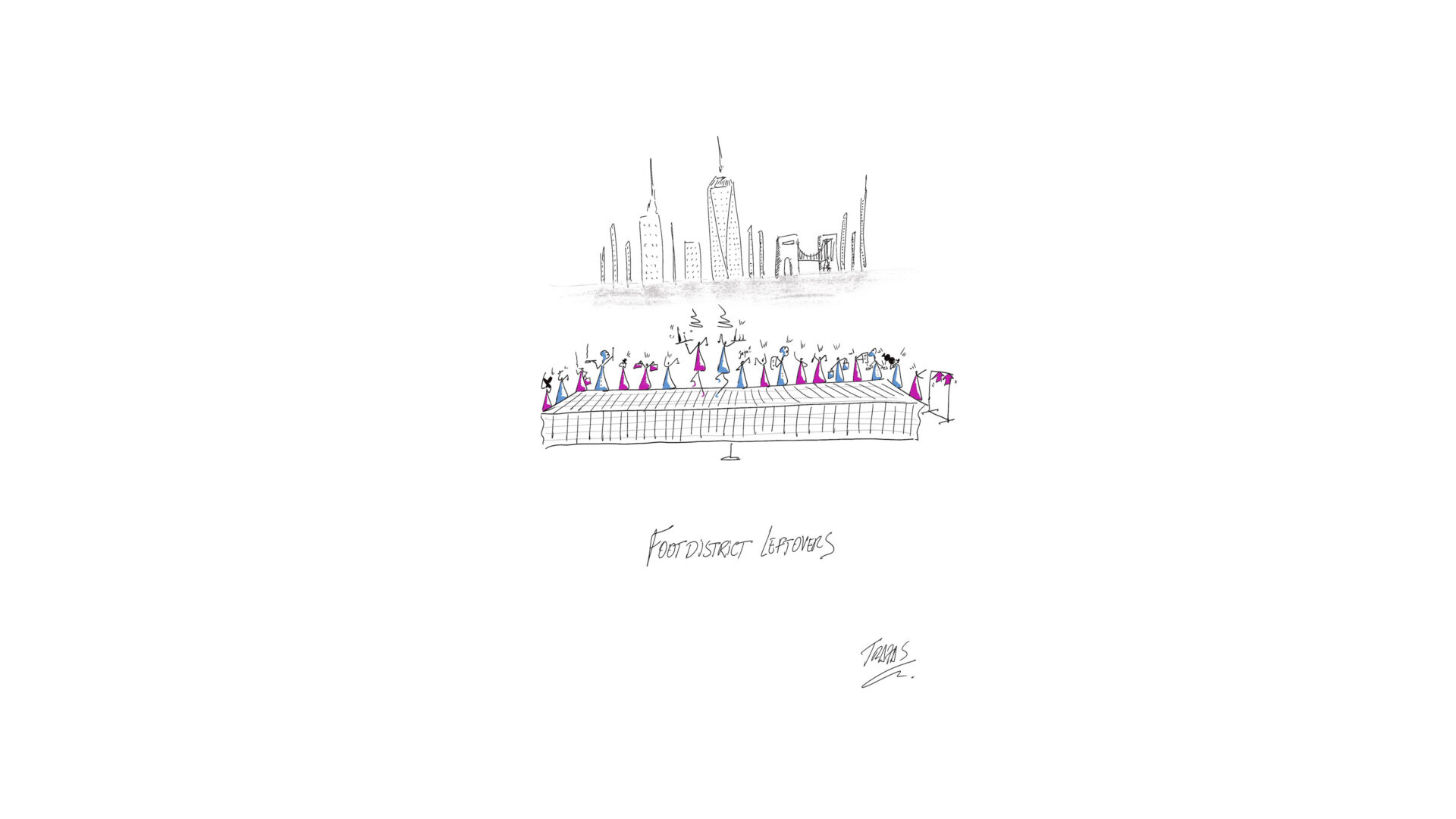
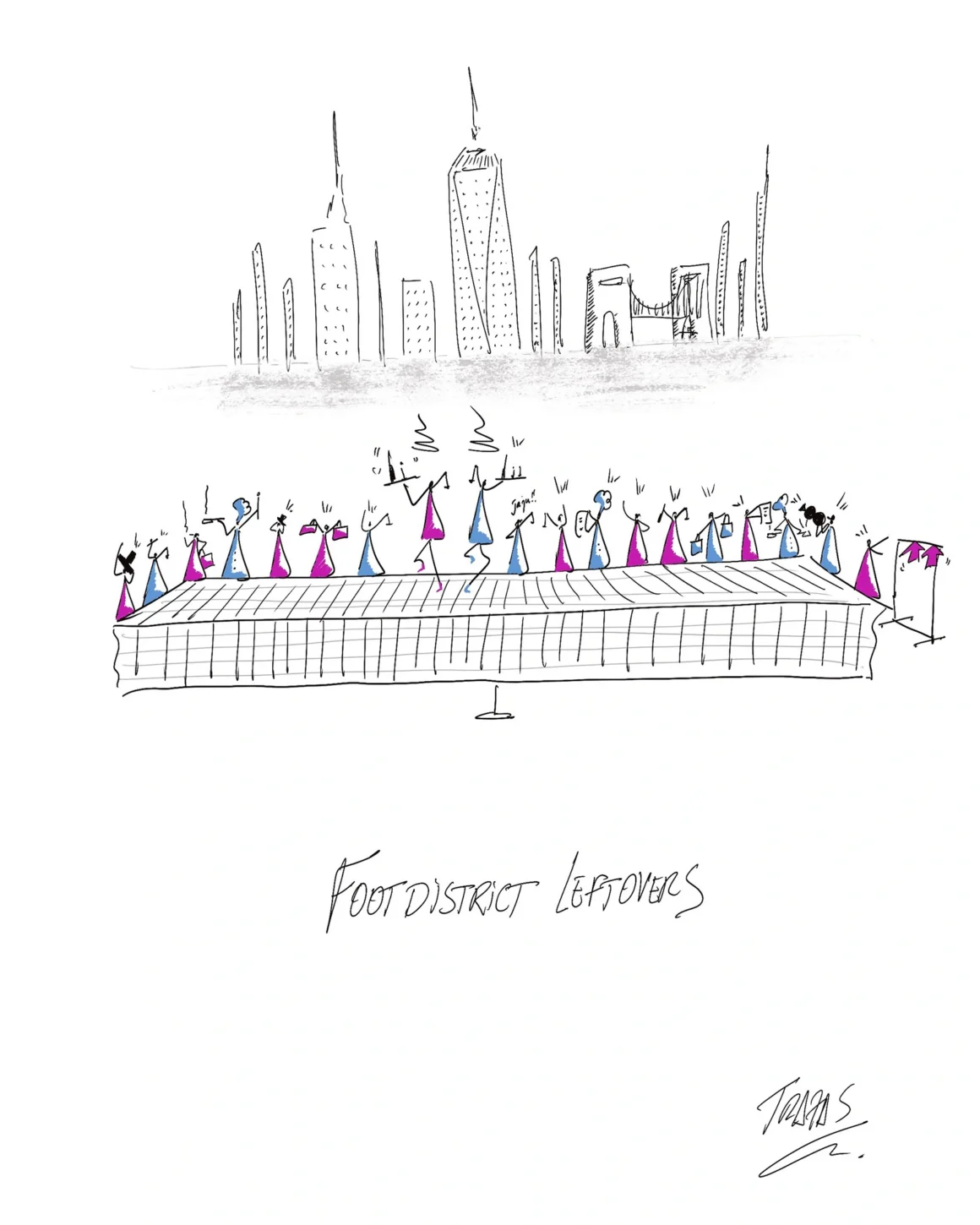
Leftovers are much more than what remains: they are memory, gesture, and possibility. For this special dinner with New Balance, we invite illustrator Trazas to explore the poetry of what endures, transforming Thanksgiving’s most humble tradition into an intimate creative ritual.
Thanksgiving is a MADE IN USA celebration built around gratitude. At FOOTDISTRICT, we believe that something as important as giving thanks shouldn’t be confined to just one day. And we also know that Thanksgiving food doesn’t stay confined to that day either.
With the help of New Balance, we’ve prepared a dinner inspired by the creative reuse of Thanksgiving leftovers. While searching for the most artisanal angle to accompany the New Balance 993 MADE IN USA, we found illustrator Carlos Alamandoz, known as Trazas.
Ahead of the dinner, we wanted to learn more about him, his work… and tried not to ask too many questions about what he’s preparing for us.
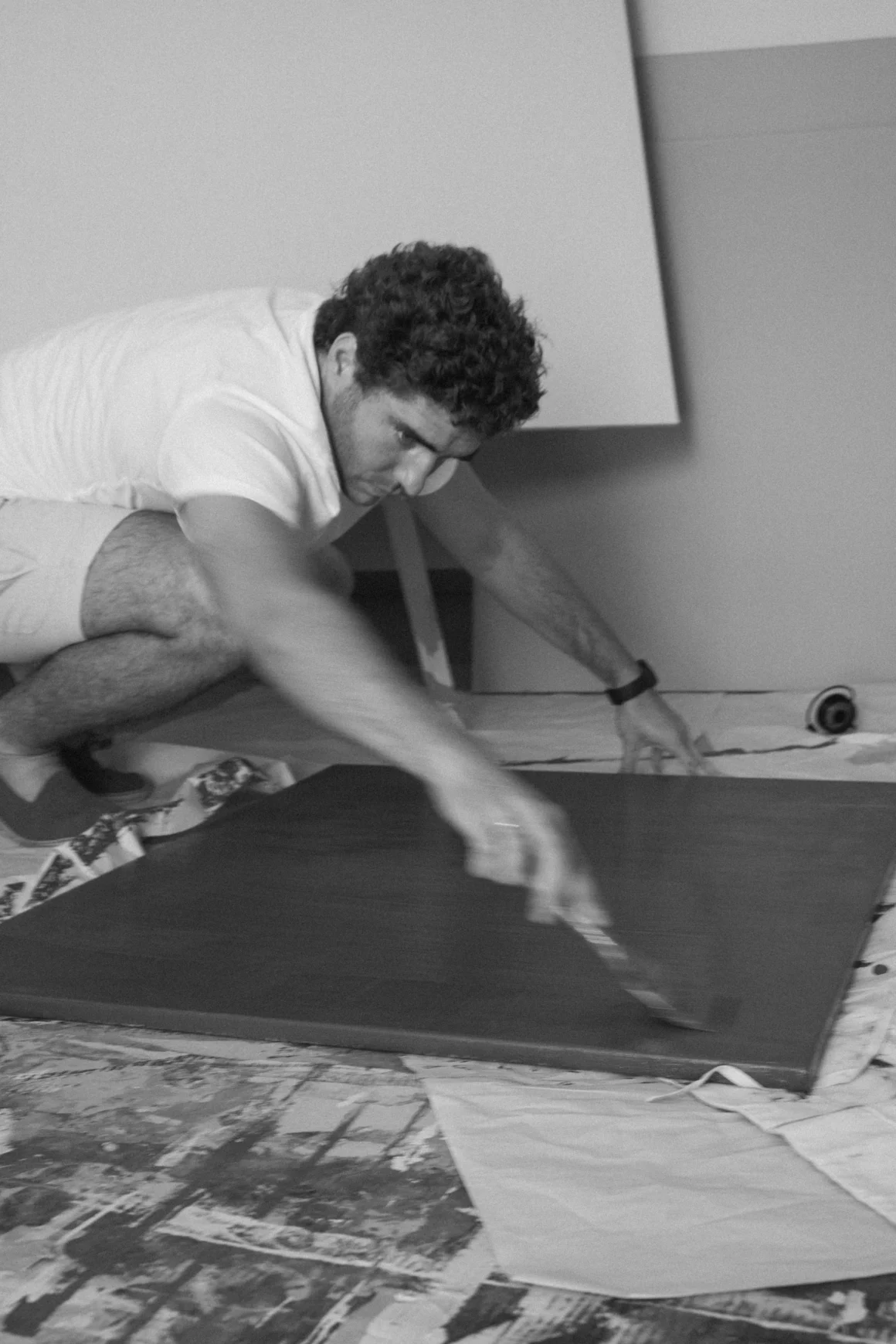
How would you define your style? What visual or emotional elements are essential for a piece to feel “very Trazas”?
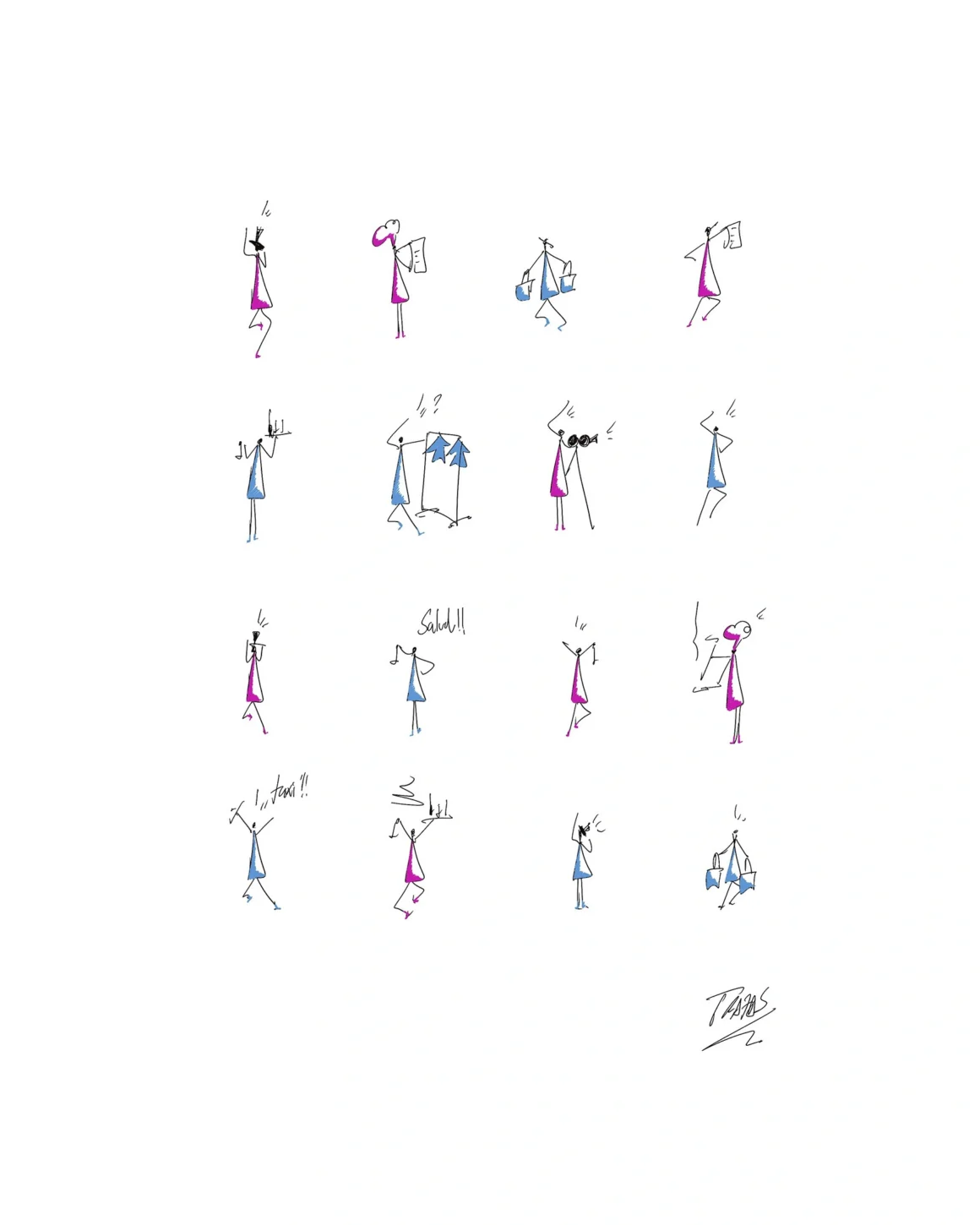
A simple, kind, and universal style. Something very characteristic of my work is that it’s easy, pleasant, and suitable for all audiences.
If I had to highlight a key visual or emotional element, it would be the sense of movement in the characters and scenes I create.
We’re talking to you in the context of the event we’re organizing with New Balance, inspired by Thanksgiving leftovers. In your own life, you’ve also had “leftovers” from past stages: changes of direction, career shifts… How do you reuse that learning from a world that seems so different in your work today?
I think the past teaches us far more than we realize. In my case, Trazas definitely wouldn’t be what it is today if I hadn’t worked in consulting, if I hadn’t met certain people who inspired me, or if I hadn’t studied the degree I studied.
Likewise, I think that if I hadn’t lived those first almost eight years of a less vocational career, I wouldn’t appreciate my current work as much. Having worked on projects that didn’t motivate me so much has made me value my day-to-day infinitely more.
I think that’s key to how much I enjoy what I do now.
You have a certain connection (at least academically) with the United States. Did you ever experience a Thanksgiving?
Yes, absolutely. During my time studying at ICADE, I took part in a program with Georgetown University, and the truth is that American culture is very different from European culture. There are things I don’t share or don’t like as much, but if there’s something I envy, it’s how proud they are of their traditions, their flag, their country, and their roots.
In that sense, it’s amazing to see how they celebrate Thanksgiving every year and what it means to their society. It’s a beautiful tradition, simply because it exists, because it’s celebrated, and because of what it represents.
In cooking, using leftovers is an almost intimate act—something offered to the closest circle—and at the same time, it’s an exercise in creativity. Is there something similar in art? Do ideas and projects get “recycled”?
Well, you’re not always operating at your creative peak, so revisiting past ideas is always positive as long as they add value.
Your work involves a lot of active participation and direct connection with others—so much so that you take personal commissions that require conversation, something we’ll also be doing during the event with New Balance. How did you realize you wanted to involve others in a creative process that many artists see as deeply personal?
It happened very naturally. I started creating prints and canvases based on my own interests. As a result, all those ideas, hobbies, or passions that I wasn’t including in my work became commissions people asked me to do.
That way, I stayed true to my original collections while adapting to what people were drawn to. At first, it was about hobbies, and later it became life stories, memories from trips…
The truth is, it’s an incredibly special process. Not only because it’s a way to summarize and capture everything learned in a piece, but also because you get to know people’s lives. People open the door to their memories, and it’s remarkable. It’s a super interesting sociological exercise. There are patterns—like the pandemic, the birth of a child, moving homes, changing jobs—that all mark us, but seeing how each person reacts to those moments is a unique experience.
Welcoming those stories turns you into a sort of emotional archive. Does exposing yourself to people change you as an artist?
Yes, that’s exactly what I meant. It’s like entering the intimate part of people’s lives. Being able to summarize it, group it, represent it, and finally deliver it so they can keep it forever is an incredible feeling.
I think this is what has made my work different: it’s very personal and very emotional.
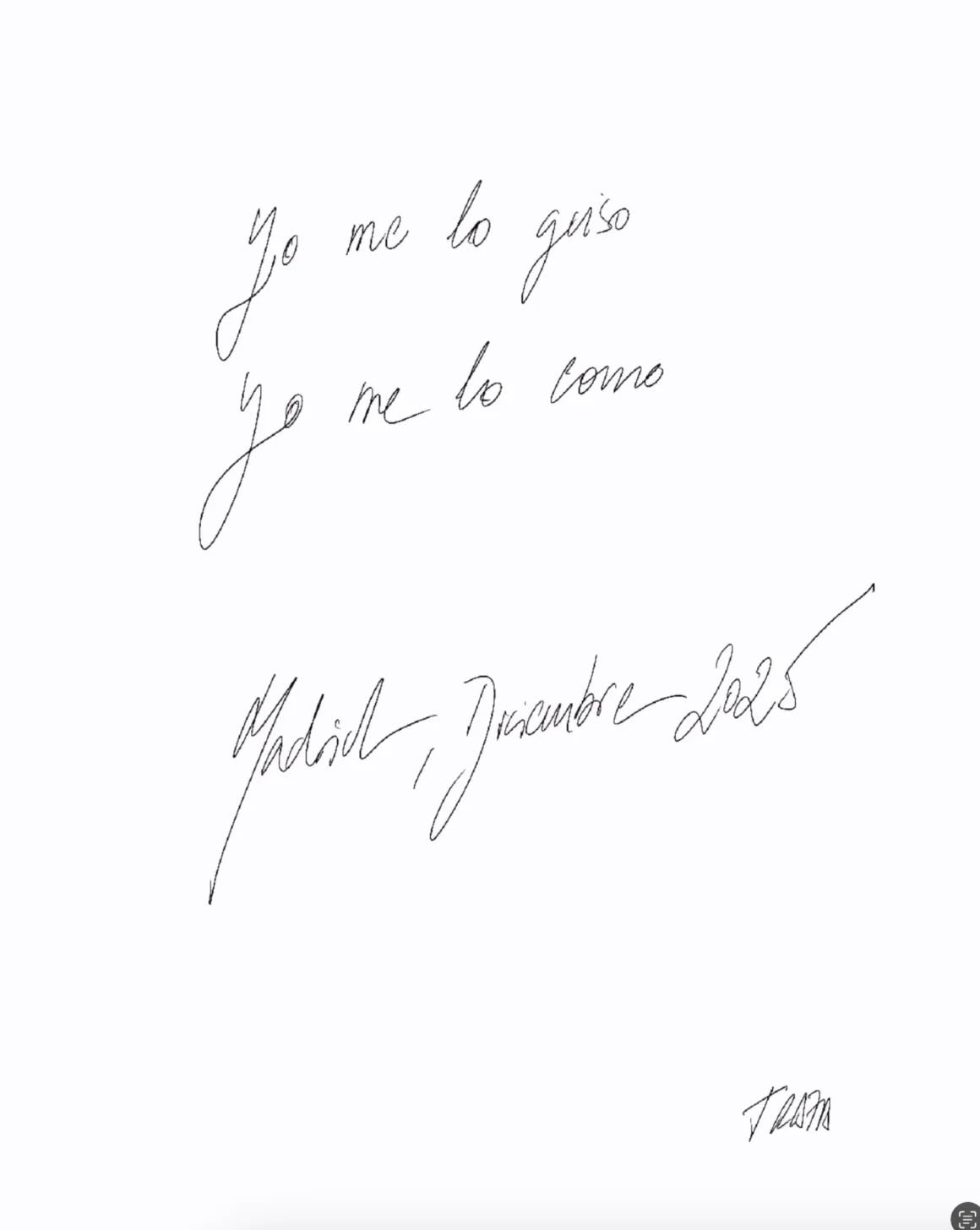
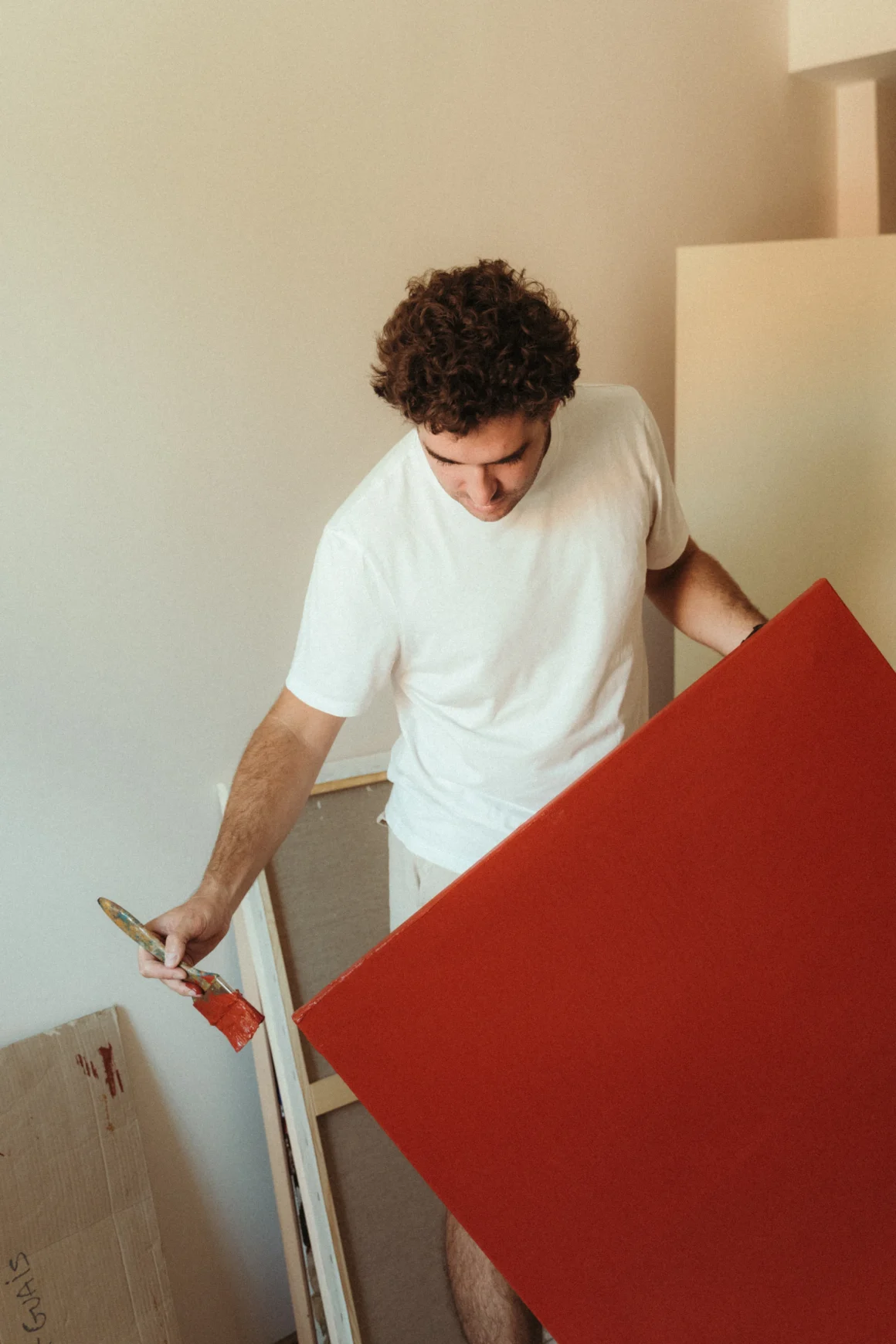
Your artistic career started while you were balancing other jobs. How do you think that double life has influenced your perspective and the stories you tell in your work?
As I said earlier, in every way. Without my past in consulting, I wouldn’t approach many decisions the way I do now. I don’t think it helped me much artistically, but definitely in the business side.
The ambition to always look for the next challenge, or to think in terms of medium- and long-term planning, is crucial to make any project credible, solid, and above all, sustainable over time.
How has your creative approach evolved from your early commissions to the exhibitions and collaborations you do now?
It has evolved enormously—both business-wise and artistically. In my latest exhibition in Seville, I incorporated new techniques, new colors, new formats…
But above all, I’ve had the opportunity to work on unique pieces—one-of-a-kind works that tell their own story beyond collecting static ideas, hobbies, or memories. Now the artwork itself starts telling you its idea.
Though you’ve been dedicated to art for some time, you don’t come from a traditional academic background. Do you feel that has become an advantage when shaping your own visual language?
Maybe, yes—because I don’t have any artistic framework telling me what I should or shouldn’t do. I’ve followed my intuition, my memories, my interests, and my way of seeing life.
As I’ve said before, there are two constant sources of inspiration for me: the comics I read as a kid, which clearly influence my work; and the travels I took during those almost eight years working for others. I always carried a Moleskine and a Rotring pen with me, and it helped me gain fluency as I drew—often depicting scenes with very little, which is still very visible in my work today.
Your pieces seem built from simple, very recognizable elements. Is that apparent simplicity a conscious search? Is it easier to connect with the viewer without artifice?
Yes, it’s something I’ve always wanted to reflect in my work: that with very little, or through something very simple, a story can be understood. But I also believed it was especially important that it be universal—something that could be understood here and in other cultures or countries. That’s something I saw clearly this year with my work in Paris and Dubai.
What role do you think art plays in today’s society, especially at a time when everything moves fast and is consumed quickly?
I think there’s an urgent need to return to the artisanal, to well-made things, to reconnect with what’s human and simple.
The hyperstimulated society we live in has great advantages and offers incredibly valuable tools, but it has also affected us negatively.
I believe the desire to pause, breathe, and appreciate things made slowly, by hand, as they used to be done, is a trend that will only grow.
Simplicity, the escape from artifice, and a kind, warm final result—Trazas will present his work at a dinner where he will share space with the New Balance 993.