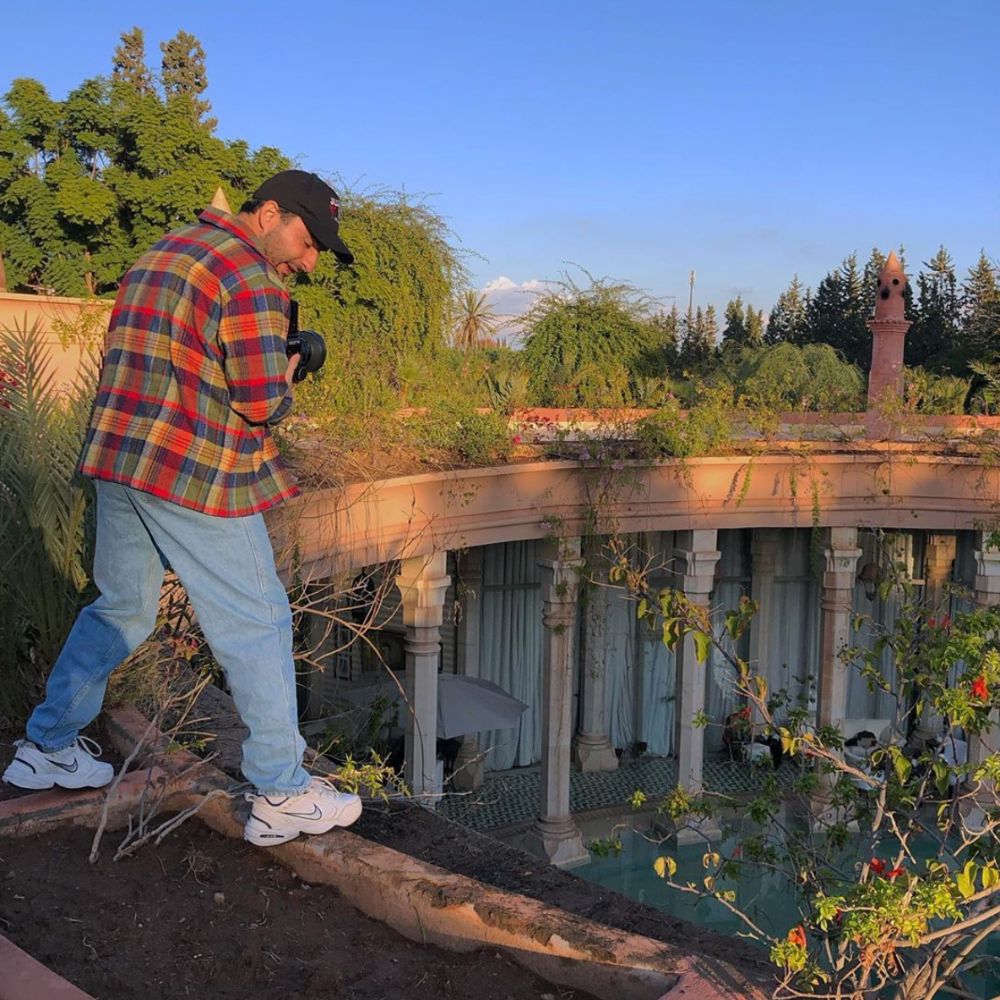
‘Memes are the viral celebration of the punk spirit’, says the photographer and director Rémi Ferrante (@pastremi), the creative mind behind projects like Blast Magazine or Le Confiné Libéré and campaigns as the latest SS20 from Casablanca. Endorsed by a creative career between Los Angeles and Paris, working with brands such as Asics, Nike, adidas, Lacoste, LVMH or Hypebeast..
His connection with nature, his contemplative perspective, his certain irony and his admiration for architecture are some of the flagships manifested in all of his works. Rémi Ferrante embraces the spontaneity and the counterculture, and his photographs are marked by an organic fluency, an harmonious breakdown with the classic elitism and an artistic ambition that seemed to bloom already in his earlier days, between raves and skateparks.
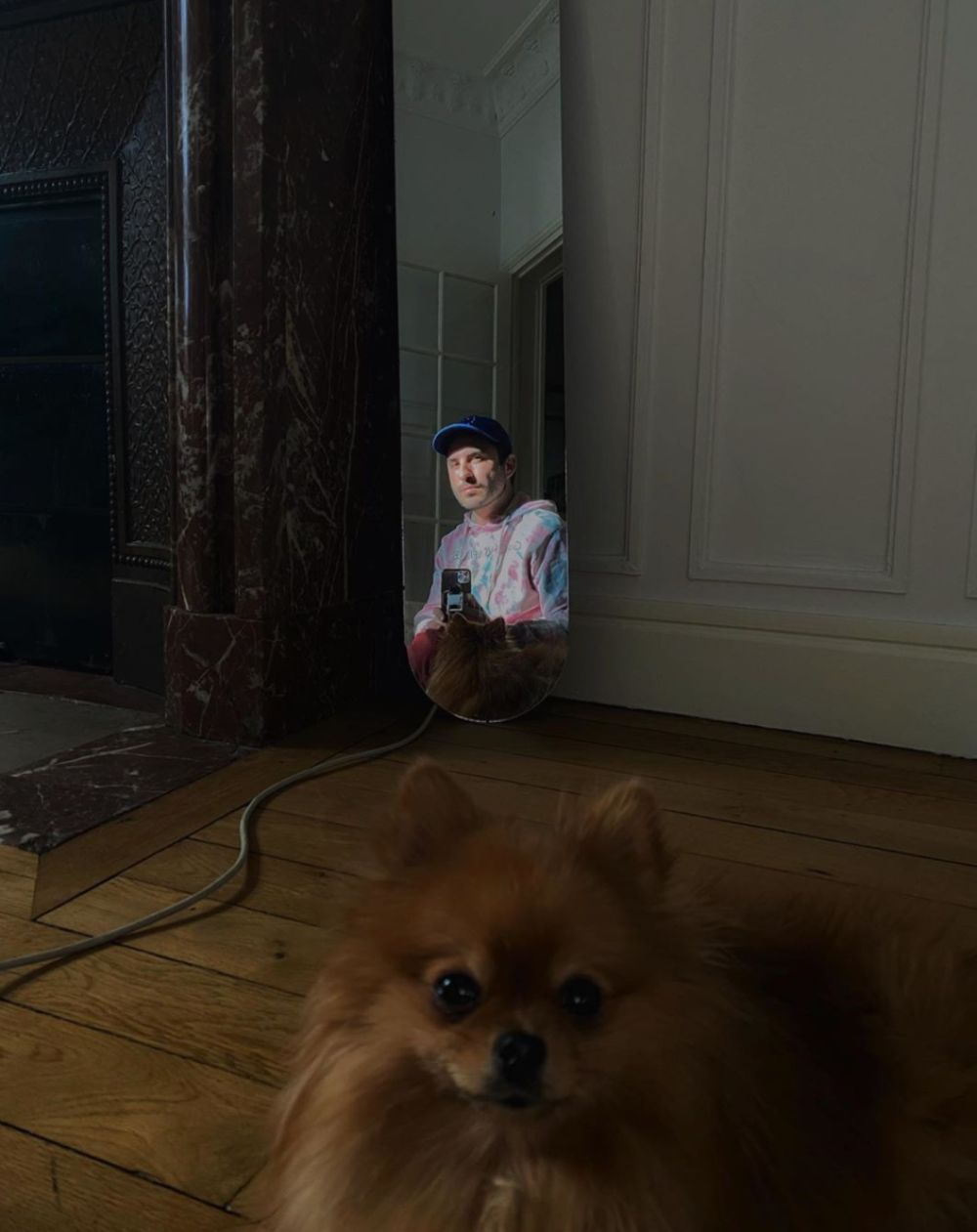
Tell us about your creative process. From inspirations, daily routins etc to the final result.
There is a lot of variables involved in the process of photography. The part that I tend to find the most crucial of all is being able to create the right mood on set. This is the theatre, where it all happens, and where you have to gain the confidence of the models, and of the team you are working with. A photo is a personal document of one desires and fantasies, where maybe 90% is about spontaneity. I think spontaneity imposes me an organizing principle, a structure. There is a kind of magic happening on set that you don’t really control and I like to accept the virtue of that segment as the bigger part of the process. The 10% left is just the application of the technics gleaned from the experience. It takes take time for me to process ideas maybe because all the memes I watch.
I basically watch more memes on Instagram than photography accounts… especially those days, with things drastically slowed down. But in a production scheme, I like to take my time way in advance to nourish ideas, exchange with an assistant, or team, depending the project. I like better inspirations from old magazines, and books rather than browsing the web, where social medias algorithms can be mind bugling somehow in the creative process. I’m also focus now on simplifying the tools thatI use, for example I process images only using a tablet and try to be as light as possible, which is a huge gain of mobility in a sense of being unencumbered, and a lot of companies going this direction in the gear they offering. I like to listen to ambient music to put myself at work, like Garrett (Private Life II), or Lara Sarkissian. Mediation and yoga are also great and essential parts in my daily routine.
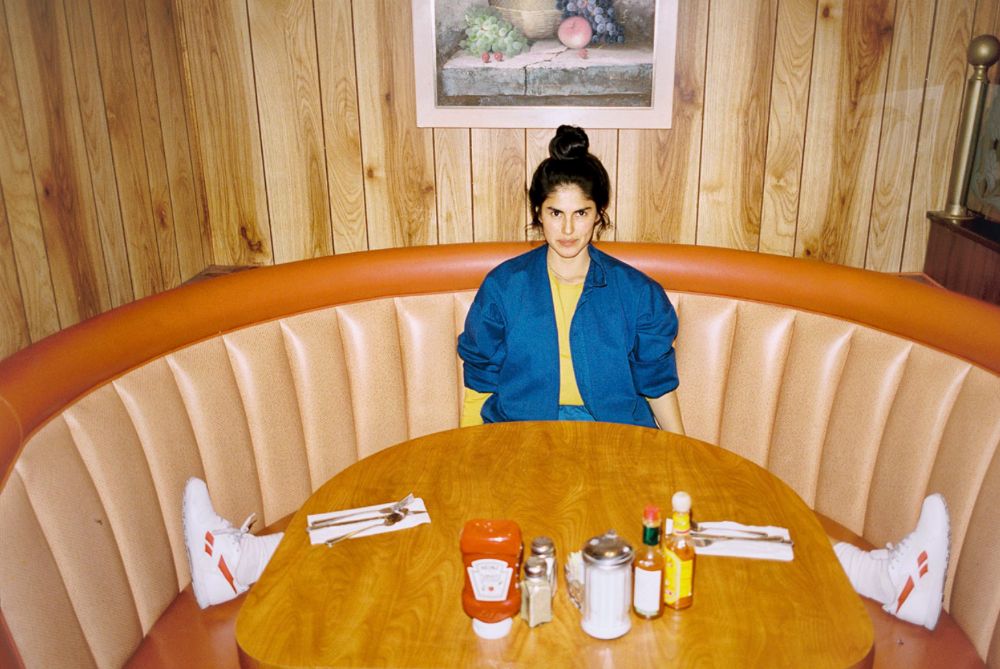
How much do you control the whole creative process? Do you usually have a teamwork or do you prefer to do everything by yourself?
II started photography alone, and I’m happy to learn each day, to work with third parts and meet new people and bring them on board. The team is really important. I’m obsessed with the light, and I do a lot of back and forth with the assistants team about the best technics we could use. Spontaneity request a good organisation in pre-production, to have free hands on set along to try things out. I like to start from a location, and imagine something around it. What’s the story we will put in there etc.
Which cities have you lived in and how have they influenced your career?
I’m grew up in south of France, near the sea. I always was a skater and was also raving a lot at this time also between 1998 and 2003. Montpellier was the cradle of Rave parties in France. In 2007 I won a fashion contest organised by Myspace with a sunglasses brand I launched. It was only deadstocks collection of french made vintage pairs. The all branding and imagery I created around that brand got a lot of attention, and soon many artists were craving to wear them, like A-Trak, Pedro Winter, all the Fluokids and the Colette crowd from Paris and all over Europe. It was really new on the internet to being able to buy sunglasses online actually, and I was maybe one of the first to offer this kind of products. It was the beginning of the « personal branding » before Etsy and others. And it was a real joy of being able to create something from top to the end, especially the photos.
I decided at this time to experience something new, so I tried myself to few different cities, like Basel which was a popular for his skateboard spots and near the french border. I lived there for a bit in a Artists Squat, called Elsie 11, run by very cool Queer Punks who welcomed me, then moved to Amsterdam and Milan, where I started to shoot for model agencies there. I finally moved to Paris, 12 years ago. Since that I kept on travelling and spent a lot of time in Los Angeles which is the city that feels like home for so many reasons. Top of the list why, is because it has this unique foggy and perfect soft light. It’s a real blessing. But to have been able to travel all over Europe, carefree, with not much more than a skateboard and a backpack was really the right move at this time and I would love to remain on that ideal for ever.
How is the LA-based industry different from the Paris-based industry?
People in the US worship Paris, and Paris returns it well to them. It’s great to see brands from LA coming more and more to Paris men fashion week. It’s a great gathering and maybe the highlight of the Parisian calendar. Great artistic collaborations are emerging there at this time, around bistrots tables at the end of a showroom day. In my field, photography, and art direction, each country acts complementarily and it’s interesting to keep on travelling to get inspired by the different cultures. Being an outsider with a suitcase, is the only way for me to really get that « zeitgest » on the industry but not only. I love understanding how cultures work, uncorrelated from the internet perspective. On medias and magazine side, I think London has the lead, and is definitely the place to be in Europe for image makers, when Paris is ruled by « les grandes maisons de couture » and sometimes could feel very elitist. It’s going to be interesting to see how each industry in different cities are now going to reinvent themselves in the post pandemic era.
Tell us about Blast Magazine.
Blast Magazine was early 90s a surf culture magazine, in 2013 ans 2014 I started to work on the project of redoing the magazine, and refresh it a little bit. I started to take the lead on the creative direction, and Issued 2 printed issues, then went online. I would love to print magazine again soon, it’s on my bucket list for 2021 for sure. It’s great to put yourself behind and assemble a piece of others work. Today the digital version is still about that. The instagram page got a little fame too, followed since a long time by huge names of the industry like Virgil Abloh, and it’s good to have free hands on it and give my take on design, counter cultures, and posting memes, and inspirational content, that I love or that I’m just obsessed with no explainations.
How have memes and the Internet culture affected the fashion system? Have they been a determining factor in the arrival of certain trends? Have they contributed to taking “seriousness” away from what fashion and elites have been until now?
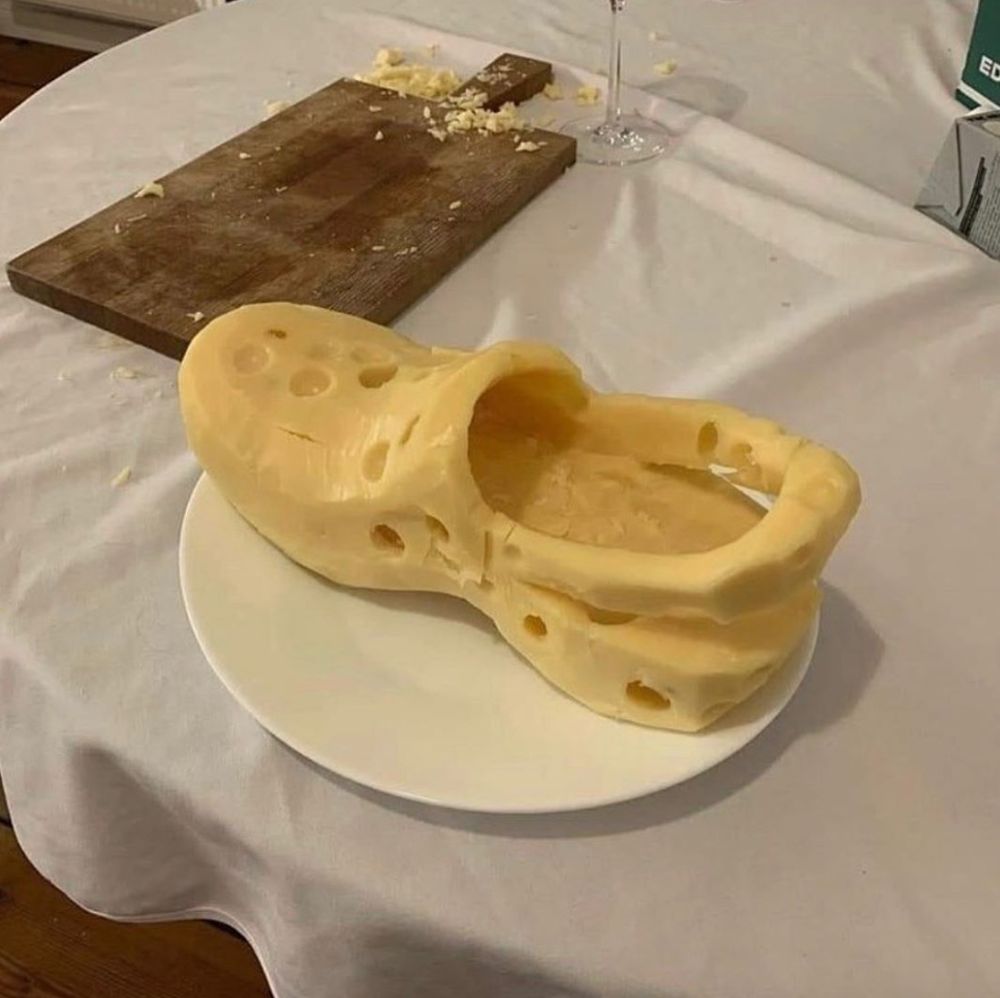
It’s a very interesting question. The internet and our screen time have multiple impacts on trends. Fashion memes, and more generally memes, offer a joy moment, easy to share in the middle of a lot of informations on society, either it’s news, or an other glamorous event in the entertainment world. Most of these informations processed on a daily basis can be a source of inspiration to who knows how to deal with that much content. But also a big source of anxiety. Fashion memes and even design memes (like @blastmagazine, @siduations, @uglydesign or @decorhardcore) got not so long ago a growing interest. It’s a real necessity to offer the obverse of the industry, where everything is flat and sleek somehow. We can estimate that it started with the appearance of the normcore concept all over the internet, and was really validated by the fashion world with Vêtements thru the vision of Demna, once he arrived at Balenciaga. From there everything was permitted even seeing Crocs in fashion shows. Memes are the core of the internet humour in its most spontaneous form, easy to get, relatable, or just so disconnected that it obliges us to a reflection or at least a necessary distanciation to the surface of things. Remove the memes from the web tomorrow and you will start to see riots down your street! They are today’s viral celebration of the punk spirit.
How does the Internet’s over-information affect the creative work?
I guess one of the biggest enemy of creativity today is the digital procrastination. Creation is a constant remix of the outside world. You have to surround yourself with relevant things for you, in order to invent a practice around deconstruction. Part of the difficulty facing photographers is that almost any subject matter has accumulated a representational history, so to find a new discursive space is a real challenge. I’m trying to make pictures that are not too illustrative. That’s not interesting for a maker and even for a viewer. And keeping myself away from contemporary photography on social media is maybe a healthier and more productive creative process that suits me.
From a brand of sunglasses to a campaign for Casablanca. What has changed in you and in your aesthetic views?
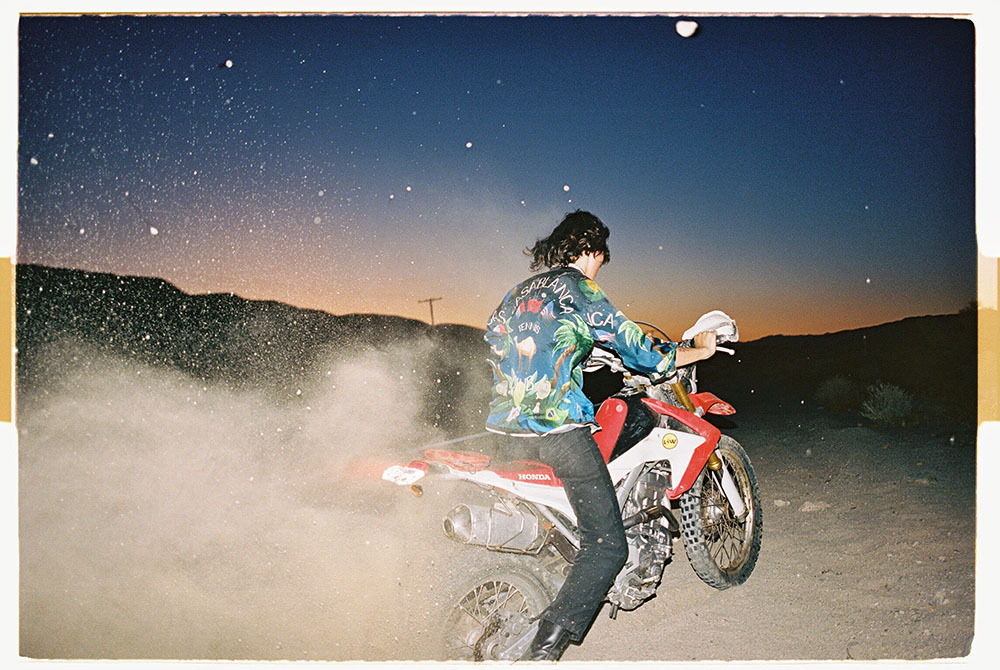
If I did not go into photography maybe sociology could have been a potential career choice. Both literally are linked. I always loved the idea of realness. This is also who I am too and I speak my mind all the time. Photography gives me the possibility to tell the story of people, and who they are, and sometimes how I want them to be seen as. It’s a work of distanciation with society and also an absolute blend in it. It grants me the freedom to radically realign my relationship with the outside world. I love colors, and spontaneity, and I try to bring that in my images.
Out of photographers, what and who are your references?
It could be a very long list, but if I had to name two, I would say Charlie Kaufman, he is a huge film writer and his inspiration always struck me by its singularity, and recently got obsessed with Rael aka Claude Corilhon who created a cult years ago called The Raelian Movement with the idea of building an earth base embassy to welcome Alien civilisations to earth. Everything about him is just fascinating.
If you have to make a campaign for a sneaker model, which sneakers would you choose?
If I had to choose one sneaker to shoot I would say the És Accel OG, which is the historical skate shoe, of the 90s. Definitely a game changer in the skateboard world, with the little pocket inside to hide your secrets. I dreamed of that pair for so long when i was a kid. I would love to imagine this pair to be the next Balenciaga model.
Tell us about Le Confiné Libéré project.
Le Confiné Libéré is the project I started working on few days before France started its lockdown. It started an Instagram with a nice logo made by my friend Jean André, who were art director for Ed Banger and Colette, and it got a lot of attention with 13.1k in only 3 weeks. It was my response to the current events related to the global Pandemic. The idea was to provide people good source of news, memes, and keys for a better lockdown. Some sort of lifestyle pandemic media. It takes me lot of my time at this moment, and it’s good to be helping the situation from home, by connecting people with embassies, and creatives who wish to help people in the front line of the virus. Thru this project we helped nurses to be driven to work, 3D printers owners to deliver facial protection to hospitals, and really create a chain of solidarity, productivity, positivity, and reactivity. I also make some memes in french, which I’m also not so used to. It’s great during this time to think about how you can contribute to something bigger than you on a human level, and so far it’s a great success.
What are your plans for this quarantine?
A friend working at Vuitton photo studio in Paris warned me early in January that all Vuitton campaigns were frozen. It was a shock for me. I started to hear from friend in the industry telling me that all their jobs were cancelling one after the other. Soon all my jobs were going to be cancelled and my agent cancelled all productions. So now I’m using these events as a cleanse. Cleanse of my hard drives, of my body, and of course the flat! I’m lucky to be lockdown with 2 lovely cats and 1 adorable dog. It’s a great way of asking myself the right questions. I think everyone of us felt a switch was coming, and that we felt the need to slow things down a bit, without really knowing how to stop the train. Nature did it for us. Let’s thank her for that and think on how we can now contribute to a better society in the post covid-19 era. It must be organised now. I’m working on a new project that I will announce soon. I will be also selling prints to raise money for people touched by the virus, thru a great project called @giveworld created by Panos Galanopoulos, CEO of PG&Co Agency. I’m joining a great panel of photographers like Norman Reedus, Walter Looss, Christina Mittermeier and Matteo Montanari for a good cause. I really wish we will all come stronger as a society after the pandemic.