
It’s hard to believe, but the mid 80s was an extremely testing time for Nike. The rising popularity of aerobics saw Reebok usurp the Swoosh from the sportswear throne, and their newly-signed star-athlete Michael Jordan had become visibly frustrated with the brand, looking for an early exit from his endorsement contract. Now, we all know this slump wouldn’t last long, but things may have taken a very different turn if it wasn’t for one man: Tinker Hatfield.

We review the story of the person who saved Nike: Tinker Hatfield
Tinker would become intimately familiar with Nike at an early age. As a gifted athlete himself –particularly in pole-vault – Tinker would join the track team at the University of Oregon on a sporting scholarship, where he was trained under Nike co-founder Bill Bowerman. Like many athletes on the team, Tinker would act as something of a guinea pig for Nike’s latest footwear designs, and in 1981, with his studies completed, Tinker would officially take on a role at Nike HQ.
Surprisingly, to those familiar with the legacy of Tinker, the now-legendary sneaker designer had nothing to do with the creation of footwear in his first few years with the brand – in fact, he hadn’t even considered it! At university, Tinker studied architecture, graduating as part of the class of ‘77, and his initial area of expertise at Nike was in promotions, designing trade show and retail displays for the brand.
Tinker went from designing stands and trade shows to developing some of the most iconic models in Nike’s history
Models like the Air Force 1 brought Nike success in the early 80s, but, as the aerobics boom took off in the years that followed, the brand found itself without any product to cater to this massive fitness craze. Reebok beat them to the punch, unleashing models like the Freestyle and Workout on to the market to sell-out success. This momentary slip-up saw Reebok expand rapidly and even manage to overtake Nike’s dominance of the sportswear market. It was clear that Nike needed to majorly shake things up – and fast!
In a bid to inject some new creativity into the brand, Nike held a 24-hour design contest. Tinker took part in this event and, despite having no footwear design experience, managed to stand out above the established designers that entered, many who simply produced designs in line with the tired old styles of the time. Instantly, Tinker’s role within the company changed and, in 1985, he would join Nike footwear design.

His most iconic piece is the Air Max 1, despite being responsible for pieces such as: Air Max 90 or Air Jordan 3
It didn’t take long for Tinker to flex his talents and, in 1987, he would introduce the world to one of the most jaw-dropping sneakers the world had ever seen. Inspired by Paris’ striking Centre Georges Pompidou (aka The Pompidou Centre), Tinker decided to incorporate the same idea of exposed functionality into his latest running design: a little shoe known today as the Air Max 1.
Nike Air was nothing new by 1987. The pressurised cushioning technology had been on the market ever since the launch of the original Air Tailwind in 1979 – Tinker’s design was simply the first shoe to show it in action.
Air Max technology was an instant hit and it didn’t take long before visible Air bags began appearing in just about every style of Nike sneaker imaginable. One such design was the Air Jordan 3: Tinker’s first contribution to the Air Jordan line.
Michael Jordan and Hatfield ended up being very good friends
Prior to signing with Nike, Michael Jordan had his heart set on adidas and his first few years with the Swoosh left him less than satisfied. Neither the Air Jordan 1 nor its successor, the Air Jordan 2, were to his tastes and he was reportedly ready to jump ship. Not wanting to lose the brand’s new star athlete, Nike CEO Phil Knight assigned Tinker to create MJ’s next shoe on the hope that his disruptive design talents might be the drastic change-up needed to retain the fresh-faced Chicago Bull.
The Air Jordan 3 was unlike anything else on the market, but, most importantly, Tinker had listened to Jordan’s requests and input. To meet these demands, Tinker produced a mid-cut design – uncharted territory for basketball shoes at the time – and incorporated supple tumbled leather to give the AJ3 a worn-in feel right out of the box. The use of ‘elephant’ print on the toe and heel, as well as the use of a visible Air bag, made the shoe stand out from every other shoe on the market. Jordan was instantly sold on the design and his faith in the brand lifted to new heights.
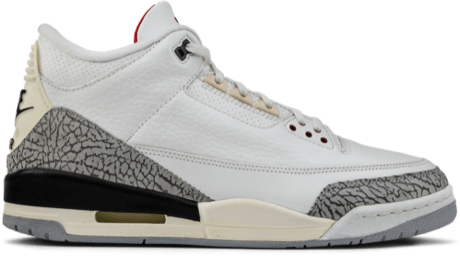
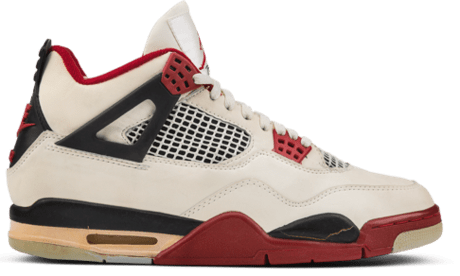
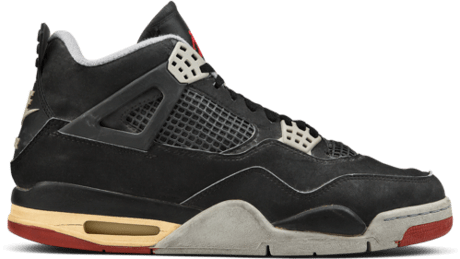
Tinker would go on to climb from strength to strength within the Air Jordan line, giving us some of the most iconic Jays of all time, including the Air Jordan 4, Air Jordan 5, Air Jordan 6 and Air Jordan 11. Tinker would step away from the Air Jordan line following the release of the divisive Air Jordan 15, expressing total mental exhaustion following the then-recent passing of Bill Bowerman and lineage of death it had followed, including Tinker’s own father three years prior and Michael Jordan’s father in 1993.
It wouldn’t be the last of Tinker’s input we’d see under the Jumpman and the talented designer would return to the Air Jordan line at the personal request of Michael Jordan for the release of the Air Jordan 20. Tinker would again contribute to the Air Jordan line with time, producing designs like the Air Jordan 23 and, most recently, the Air Jordan 30.
It wasn’t just in the shadow of the Jumpman that Tinker Hatfield would find success, however. In the same year as the Air Max 1, Tinker would also bring us the wild Air Safari and the Air Trainer 1, the latter of which would give birth to the cross-trainer and find itself in the spotlight for the most unexpected of reasons – on the feet of volatile tennis great John McEnroe, who liked the design so much that he decided to wear them in game on multiple occasions, much to the disbelief of Nike.
Tinker’s contributions to not just Nike, but also the sneaker world at large, are almost too numerous to list
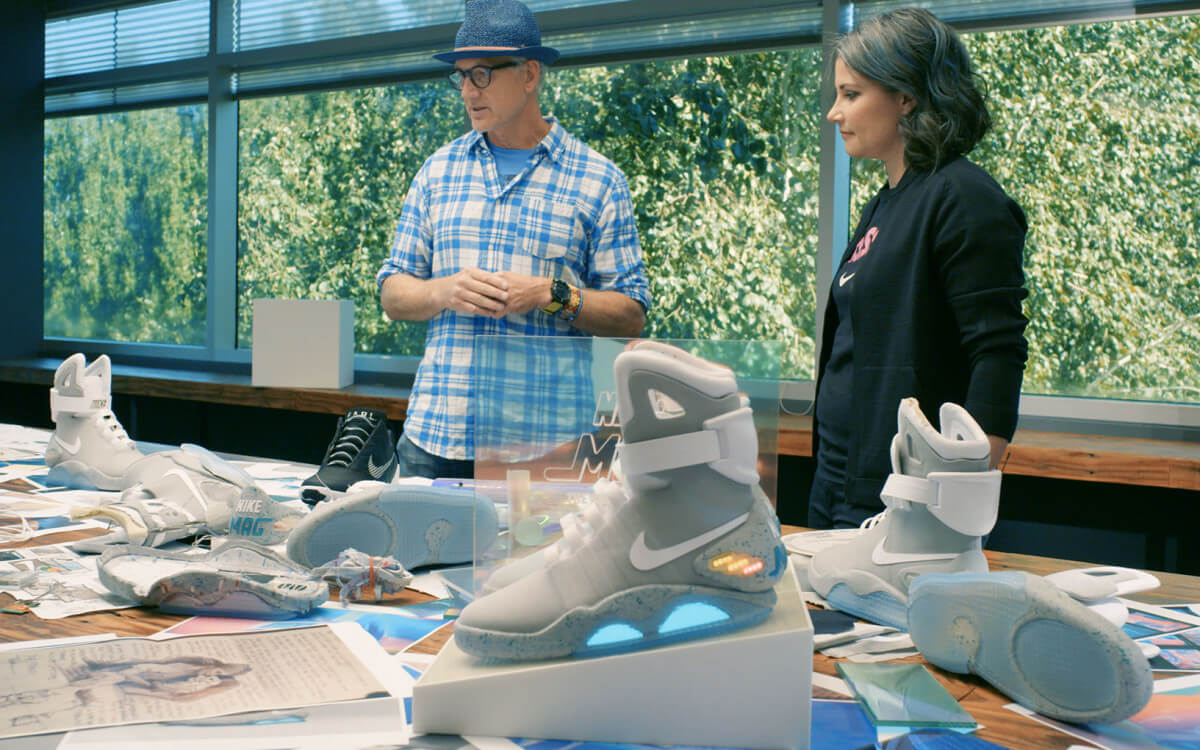
On top of all we’ve already noted, he also brought us the Air Max 90, Air Huarache, Air Max 180, Air Mowabb, Air Tech Challenge, Air Trainer SC, Air Oscillate, Air Zoom Talaria and, what is quite likely the most important sneaker in cinematic history: the Mag.
He would even make self-lacing sneakers a reality with the introduction E.A.R.L. technology, as utilised in the screen-accurate Mag replicas auctioned off in uber-limited numbers for charity and the more widely available HyperAdapt 1.0.
Tinker Hatfield is popularly known as the man that saved Nike and, with such a pedigree of iconic designs to his name, it’s not hard to see why. Would Nike have still made a comeback without Tinker on their side? It’s hard to say, but one thing’s for sure: we wouldn’t want to live in a world without his incredible input!