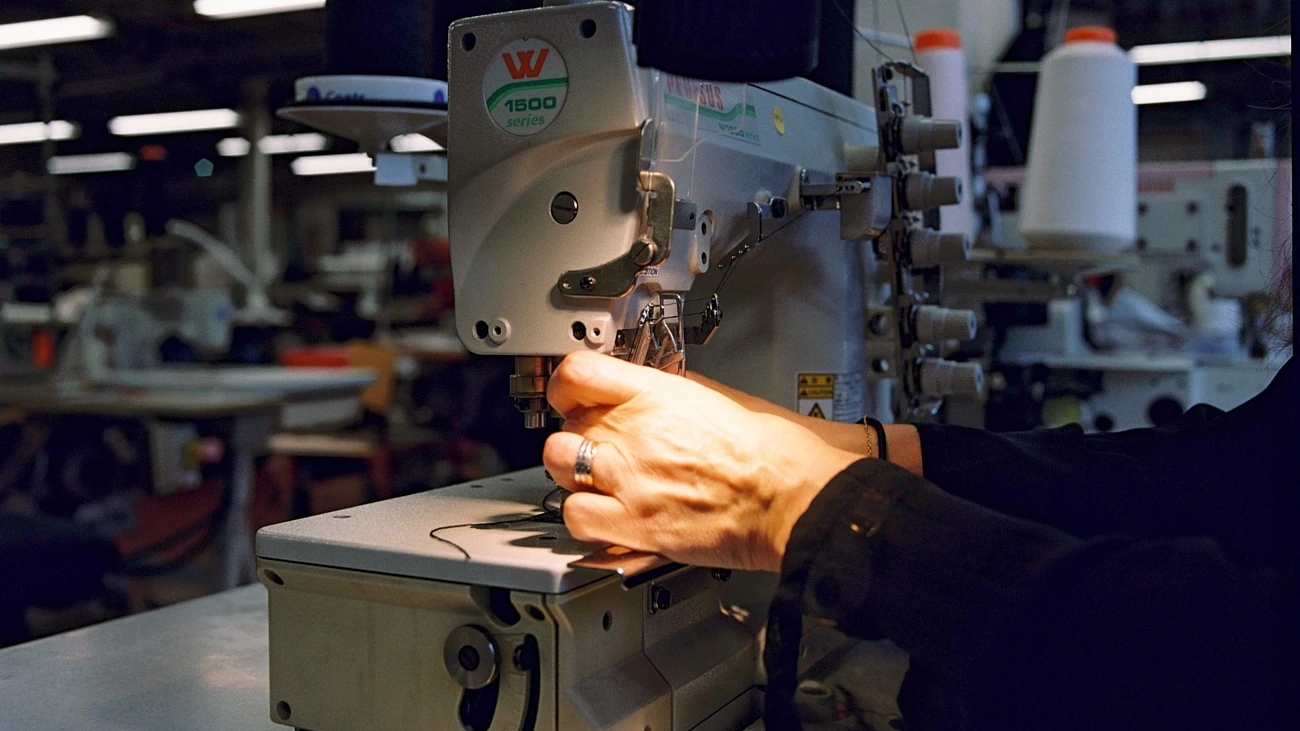
The Salomon Annecy Design Center is where Salomon’s ideas are born. We visited it for a day that took us on a journey through the brand’s origins and future.
“What fascinates me is what I will do tomorrow” These words from Georges Salomon, the founder of Salomon, welcomed us to the brand’s design center in Annecy, France. A place that they ceremoniously do not call Headquarters, as it serves not only as the brain of the brand but also as its heart. We embarked on a day that revealed parts of the brand’s history and gave us a deeper understanding of its future.
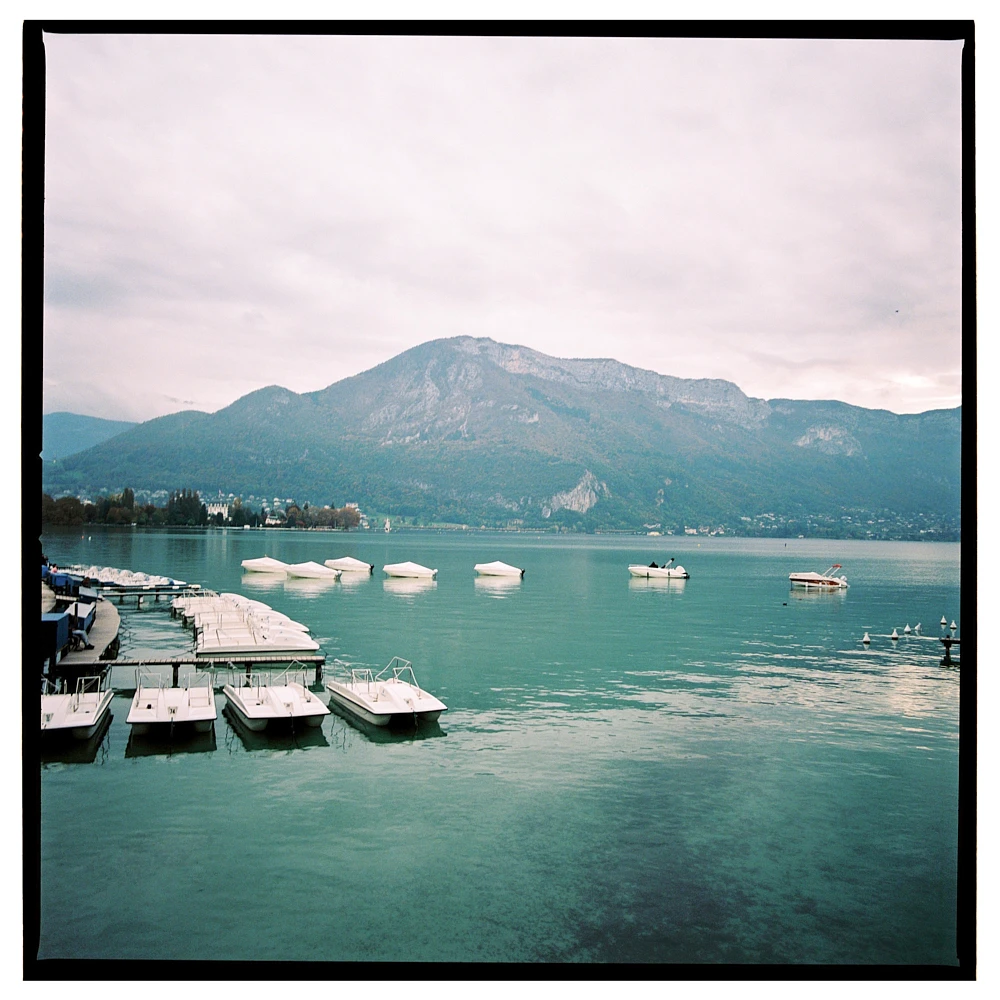
The Salomon Annecy Design Center has a vintage charm. Salomon was born in a workshop in downtown Annecy, a city surrounded by alpine landscapes, just over an hour from Chamonix-Mont-Blanc, the center of the mountains in Europe. FOOTDISTRICT also has its origins in a mountainous area, so we immediately felt at home. Annecy is exactly what you’d expect from an alpine town but with canals crossing the city, like a Gorpcore version of Venice, a lake at its center, and people engaging in sports wherever you look.
We arrived expecting to dive into the brand’s history, archives, stories, and nostalgia. Salomon was founded in 1947, boasting a sporting record on par with the biggest brands and being the first major European brand to break into Japan. We anticipated hearing tales of their legacy—from becoming the first company to create ski boot bindings, to producing the first ski boots in 1979, the first hiking footwear in the 90s, and launching a new category with adventure racing at the end of that decade.
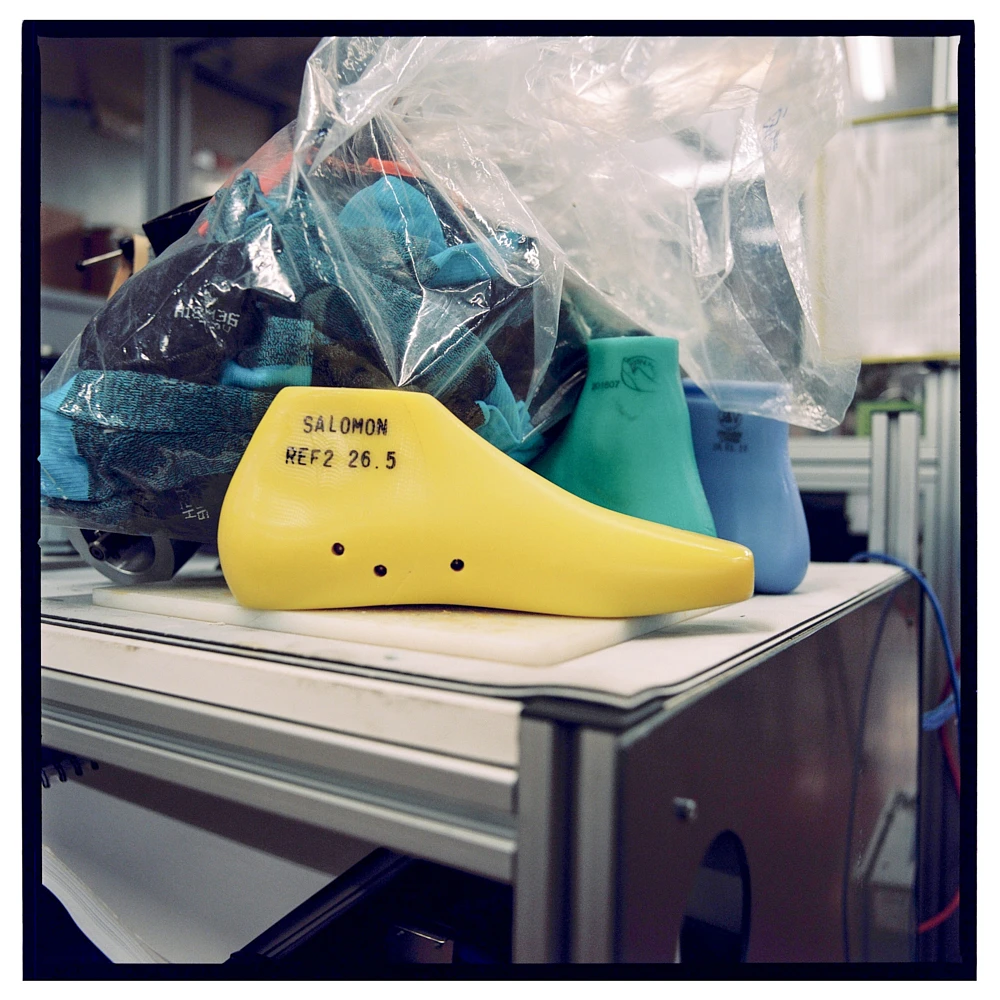
To capture this history, we brought along a camera that suited the moment, a Hasselblad 500C, a 1950s device that might have witnessed Salomon’s early steps, from the workshop to the large-scale industry. A version of this camera was the first to travel to space. If a camera had gone to space, it could surely travel through time.
Big mistake. At Salomon, we didn’t find glorifications of the past. What remains, does so because it has meaning. The founder, whose name graces the brand and could be the root of countless stories, only surfaces in conversations focused on the future. “What fascinates me is what I will do tomorrow”. Traditions are upheld only until a new method arises. At the Salomon Annecy Design Center, we found more of tomorrow than of yesterday. However, the Hasselblad 500C still took great photos, even of that future.
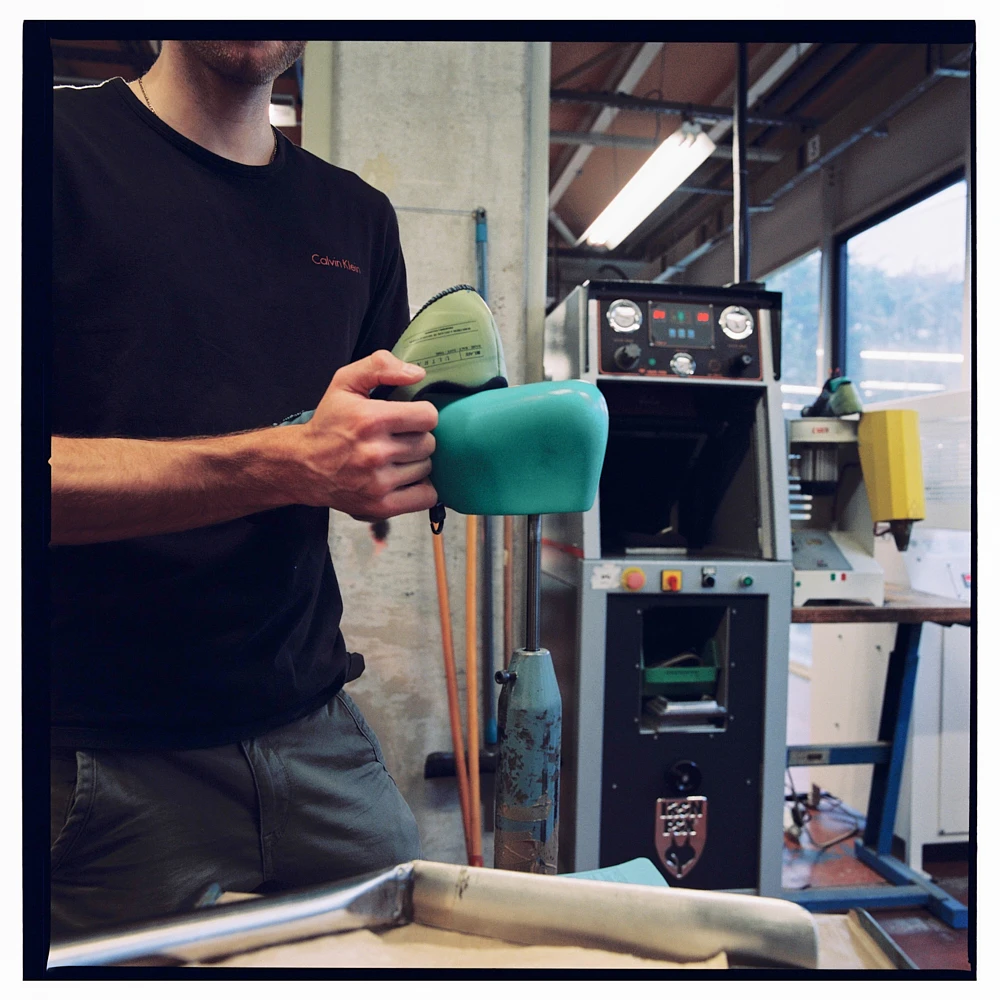
The Salomon Annecy Design Center, as we toured it with our guide Kristof, impresses with its layout, with spaces seemingly designed for chance encounters; a man wearing protective glasses and safety boots, fresh from the ski workshop, crosses paths with someone dressed in Margiela. They exchange a few words about the visitors’ Hasselblad camera. Yes, it’s the 500C.
And they continue with their tasks, one in front of the computer, the other among the machines. They aren’t even aware, but that atmosphere of everyday life is evident even in introductions—just first names: I’m Kristof, I’m Marta, I’m Valentine, I’m Marion. No last names, no titles. In the 33,000 square meters of the Salomon Annecy Design Center, 750 people work together naturally.
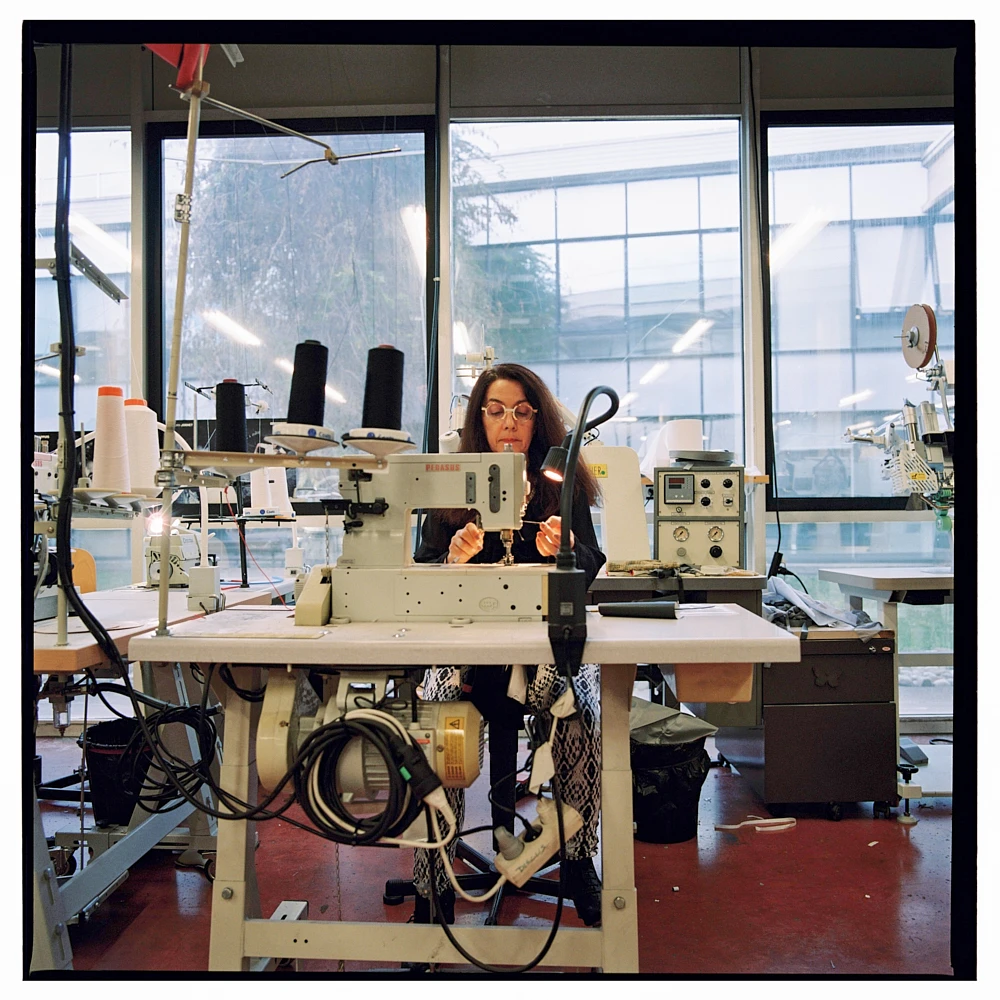
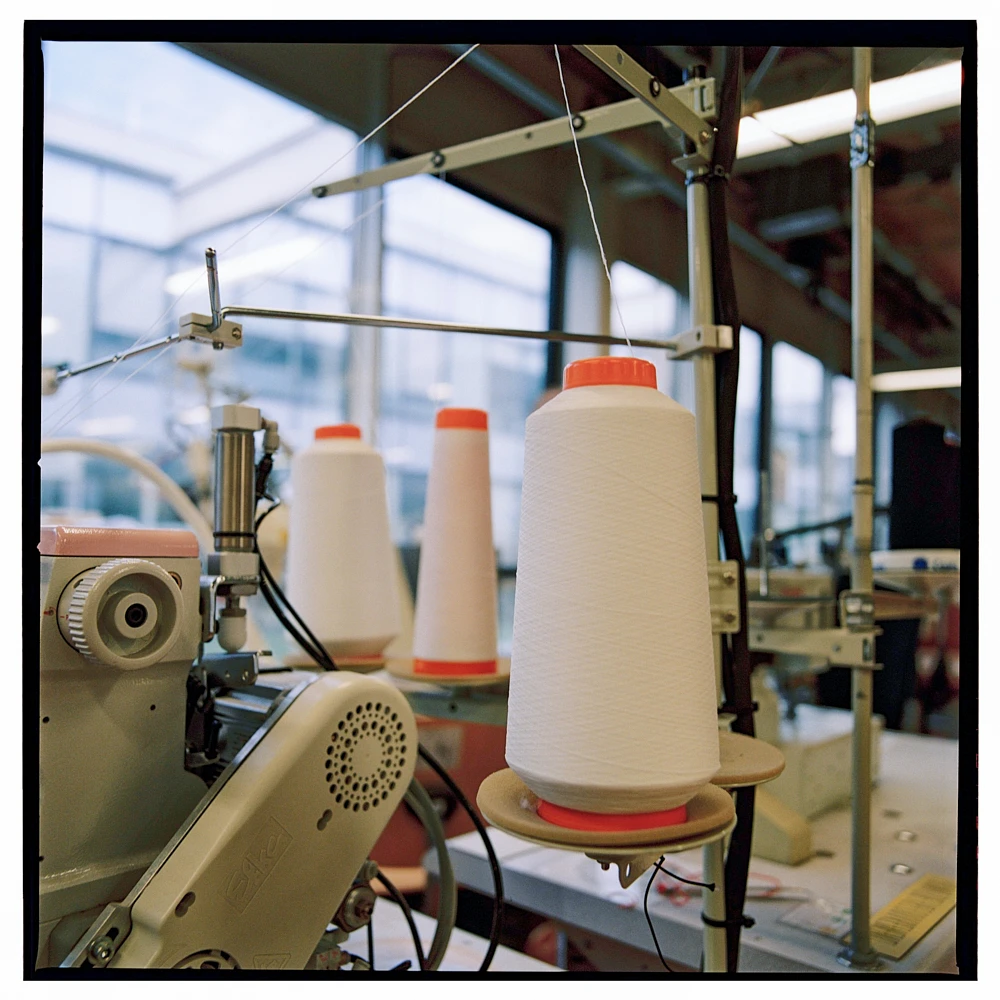
The space explains it all. The Sportstyle team works in a single room, from design to marketing, so every campaign has a holistic sense. When they present their marketing campaigns, they’re actually just translating into a different language what they’ve known since the beginning of the process. This sense of purpose is woven through various “languages”: design, marketing, communication. This is the foundation of Salomon’s image as an authentic brand, aware of trends but not following them.
Valentine and Marion tell us that collaborations are also a way to connect with other worlds, ideas, stories, and strategies. A way to challenge themselves and broaden their horizons without losing Salomon’s original identity.
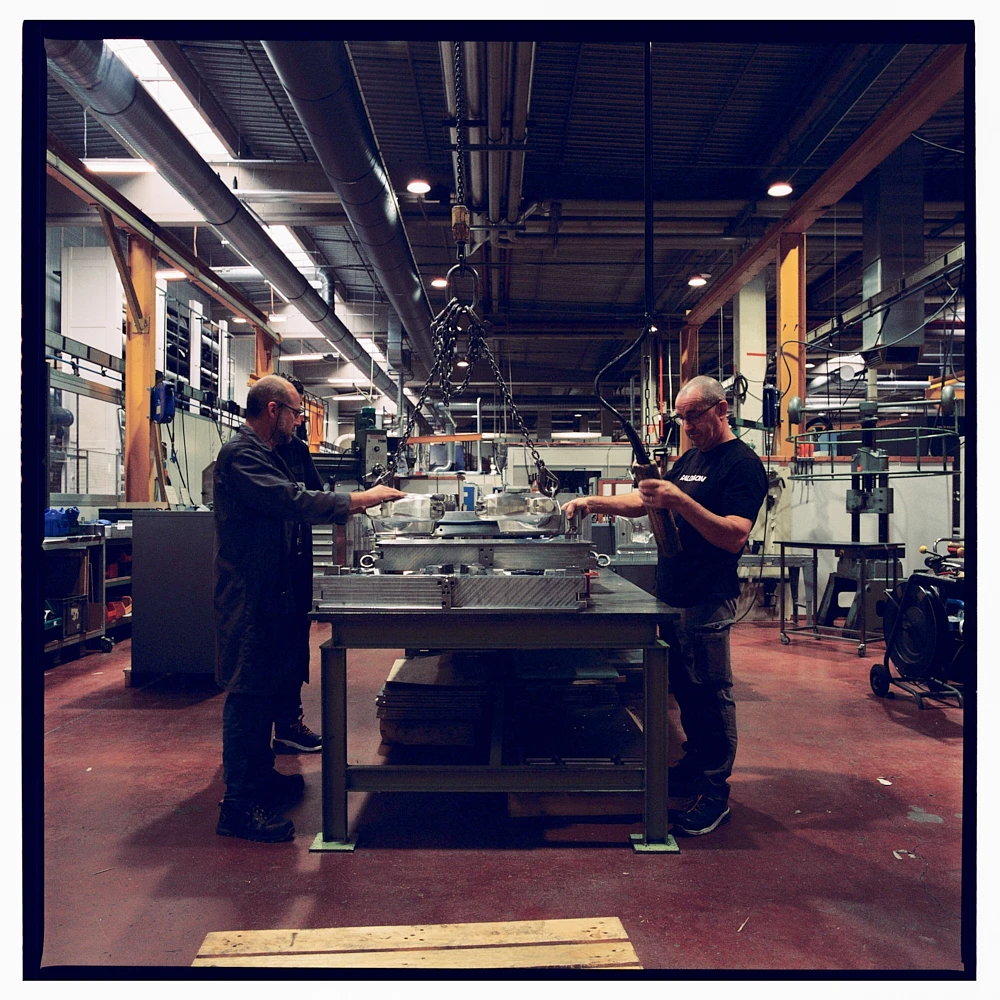
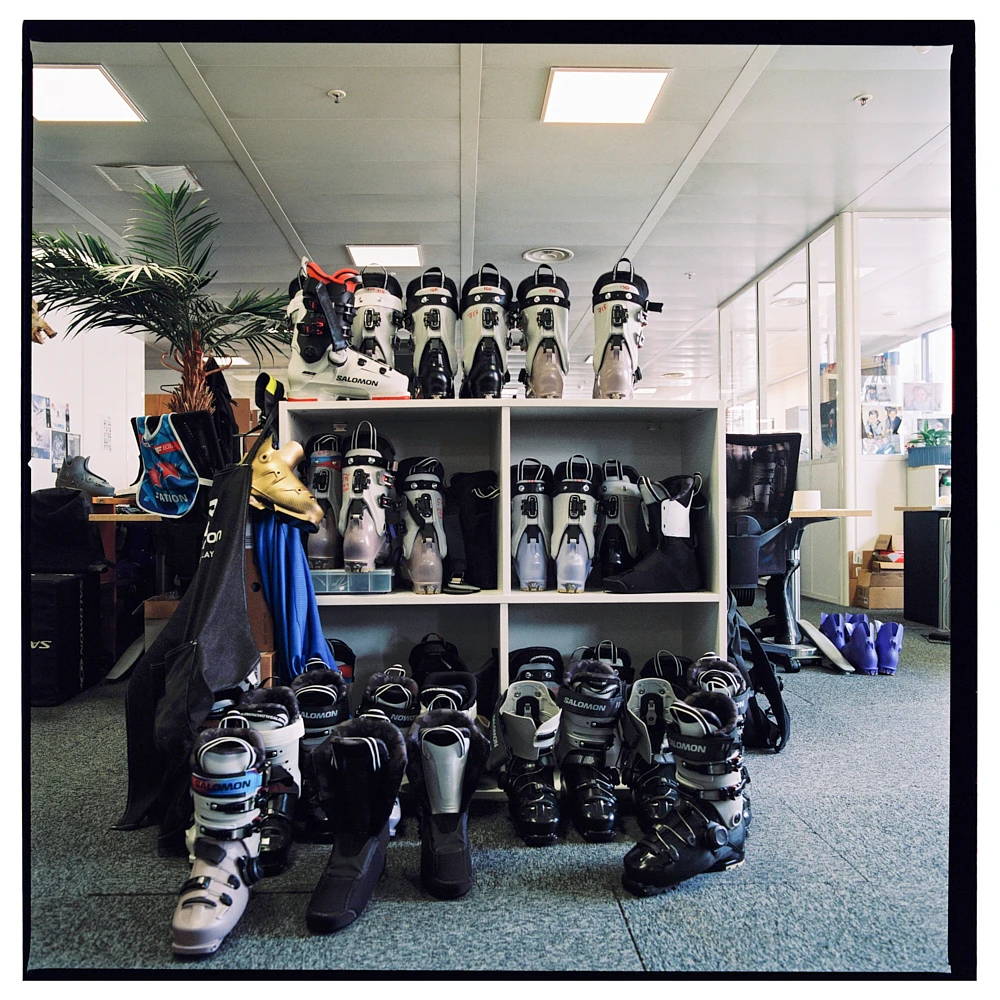
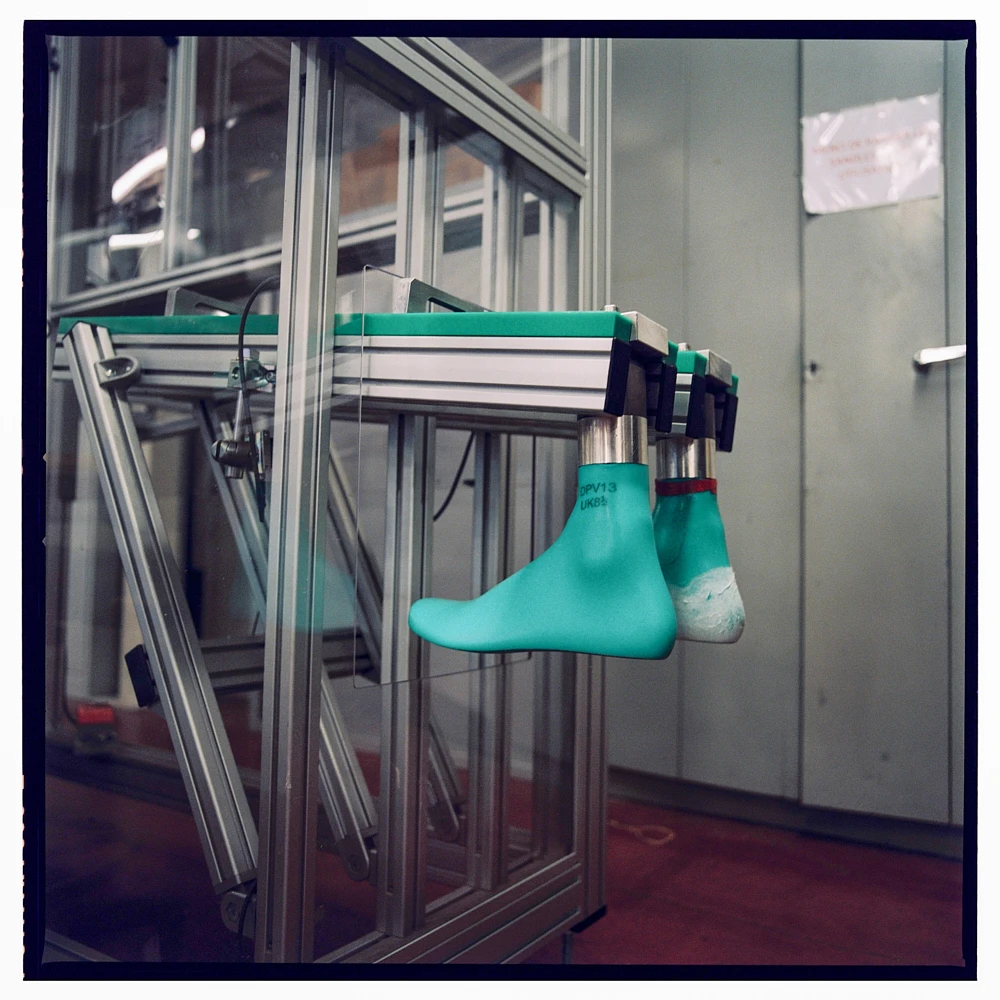
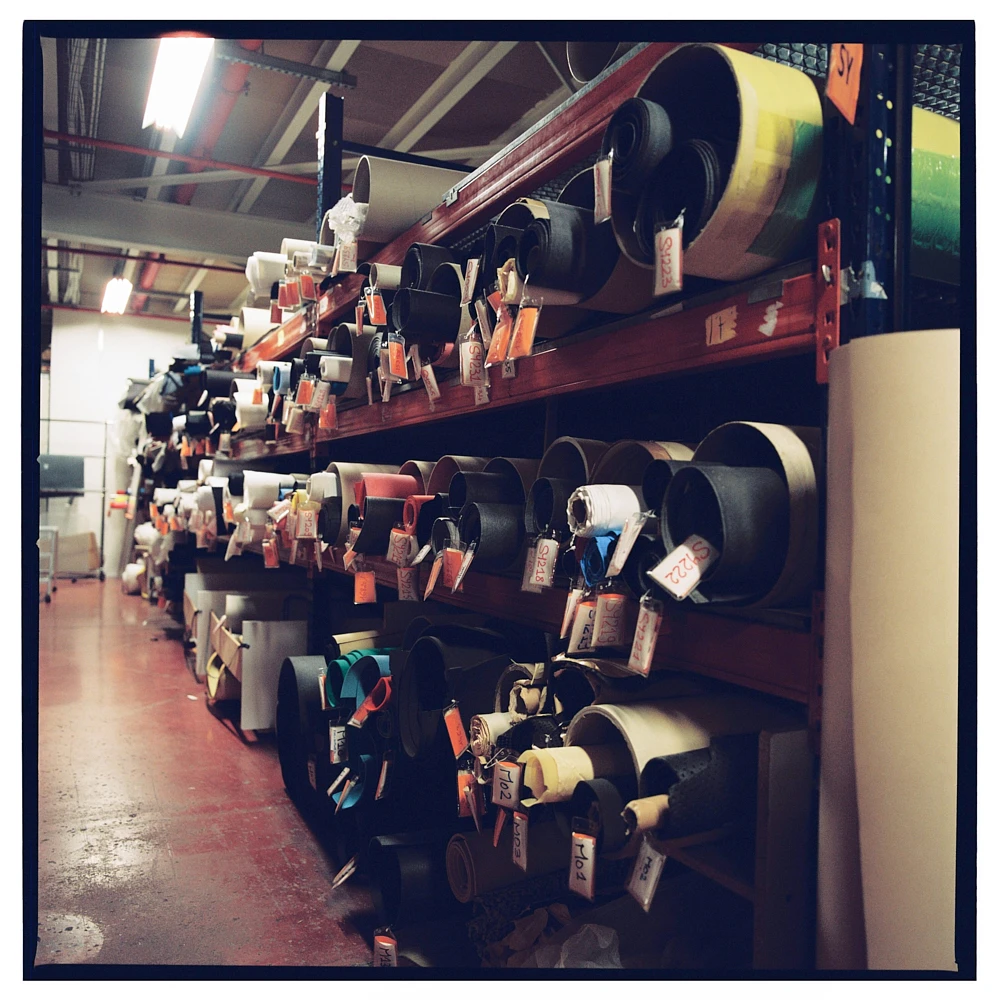
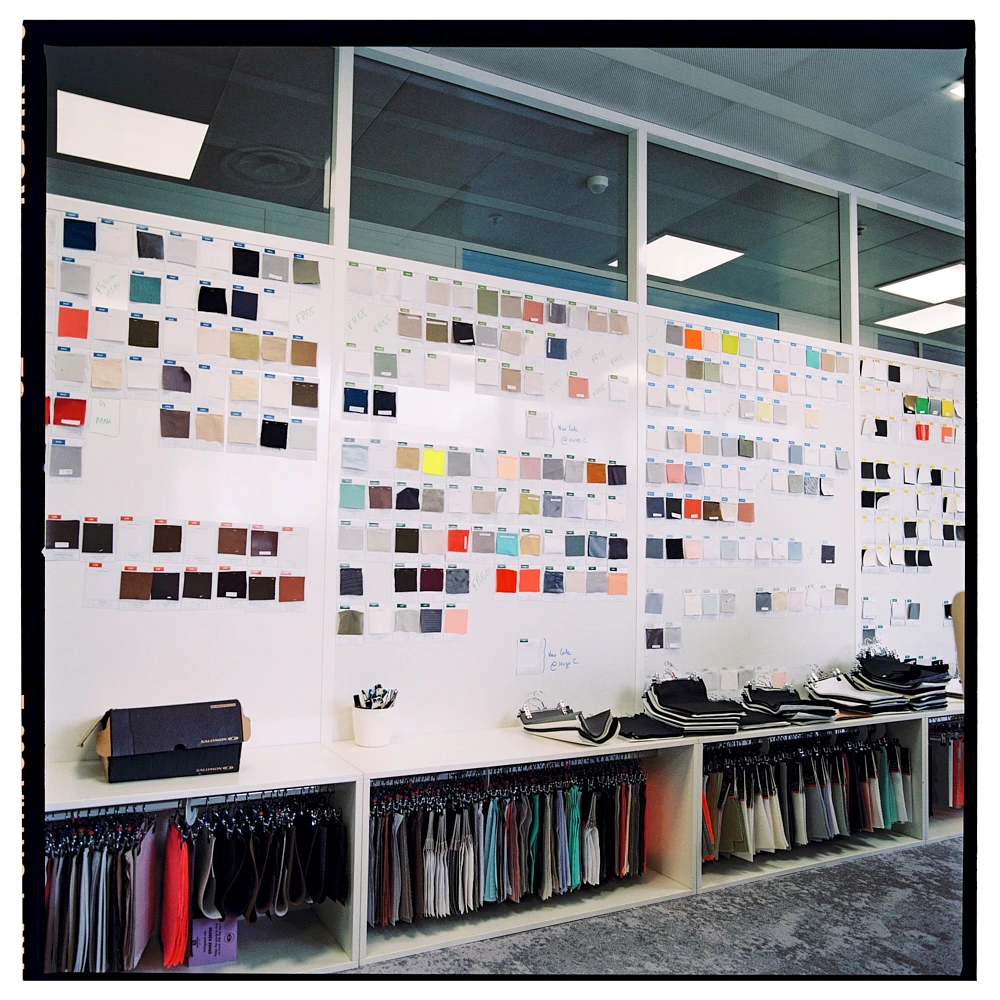
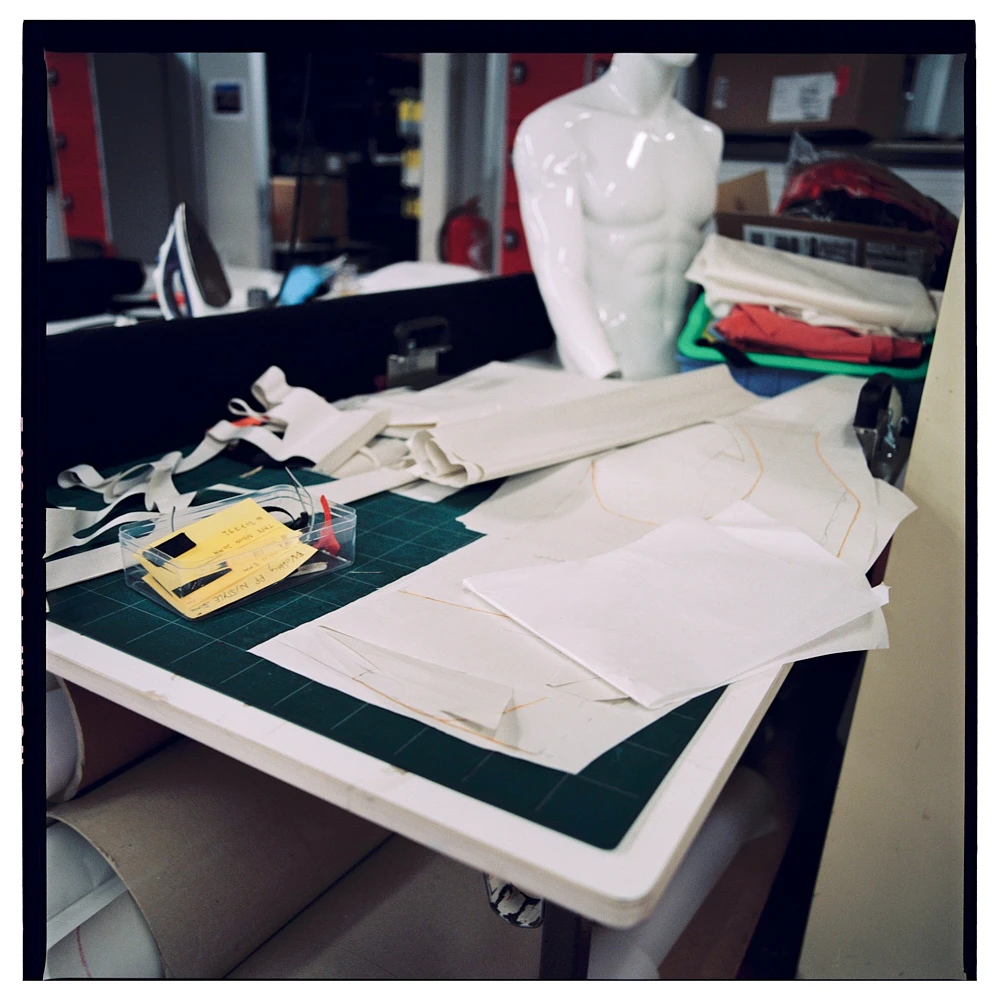
The space reveals even more. The designers are just steps away from a large atelier, a testing center where they can bring to life a first prototype conceived just minutes before. From idea to object, it’s just a few steps away. Next to the workshop, a materials library allows them to select exactly the same material that will be used in the factories. This workshop is an amusement park where a sneaker, hydration pack, or leggings can be created from scratch based on an idea generated just a few meters away. And as they tell us, it’s the usual process: trial and error in real time.
The third phase of the process, product testing in a sporting context, requires opening one more door, leading directly to the mountains, where new designs are tested in their natural environment.
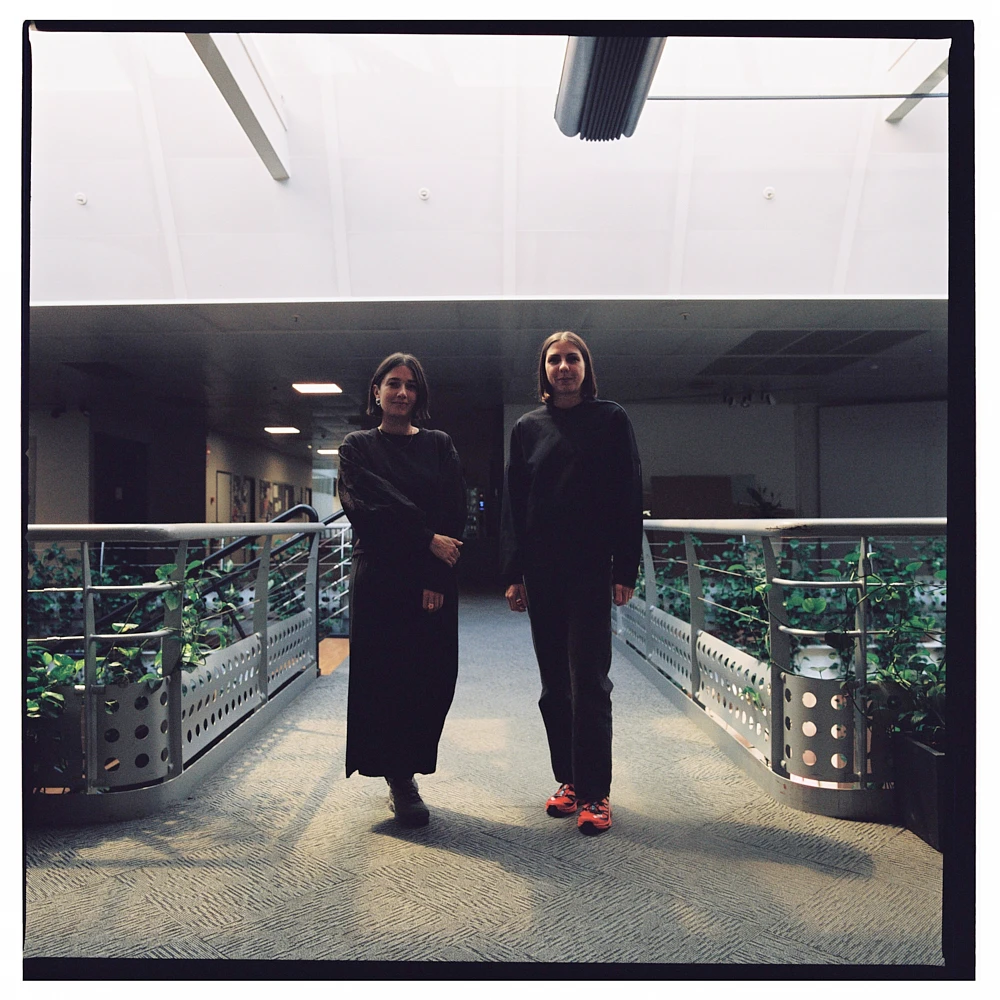
A few meters from the room where sales representatives present upcoming collections, a workshop welcomes Salomon’s elite athletes, who adapt and personalize their own products with guidance from brand specialists.
Guillaume explained a key concept for understanding Salomon’s approach to products. Guillaume is Guillaume Meyzenq; he joined Salomon in 1994 and, for the past seven years, has led the brand’s venture into Sportstyle. His background is that of someone you want to listen to.
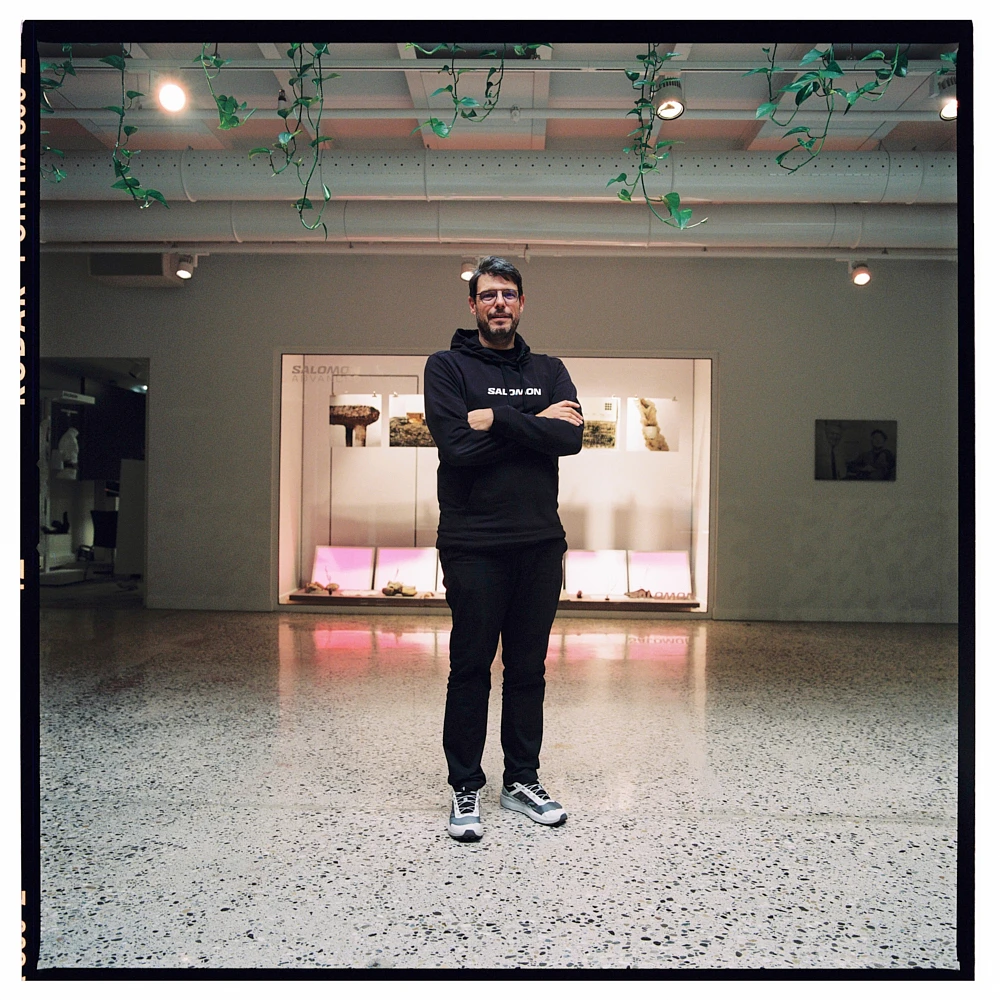
Salomon doesn’t design its products based on how users currently use them, but rather on what the user’s next step will be. That’s why Salomon stays close to the community, to identify its future needs. This is how they understood the trail running culture and why they recognized their place in Sportstyle—by identifying needs ahead of time for brands like The Broken Arm and Boris Bidjan, two seemingly unrelated brands that appreciate Salomon’s products for their functionality and design. This insight also helps them understand Salomon’s relevance in other contexts. Collaborators who have a long-standing relationship with Salomon contribute new perspectives in design, marketing, and storytelling.
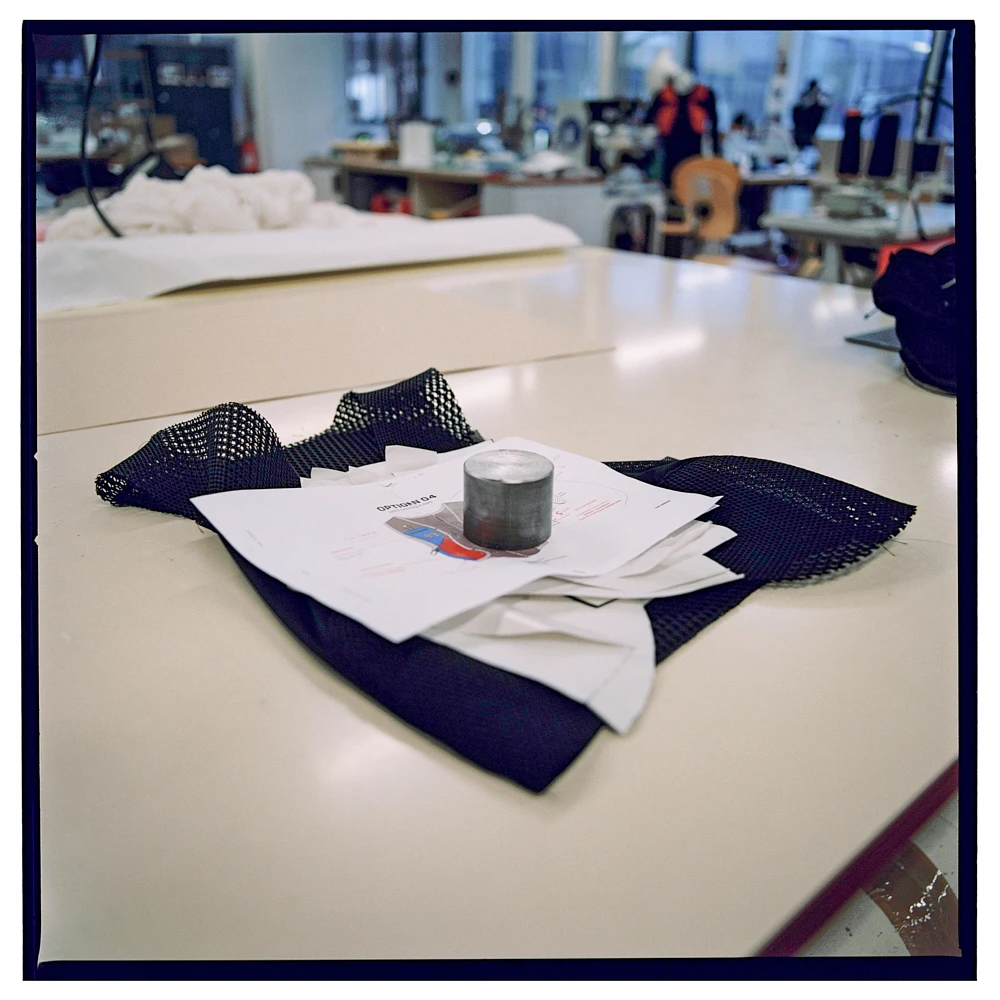

We were struck by the collaborative spirit and drive for innovation at the Salomon Annecy Design Center, but it didn’t surprise us, as expected, that sustainability is a core value throughout. We saw it in the collections and use of recycled materials, and we learned about it in talks with designers who explained the relationship between color, materials, and sustainability. We saw it in every detail of the offices.
The last stop of our journey took us to the only place where the brand’s history outweighs innovation. The small workshop where François and Georges Salomon began repairing and making ski edges. Located a short walk from Le Palais de l’Isle, one of the most photographed spots in Annecy, the workshop remains nearly hidden. It was the perfect place to close our journey to the sources of Salomon—a place where the Hasselblad 500C could meet its era.