
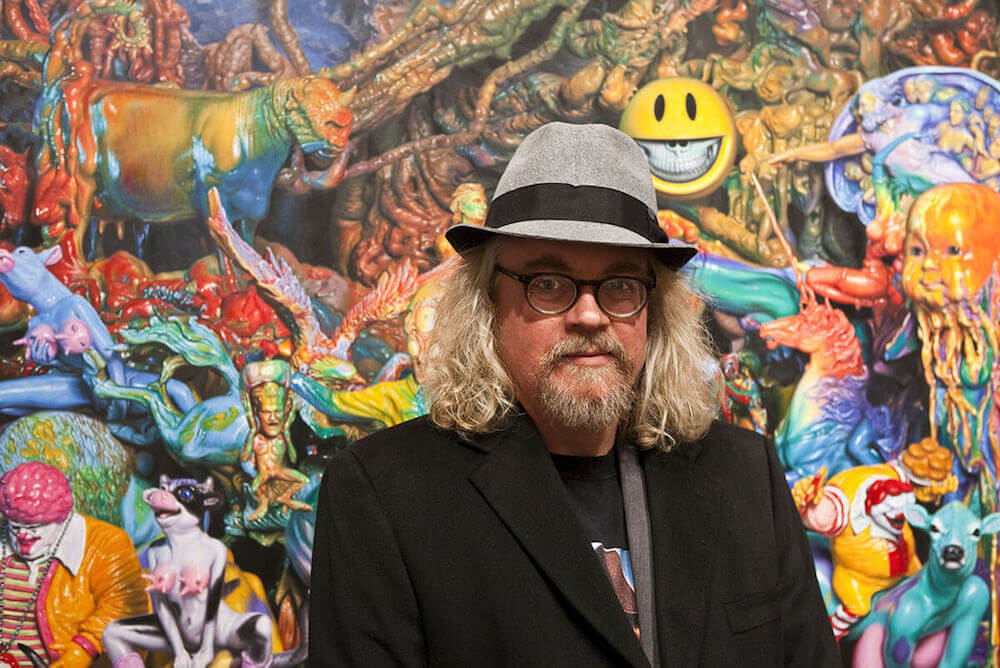
We’re sure you’ve heard of the name Ron English by now. At the very least, you’re bound to be familiar with his unique brand of pop-culture-influenced art. English is the creator of POPaganda, a term he created to describe his signature fusion of lowbrow subject matter and fine art techniques. We’re big fans of Ron English here at Foot District – and he is undeniably one of the most striking artists in the modern art scene – so we decided to dive in and take a closer look at the man behind the ‘Grin’.
 Ron English
Ron English, the creator of POPaganda
Ron English is known as ‘the godfather of street art’ – and with good reason. From the early 80s until well into the new millennium, English was actively producing street art, both in considerable numbers and scale. Like KAWS, who we previously explored, English favoured subvertising in his work. Where his approach to street art differed from that of his contemporary, however, is that, rather than subtly editing existing advertising materials, as KAWS tended to do, English would typically take over the entirety of an advertisement. He would commonly paste his own billboard creations over existing advertising real estate – typically aimed at a completely different target than the advertisement he would be concealing. It was a form of ‘culture jamming’, with the act seen as ‘billboard liberation’. English’s desire to target advertising real estate was fuelled by his disgust of corporate America, as well as a desire for his artwork to be seen and noticed – and by attacking valuable advertising locations he was guaranteed to achieve just that.
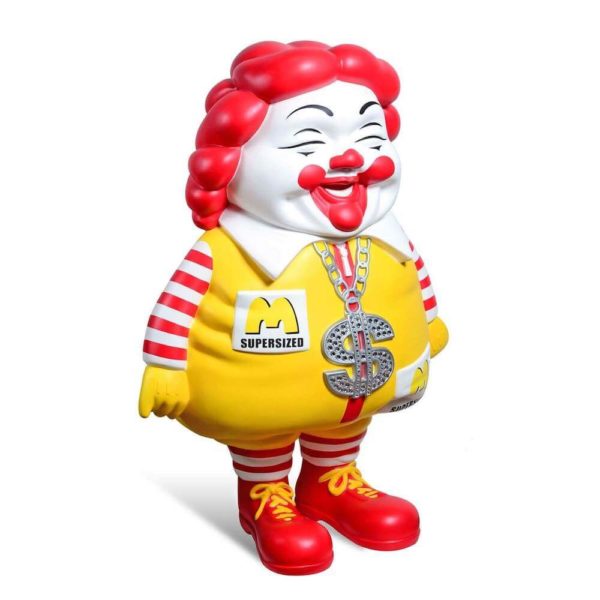
Waging war on corporate America became core to English’s work, specifically the colourful mascots created to entice and influence the habits of young children. Infamous cigarette mascot Joe Camel became a particular target of English’s, as did Ronald McDonald – who he reinterpreted with a dose of fast-food-fed reality into the overtly obese ‘MC Supersized’. English’s most famous cartoon creation though is his character ‘Grin’, which originally reworked Charles Schulz’s Charlie Brown, but has since been reimagined into other childhood favourites, like the Teletubbies and Bart Simpson.
English wouldn’t just limit himself to fictional characters in his war on corporate America, however. He also targeted brands that adopted the image of famous individuals in the real world to promote their wares – including long-dead historical figures, as in the case of Apple’s famous ‘Think Different’ campaign. English’s response, in this instance, was to produce his own ‘Think Different’ billboards that replaced the campaign’s use of acclaimed free-thinkers, like Einstein, with the sinister visages of Adolf Hitler and Charles Manson – two men who arguably still live up to the campaign’s motto, but give it competely meaning.
English’s style
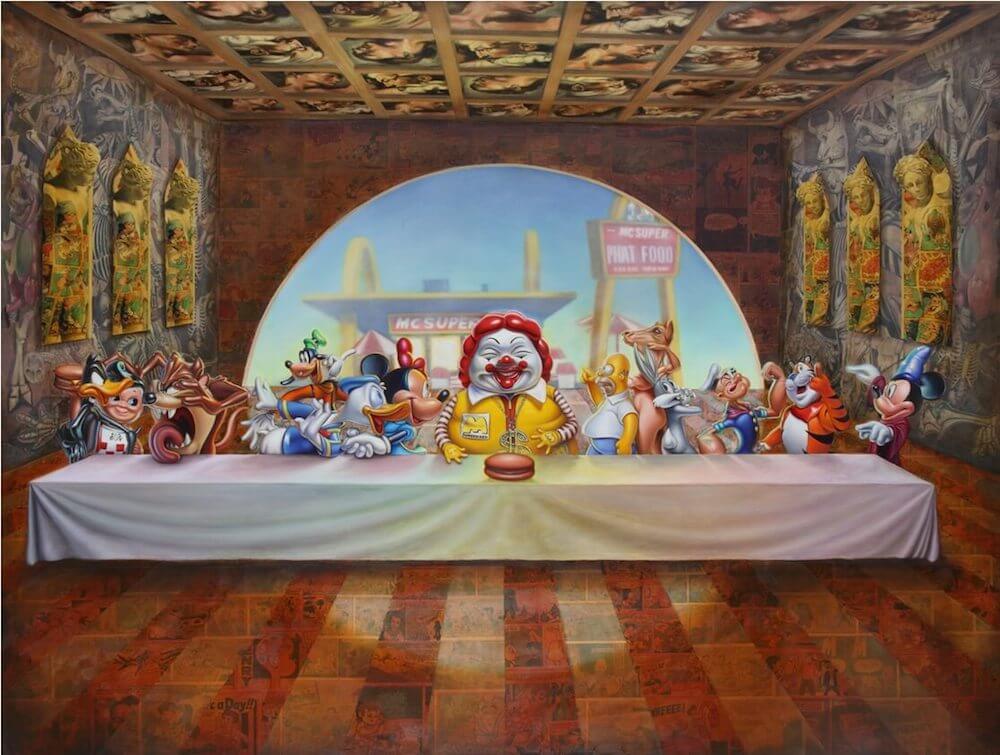
Not all of English’s work is fuelled by aggression, however. At his core, English is a traditionally trained artist with a Master of Fine Arts and a preference for oils on canvas. He has put these talents to good use through his outstandingly life-like spin on pop art, including recreations of famous works from the likes of Van Gogh and Picasso with a dash of pop-culture influence.
English’s eye-catching style and finely-honed talents have earned him widespread praise and seen his work leak back into the very culture he has continually targeted. He has created album covers for popular musicians like Slash and The Dandy Warhols, and his ‘MC Supersized’ character became a mascot for Morgan Spurlock’s acclaimed documentary Super Size Me. Although his work and identity spawned as a critique of capitalism and consumerism, English has sporadically collaborated on projects in recent years, including a set of skateboard decks with DGK and, on the sneaker front, a two-shoe capsule in conjunction with Vans Vault and Philadelphia-based retailer UBIQ
Nowadays, Ron English has shifted his work from the streets to galleries (much to the appreciation of his wife, Tarssa), where his original works sell for well into the thousands – sometimes even into six-figure territory. While that might seem like a huge sum for a pop-culture parody, it’s not hard to see why his works command so much given English’s profound impact on the genre. Some even suggest that, without English, we would never have had Banksy. According to English himself, Banksy was quite the fan of English’s work in the late 90s and even went so far as to claim that he wanted to be ‘the Ron English of Britain’ at the time.
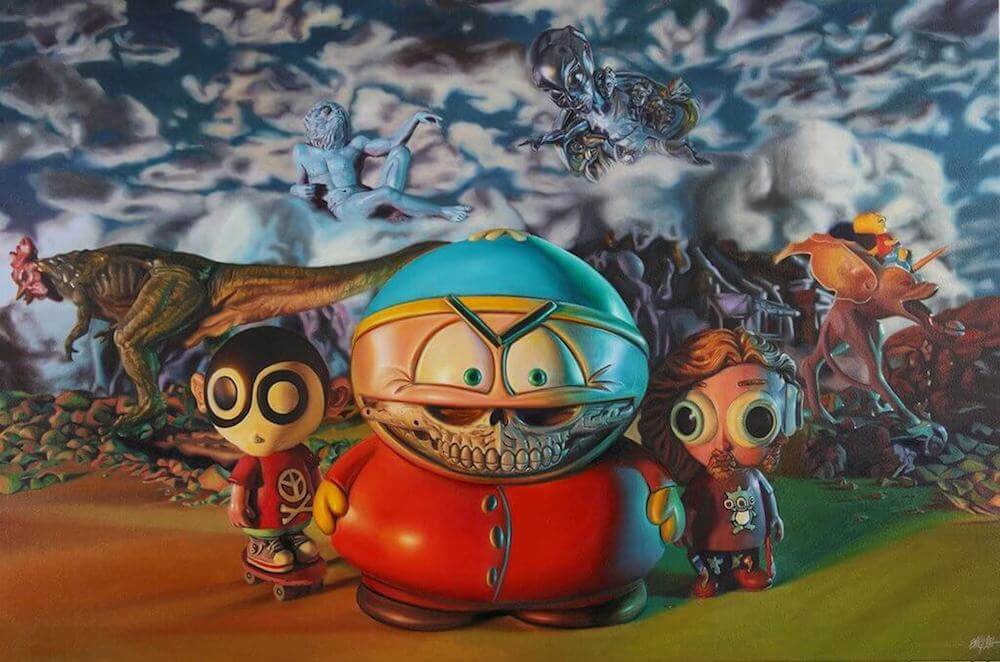
Ron English will forever be known as one of the true greats of modern street art, as well as one of the most proficient and prevalent artists in pop culture-inspired art since Warhol. He is a king of kitsch – and we couldn’t be happier to have his unique brand of POPaganda challenging the conventions of fine art. Long live the one true Ron!