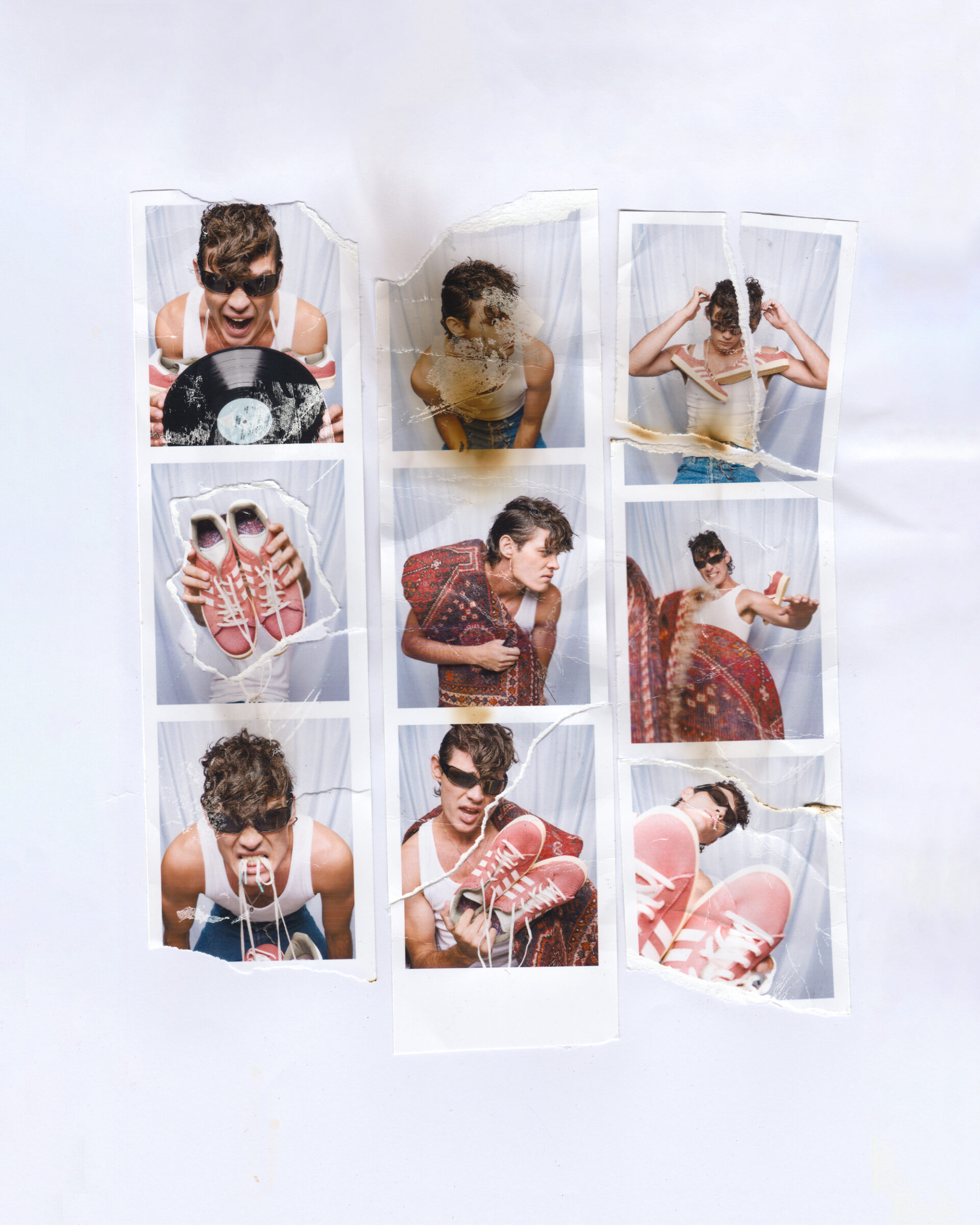
Forty years ago, adidas launched a tennis silhouette that, beyond its initial mission, would become the favourite trainer of several generations of subcultures and urban tribes during the 80s and 90s. With the release of the adidas Campus “London” and “Paris”, the brand with the three stripes brings the legend to a new audience that still has many stories to live and tell.
There was a time when the big sports brands were devoted to just that: manufacturing footwear and clothing for training or competition. It was a very different time from today when, at the same time, new musical styles, aesthetic trends and human groups were emerging that defined the cultural moment in which they found themselves. It was the second half of the 1970s and young people were rebelling more than ever against previous generations.
Members of these subcultures defined themselves by adopting items that served to underpin their personality, as opposed to the more traditional approaches of previous generations. Thus, the wearing of clothing intended for professional or specific activities became a phenomenon with no turning back.

It happened with Dr Martens, work boots with reinforced toecaps used in UK factories before jumping onto the streets on the feet of punks and skinheads in the 70s and 80s, and grunges and alternatives in the 90s. Or with the Nike Dunk, the legendary basketball silhouette that made the leap from the parquet of NBA courts to the asphalt of streets all over the world. Of course, it also happened with adidas which plays a fundamental role in this story.
Run-D.M.C.: when the world’s most famous rappers swapped the Superstar for the Campus
If we travel back to the New York of 1983, we see that the street has been taken over by young people, mostly of African-American descent, who listen and dance to a strange music of pounding rhythms and elaborate rhymes, and dress radically differently from their older brothers. The silk shirts, bell-bottoms and Cuban-heeled ankle boots of 1970s disco-era flamboyance have given way to Kangol caps, Puma tracksuits and adidas trainers. Hip hop has arrived and, with it, the explosion of the sneaker and streetwear phenomenon. The “culprits” have a name: Run-D.M-C.
The New York rappers were not the first to appear, but they were the first to hit the charts – and the streets – with “My Adidas”, a song written in reaction to a poem by Gerald W. Deas, a doctor and activist from the same neighbourhood as the band members, Jam-Master Jay, D.M.C. and DJ Run. The written piece itself was an attempt to criminalise those who wore trainers beyond their primary purpose – sport – by associating their use with drug trafficking, organised crime and other criminal acts. The success of the song was superlative. And with it, that of adidas, as they saw sales of their Superstar model increase exponentially, becoming official sponsors of the band.
Although they loved their adidas Superstars, the members of Run-D.M.C. soon switched to the adidas Campus because of the limited supply – at the time they were white, with no other options. So, the Campus silhouette originally designed for playing tennis was offered in a variety of colours, which gave them much more choices to combine them with their extravagant looks. The Beastie Boys from New York must have thought the same thing when they began to proudly show off the Campuses on their feet. The phenomenon was unstoppable.

Change of country, decade and soundtrack for an unchanging design
Back in the 90s, the adidas Campus “flew” back to the UK to fit the feet of millions of Britpoppers and indies across the country. We say it came back because during the 80s, the shoe – and others like the adidas Samba – enjoyed a certain popularity among the members of the casual movement, famous for their almost unhealthy obsession with certain brands, such as Lee, Lacoste, Fred Perry, Lyle & Scott, Stone Island or adidas itself – what later became known as terracewear or “tiered fashion” – and their proximity to the hooliganism of the most extreme football fans of the time.
During the golden age of britpop and english indie rock, dominated by bands like Oasis, Blur, Supergrass or Echobelly, it was common to see their members complementing their cool, urban looks with a pair of adidas Gazelle or Campus. Real idols of the time, such as Liam Gallagher, Damon Albarn or Ian Brown proudly wore their Campus, generating a trend that went beyond the limits of the genre to become massive. So massive that even the Spice Girls jumped on the bandwagon. The phenomenon became legendary.

adidas Campus and all the stories still to tell
Back to the present. It is 2022 and the world has changed. The Internet and social networks are capturing the attention of the young and not so young. Fashion is beginning to go beyond the physical plane to take on new forms through the metaverse. And, above all, the concept of “urban tribe” seems diluted among a thousand and one aesthetic currents that combine and merge in a seemingly arbitrary manner.
In an age of technical fabrics, exclusive collaborations and hypertrophied, chunky trainers, it’s necessary to look back at designs that don’t need to offer anything new or change to tell fascinating stories. The adidas Campus is one of them.
On the occasion of the launch of the collection inspired by some of the most significant cities in its history, at FOOTDISTRICT we have prepared a very special editorial to introduce the shoe to the new generations.

A collection of images that, with the common link of the new adidas Campus “London” -inspired by its bustling flea markets and coffee shops- and adidas Campus “Paris” -which does the same with its traditional terraces and crocantes-, tell past, present and future stories. Some that took place a long time ago and others that are yet to happen. Exciting stories that deserve to be lived by new generations for another forty years. Because the only irrelevant or uninteresting history is that which is forgotten.
Get your adidas Campus at the FOOTDISTRICT online shop and become part of the legend.