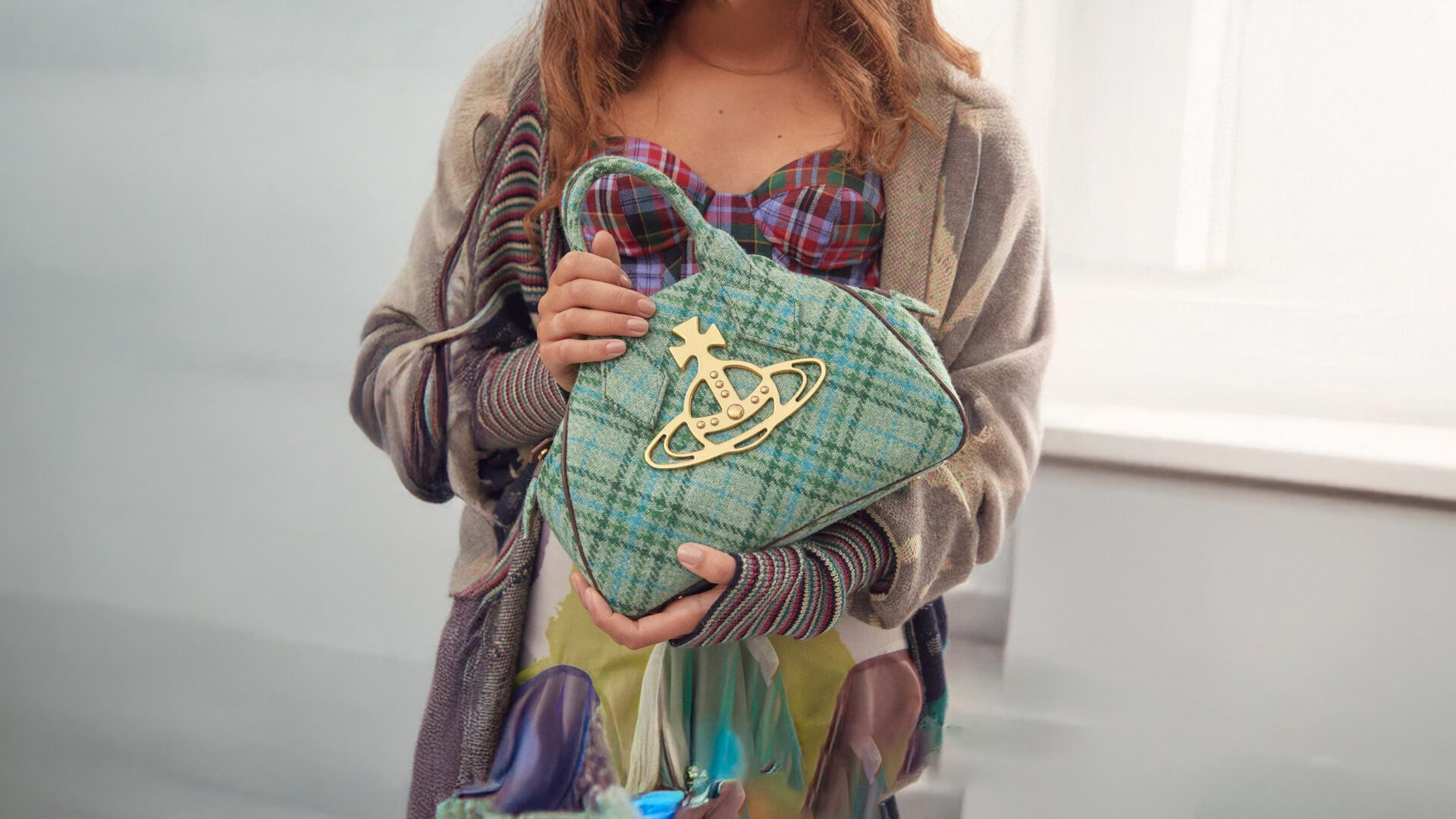
From the Hebrides to London punk, Harris Tweed® found in Vivienne Westwood an unexpected vehicle for rebellion and cultural critique. What began as a rural and aristocratic fabric became a symbol of provocation, style, and aesthetic revolution.
The Fabric of the Hebrides
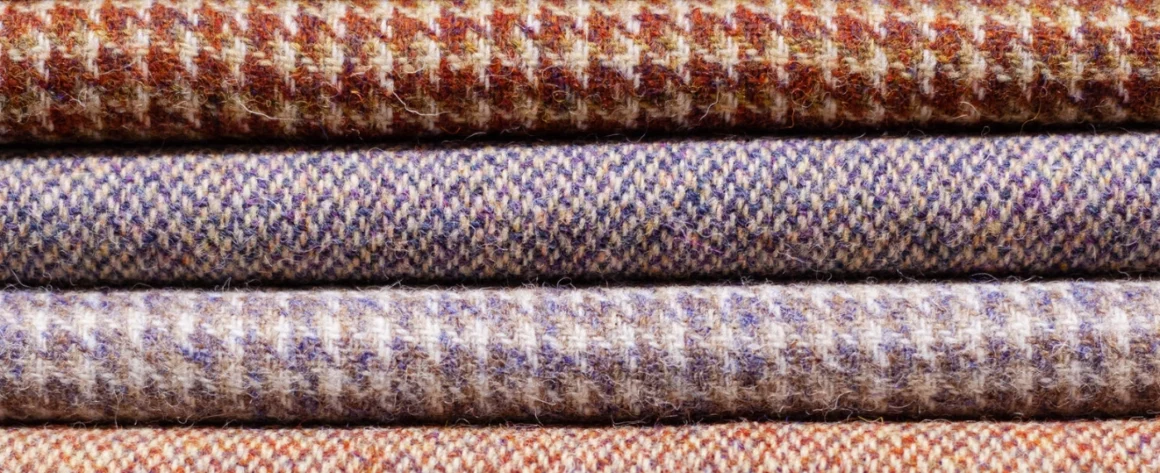
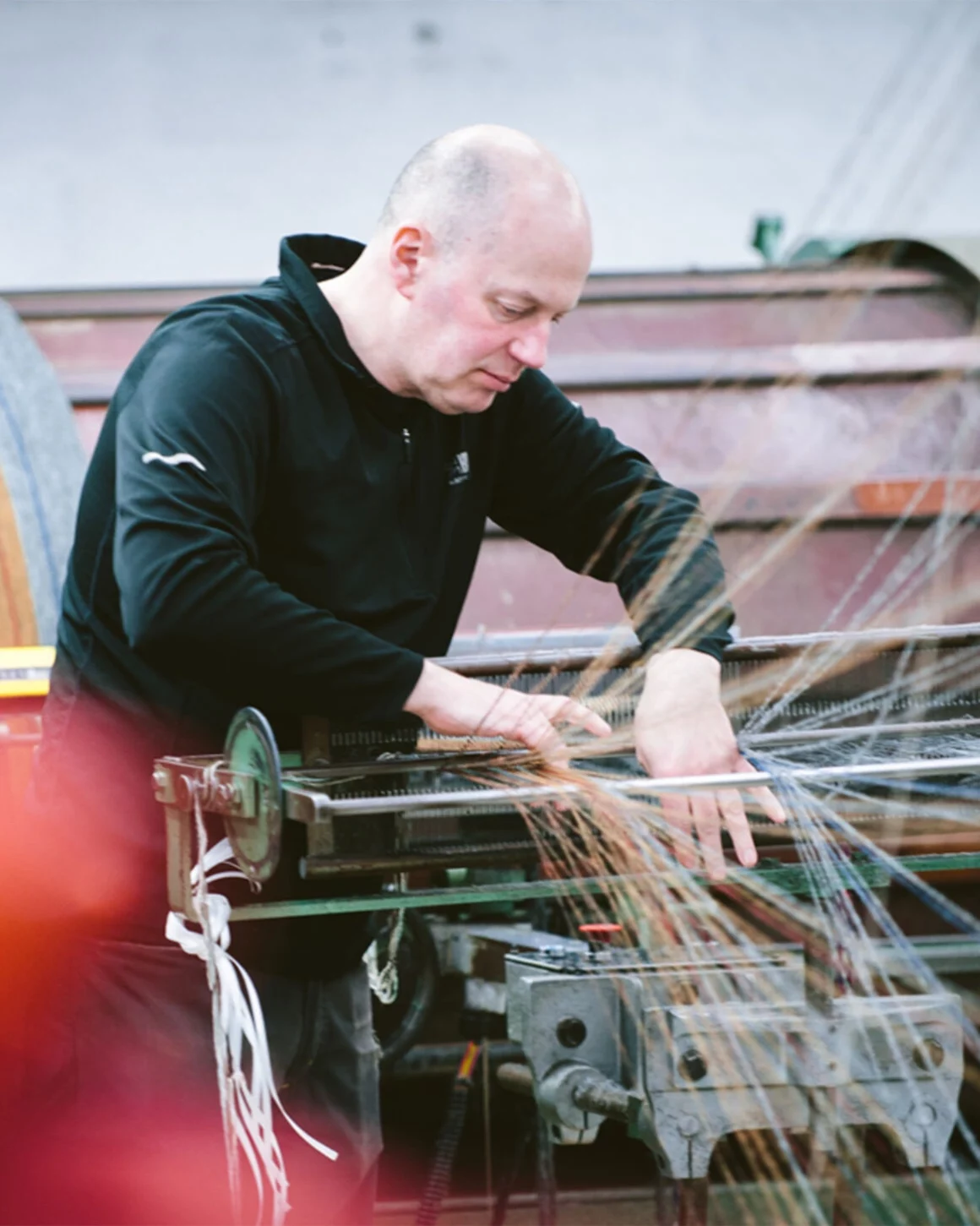
Harris Tweed® is one of Scotland’s most renowned fabrics. Since time immemorial, the inhabitants of the islands of Lewis, Harris, Uist, and Barra have woven a dense and intricate cloth in their homes, dyed and spun in the Outer Hebrides. Each thread gathers different tones that evoke the Scottish landscapes: browns like peat, greens like the moors, greys like the Atlantic mist. This organic character, tied to the land and protected by law through the Harris Tweed Authority, turned the fabric into a symbol of authenticity and local craftsmanship.
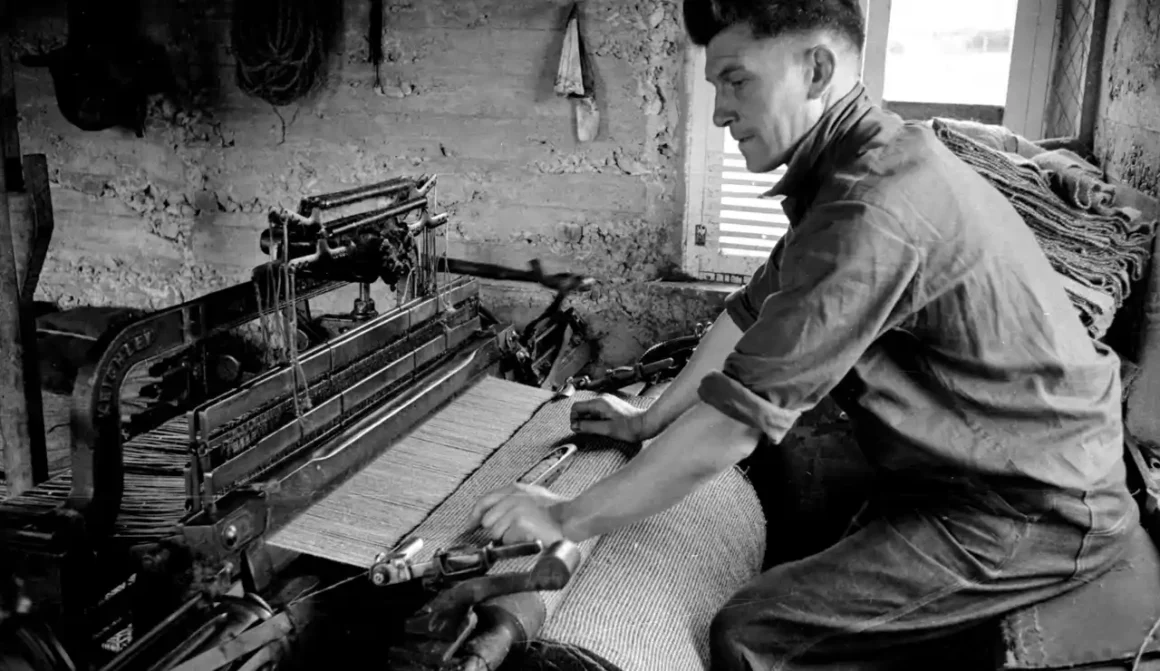
In the 19th century, Lady Dunmore —widow of the Earl of Harris— played a key role in its dissemination. She commissioned local weavers to reproduce her clan’s tartan in tweed, promoted it among the British aristocracy, and soon the material was established as a synonym of elegance and durability. By the mid-20th century, Harris Tweed was already linked to royalty, the English countryside, and a conservative lifestyle. Precisely for that reason, it was so attractive to those who wanted to challenge those structures.
Vivienne Westwood and the Origins of Punk
In 1976, at the height of London punk, Vivienne Westwood and her boutique (which operated under several names — SEX, Seditionaries, World’s End…) became the forerunners of a cultural and aesthetic movement that would transform fashion forever. It was there that she introduced Harris Tweed® in a radically different context: a pair of bondage trousers that transformed a fabric associated with the establishment into a symbol of rebellion and provocation.
Westwood’s gesture was revolutionary: appropriating a material tied to aristocracy and conservative British culture, and returning it as a challenge. More than a decade later, Westwood revisited tweed with a decisive collection: Autumn-Winter 1987/88 “Harris Tweed”, in which the fabric became a vehicle for critique and parody of the very idea of “Britishness.”
Punk, Aristocracy and Theatricality
For this collection, Westwood was inspired by images of Princesses Elizabeth and Margaret in the 1930s. She reinterpreted A-line coats, equestrian sets, and mini-crini skirts, all made in Harris Tweed®, and combined them with denim and other contemporary fabrics. The collection played with stereotypes of Britishness, incorporating archaic accessories and pearls. For eveningwear, models appeared in faux-ermine stoles and jeweled sashes, like princesses in a satirical carnival.
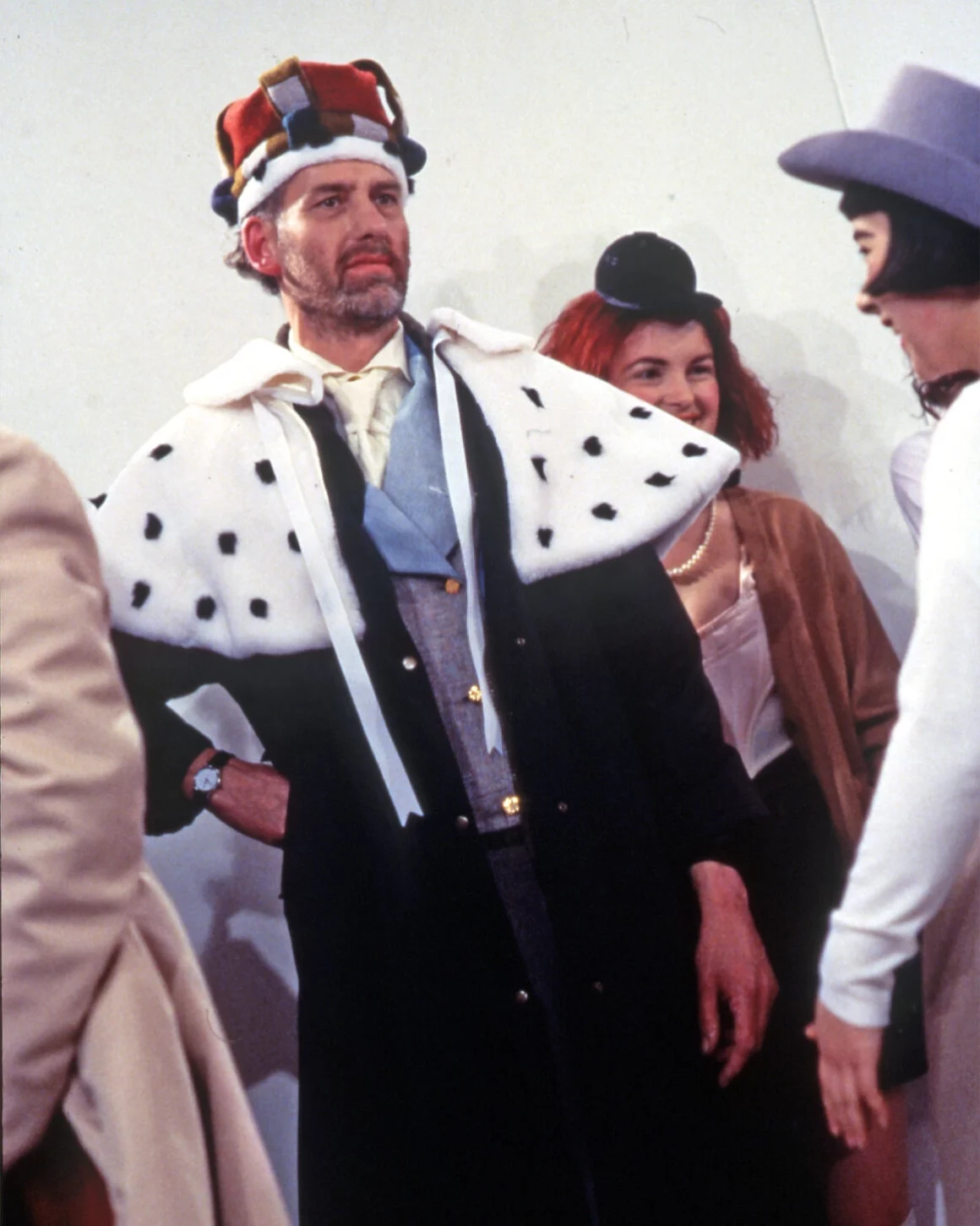
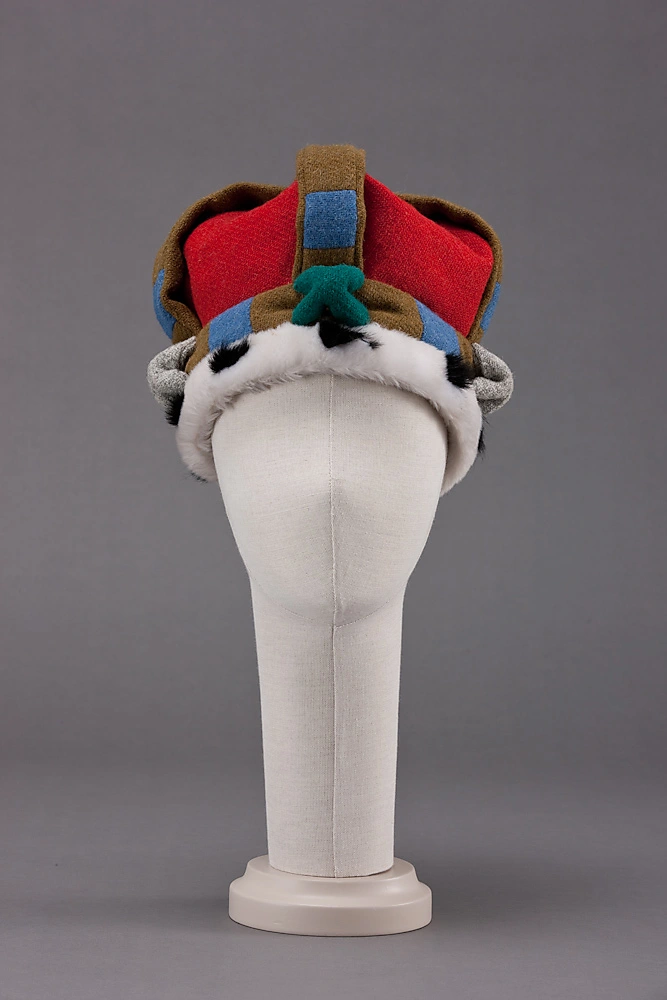
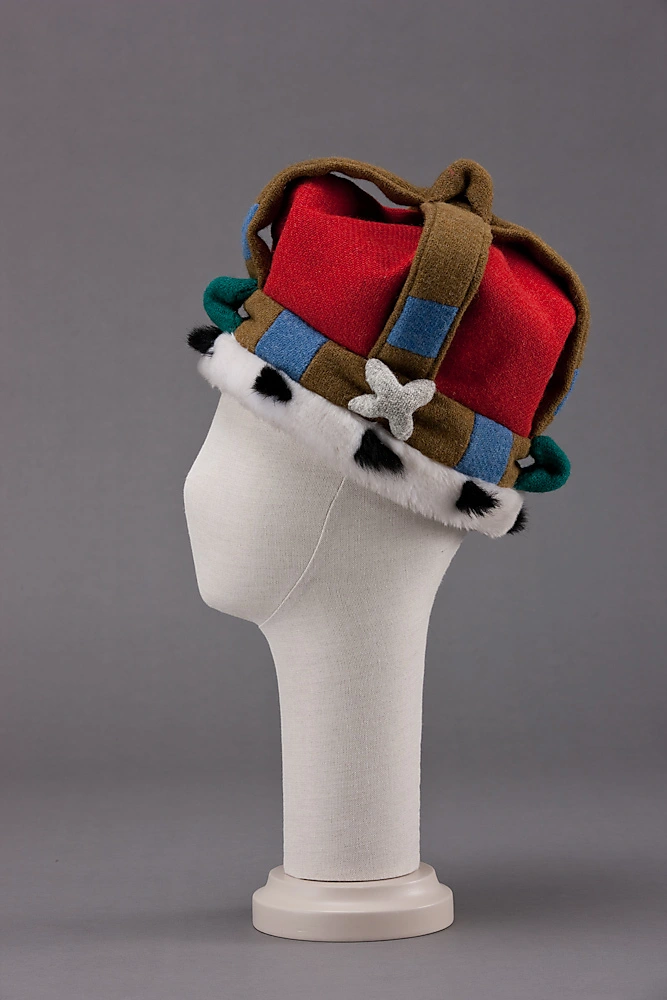
Westwood also used the colors of Harris Tweed®, which she compared to “gemstones,” to create, alongside milliner Stephen Jones, a parody of the royal crown: a soft hat made from strips of the fabric. In doing so, she questioned institutions by using their own symbols, turning theatricality into critique.
The Clash of Logos: Tradition and Provocation
If Harris Tweed® found in Westwood an unexpected vehicle for rebellion, the dialogue became even more fascinating in the realm of symbols.
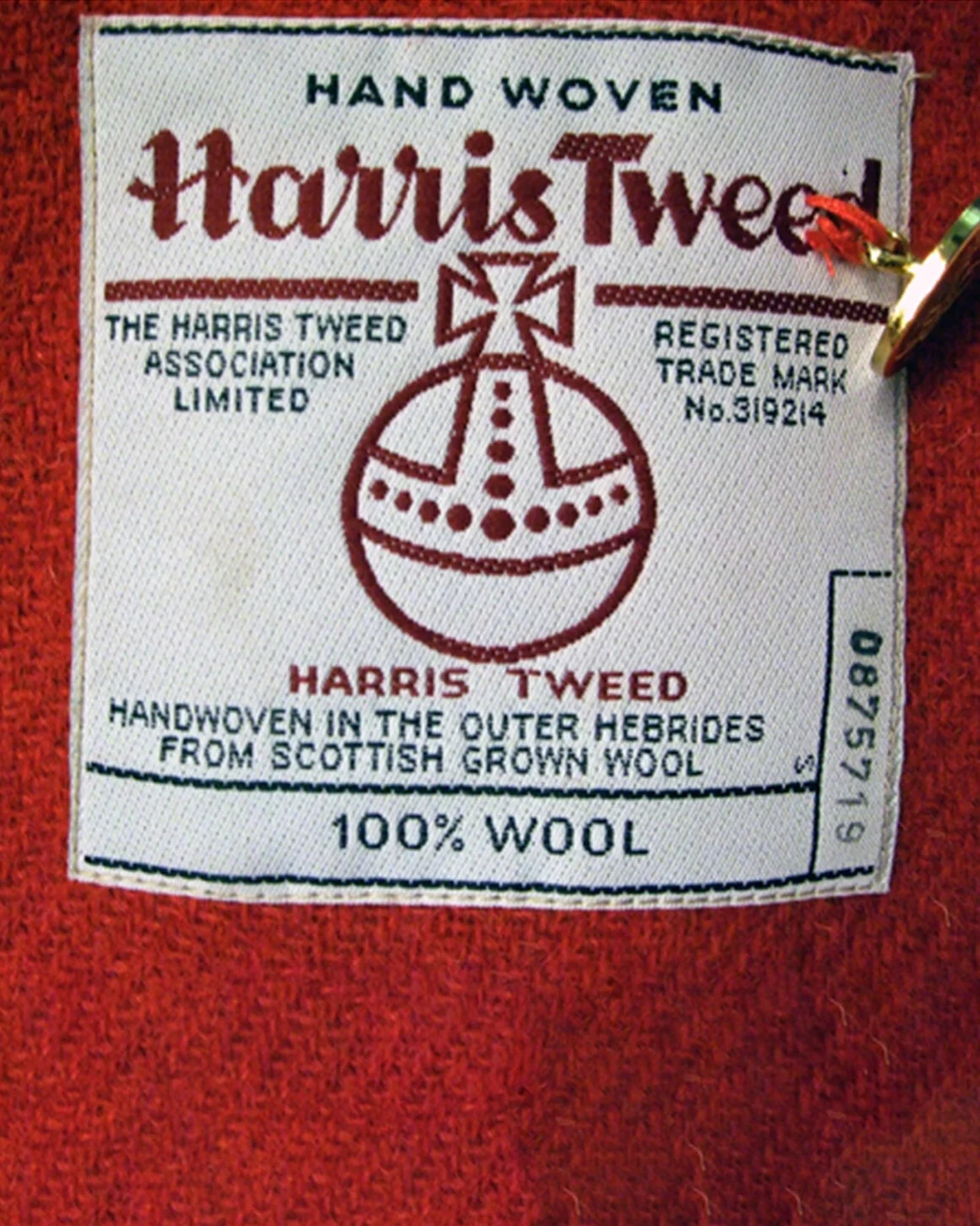
The Scottish brand had protected its fabric since 1909 with an official logo: the Orb of Certification, a crowned orb, an emblem of authenticity evoking monarchy and the church. For Harris Tweed, the orb meant legitimacy, heritage, and the guarantee of a unique artisanal process.
In the late 1980s, Westwood shifted gears: after bringing punk to the street, she began looking at British tradition in order to re-signify it. As she herself put it, “you can’t move forward without knowing where you came from.” The spark came from a chance encounter on the London Underground, where she saw a teenager wearing a tweed jacket. That image inspired her Autumn-Winter 1987/88 “Harris Tweed” collection and, with it, the birth of her own Orb logo.
Westwood’s emblem bore a striking resemblance to that of Harris Tweed, but introduced an irreverent twist: an orbital ring, as if the royal orb had been transformed into a futuristic planet. With that simple addition, the symbol shifted from representing British tradition to embodying a heady mix of monarchy, science fiction, and punk attitude. The logo debuted in the collection, sewn onto buttons and decorative details, and went on to become the most recognizable hallmark of the brand.
Decades later, that same logo achieved global status, especially with the viral success of her pearl choker with the Orb on TikTok, which rekindled the fascination of new generations with Westwood’s universe.
In this overlap, the same visual language —the crowned cross— signified quality and heritage for Harris Tweed, and provocation and satire for Westwood. A cultural mirror where tradition and subversion met in a single symbol.
From Rural Cloth to Cultural Icon
Thanks to Westwood, Harris Tweed® ceased to be a material confined to rural tradition and became a fashion fabric. Other designers began to work with it, giving a decisive boost to the industry of the Scottish isles. What was once used to clothe farmers and aristocrats alike was transformed into a standard of youthful rebellion, showing that fashion can be a field of tension between heritage and subversion.
The relationship between tweed and punk exemplifies how a traditional material can be re-signified: to appropriate the codes of power, dismantle them, and return them in theatrical form can be an act of provocation, critique, and creation. Westwood understood this perfectly, and her legacy continues to inspire designers who seek to break barriers and challenge conventions.
Westwood was the ultimate leap for tweed, the factor that explains its presence today in pieces from brands like Nike, Puma, or Clarks—always balancing somewhere between tradition and aesthetic rebellion.