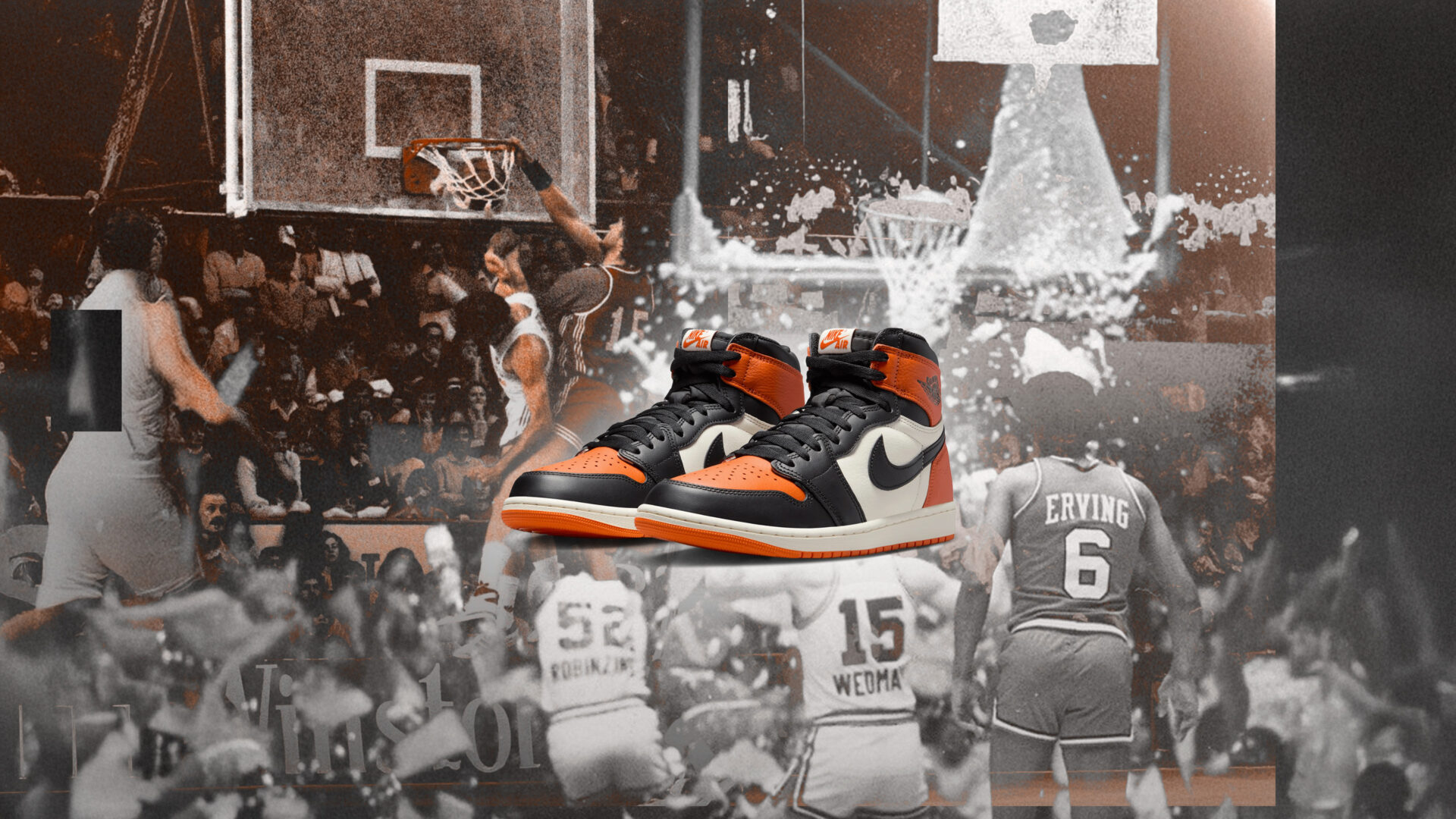
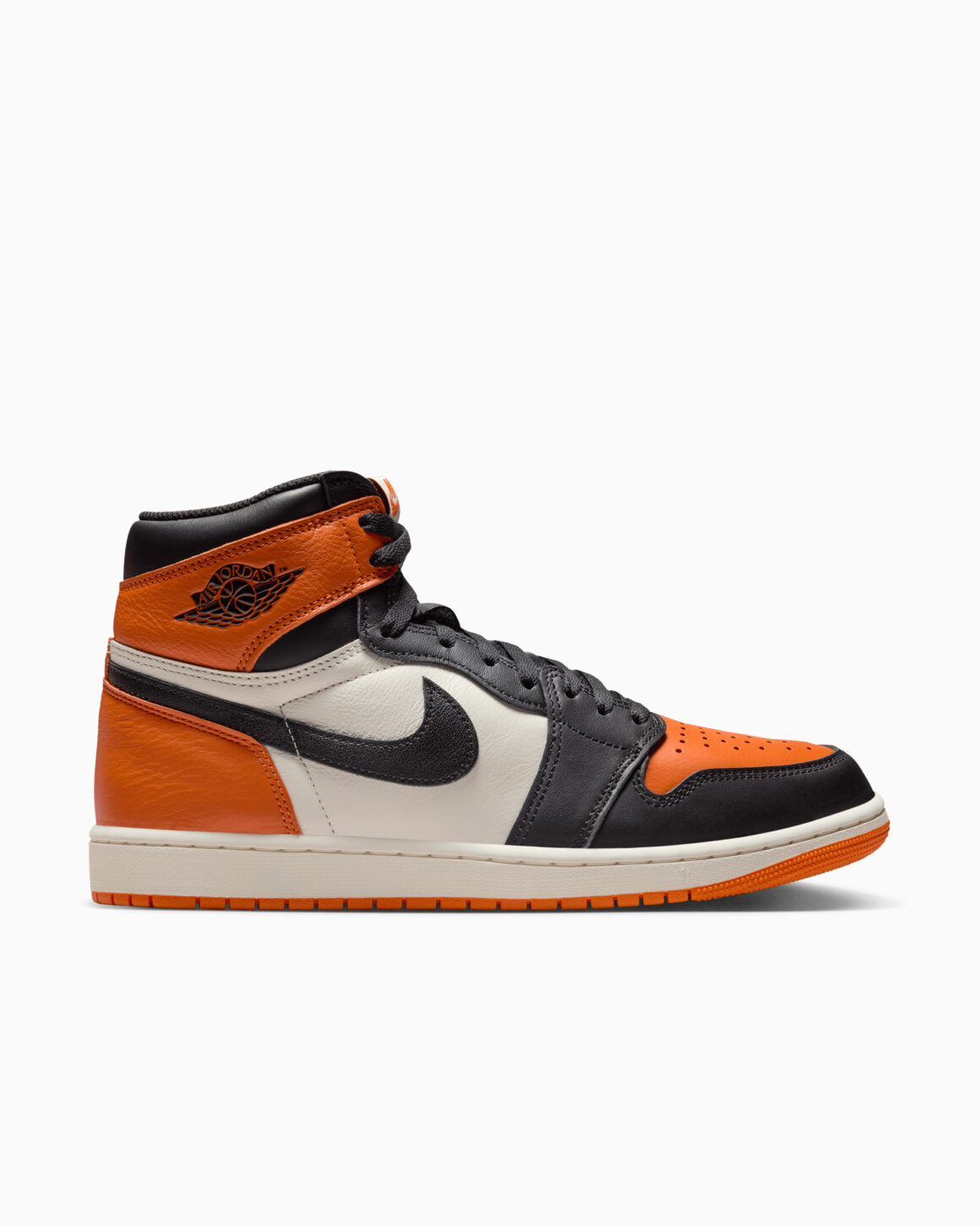
The return of the Air Jordan 1 High “Shattered Backboard” takes us back to a sneaker that popularized full-size family drops—but also to a lesser-known moment in Michael Jordan’s life: the era of shattered backboards.
Air Jordan Shattered Backboard
The original 2015 release of the “Shattered Backboard” stood out for several reasons. It was the first major drop to be offered simultaneously in adult and kids’ sizes. It also marked a leap in material quality, elevating the Air Jordan 1 High into a coveted silhouette beyond core sneakerheads. Most importantly, it uncovered a little-known story.
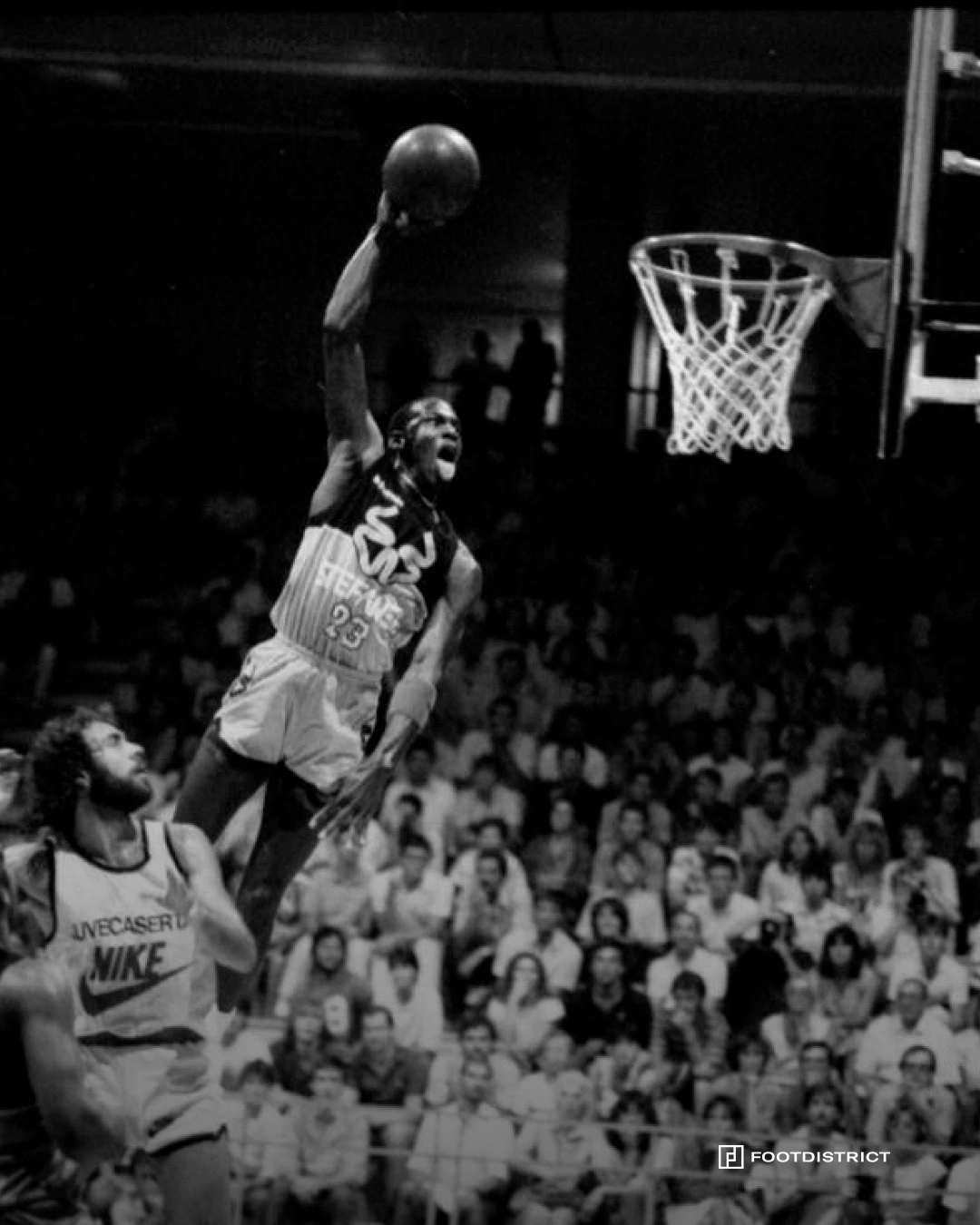
It all began in 1985. After his rookie season, Michael Jordan embarked on a promotional tour with Nike across Europe. In Italy, Stefanel Pallacanestro Trieste was playing a friendly match against JuveCaserta, and it seemed logical that Jordan would play with JuveCaserta, the Nike-sponsored team. Normally, he would split time between teams, but Jordan felt so comfortable in Stefanel’s orange uniform that he never switched sides.
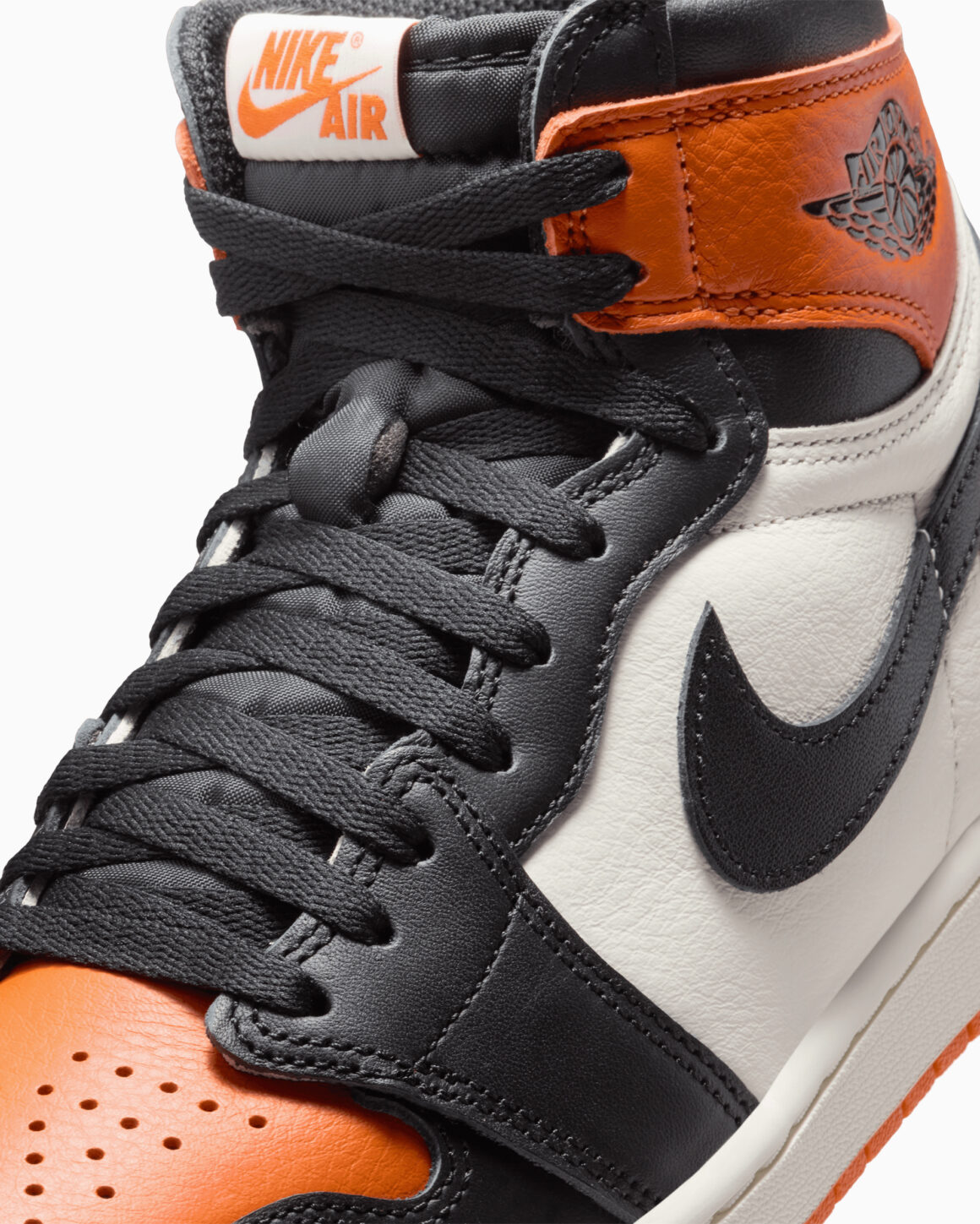
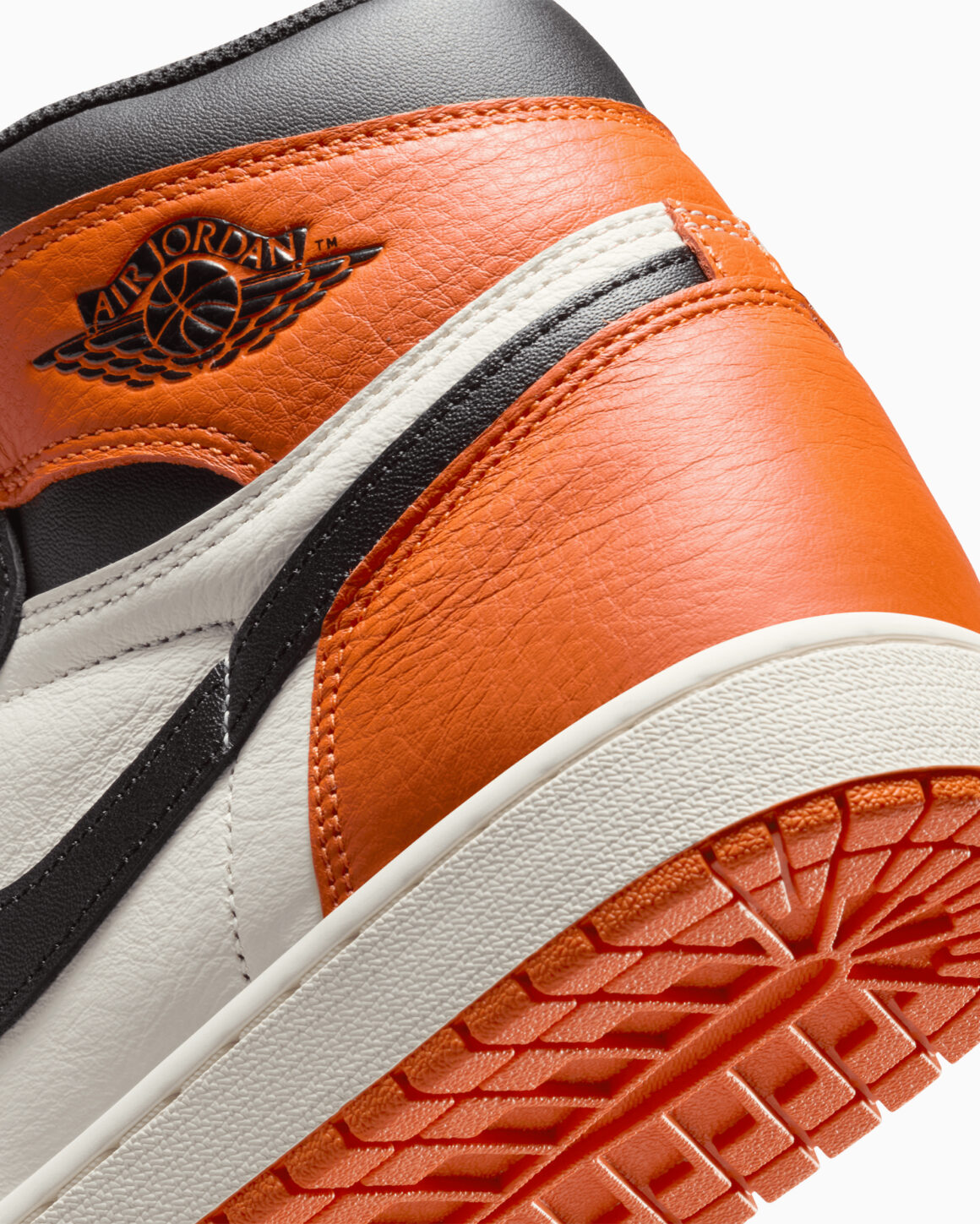
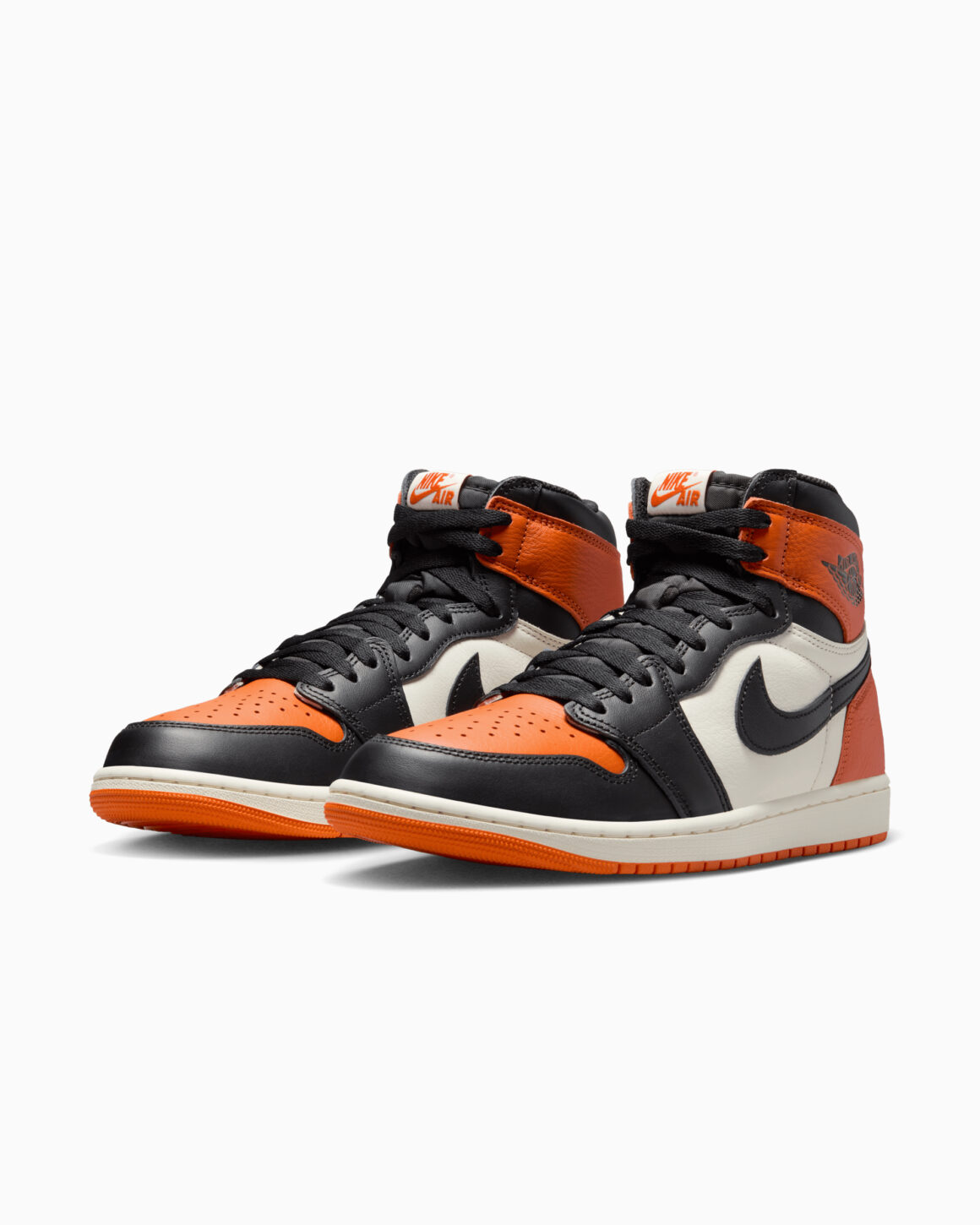
He dominated the game, but the defining moment came when he dunked with such force that he shattered the backboard. Some players suffered minor cuts, and shards of glass remained embedded in his Jordan 1s—which, 35 years later, would sell at auction for around $600,000.
Since then, orange has become synonymous with special releases like the current Air Jordan 1 and Air Jordan 3, as well as that unforgettable moment. But the history of shattered glass didn’t start with Jordan.
Shattered glass before Jordan
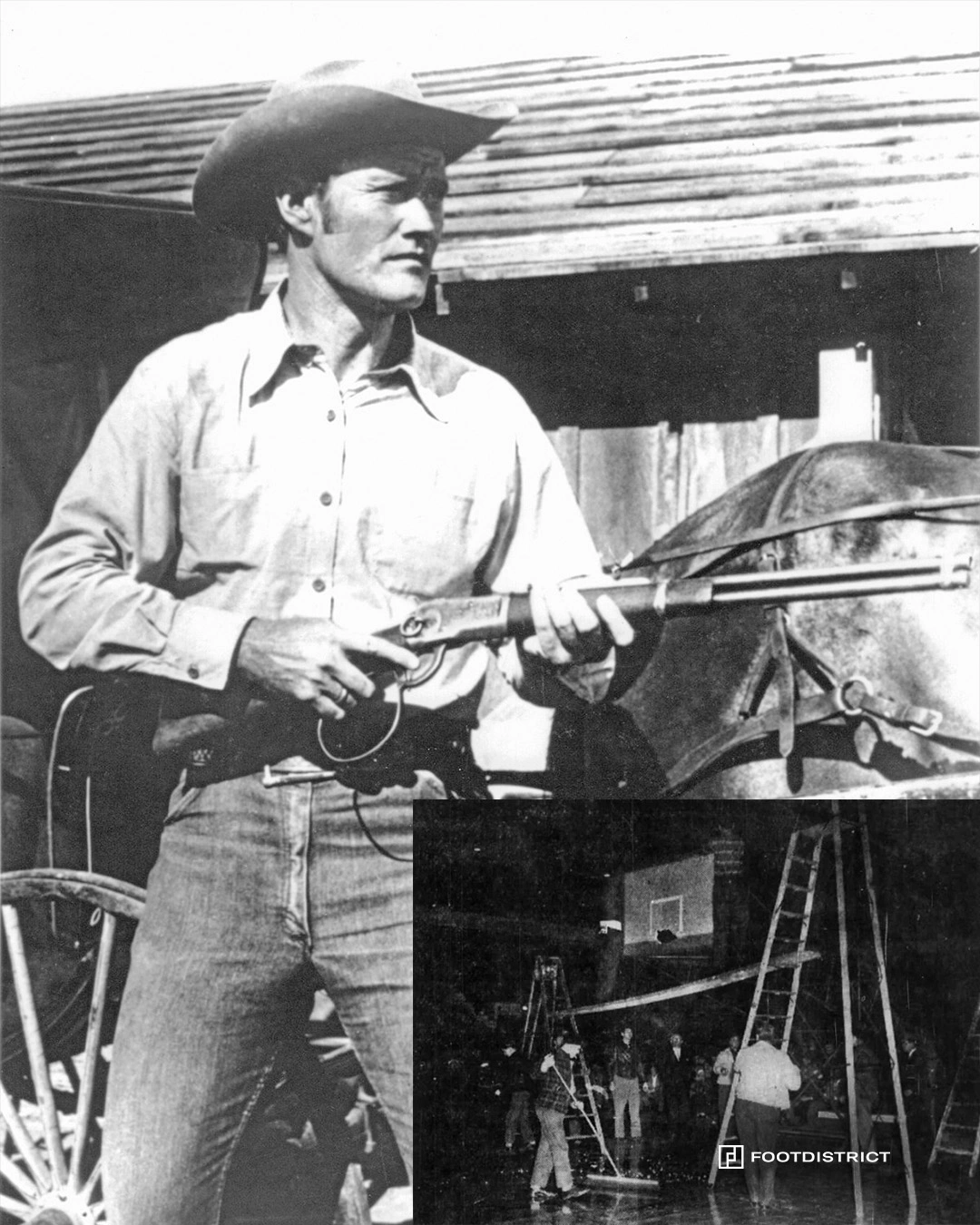
The first documented “backboard breaker” was Chuck Connors in 1946. It wasn’t even a dunk—just a mid-range shot. The hoop hadn’t been properly installed, and the backboard collapsed. Connors would later become better known for his aim as an actor, starring as a quick-draw cowboy in The Rifleman.
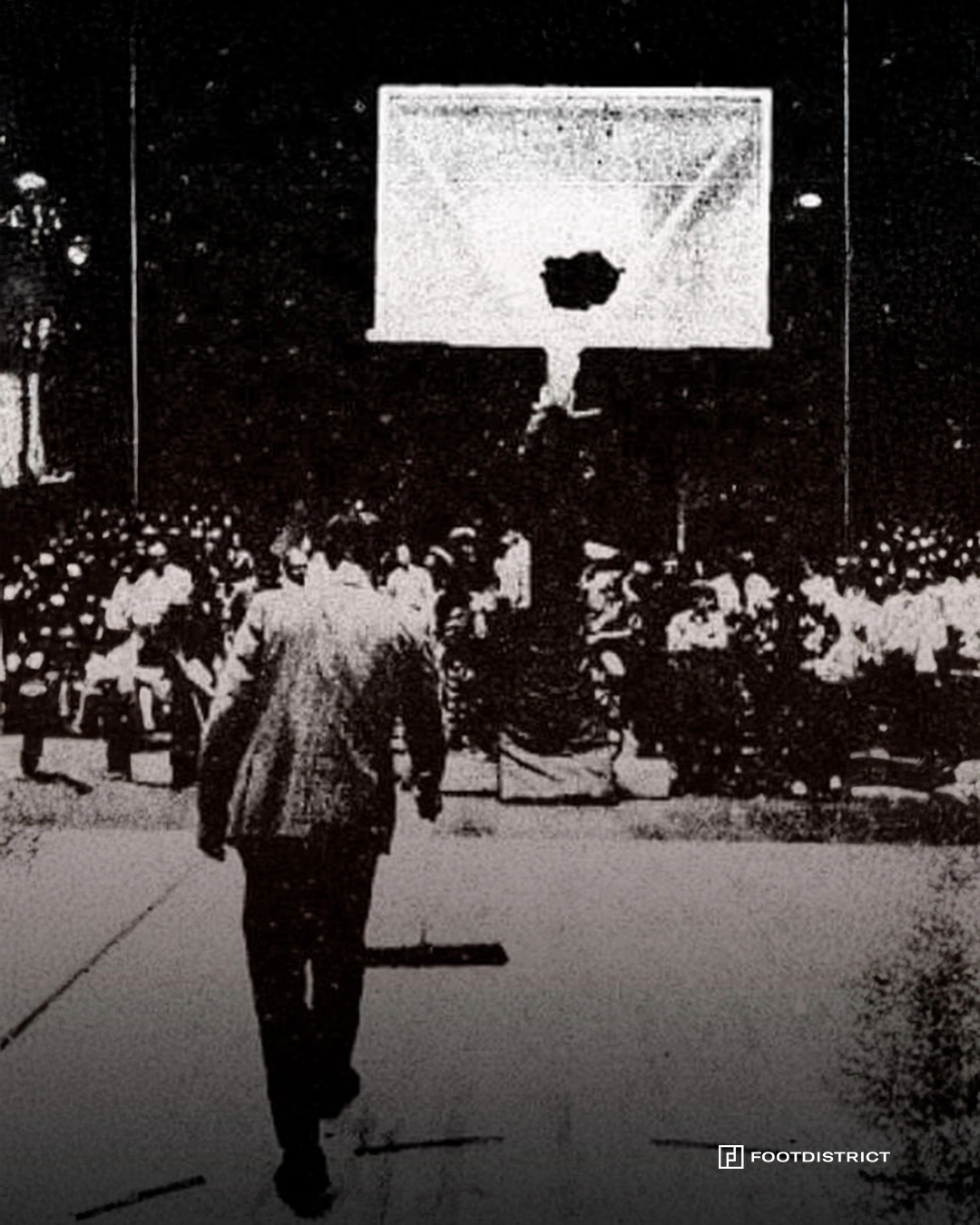
Then came Charlie Hentz, a player remembered for a single, explosive act. In just 57 professional games in the ABA, he shattered two backboards—in a single game. The first occurred in the first half and was replaced with a wooden backboard. With less than a minute left, he shattered the second. Coaches and referees agreed to end the game.
Dawkins: The Last Great Backboard Breaker
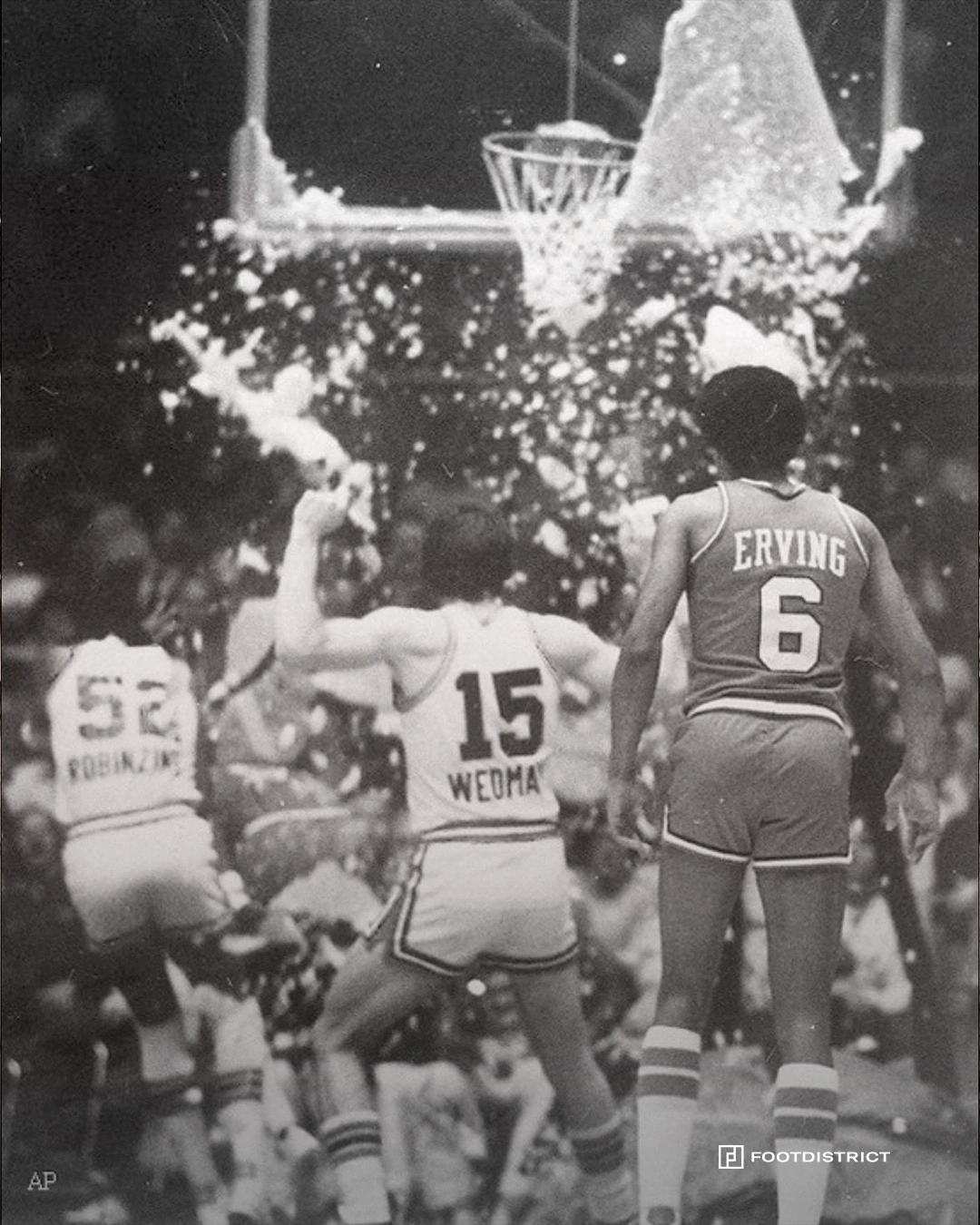
In the late ’70s, Darryl Dawkins became the face of the power dunk. In November 1979, he shattered a backboard during a Cavs game in Kansas City. Footage shows him genuinely surprised.
Sixers fans, thrilled but envious, wanted to see it at home. Dawkins delivered. In February 1980, during a game against San Antonio, he shattered another board—this time in front of his home crowd.
He was the last of his kind. NBA commissioner Larry O’Brien warned that the next break would bring sanctions.
Technology Ends the Spectacle
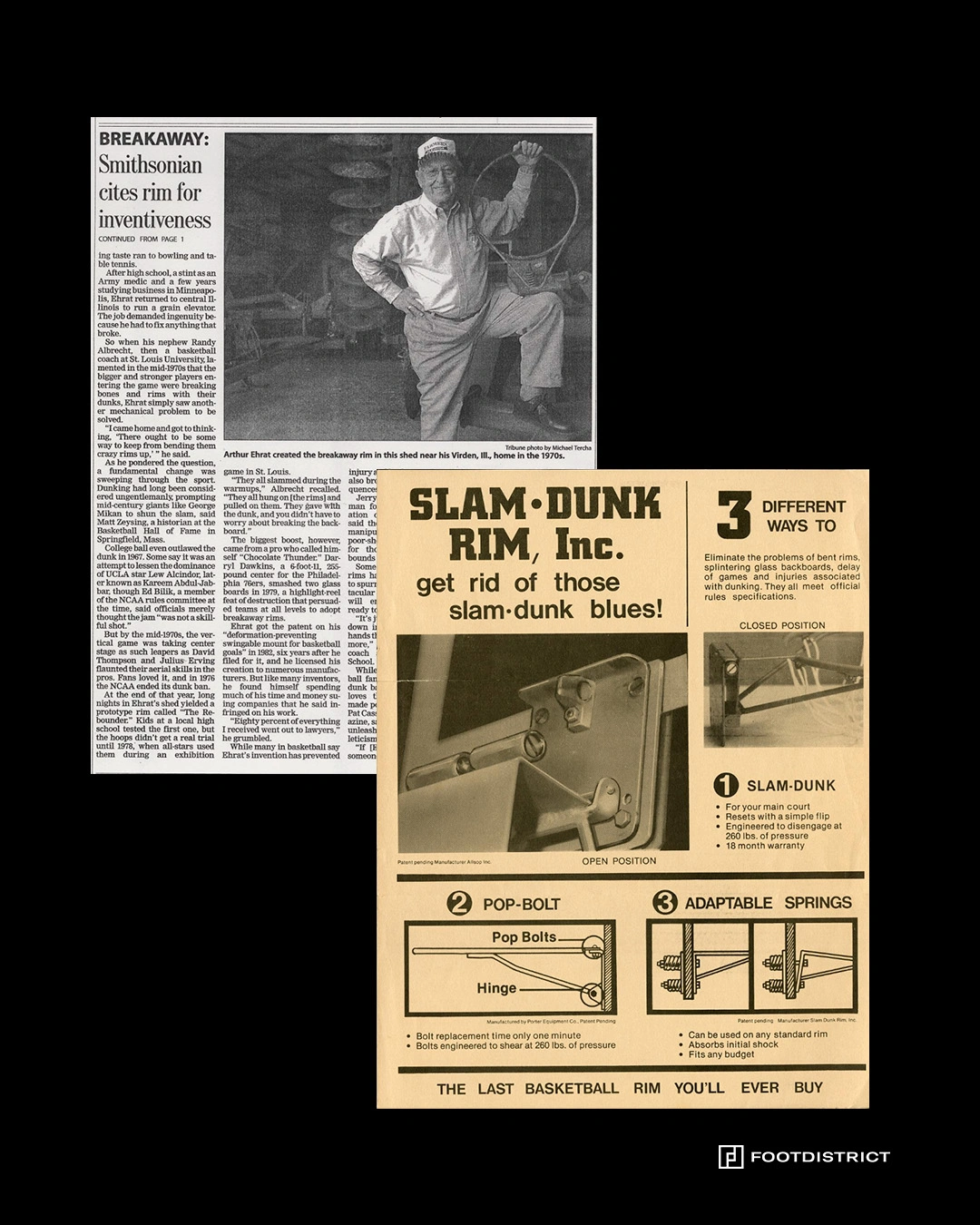
The solution came from the field—literally. A farmer named Arthur Ehrat patented a spring-loaded rim inspired by his tractor’s mechanics. From then on, backboards would collapse without sending glass flying. Chris Morris and Shaquille O’Neal were among those to test the limits. Dwight Howard didn’t shatter a board—but he did destroy the shot clock.
Europe and the Last Shards
In Europe and the NCAA, the technology took longer to arrive. Jerome Lane, Darvin Ham, and Bryant “Big Country” Reeves broke boards even after the NBA had moved on.
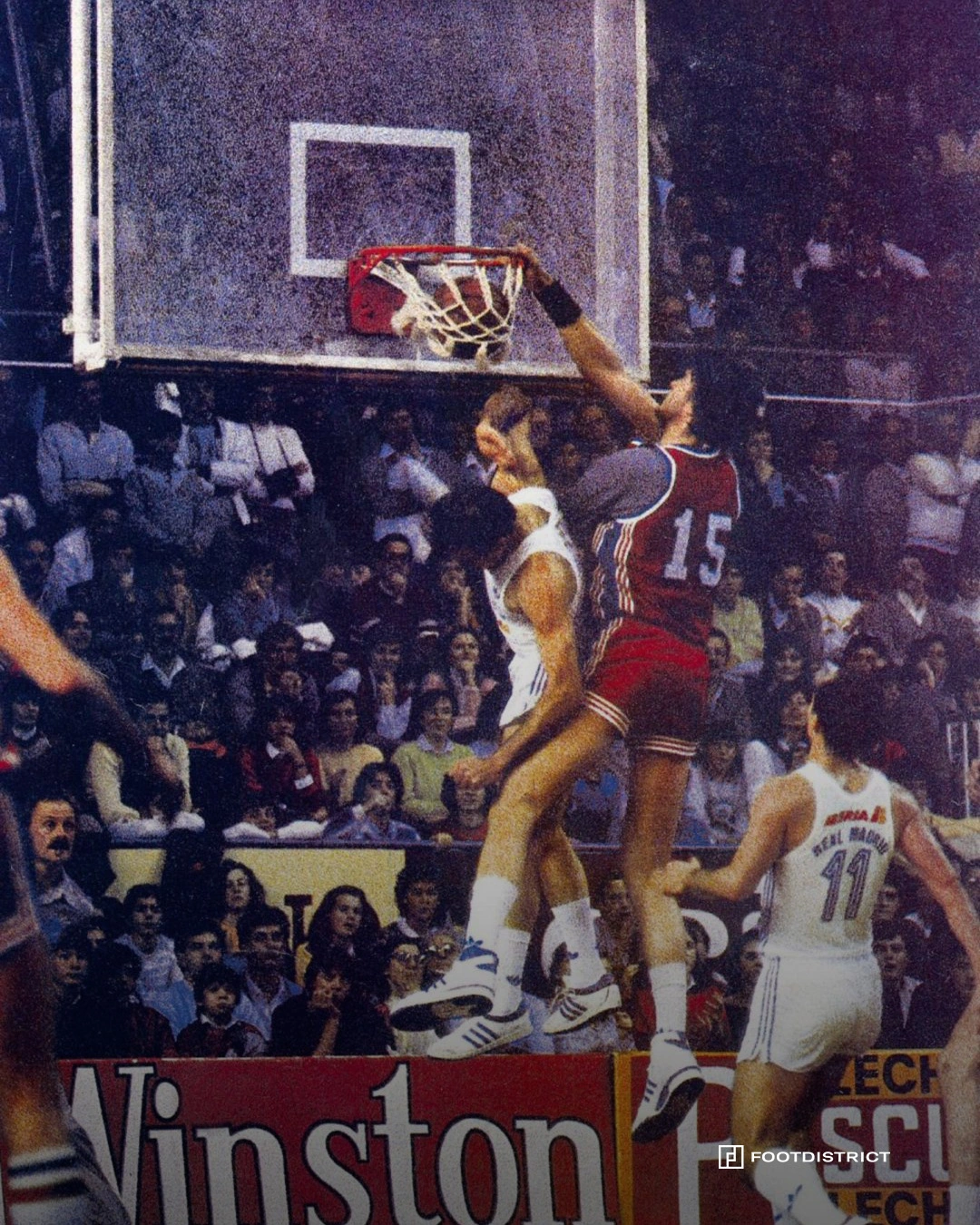
Spain witnessed one of the most iconic incidents: Arvydas Sabonis, during the 1984 Christmas Tournament, representing the Soviet national team against Real Madrid. It was his explosive introduction to Europe.
And Then Came Trieste
One year later, in 1985, Michael Jordan shattered a backboard in Trieste. The event remained virtually unknown for decades—until a pair of sneakers and a color brought it back to life. The story now lives on, embedded in the Jordan 1. And it still resonates today.