
At the turn of the century, skate culture was finally granted some recognition, and, for the first time, this community was starting to have a real impact on sneaker sales. This prompted Nike to enter this new niche creating a massive market. Nike sneakers featured high-end construction and technology which made them the perfect shoe for skating. In 2001, Nike SB, the Swoosh skateboarding line, released a model that revolutionized not only the image of the brand, but skate culture worldwide: the Nike SB Dunk.
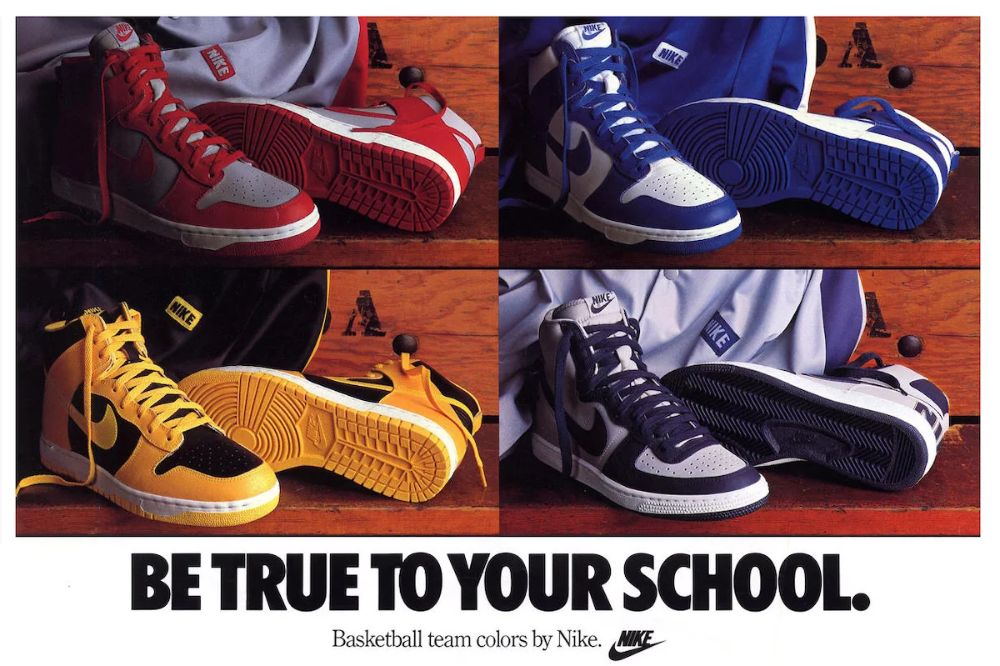
The Nike Dunk was originally introduced in 1985. Designed by Peter Moore, it introduced a defining characteristic: endless colorways which became the silhouette trademark. The Dunk’s various colorways mimicked those of college basketball teams with the tagline “Be True to Your School” and were marketed specifically to players from these teams and fans. Skaters would eventually fall in love with the Dunk, thanks to the great cushioning, support and traction it offered. The model would be revamped five years later, but it would not be until Sandy Bodecker was named general manager of Nike SB in 2001, that the model broke everyone’s expectations.
The new version of the Dunk earned skate community approval when four skaters -Reese Forbes, Gino Ianucci, Richard Mulder and Danny Supa- were recruited to be the face of Nike SB. A number of changes were made to the original model: padding was added to the insole, the sole was modified for better traction and the “fat tongue” was introduced. In 2002, Bodecker took a chance with the first Nike SB Dunk in grey and navy blue. He hit the road with the sample, going from city to city, hitting almost every independent sneaker shop on the way, gauging their reaction to the new model. The SB Dunk was greenlit and was finally released in March 2002.
For the launch of the SB Dunk Low Pro, each of the four Nike SB skaters received their own colorway, which was officially named the “Colors By” series. Each sneaker featured nods to the associated skater and to the brand: from the stark color scheme of the “Gino” to the soft nobuk used in Forbes’ Reese Dunk. The Colors By Dunks aren’t legendary simply because they were the first versions of this model, but for the story behind the sneaker. The first four sneakers were available in limited quantities, sold exclusively in independent skate boutiques. Collaborations with skate brands would come later: Zoo York, Chocolate and finally, the grandmaster of hype, Supreme. SB partnered with Supreme to release the first ever non-Jordan sneakers to feature elephant print. This trio of collaborations helped cement the SB Dunk’s reputation, but it was the partnership with Jeff Staple, founder of Staple Design, that ensured the legacy of the sneakers.

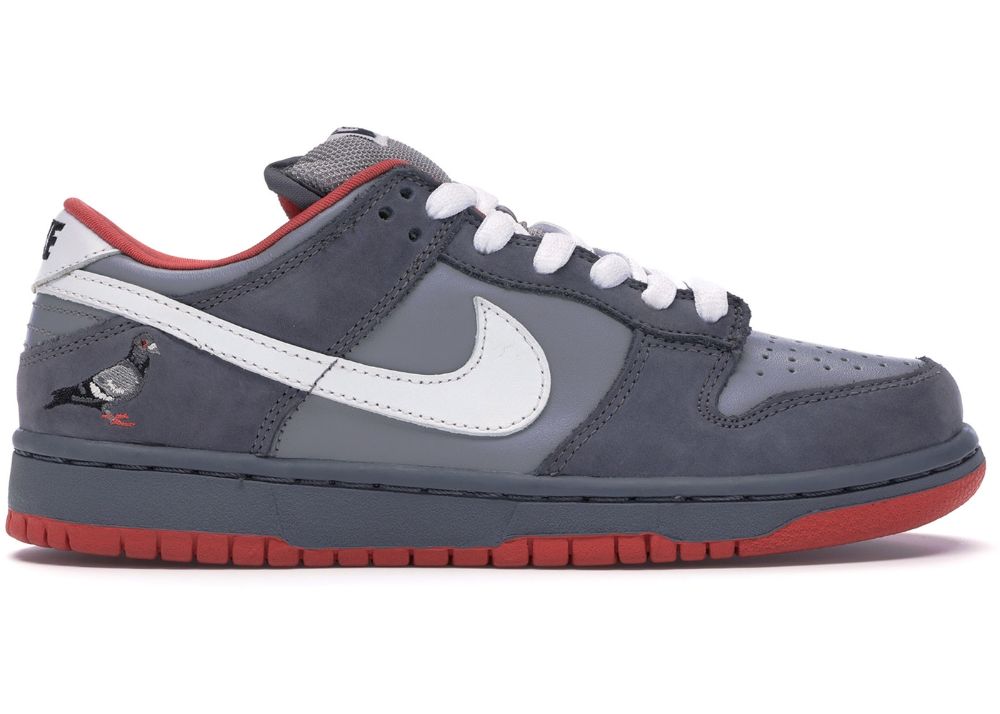
Nike entrusted Staple with the task of designing an SB Dunk representing New York City, to create the SB’s “City Series”. The previous release, the “Paris” Dunk, a limited edition of 202 pairs personalized by French artist Bernard Buffet, had been a success. Staple opted for a different, more mundane concept for the New York Dunk: the pigeons. The Jeff Staple x Dunk Low Pro SB “Pigeon” became a social revolution. They featured two shades of grey on the upper, a white swoosh, red accents and the iconic embroidered pigeon on the heel. When the sneakers arrived at Staple’s retail space, NY went into a frenzy. Sneaker heads camped for four days under extreme weather conditions. NY City Police attempted to end the situation and break up the line, leading to a tense standoff and almost riot between buyers and the cops. The event and sneaker launch was featured on CBS evening news. The Jeff Staple Pigeon x Dunk Low Pro SB “Pigeon” is still one of the most sought after sneakers in the world.
More collaborations followed. Nike SB partnered with Stüssy and Diamond Supply for the “Team Manager” Series, loved equally by underground skaters and the mainstream market. The Slam City Skates shop rolled out a Dunk Low that changed colors as you wore it. The shop also offered five pounds back to anybody who did a kick flip outside the store while wearing his newly-purchased sneakers: a clear message that skaters were the preferred buyer. De La Soul teamed up with Nike to create their own SB Dunk Low and High, inspired by the cover of the albums 3 Feet High and Rising. In 2008, Concepts changed the game when it dropped the Concepts x Nike Dunk Low SB “Red Lobster”, inspired by the emblematic Boston staple. The “Blue Lobster” and “Yellow Lobster” would come later. Nike gifted the latter to the Concepts staff as a thank you. Skaters like Paul Rodriguez, Eric Koston and Stefan Janoski also left their mark in Dunk history.

The SB Dunk success after all these years has been Nike’s penchant to partner with key players from the skate or underground scene instead of celebrities or mainstream brands. Dunk has maintained the respect of the skateboarding community while increasing its pop culture status. The rivalry between skaters and sneakerheads is runs parallel to the brand’s history. While a hoard of collectors drooled over the collaborations and limited editions of the Dunk, they had to stand by and watch while they were used by riders for extreme skateboard tricks. At the same time the skater community was fighting to perserve the Dunk as an icon of their subculture.
After all this history, the Dunk went into a slump. The silhouette was eclipsed by other models and emerging trends which sidelined minimalism. But now, along with the revival of the Blazer, the Nike SB Dunk is living a vibrant second life, collaborating with streetwear brands such as Off-White and launching new models with an old school vibe. Keep them coming!
