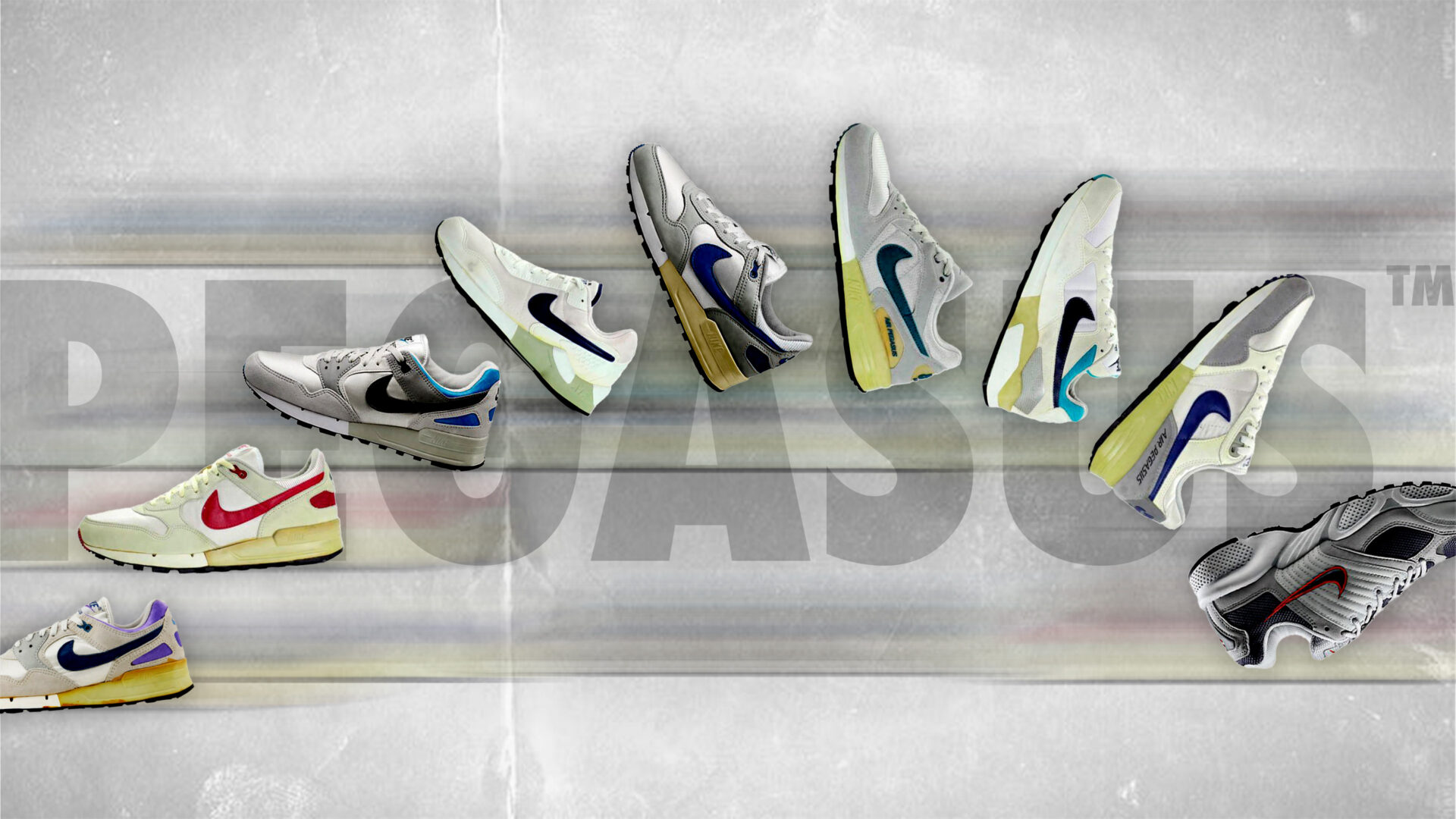
Nike has been infused with mythology since its inception. The name of the company, which appeared in a dream, is derived from the winged goddess of victory.
Myths and wings reappear in Nike’s most iconic running sneaker, a model that has been updated annually since 1983 to meet the needs of the majority of runners. Because the Nike Pegasus combines myths and wings with the goal of reaching the entire running community.
The first, Pegasus 83
Mark Parker is Nike’s third CEO, following founder Phil Knight and the brief tenure of William Perez. He held the position from 2006 to 2020, but had previously worked for Nike as a designer. Parker’s first major success was the Nike Internationalist, and based on some of his ideas, he recruited another historical figure, Bruce Kilgore (AF1, AJ2), to create a new model. The main feature was the Air-Wedge, a wedge of air under the heel that was typically filled with EVA, a material that lost its shape quickly. Air-Wedge claimed 12% more shock absorption than EVA foam in a smaller Air unit than the 1979 Tailwind.
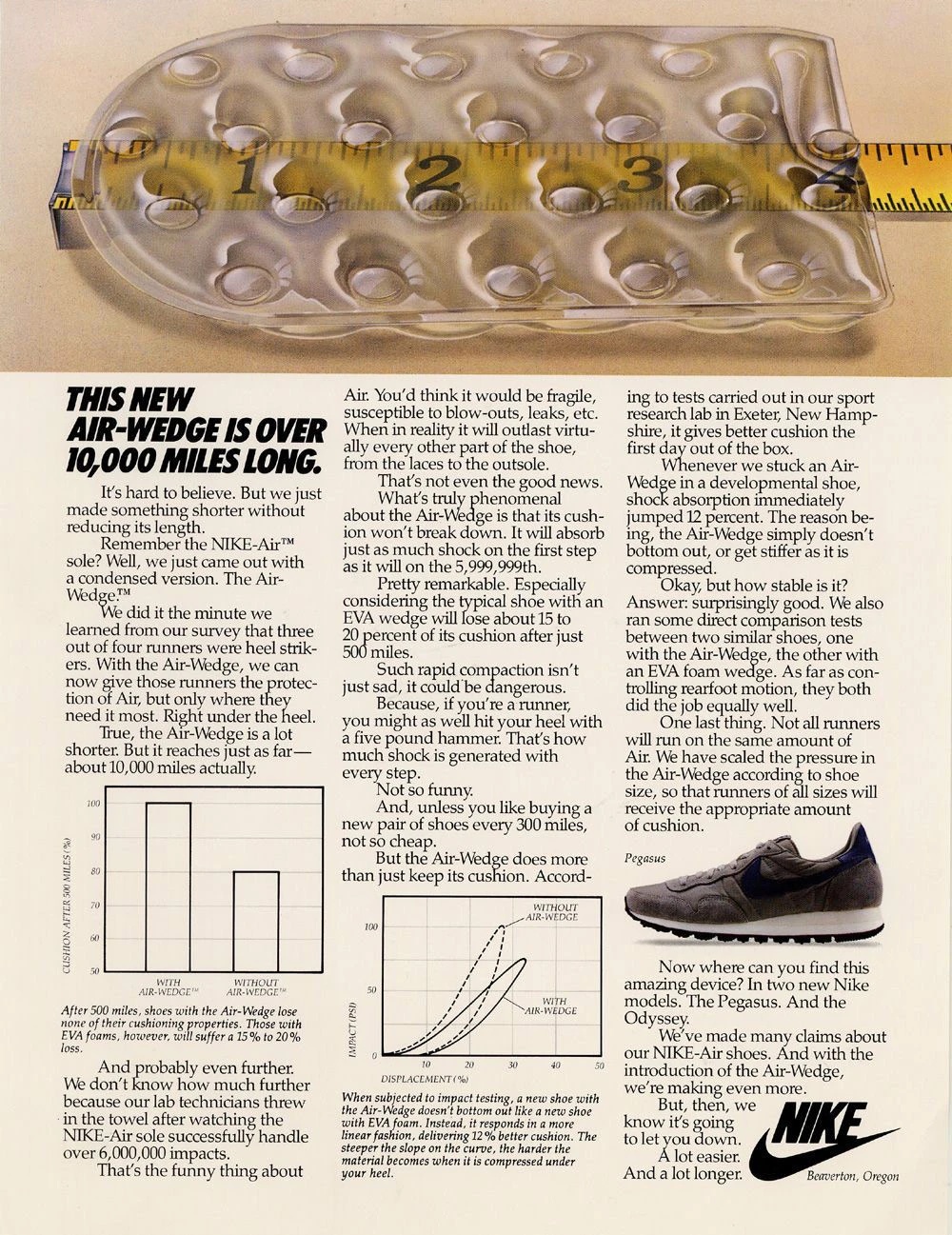

Priced at $50, the first Nike Pegasus was a running must-have and a complete sales success, with 300,000 pairs sold in the first half of the year. Without intending to, it established the style of a franchise that is still being updated 40 years later.
Pegasus in the 80s and 90s
The original Pegasus was succeeded by the Pegasus GX in 1985, which improved some technical features while maintaining the styling. New versions of the Pegasus were introduced in 1987, 1988, and 1989, including a trail version known as ACG (All Conditions Gear).
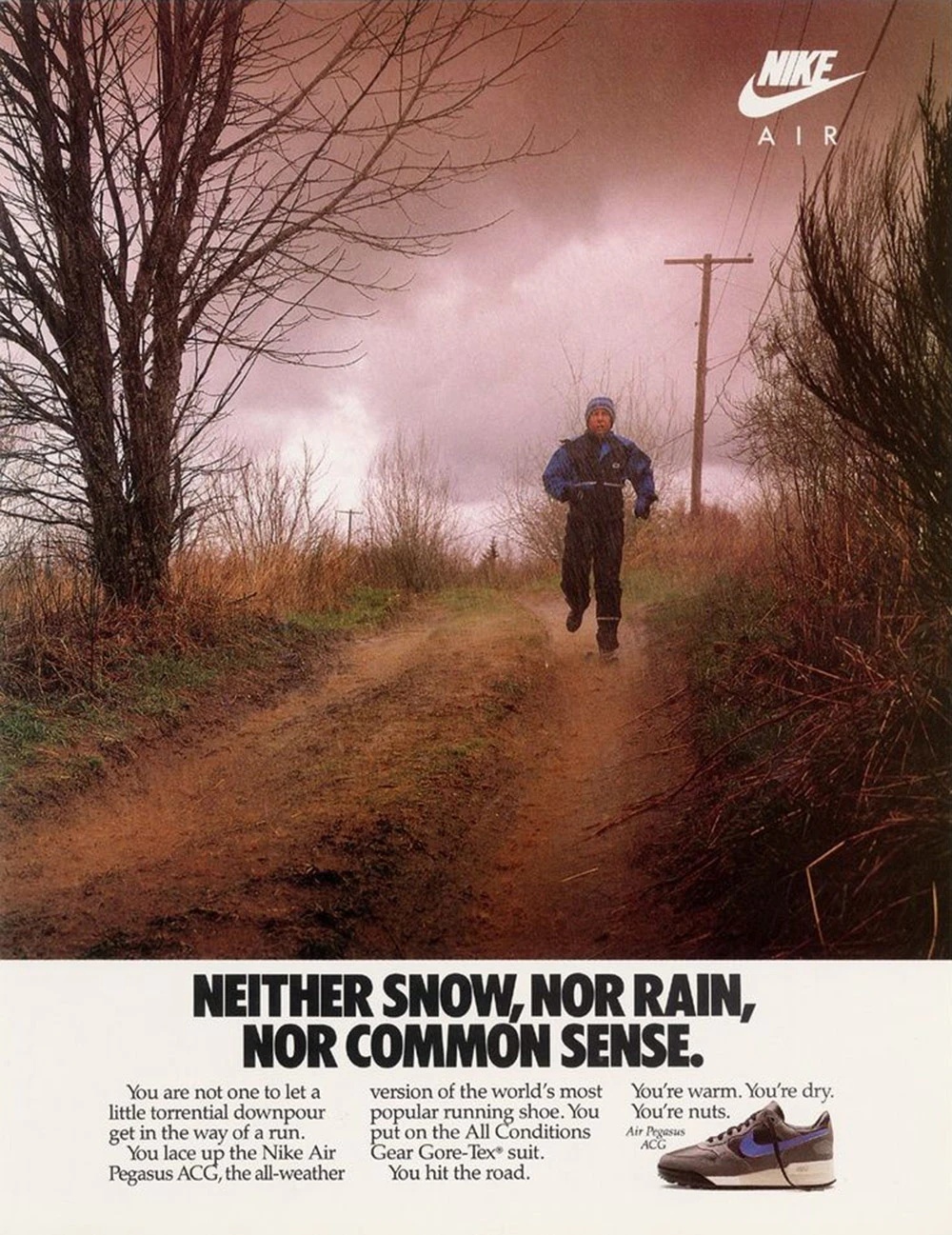
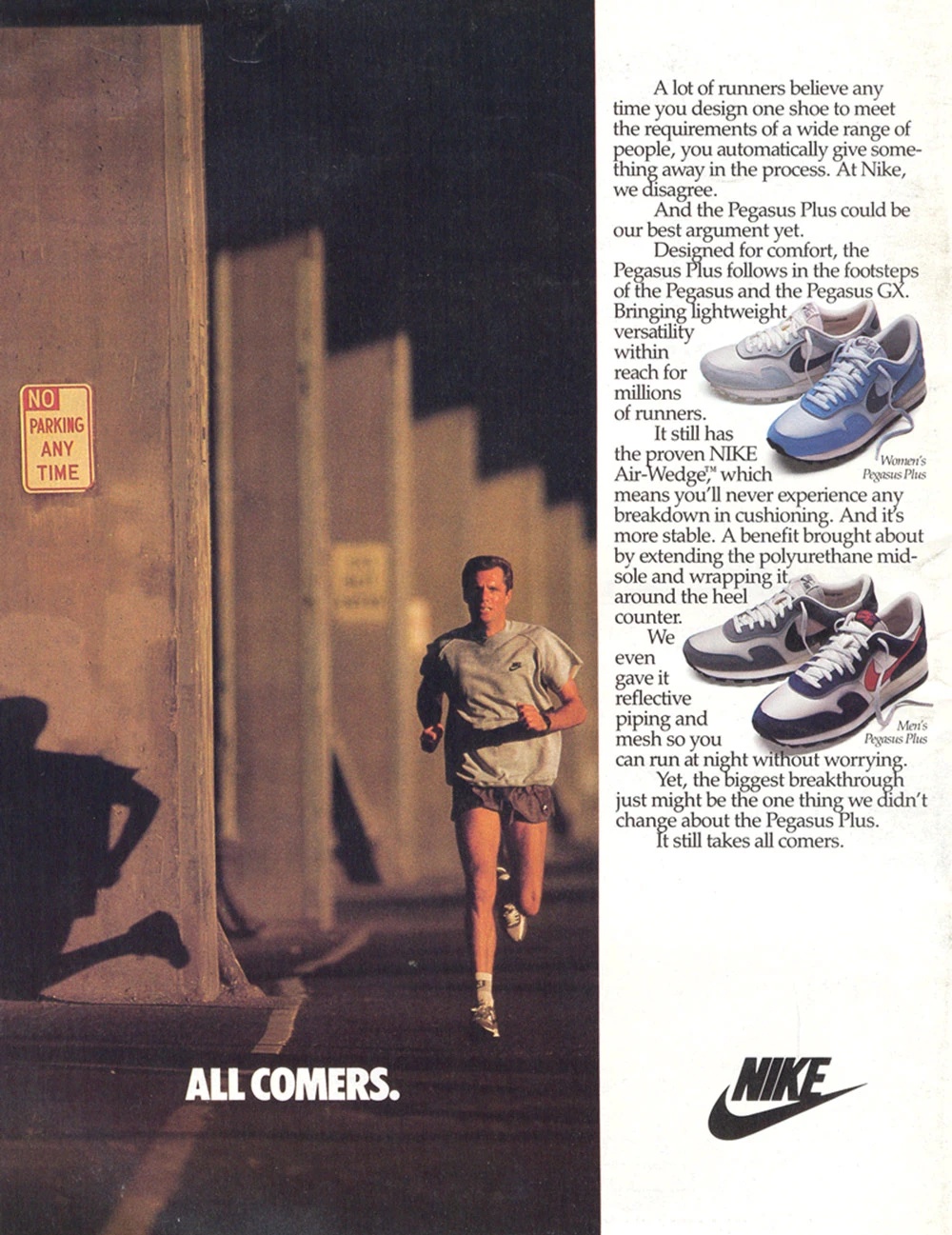
Until 1995, Nike updated its designs on an annual basis, but in the latter half of the 1990s, the Pegasus was called into question. The Pegasus franchise was drifting away from the ideas that inspired it, and by 1997, it appeared destined to disappear.
The return of the Pegasus
Nike reintroduced the Pegasus in 2000 due to popular demand. It did so with complete adherence to its principles, releasing the Bowerman Series, which was inspired by one of Nike’s founders. A delicate combination of adaptation to the times and respect for the fundamental principles of a sneaker that is maintained with each new edition.
Four decades of Pegasus
In addition to performance, and as a result of its four decades of existence, the Pegasus franchise can be viewed as an indicator of the spirit of each era. If the Pegasus 83 defined a style, the Pegasus 2K5 has returned to define the lines of the first decade of the 2000s, with some of the Pegasus from that era merging into the P-6000.
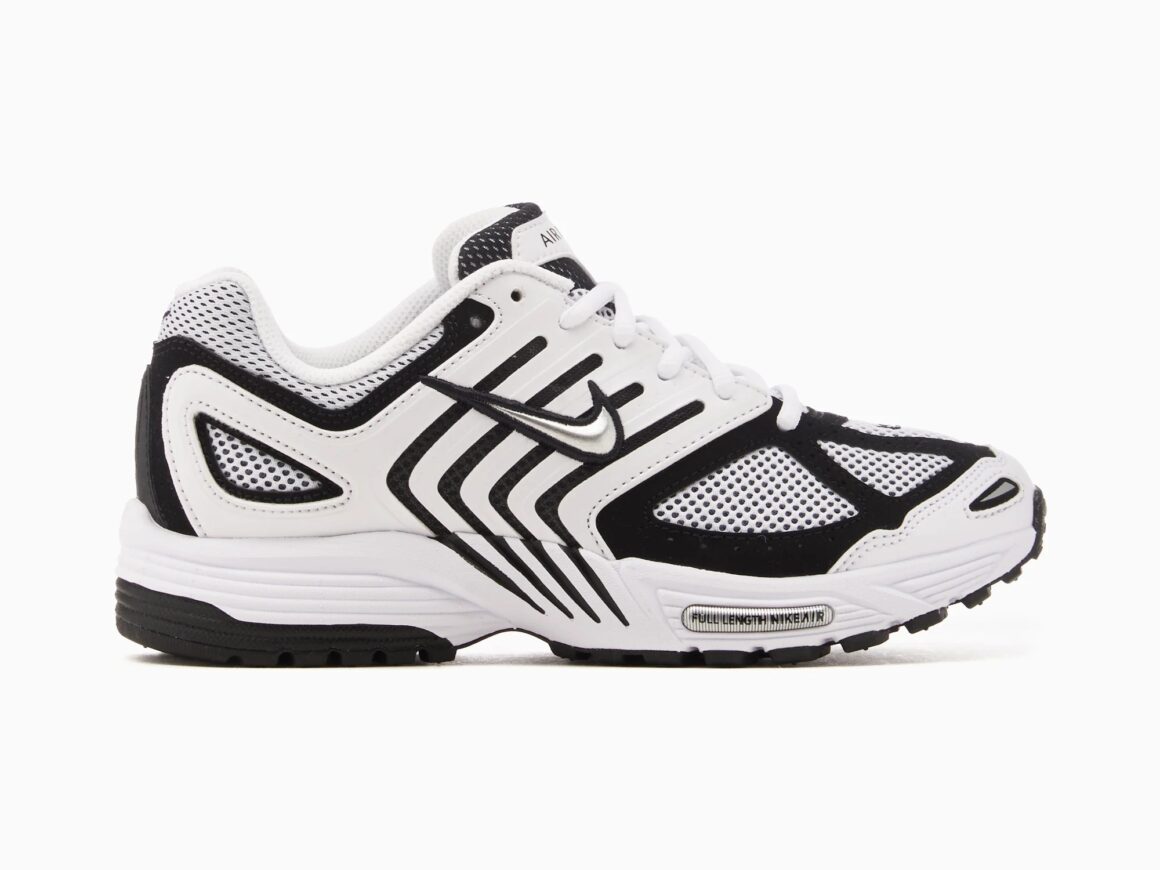
The Pegasus franchise, which includes retro models from 1983, vintage tech silhouettes like the , and performance sneakers like the Pegasus 40 or Pegasus Trail, has its own section at FOOTDISTRICT.