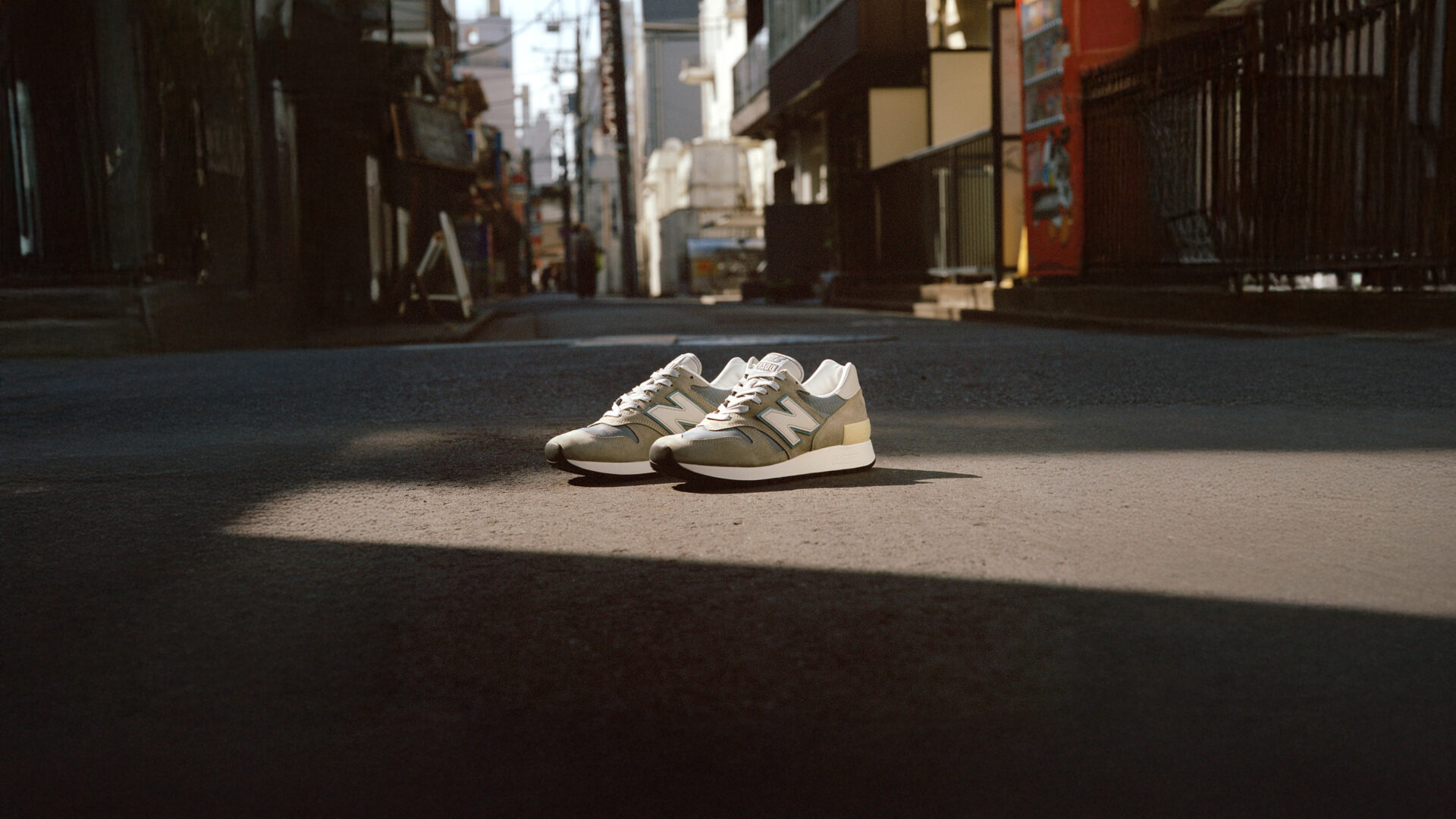
The 1300JP is one of those models that perfectly embodies everything you could ask of New Balance—handcrafted, meticulously detailed, and made with the finest materials in the United States. But the 1300JP also has a special story, one that began on the other side of the world.

The Origin of the New Balance 1300
The New Balance 1300 was a bold experiment with no commercial compromises. The goal was to create the best possible running shoe, and the result was both technically advanced and groundbreaking. Its major innovation was ENCAP™ technology, a cushioning system that encases a wedge of EVA inside a polyurethane shell—achieving an exceptional balance of rebound and stability. This construction is also impressively durable: even after 1,000 miles of wear, the system shows no signs of compression. Added to that is the SL-2 last, which offers a wider toe box, higher forefoot space, and enhanced heel fit for greater comfort and compatibility with orthotics.

The design featured remarkably precise elements, including an anatomically shaped heel to protect the Achilles tendon, a structured insole for support, and a carbon rubber outsole for increased durability. All this in a silhouette that remains surprisingly lightweight for its level of protection.
These features helped justify its then-shocking $130 price tag—an unusually high figure for 1984. In fact, the advertising campaign jokingly suggested mortgaging your house to experience the benefits.


NB1300 in Japan, Every 5 Years
While the New Balance 1300 showcased the brand’s full potential, its high price kept it from reaching the masses. Remembered as a cult model, the 1300JP was reintroduced in Japan in 1995, right when a new generation of creatives—raised on magazines like Popeye—was defining their aesthetic. For many of them, the New Balance 1300 became a key symbol of Americana, alongside denim and workwear imported from the U.S. The success of that first reissue—MADE IN USA and designed for Japan—established a tradition: the New Balance 1300JP is released every five years since 1995.
And now, of course, it’s back for 2025. This time, available at FOOTDISTRICT in a special and ultra-limited edition—just as it should be when stepping outside its natural habitat.