
Last month – in May, 2019 – Jeff Koons stainless steel sculpture Rabbit sold for $91.1 million USD, setting a new record for the highest price paid at auction for a living artist’s work. While the sum is only a smidge higher than the amount garnered for the previous record holder, David Hockney’s ‘Portrait of an Artist’, it towers over the prices paid for works by the likes of Picasso and Dali in their prime. Despite his record-breaking achievement, Koons is also one of the most divisive artists in the scene, with many of his critics deriding his work as mere recycling for the purpose of self-merchandising, entirely devoid of the artist’s own creativity. So, who’s right? In today’s piece we’re going to attempt to determine the answer.
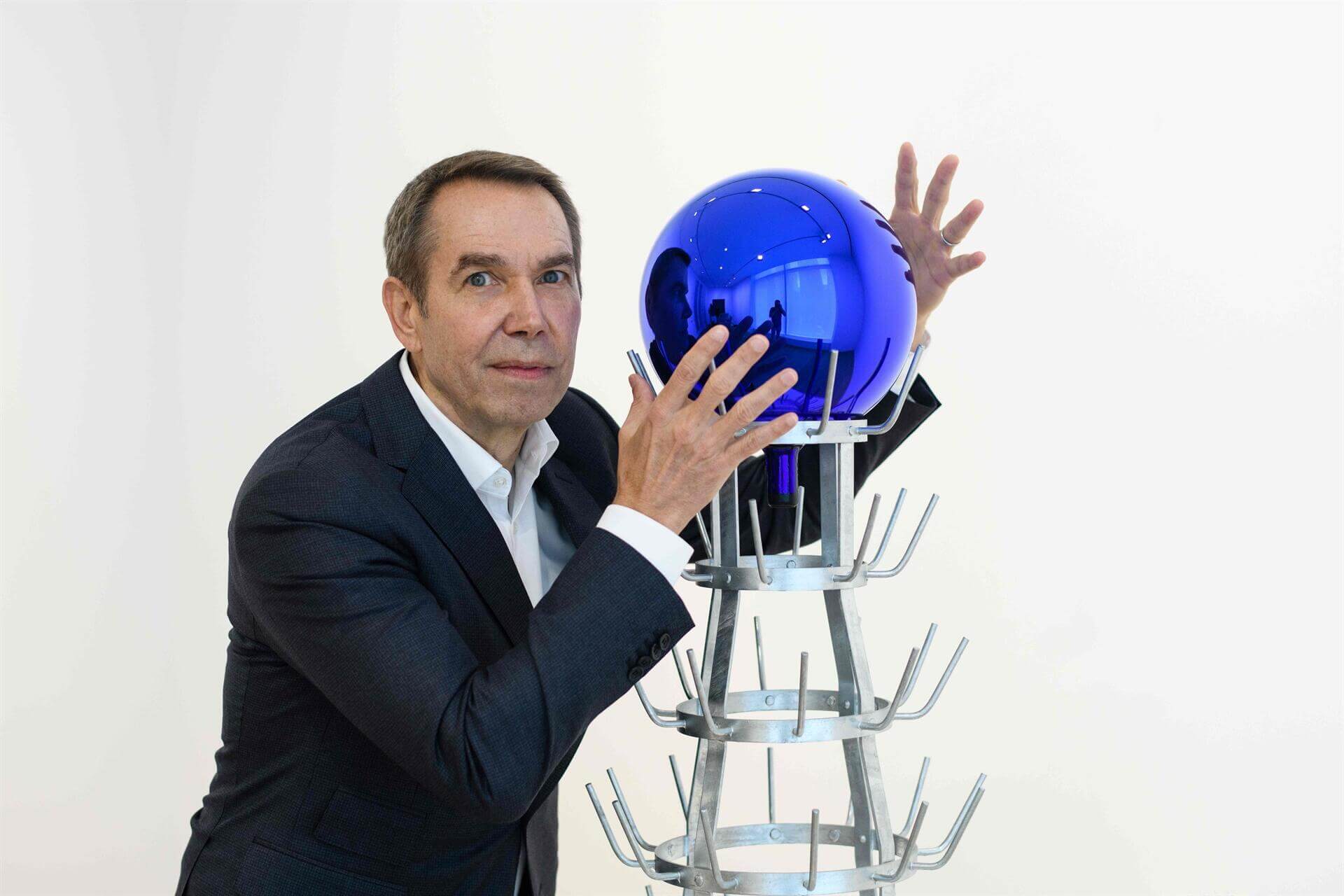 Jeff Koons
Traditionally Trained
Koons showed signs of high artistic talent from a very early age. At the age of nine, he was reportedly creating reproductions of master paintings, signed under his name and displayed at the front of his father’s furniture store. As he entered his teens, he became infatuated with the work of Salvador Dali and would even go on to replicate the surrealist’s signature pencil moustache later in life. Koons honed his talents at the School of the Art Institute of Chicago and Baltimore’s Maryland Institute College of Art, specialising in painting. On emerging from college, Koons made the move to New York City, where he worked as a studio assistant for painter Ed Paschke, as well as signing up members at the Museum of Modern Art. With all of this behind him, there’s no doubt that Koons was not only well trained in the arts, but also just as passionate and respectful about those that came before him.
Jeff Koons, Corporate Creative
Three years into his new life in NYC, in 1980, Koons deviated from his artistic career focus in the most unexpected of ways: by obtaining a licence to trade mutual funds and stocks, and stepping forth down a new career path as a commodity broker. Koons justified his decision as a means to obtain total artistic freedom, by removing all financial dependence upon his creativity. This, he said, allowed him to produce art exactly as he desired, without worrying when, or even if, his work would sell in order to keep himself afloat – thus forgoing the need to bow to public expectation. As the 80s progressed, Koons’ artistic profile grew, allowing him to capitalise on his creativity, which he did on an industrial scale. He employed 30 assistants to produce his work with a paint-by-numbers approach, allowing it to be replicated to Koons’ exact specifications, resulting in indistinguishable copies irrespective of the makers. This factory-like approach to art, which allows for mass-consumption with minimal effort from the artist, has remained a key-component of Koons’ approach. The number of assistants on his payroll today is said to now be in the three figures.
Readymade Redundancy
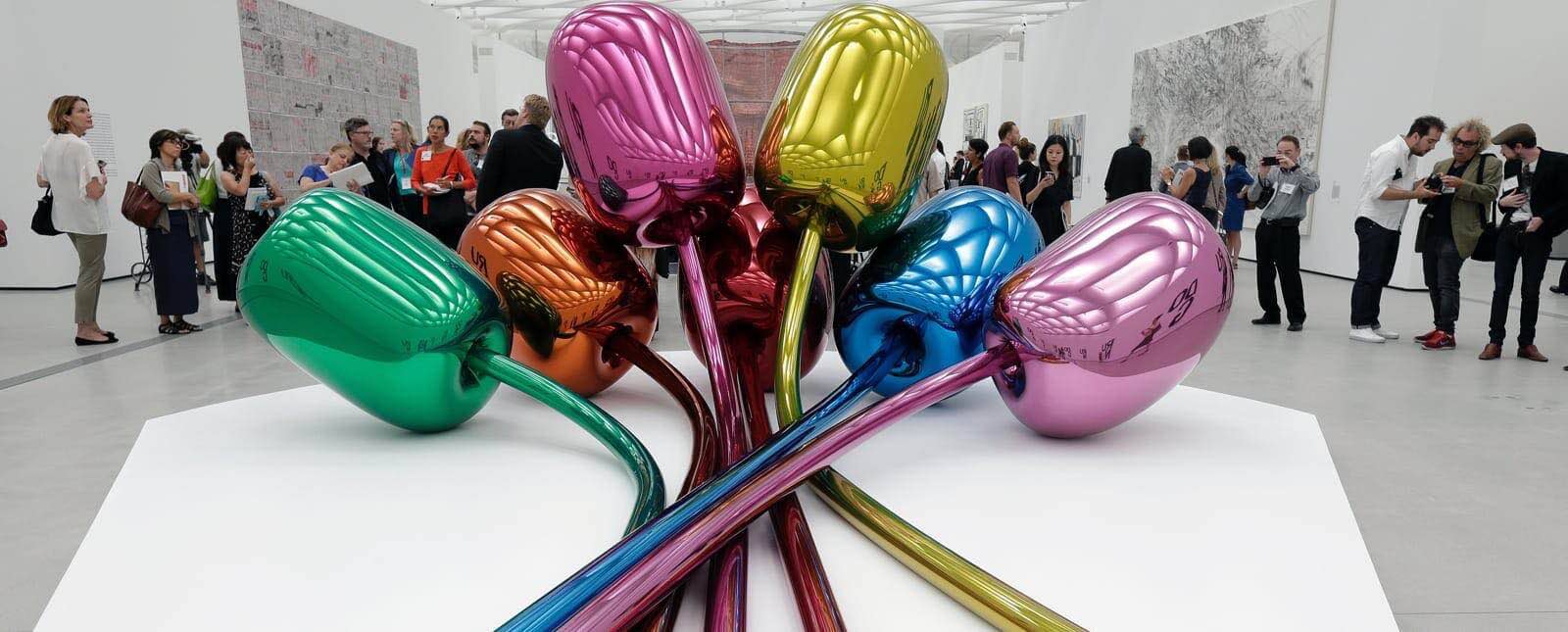
When it comes to Koons’ detractors, one of their biggest complaints targets the artist’s penchant for readymade items – a move they tend to deride as kitsch and unworthy of merit. This is to say, that much of his most well-known work has merely recontextualised existing creations, a fact that Koons has never attempted to conceal. His series The New, produced early in his professional career, saw widely available consumer vacuum cleaners sealed in illuminated Perspex boxes. Apart from the way in which they were displayed, which was akin to a retail showroom display, the cleaners themselves were wholly unaltered from the way they rolled off the production line.
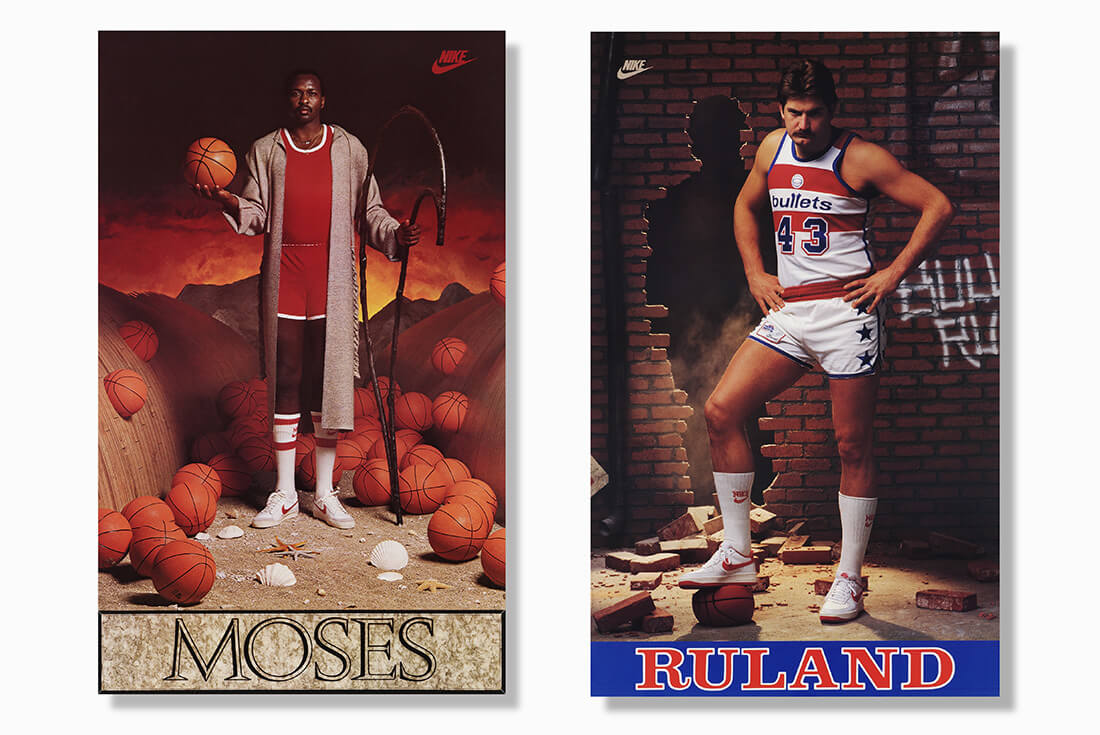
Another early series, Equilibrium, has proven particularly controversial, especially amongst photographers. While the key focus of the series featured three Spaulding-branded basketballs miraculously suspended in the centre of a distilled water solution, a mind-blowing feat achieved with the help of Nobel Prize-winning physicist Richard Feynman, another component consisted of a number of Nike advertising posters that featured some of their star signed athletes, the very same posters that donned many childhood bedrooms at the time. The imagery for these posters – which featured iconic photos of players such as Moses Malone, George Gervin and Darrell Griffith, inspired by their nicknames and reputations – was the work of photographer Chuck Kuhn. Apart from the simple frames in which the posters were presented, Koons has seemingly done nothing to alter the original work, with one key exception: purchasing the rights to the posters from Nike in order to call them his own ‘artwork’ and cease their replication. Two of these exact ‘works’ have recently changed hands for more than $100k USD. However, that’s a proverbial bargain when considering the prices paid for some of Koons’ other readymade reinterpretations.
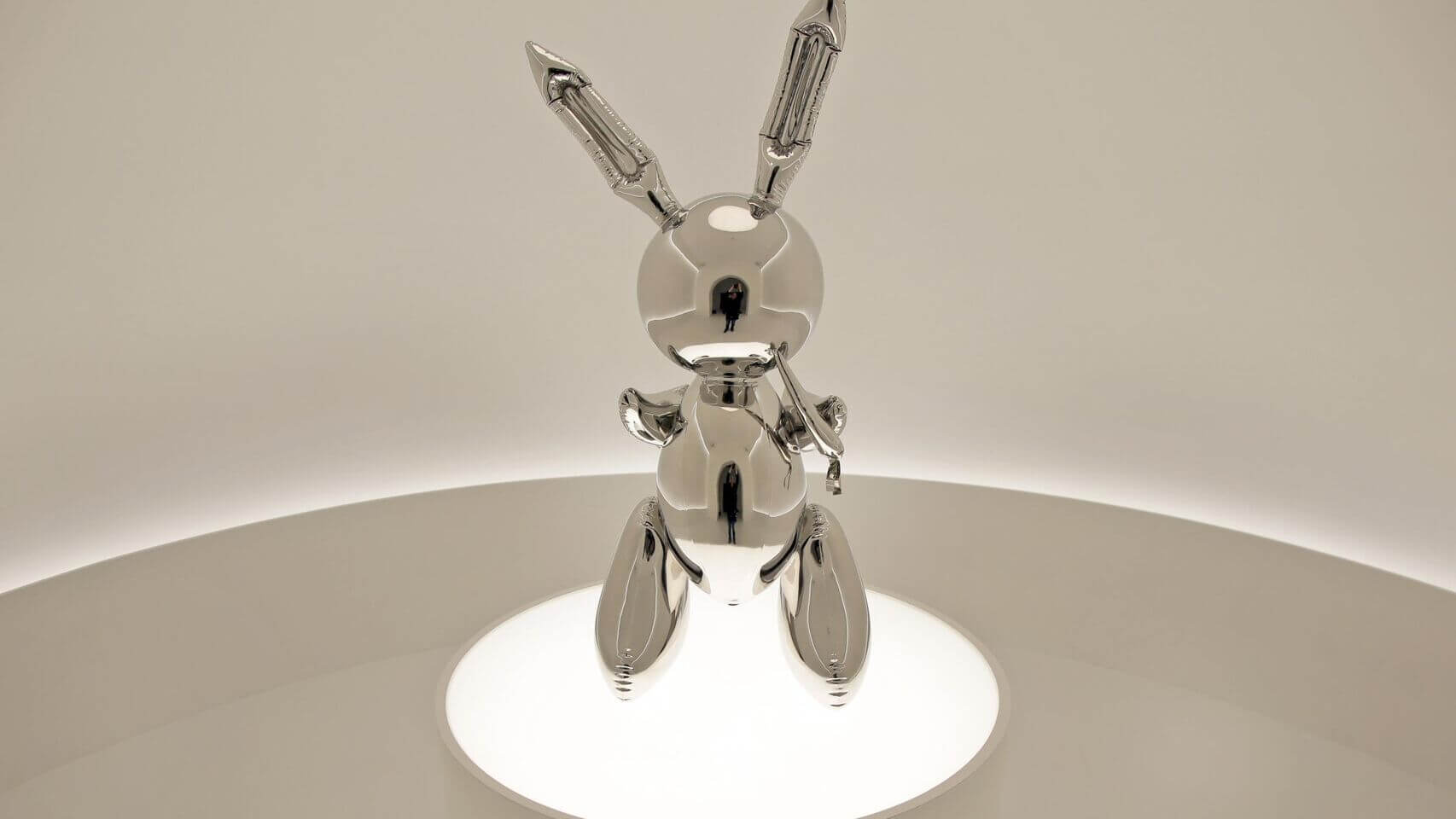
Rabbit, the record-breaking $91 million USD sculpture we touched on at the beginning, is literally just a stainless steel replication of an inflatable toy. The original mass-produced object, likely sold in toy shops for only a couple of bucks, was simply inflated, cast and then polished to a bright shine. To rub salt in the wound even more, another work of Koons’, Balloon Dog (Orange), also holds the current record for the third most expensive artwork of a loving artists to sell at auction. Like Rabbit, Balloon Dog (Orange) is a metal sculpture that replicates the classic balloon dog that just about any clown around the world can punch out at a kid’s birthday party in under a minute –with their eyes closed! The only real difference is that Koons’ version stands at ten feet high… and sold for $58.4 million USD!
Art Without Meaning
With so many (seemingly) easily constructed works and respected artistic pedigree attached to his name, you’d probably be expecting there to be some long-winded justification behind Koons’ creations that justifies their exorbitantly high sales prices, right? Well, not quite. Another key reason that Koons’ is so loathed by certain figures in the art-world is due to the fact that he openly denies that there is any deeper level of meaning or aspect of critique when it comes to his work. He has explained that his work is, instead, ‘an acceptance of ourselves and our own history to this moment’. We’re guessing you didn’t see that coming!
Jeff Koons, the Verdict
So, is Jeff Koons worthy of his record-breaking success? Well, that’s the 91.1 million dollar question… and I’m guessing that there‘s few – if any – of us out there that are in a position of privilege to answer that with a level of true monetary authority. They say that people only truly appreciate your talents when you’re gone, so perhaps time will tell. Much of what Koons is criticised for today was pioneered by the likes of Andy Warhol before him – and few people still complain about his cans of soup nowadays! As they always say, beauty is in the eye of the beholder, so just spend your money however you wish. Whether you’re deciding between multi-million dollar artworks or choosing a new pair of sneakers, the concept of an item’s worth is entirely up to you.