Some sneakers are created for a specific moment, but it’s the public who decides they’re here to stay. That’s exactly what happened with the Air Max 95: designed to capture an instant, embraced as a timeless icon.
Air Max: A Constant Evolution
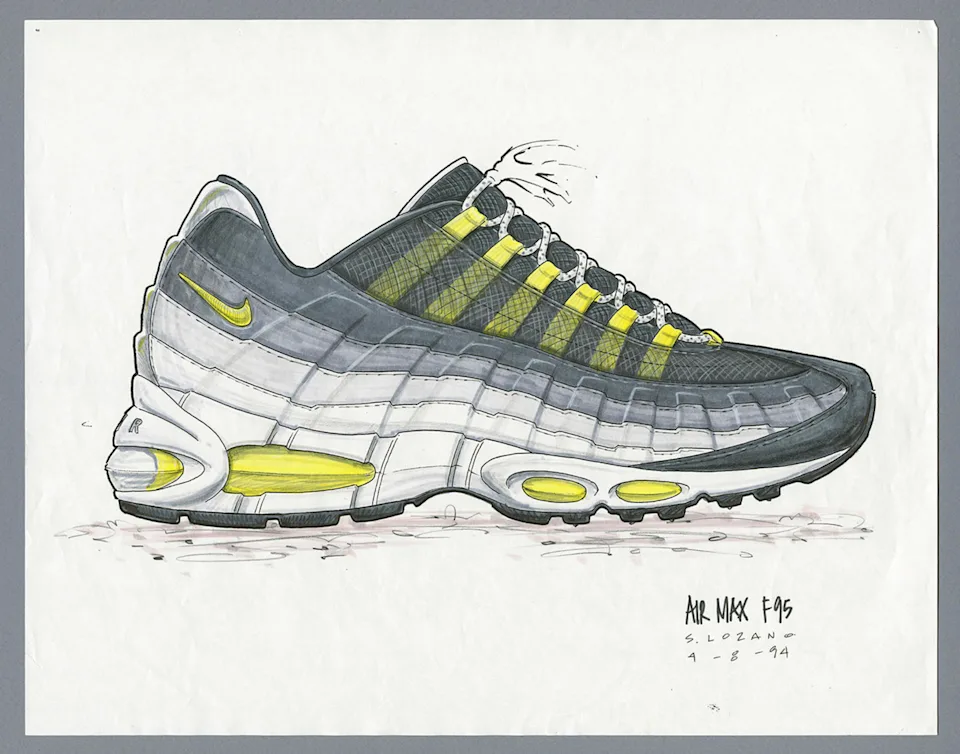
By 1995, the Air Max line was already well-established. The first sneaker to feature Air units, the Nike Tailwind, hit the shelves in 1978, and the Air Max 1 was approaching its 10th anniversary. Over that time, the series had evolved with innovations like the Air 180 (visible at 180 degrees), the Air Max 93 (with a 270-degree wraparound unit), and the pressure-mapping system of the Air Max2.
Until then, Air Max had lived a double life—designed for performance but increasingly relevant in cultural spaces far from sport. The Air Max 95 was the first model to be fully aware of its social impact. Part of this shift came from a change in designer: Sergio Lozano replaced Tinker Hatfield, bringing a fresh perspective rooted in his background with Nike ACG, the brand’s outdoor division.
The Design of the Air Max 95
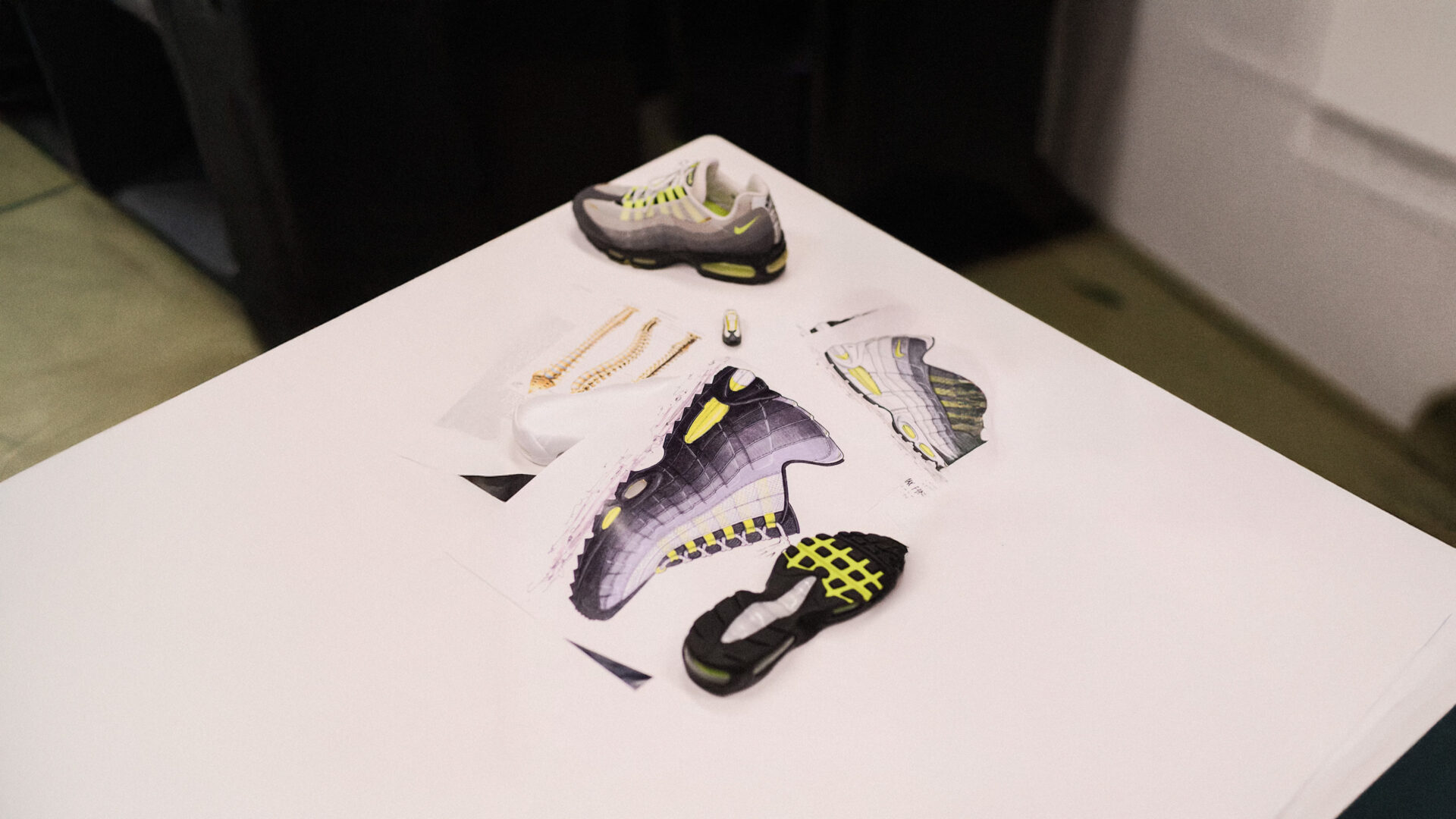
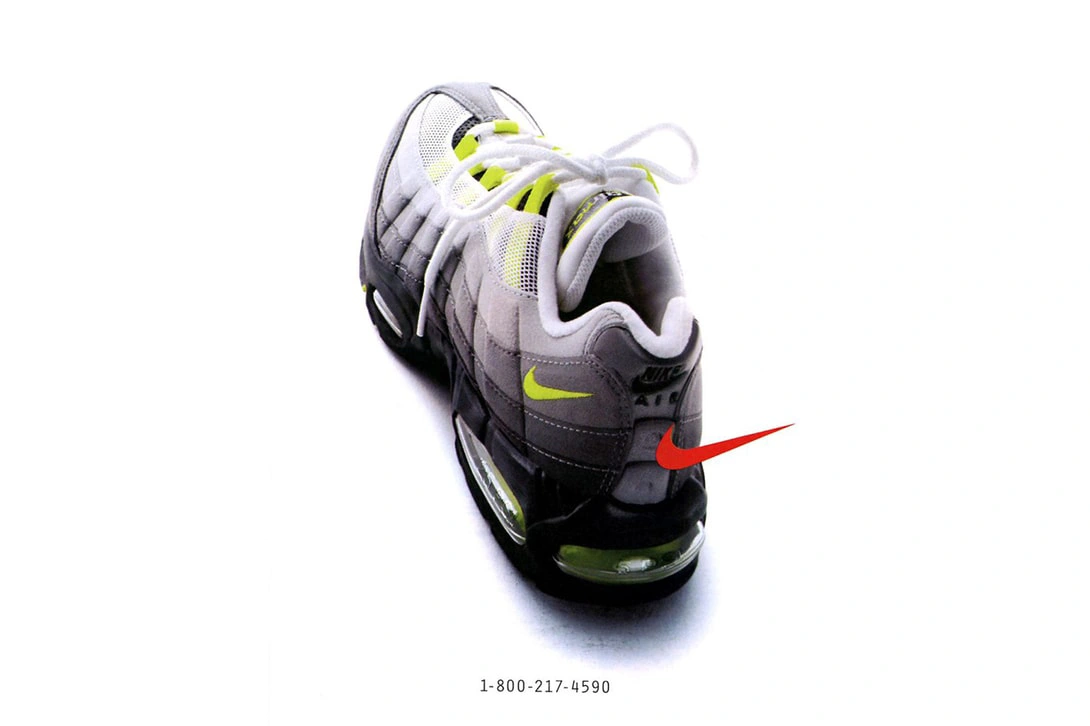
That outdoor mindset is visible in the Air Max 95. Lozano was inspired by the erosion patterns caused by Oregon’s frequent rain—where Nike’s headquarters are located. Layers of sediment left visible gradients in the soil, which he translated into varying shades of grey. The black midsole, common in other sports categories, made its first appearance in running—intended to hide dirt from outdoor use. The neon accents nodded to Nike Running’s heritage: a color forever linked to speed.
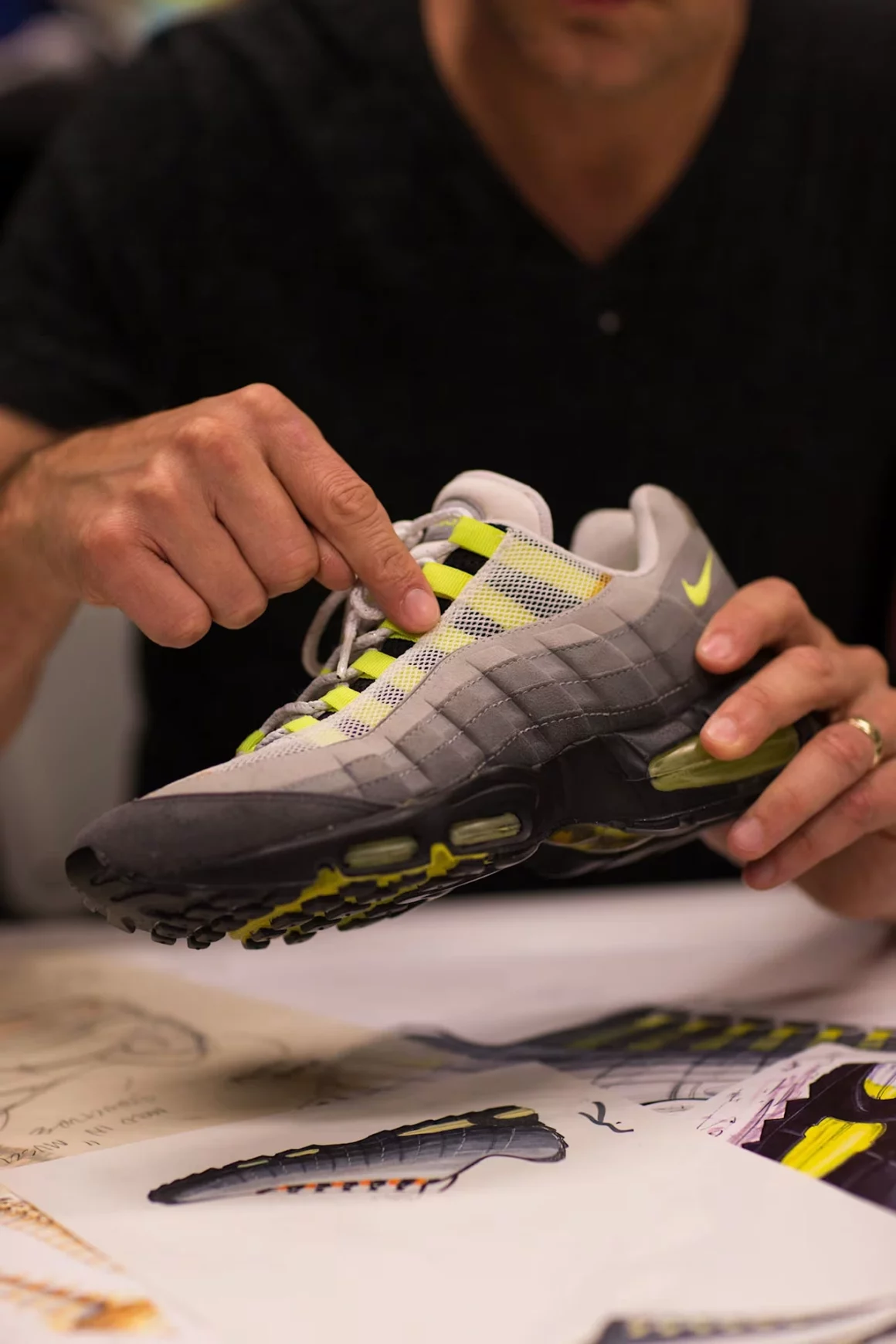
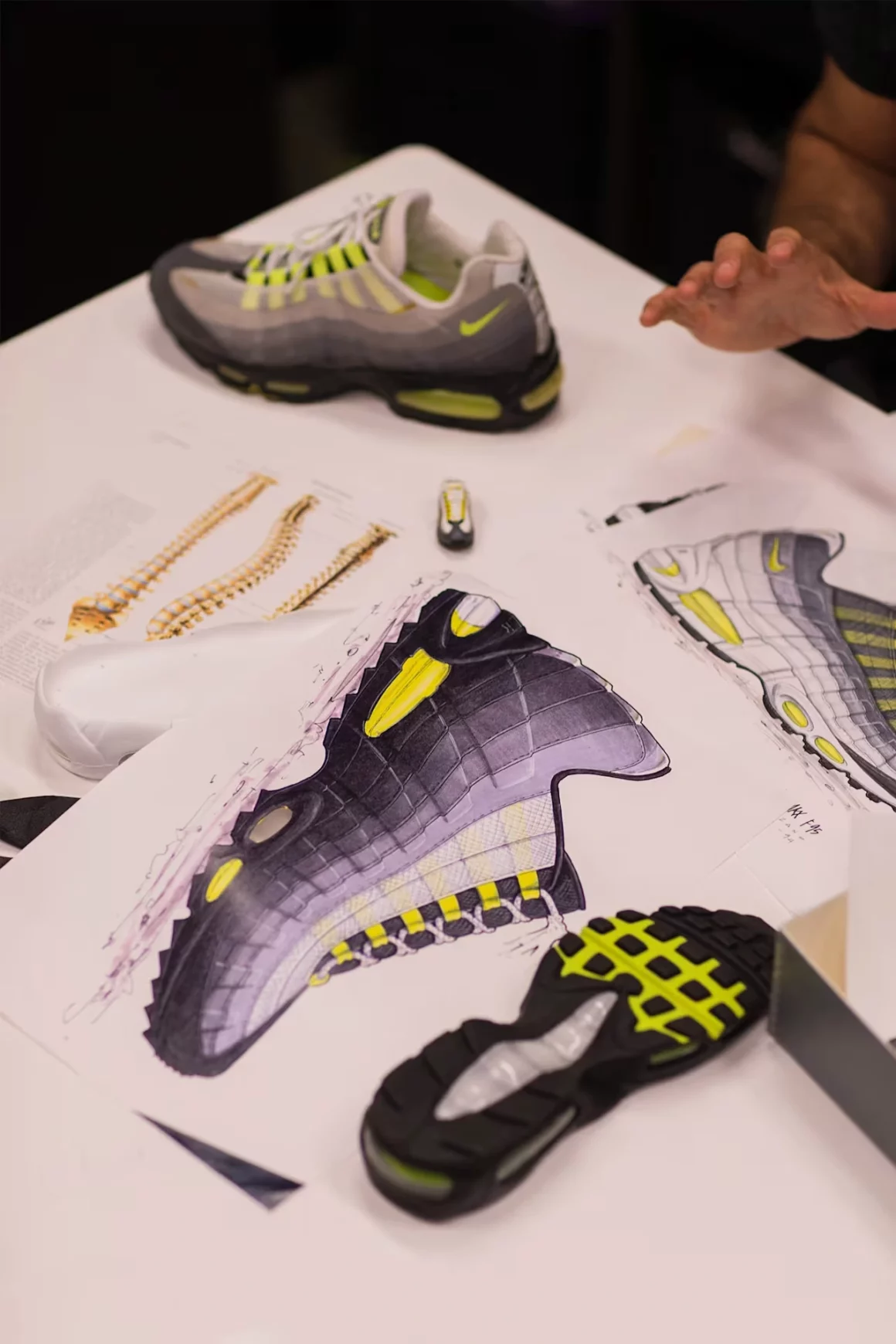
But was it really a running shoe? Technically, yes. It was the first to feature visible Air units in the forefoot, something already used in other sports but new to running. It also revisited the variable pressure chambers first seen in the Air Max2, designed to guide the foot more efficiently through each step.
Still, Lozano understood that the Air Max’s true impact wouldn’t come on the track—it would happen in the streets. For a new generation, Air Max was already a symbol.
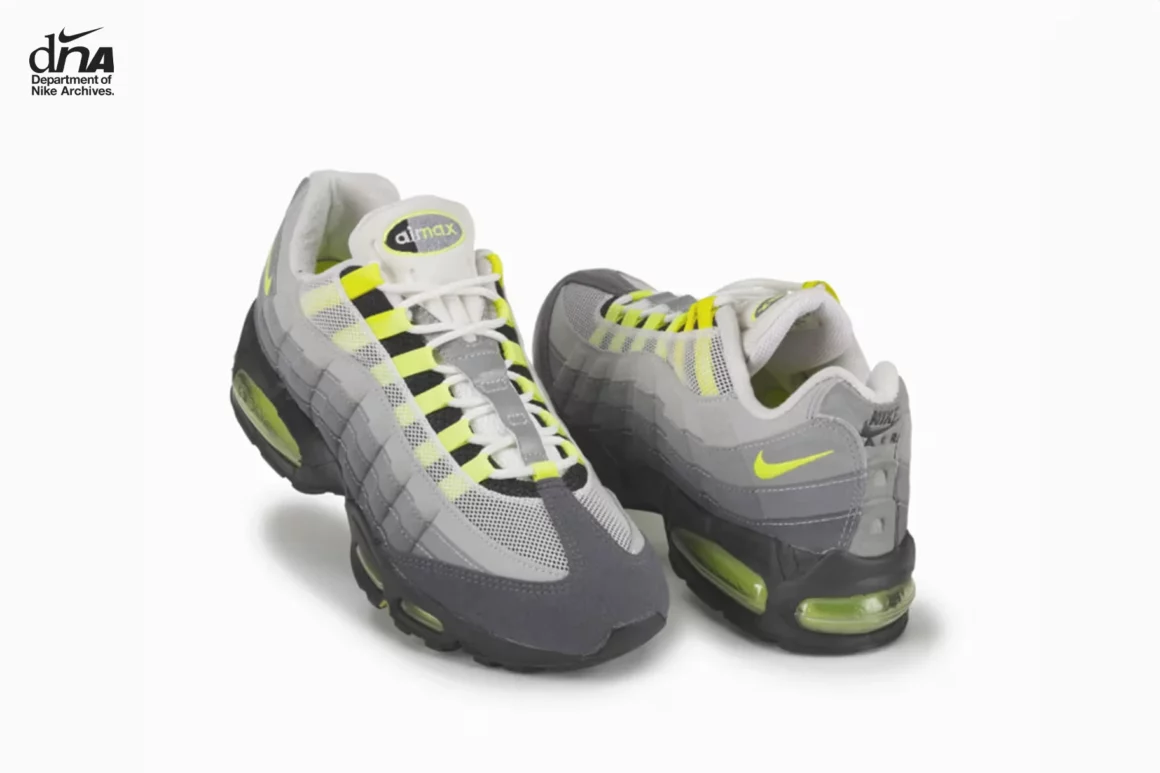
Air Max 95 in Japan
The 1990s were a culturally rich time in Japan. Since the 1960s, the country had developed a fascination with American aesthetics—Ivy League, sportswear, and military uniforms. Initially sourced as vintage, these styles were later reinterpreted locally, blending classic American patterns with Japanese craftsmanship.
At the same time, a new subculture emerged to challenge these traditions, offering bold, urban alternatives. Somewhere between these two worlds, the Air Max 95 landed in Japan at the perfect moment. That same year, Hideo Nomo was named MLB’s Rookie of the Year, and yes—he was often seen wearing the Air Max 95. The hype exploded.
Japan, a market known for reviving Nike classics, became obsessed with this brand-new model. It was the first time a new design created such a collective frenzy—foreshadowing what would soon happen across the globe.
The Era of Collaborations
Although the Air Max 95 is widely associated with its iconic grey and neon colorway, the original releases also featured combinations like the “Grape,” “Black Border,” “Slate,” and “Comet.”
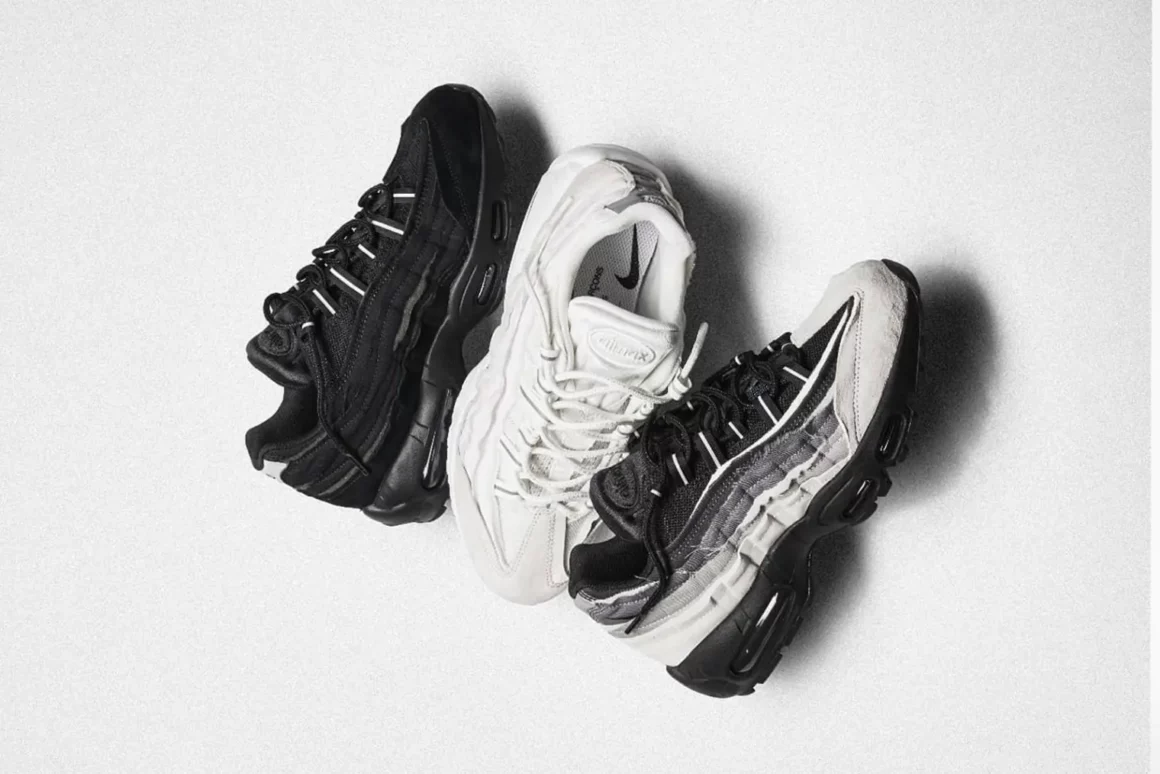
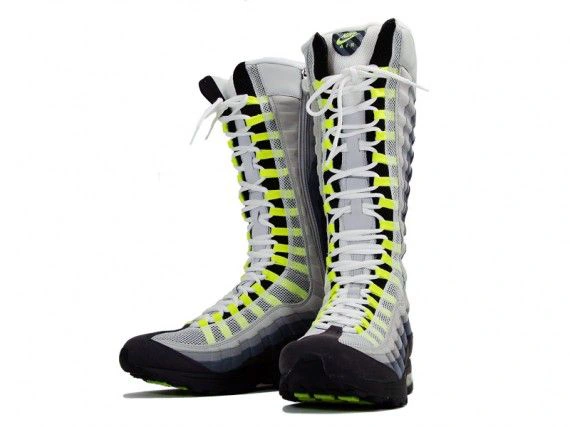
Over time, the model has been the focus of high-profile collaborations with names like Stash, Corteiz, Atmos, Parra, Stüssy, and Comme des Garçons. It has also evolved in design—through iterations like the Air Max 95 Z (featuring a zipper), the Zen Venti (an ultra-high version), and models incorporating Dynamic Flywire and enlarged Air units.