The one and only: Air Jordan 3
Let’s just get this out of the way from the jump: the Air Jordan 3 is the most important piece of footwear in the brand’s history. And when we say “the brand,” this includes both Nike and the Jumpman itself.
A bit perplexed? Hear us out.
Leading up the 1988-1989 season, Nike had a real problem on their hands. It wouldn’t be an overstatement to see this period for the company as its most critical. Two things are happening during all of this.
First, Michael is coming off of his second Air Jordan performance model. Second, he’s nearing the end of his time with the brand as his contract draws nearer to a close. Both of those details came together to make for a less than pleased MJ.
He wasn’t happy about the direction the design crew were going with his shoe. Consequently, even per Hatfield’s estimates at the time, Michael had one foot out the door.
Tinker Hatfield and Michael Jordan get together
Speaking of The Architect, his first official presentation to MJ must have been at least a little harrowing. Tinker had met Jordan before for a preliminary chat about what the world’s greatest basketball player wanted in his shoe. In initiating this process, Hatfield had started something of a trend.
Up to this point, it wasn’t normal to be working closely with an athlete when designing a shoe for them. The concept of a signature shoe was still relatively new in basketball. Moreover, having a shoe with your name on it was more important as a status symbol, which is part of the reason why athletes rarely involved themselves in its technical details.
Tinker’s preference to be more collaborative yielded some impressive results. On that first sit-down, Jordan was hardly shy. He’d made a few things clear.
 Air Jordan 3 ‘Black Cement’ OG
The next shoe had to emphasize lightweight performance. The Air Jordan 1 and 2 were the complete opposite of this thinking. Particularly with the second of those two, bulk and weight were on full display. The Air Jordan 3 had to improve on this.
Another note Michael had would prove to be Tinker’s most interesting challenge: he wanted to be able to “wear a new pair of shoes for every basketball game.” Essentially, Jordan needed this next model to be one that didn’t require a ton of break-in time.
Tinker responded to both of these crucial notes. First, the shoe was cut down into a significantly lower frame. Second, the upper was fitted in a thick helping of tumbled leather. It’s worth noting that this was before tumbled leather basketball sneakers were a 90s staple.
The Air Jordan 3: the start of the Jumpman
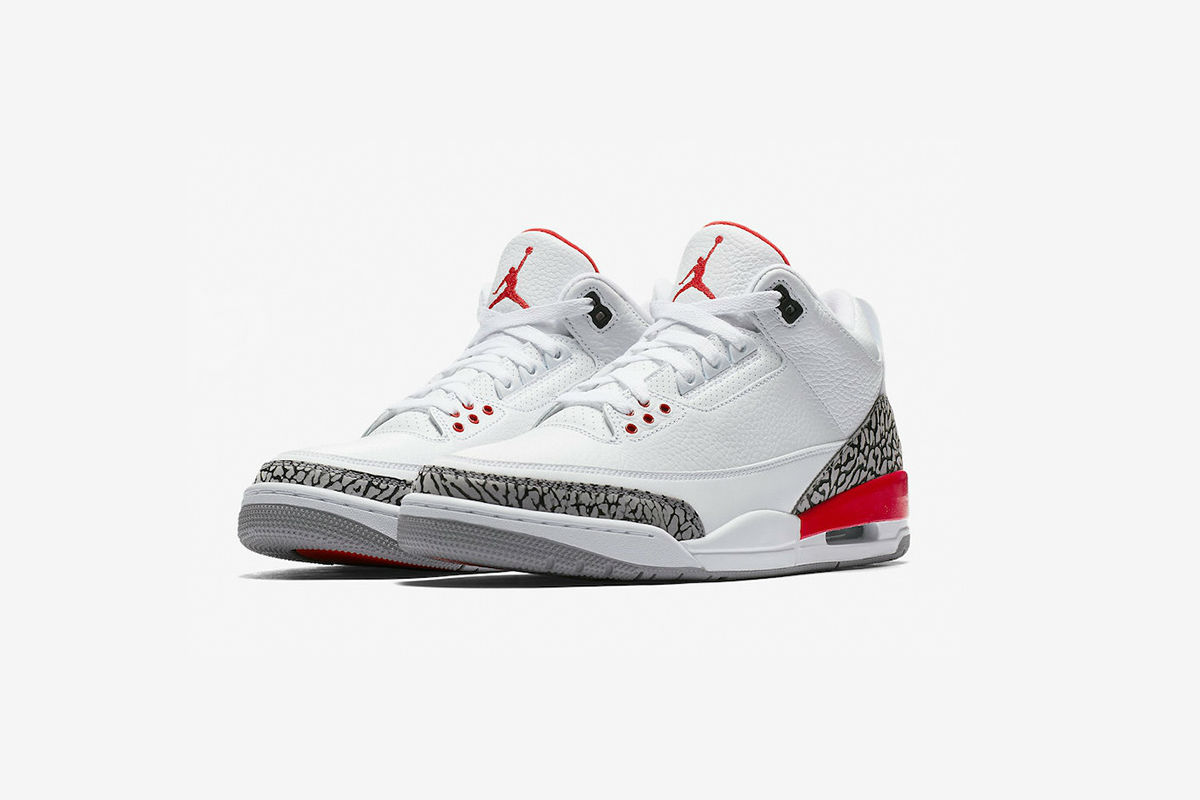 Air Jordan 3 ‘Katrina’
Of course, no basketball shoe associated with MJ could get away with being bland or unremarkable. The Air Jordan 3 had to be visually captivating for a number of reasons, not least of which was Jordan’s possible departure from the brand. Tinker would deliver in this regard as well.
The mudguard’s legendary elephant print was a direct reaction to the aesthetic taste of MJ. The same goes for the shoe’s tongue. Finally, the Air Jordan 3 would be the start of something brand new thanks to a branding switch.
Up to this point, Jordan’s position within the company was that of a Nike sponsor. He was another a cog – albeit a massive one – in the marketing machine. With his third signature sneaker, Michael would see the iconic Jumpman logo for the first time.
It was the start of his ascent from sponsored athlete to a billion dollar business in his own right. The meeting, where all of this was being shared with MJ, started out quite bumpy. He reportedly looked disinterested and like a man forced to be sitting there.
But, once Tinker let him in on this drastically new vision for the Jordan line, it was a different story. MJ was excited and raring to get this shoe on his feet. Now that you know a bit about the shoe’s background, let’s talk about it in a more modern context.
The patterns and most famous colorways
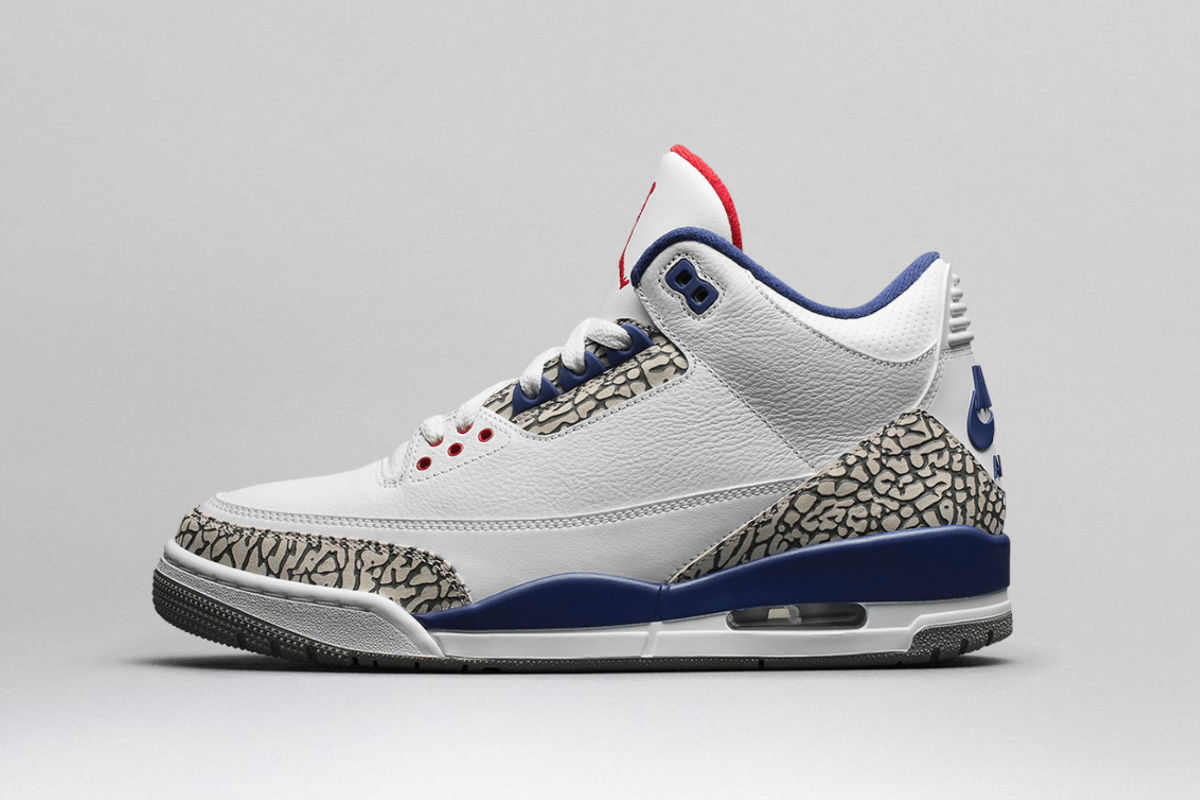 Air Jordan 3 White / True Blue / Varsity Red
The Air Jordan 3 originally came out in a selection of solid colorways. These included some of the more recognizable schemes, including a Black Cement and True Blue look that were both retro’d relatively recently. As a performance model, Jordan would find these to be a world of difference from the AJ 1 and AJ 2. For our purposes, it’s become something much bigger.
The Air Jordan 3 has grown into a fixture in sneaker culture. Beyond that, it’s also sitting pretty as perhaps the most universally adored Jordan model. For hoop heads, sneaker collectors, and Nike newbies alike, it’s looked upon as an ideal purchase.
So, what’s it like to wear the Air Jordan 3, anyway? You’ll be happy to know that it’s one of the coziest retro basketball sneakers out there. This shoe isn’t limited to ages or gender. It isn’t even restricted to hoopers.
A big part of that is its considerate design. The inner linings come together with the tumbled leather to make for a snug fit and surprising support. The shoe’s synthetic heel counter, where we see its largest branding, helps bring it all together.
It’s definitely not the most advanced shoe on-court. Yet, the material, support features, and exposed Air cushioning make sure it isn’t a dud either. It’s still better suited as a casual option for nights out or even an everyday pair.
Though this is the first low-profile model in the retro line, it sports some relative bulk for modern wearers. As such, it’s important to know how best to style it.
The good news? It’s as versatile as an OG hoops shoe gets. The Air Jordan 3’s distinctive style makes it so that it often stands out on its own. It would be a waste to feature it as just a compliment for whatever outfit you happen to wear.
Nearly every colorway of this shoe is worthy of being the main attraction when you step out. And, in case you do want to consider the AJ 3 as an everyday option, the tumbled leather and mudguard will keep your pair going for a long time!
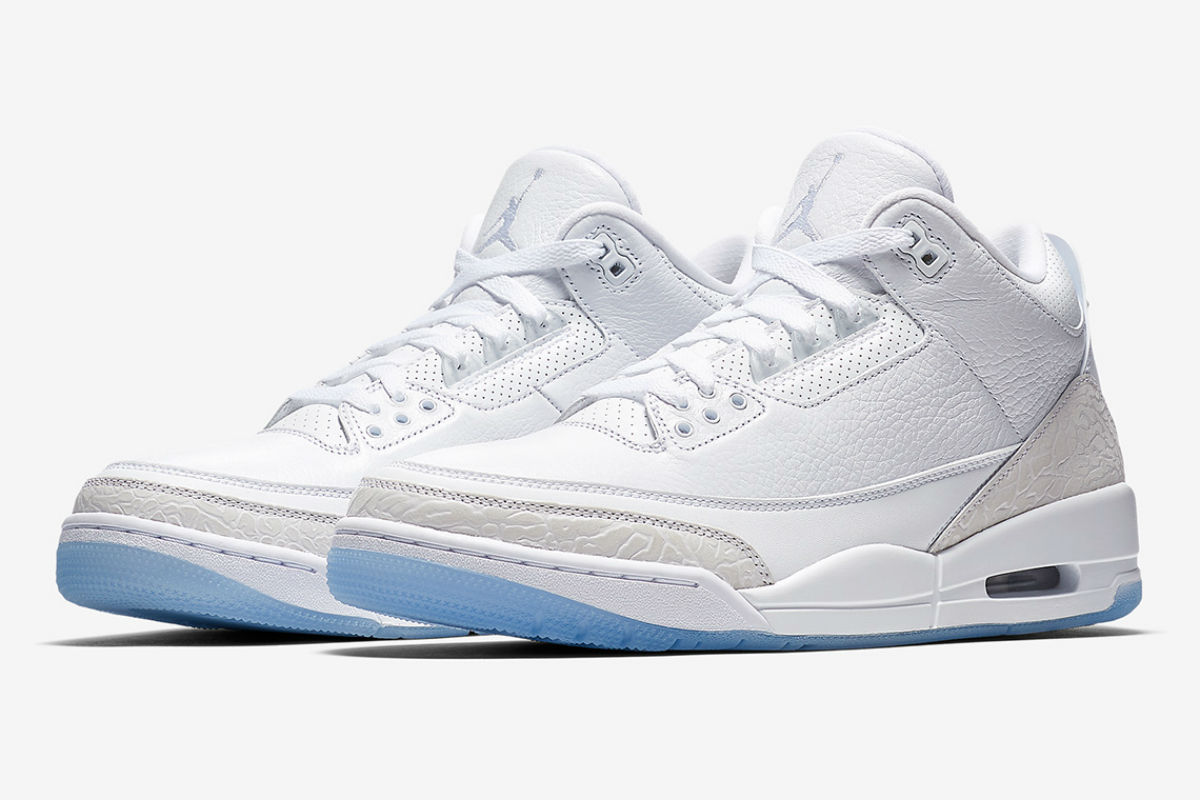
Image Credit: Air Jordan