
Warning: Trying to access array offset on false in /var/www/blog.footdistrict.com/wp-content/plugins/fusion-builder/inc/lib/inc/class-fusion-images.php on line 219
Warning: Trying to access array offset on false in /var/www/blog.footdistrict.com/wp-content/plugins/fusion-builder/inc/lib/inc/class-fusion-images.php on line 219
Warning: Trying to access array offset on false in /var/www/blog.footdistrict.com/wp-content/plugins/fusion-builder/inc/lib/inc/class-fusion-images.php on line 219
The various iterations of the adidas trefoil, which are featured on the Superstar, Gazelle, and Samba, activate the brand’s new aesthetic.
Since its introduction as the adidas logo in the 1970s, the trefoil has evolved into various interpretations that have accompanied the brand in its continuous development, from sport to the avant-garde of culture and back to its roots.
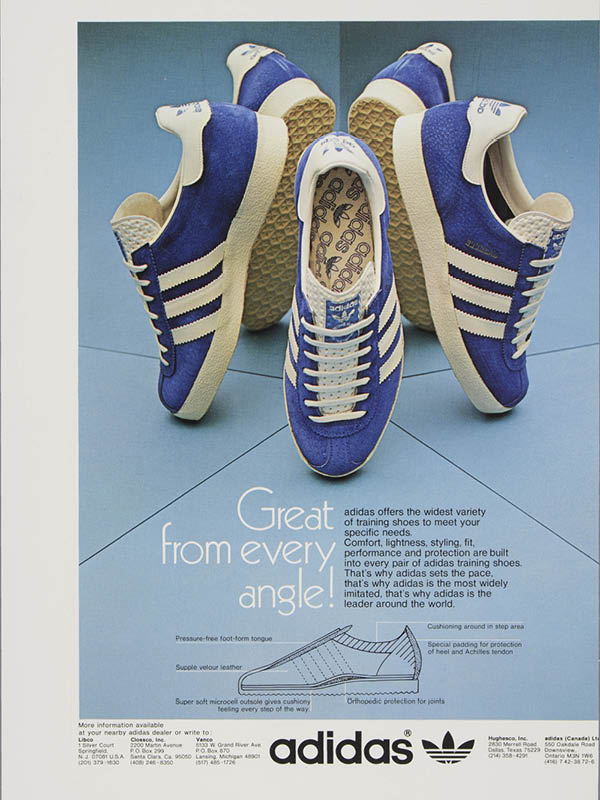
That’s why it has been able to stand the test of time and adapt to every era. After 50 years, the shamrock is placed at the centre of adidas Originals, it is positioned as its main image and serves to remember those who made it an element of classic iconography for different popular cultures. “We Gave the World an Original. You Gave Us a Thousand Back”, is a statement of principle, designs take on relevance when people make them their own and turn them into something totally new.

To celebrate its trajectory, the shamrock opens a new chapter in its history with three videos created by three emerging creative talents that tell the stories of three of the timeless silhouettes from the adidas archive, Superstar, Gazelle and Samba. Models born in and for sport that have been adopted by a different audience that gives them a new meaning, a new value related to their cultures and experiences.

adidas Originals Superstar
Daniel Wolfe, the director of Catch Me Daddy, who has built a reputation in the industry for his hard-hitting and subversive style over the past 15 years, narrates the evolution of the adidas Superstar.
His video, which features music by Giorgio Moroder, traces the history of the Superstar from its early days, when Chris Severn was selling his invention in the NBA courts’ hallways. Their transition to the streets happened in New York’s street basketball competitions, and it was in hip hop that Run DMC, who makes a brief cameo, helped them become a myth. The adidas Superstar went to raves in the 1990s, and skateboarding turned its shell toe into a functional benefit.
adidas Originals Gazelle
Will Dohrn, a self-taught filmmaker, follows a runner who moves through time like the protagonist of Run Lola Run, from which he borrows the original theme.
The timeline of the video starts with Wilma Rudolph, known as the “Black Gazelle,” who served as the mythological model for the adidas Gazelle. It then moves on to British football, eighties yuppies, shoegaze, skateboarding (Mike Arnold and Miles Silas make appearances in the video), and nineties fashion magazines, with Goldie on the cover of i-D in July 1996.
adidas Originals Samba
Justyna Obasic, a visual artist who divides her time between Berlin and Lagos, completes the trio. Additionally, her tale—the tale of the adidas Samba—was born in a number of nations.
The Brazilian national football team was the ideal football team in 1950, but the adidas Originals Samba was made in Germany as a football boot for icy and hard surfaces, which was a very different purpose. Obasic views dancing and playing football as components of the same continuum, which is why the Samba brings to mind the legendary matchups between reggae stars and the choreographies performed on skates. T.Rex’s Cosmic Dancer plays, an exploration of how dance can transform lives.
3 bands. 3 exclusive icons. 3 videos. And a thousand Originals. Currently available at FOOTDISTRICT.