
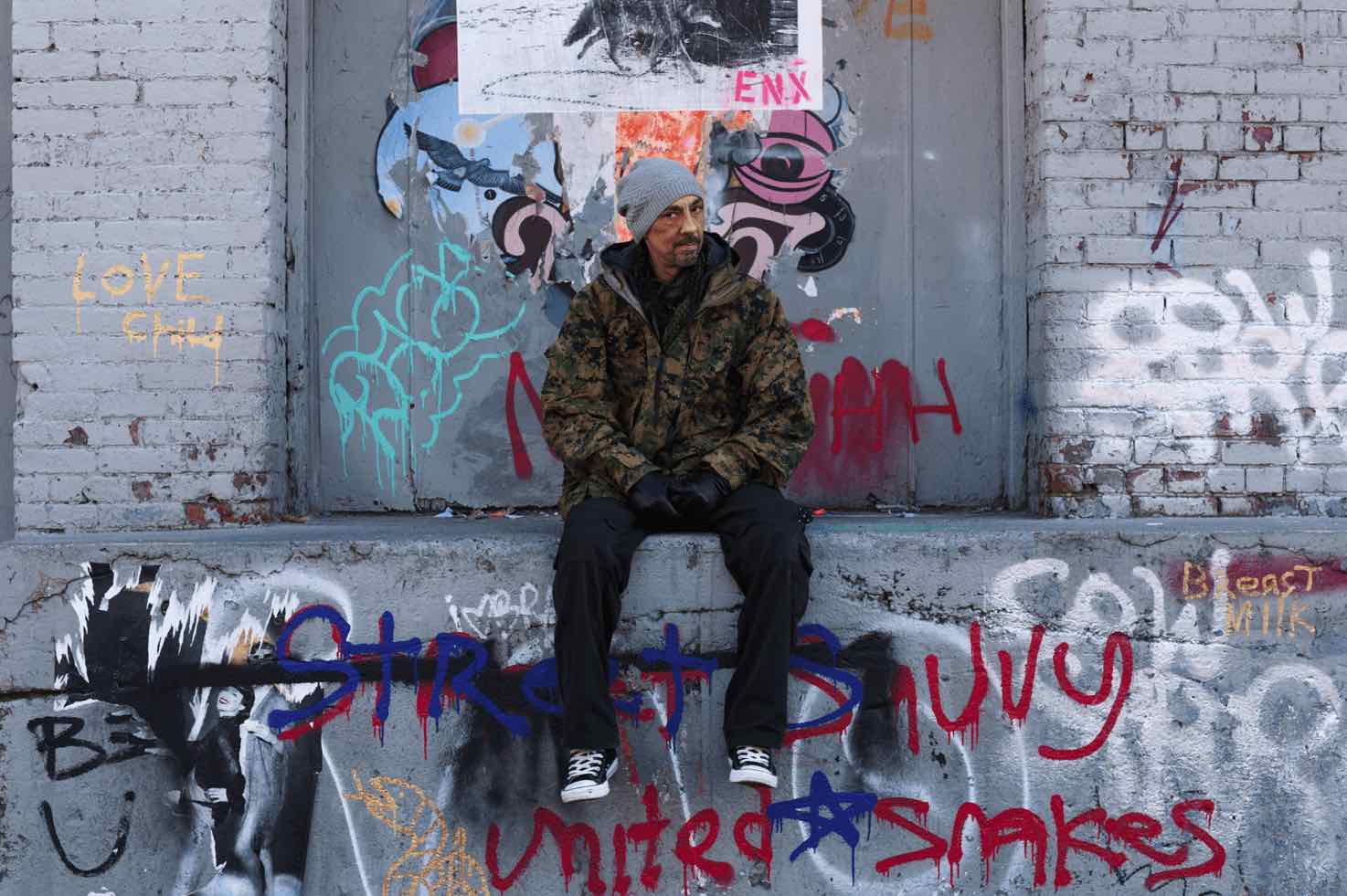
When it comes to the world of streetwear, few artists, if any, can rival the impact left by Futura. In a career spanning more than four decades, the New York-based graffiti legend can be linked to almost all significant moments of streetwear – in one capacity or another. But, despite building an iconic reputation off his signature atom and ‘Pointman’ motifs, which have graced everything from tees to Dunk SBs, Futura is far more than a brand. He is an out-of-the-box thinker that has forever challenged convention across a variety of disciplines. In today’s piece, we’re diving in deep to explore the man, the myth, the legend.
 Futura
In the Navy
Futura’s story begins in New York City in 1955, where he was born under his real name Leonard McGurr. Upon completing his schooling, Leonard, who would come to be known as ‘Lenny’ to his friends, would join the US Navy as an aviation machinist’s mate and be deployed on the USS Constellation. He would spend four years in the navy, from 1975-79, travelling the world aboard the Kitty Hawk-class supercarrier, including a deployment to Southeast Asia in 1977.
With his service completed in 1979, Futura moved back to NYC, which reignited his passion for graffiti. It wasn’t long before his handle – which featured the extension ‘2000’ at the time as a sly nod to Stanley Kubrick’s 2001: A Space Odyssey – began to appear throughout the city’s subways and streets.
Breakthrough
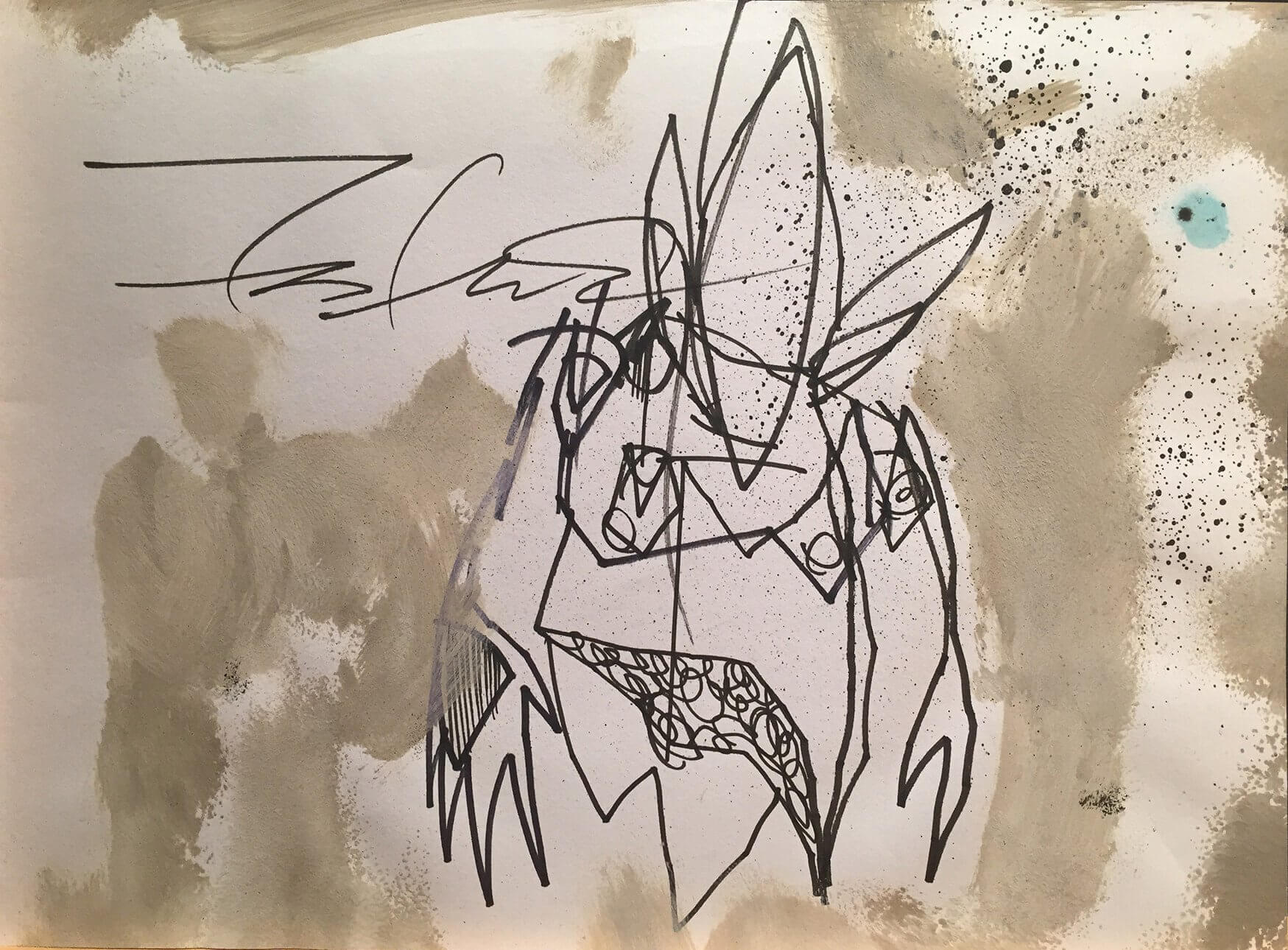
Although much had changed in the graf scene in Futura’s absence during his navy years, it didn’t take long for him to grow tired of conventional constraints. In 1980, he decided to create his self-proclaimed magnum opus, the so-called ‘Break Train’, as a send off to the days of lurking trainyards and subway systems to spread his art. The ‘Break Train’ was a full-car work like nothing before it. It did away with the limitations of lettering and exposed the world to what we now know as ‘abstract graffiti’. It was this work that well and truly made Futura’s name known throughout the community, both locally and globally, while simultaneously broadening the definition of graffiti.
 Pointman
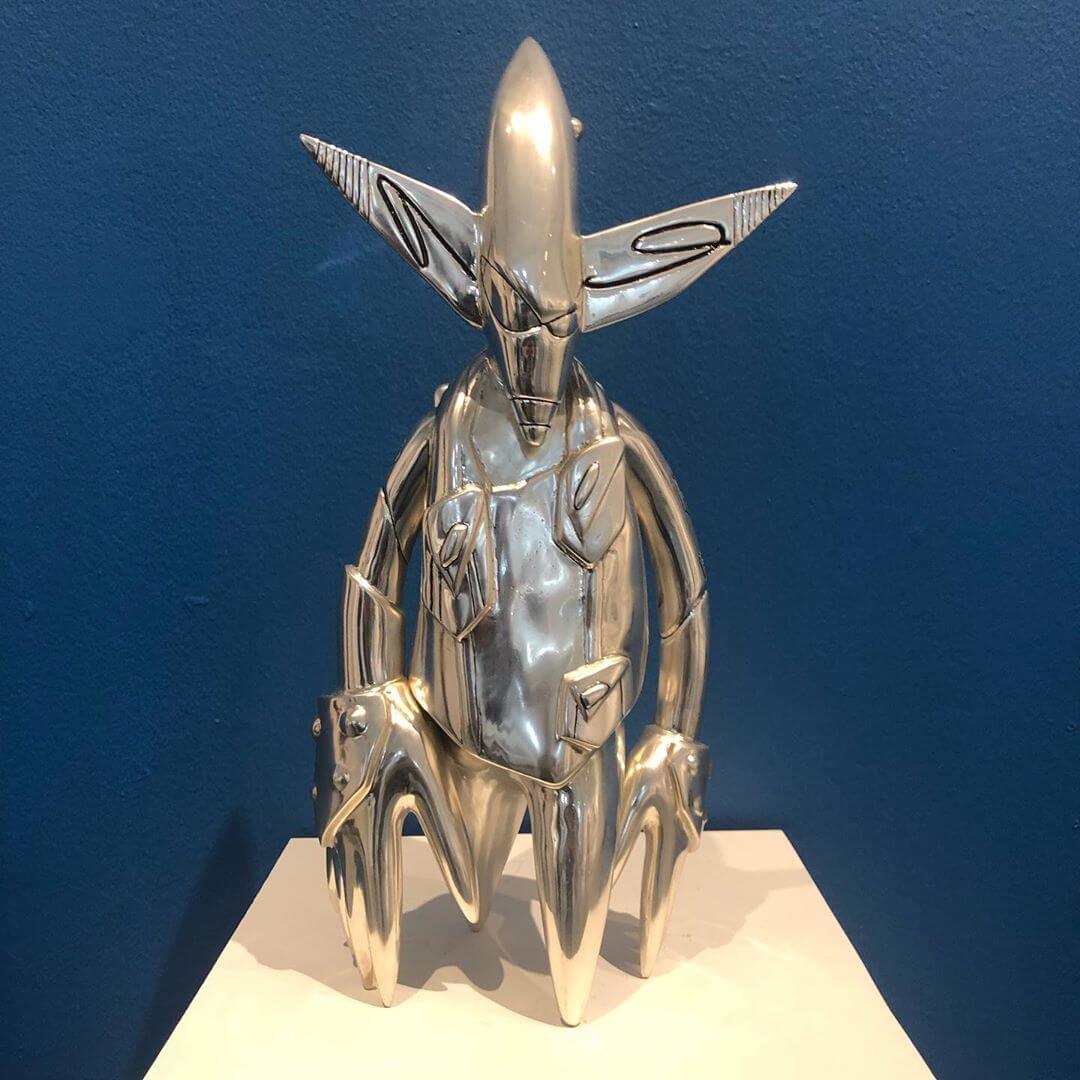
There are a number of signature symbols that have come to define Futura’s work. These include his iconic freehand atoms, inspired by the atomic-era ‘Future’ brand cleaning product from which he took his name, and his sinister ‘Pointman’ creations, which were Futura’s own interpretation of H.R. Giger’s Xenomorph creature from the Alien movies. Cranes are another common element in Futura’s work, inspired by a massive cluster of cranes he encountered on a visit to France in the early 80s. As distinctive as the symbols themselves are, so too is the way in which they are achieved. Futura literally turned graffiti convention on its head, by inverting the spray can to allow him control the paint flow and produce intricate line work. Despite the seemingly haphazard nature of creation it suggests, Futura’s work is produced with the utmost precision.
Creative Contemporaries & Collaborations
With an artistic career spanning four decades, Futura has managed to build up an impressive list of contemporaries that he has worked with, or otherwise alongside of. Exposed to the melting pot of creativity in downtown NYC in the late 70s and early 80s, Futura mingled with the likes of Keith Haring, Jean-Michel Basquiat, Kenny Scharf, Fab 5 Freddy and Eric Haze. His most famous artistic relationship, however, is undoubtedly with fellow NYC graf artist Stash. The two have remained close friends since the mid 80s and have united on a number of projects in that time, including the art exhibition ‘Command Z’ and a clothing line dubbed Project Dragon.
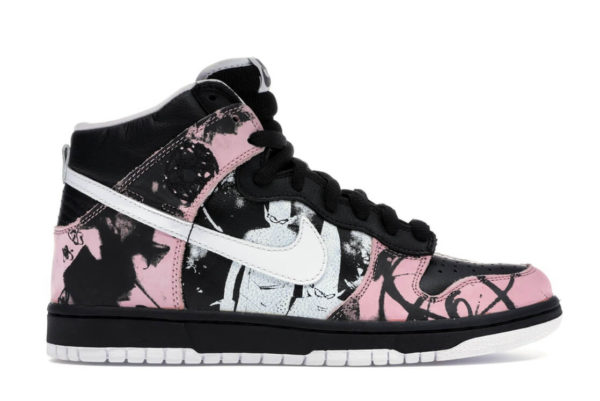
It’s not only visual creatives that Futura has collaborated with. In the early 80s, Futura connected with legendary English rock band The Clash, creating the sleeve design for their ‘This is Radio Clash’ vinyl single and touring with them during the release of Combat Rock to create live works on stage during their performances. They would even collaborate musically on more than one occasion, most memorably on an autobiographical track recounting Futura’s escapades. Keeping with the music theme, Futura would later work closely with Mo’Wax founder James Lavelle to create artwork for a number of the label’s albums, including, most famously, for Lavelle’s own project, UNKLE. The music group’s debut album, Psyence Fiction, memorably featured a duo of ‘Pointmen’ front and centre. Lavelle would later repurpose Futura’s artwork for UNKLE’s Nike SB Dunk High collaboration during the line’s Pink Box era.
Futura: From Street Art to Streetwear
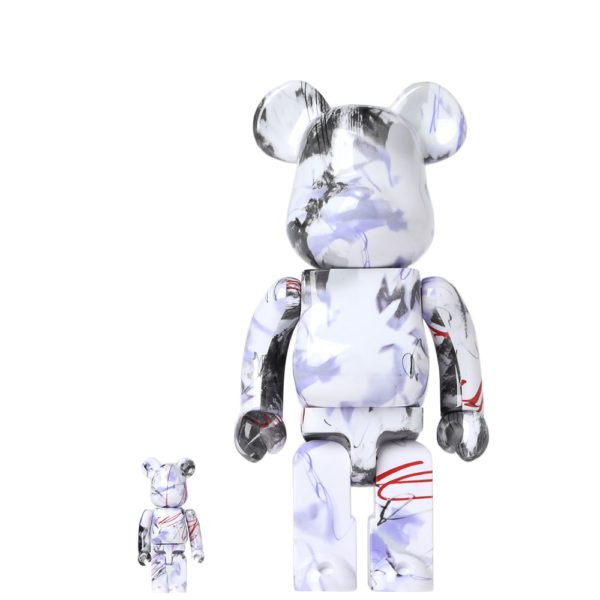
Futura is considered one of the most significant figures in street art, but his impact on the world of streetwear is equally as profound. Nike called upon his talents when they first began to experiment with collaboration, helping to pave the way for the modern sneaker scene. He has since built up an impressive portfolio of Nike collabs, ranging from Blazers to Air Force 1s to Dunk SBs. He has also collaborated with shoes for the likes of Clarks and Converse. Stepping outside footwear, Futura has created expansive collab collections with A Bathing Ape, G-SHOCK, Maharishi and Medicom Toy. Futura even made a surprise appearance during the reveal of Virgil Abloh’s AW19 Louis Vuitton collection in Paris, creating works live on the show’s streetscape backdrop. Could a collaboration be in the works? Our fingers are crossed!
Funnily enough, what might just be Futura’s most significant contribution to the world of streetwear – and fashion as a whole – is one of his least well known: his input in the creation of Supreme’s legendary box logo, which ironically uses the font ‘Futura’. Supreme and Futura have collaborated on a number of releases since the store’s establishment, including a remix of the box logo using Futura’s iconic hand script and a homage to Martin Scorsese’s acclaimed mobster flick Goodfellas.
Beyond collaboration, Futura also established his own clothing line Futura Laboratories, which originally included a flagship store in Fukuoka, Japan. After lying dormant for much of the past decade, the brand has finally made its long-awaited comeback, proving that, even at the ripe old age of 63, Futura isn’t showing any signs of slowing down – and we couldn’t be happier for that fact! He’s one of a kind and has unquestionably helped to shape the culture that we embrace today in so many ways. We can’t all have an original Futura artwork on our walls, but we can all relish in his impact.
Foot District was recently on location in Singapore for the launch of CONSTELLATION: Futura’s debut solo exhibition in Southeast Asia. The exhibition, presented by The Culture Story, featured a collection of 30 all-new works produced during a two-week long residency. Be sure to check out The Culture Story’s Instagram page to check out Futura’s work created specially for the exhibition, as well as an impressive recap of his career and some insightful new interviews.