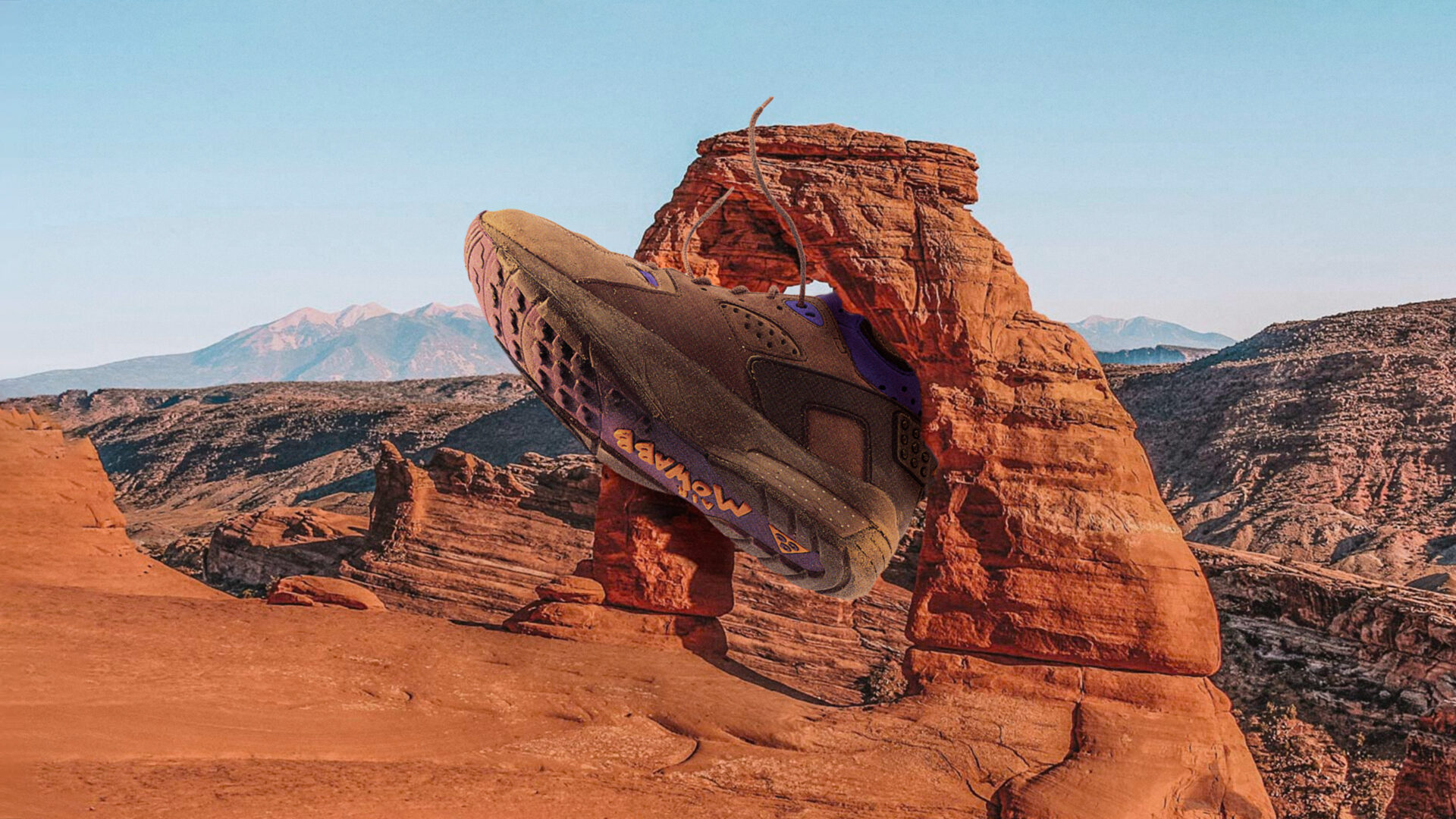
An inside joke from Nike ACG‘s early days has become a classic feature of Nike’s outdoor line. The unique names of its clothing and sneakers inspire us to travel to new locations.
You need to look back at Nike ACG’s beginnings to comprehend its bold and relaxed aesthetic. As the 1980s came to an end, many of Nike’s designers used their free time to play sports in unfamiliar settings, such as the forests of Oregon, the deserts of Arizona, or the mountains of Utah. Any form of exercise was welcome for a group that included the legendary Mark Parker and Tinker Hatfield, whether it was canyoning if the river allowed it, peak-climbing in good weather, or mountain biking if long distances had to be covered.
ACG, a line developed by designers in response to their own needs, was born from the designers’ discovery that Nike did not have a product that was suitable for their adventures. Because Nike ACG was intended to be a small collection, certain risks could be taken. The names of the sneakers were an inside joke; the original ACG models used the names of the places they were inspired by, but with a slight modification. The Deschutes River inspired a sandal called Deschutz, which is still on the market three decades later, Wyoming inspired Whyomin, and Arizona experimented with air to create the Nike Air Azona.
Although Nike ACG has taken different turns over the years, it has always kept a connection to its roots in the form of names that will always be connected to ACG footwear and apparel. We look back on five places we’ve visited thanks to ACG.
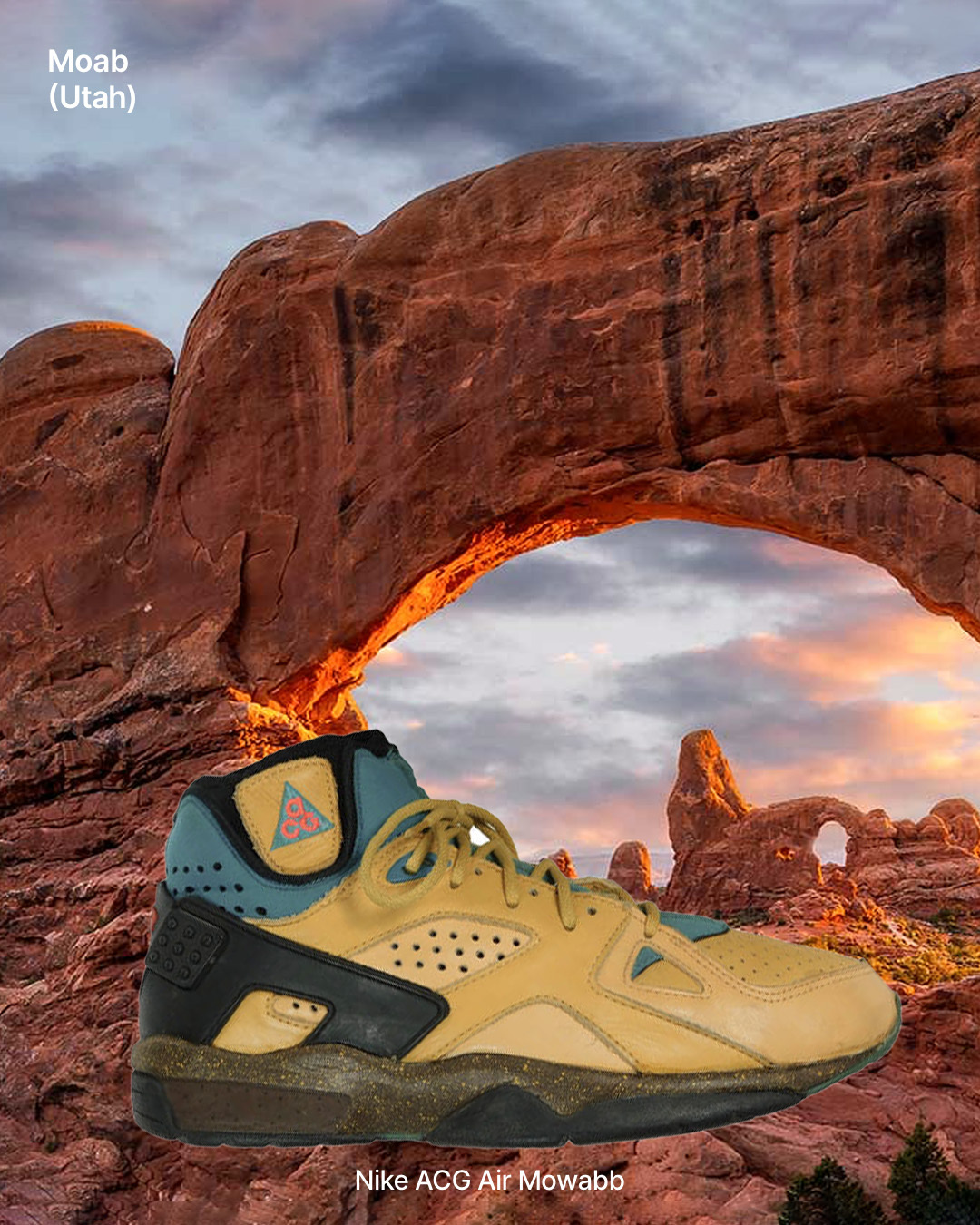
Mowabb, the original and originator of the trend. The name of this multifunctional outdoor product was inspired by Moab, a desert in Utah where Nike designers worked on the ACG.
Trango. Climbers John Roskelley and Rick Ridgeway sent Nike a photo from base camp during the first American ascent of K2 in the early 1980s. That photo inspired a more mountain-centric approach from Nike ACG. The Nike Trango takes its name from one of Roskelley’s great ascents, the central block of the Trango Towers, the Great Trango.

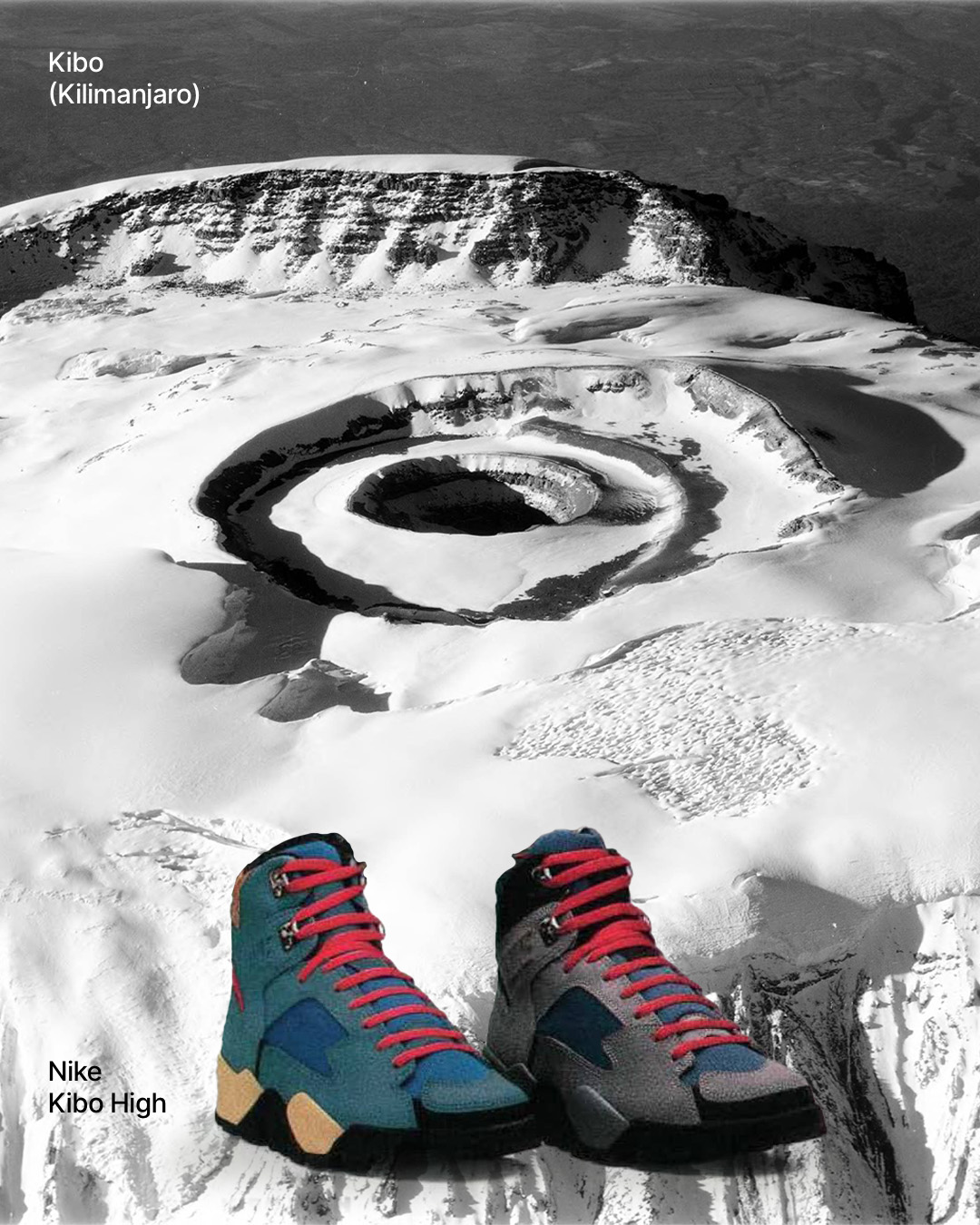
Kibo is the name of one of the craters that, together with Shira and Mawenzi, form Kilimanjaro, the highest mountain in Africa and the highest free-standing mountain in the world.
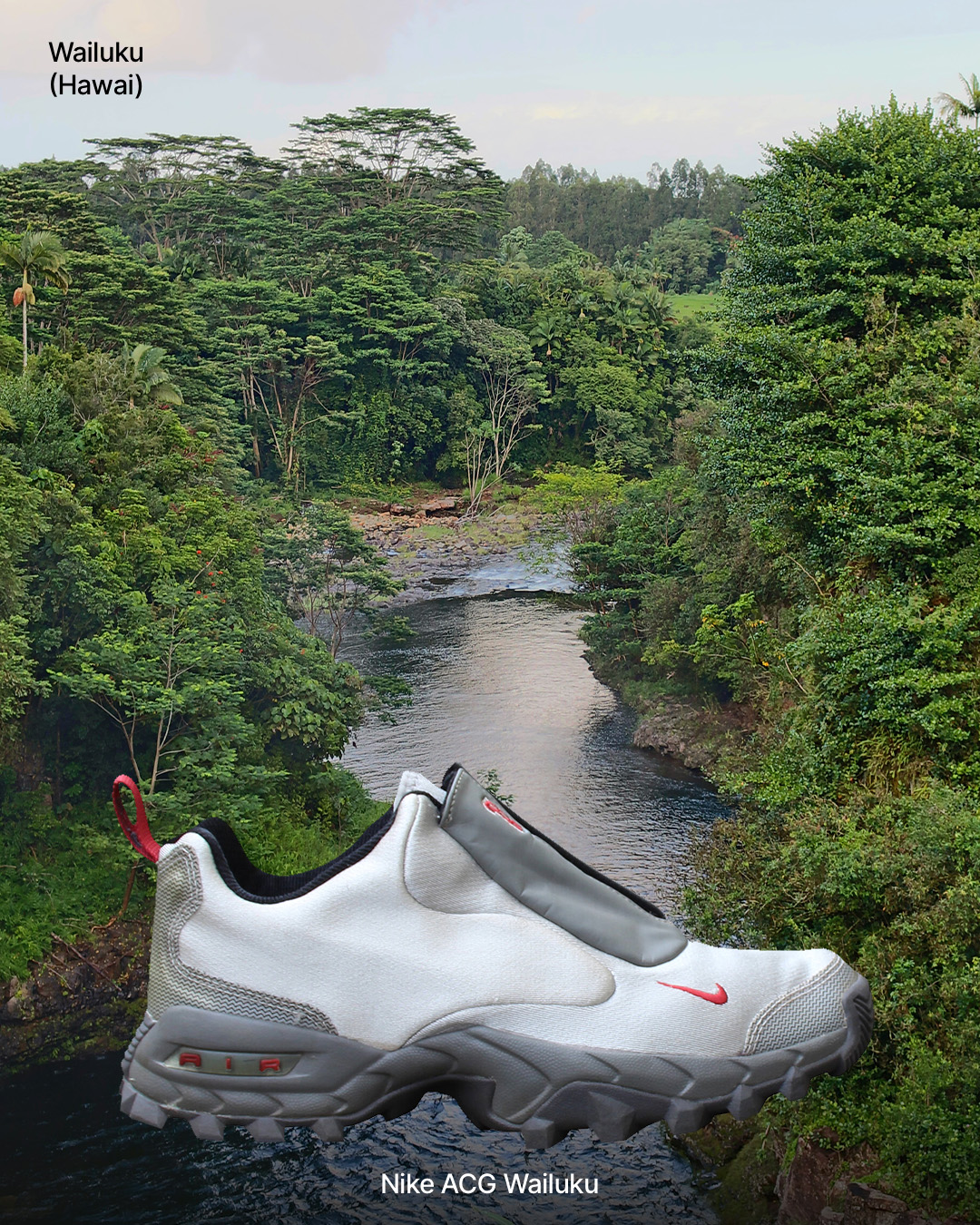
Wailuku is a natural park located in Hawaii that follows the path of the river of the same name in which waterfalls and natural pools stand out. From such a name we could expect a more summery model.
Rhyolite is the name of a Nevadan settlement that flourished for ten years in the first decade of the 20th century, at the height of the gold rush. The town’s name, Rhyolite, originated from the name of the type of rock where gold was found. Rhyolite’s last resident died in 1924, and the ruins have since been used for filming and as a tourist attraction.
